Palau Güell Visitor Guide: Plan Your Visit to Gaudí's Palace
Plan your Palau Güell visit with top picks, historical context, timing tips, and practical booking advice for a smoother trip to Gaudí's early masterpiece.
On this page
Palau Güell Visitor Guide
Palau Güell is Antoni Gaudí's earliest major commission — an urban palace built for the industrialist Eusebi Güell between 1886 and 1890, a few steps off La Rambla in Barcelona's El Raval district.
It draws far fewer visitors than the Sagrada Família or Casa Batlló, which makes it one of the most unhurried Gaudí experiences in the city. This guide covers tickets, opening hours, what to see floor by floor, and practical tips for visiting in 2026.
What is Palau Güell?
Palau Güell stands at Carrer Nou de la Rambla 3-5, tucked into El Raval a single block from La Rambla. Gaudí designed it as both a family home and a cultural showcase for Eusebi Güell — a space for concerts, salons, and high-society receptions. The Güell family lived here from 1890 until 1910, and the building later served as the Museum of Performing Arts from 1954 to 1996 before a careful seven-year restoration returned it to something close to its original appearance. It reopened in 2011.
From the street, the building is surprisingly restrained. The limestone façade is dark and formal, more like a private fortress than a fantasy palace. The spectacle begins inside. UNESCO inscribed Palau Güell on the World Heritage List in 1984 as part of the Works of Antoni Gaudí — the same inscription that covers the Sagrada Família, Park Güell, Casa Batlló, and several other buildings. It is one of Barcelona's best-kept secrets: fewer queues, more space to think, and architectural details that reward close attention.
History and Significance of Palau Güell
Gaudí was in his mid-thirties when Güell offered him the commission. Eusebi Güell was wealthy, politically connected, and had clear artistic ambitions; Gaudí was already daring but not yet famous. Güell gave him an unusual degree of freedom — control not just of the structure but of the light fixtures, furniture, ironwork, and even the door handles. The result was what Gaudí later called a gesamtkunstwerk, a total work of art in which every element was designed by the same hand.
Construction began in 1886 and was complete by 1890. Gaudí drew more than two dozen façade concepts before settling on the final design. The palace served as a family residence, a concert hall, and a reception space for Barcelona's intellectual and political elite — a stage for Catalan cultural life at a moment when that identity was reasserting itself.
This was Gaudí at the height of his Orientalist phase. The influence of Moorish arches, Persian domes, and Japanese timber detailing runs through every floor. You can feel the difference from his later, more organic work: the building is heavier, more formal, more indebted to history. That aesthetic gradually gave way to the nature-driven Catalan forms of his mature style. Palau Güell sits exactly at the hinge point — between the eclectic experiments of Casa Vicens and the freely organic symbolism of Park Güell and the Sagrada Família. Understanding that transition makes the building far more interesting to explore.
The Exterior: Ironwork Gates and Parabolic Arches
Stop at the entrance before going in. The two parabolic wrought-iron gates were sized to admit Güell's horse-drawn carriages — tall, dramatic, and already showing Gaudí's obsession with organic curves. Look at the ironwork closely: intertwined serpents form the initials E and G for Eusebi Güell, and a phoenix perches above the Catalan coat of arms between them. Fire, resurrection, and Catalan national identity, all coded into the gate before you have stepped inside.
The grey limestone façade on either side is almost flat by Gaudí's standards. He quarried it from Garraf — the same hills he returned to for Park Güell. The surface communicates gravitas rather than fantasy, which Güell wanted: the street was rough-edged in the 1880s, and the building needed to project authority.
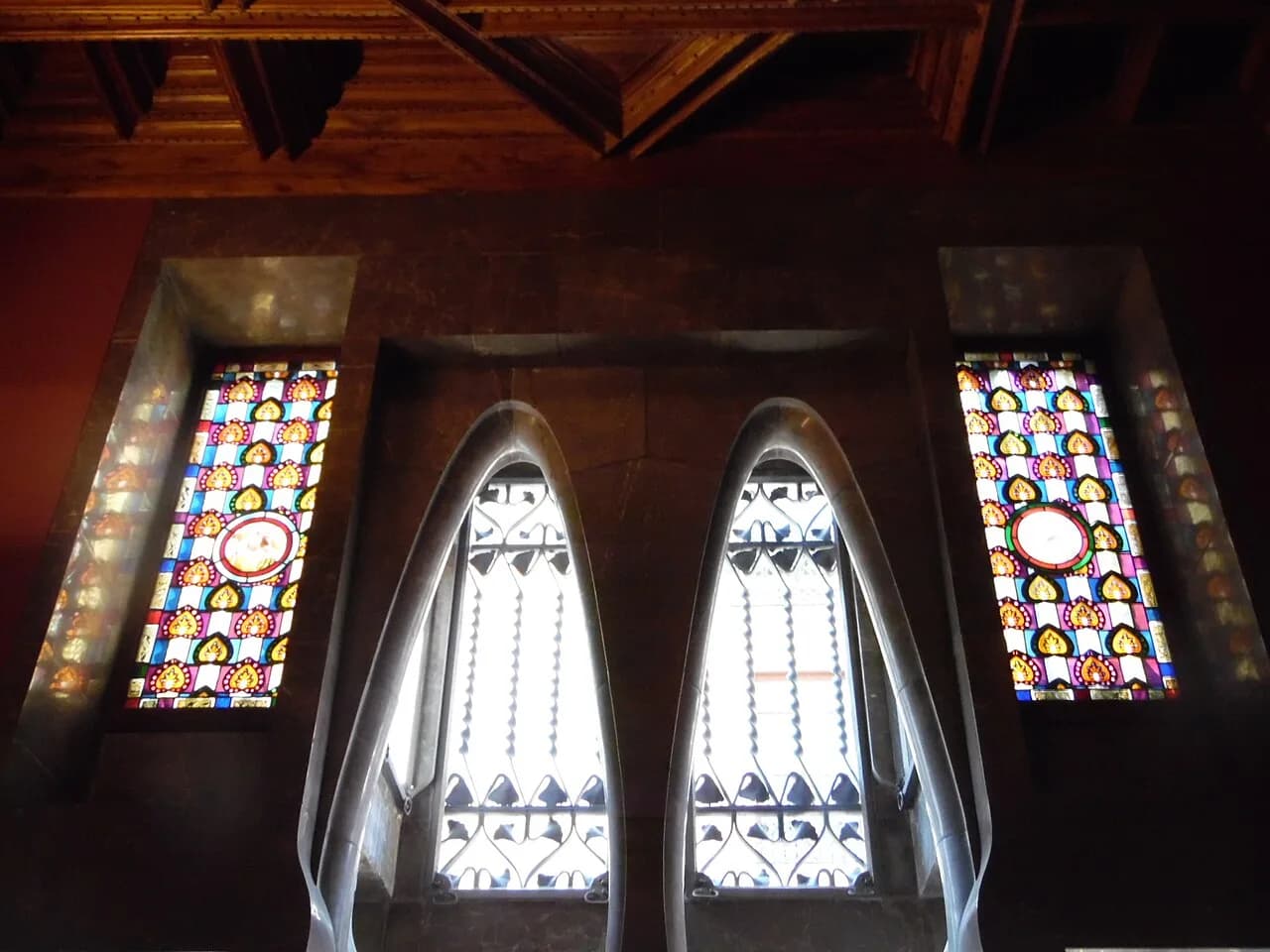
Walk through the gates into the vestibule. The ceiling tiles form low concentric vaults. Light enters through iron grilles rather than open windows, and the small stained-glass panels glow in the red and yellow of the Catalan flag — a quiet declaration of cultural pride woven into the architecture. This is not a welcoming lobby. It is an architectural threshold designed to impress before you have begun to climb.
Planning Your Visit: Tickets, Hours, and Location
General admission is €15 and covers all floors, the permanent furniture exhibition, and an audio guide in several languages. A reduced rate of €12 applies to visitors over 65, Barcelona Card holders, and groups of 10 to 25. A mini rate of €5 covers ages 13 to 18, students, large families, and youth card holders. Children under 13 enter free. Buy tickets on the official site at palauguell.cat; booking online costs the same as the box office but lets you choose your time slot and skip the queue.
| Ticket Type | Price |
|---|---|
| General admission | €15 |
| Reduced (65+, Barcelona Card, groups 10–25) | €12 |
| Mini (ages 13–18, students, large families, youth card) | €5 |
| Children under 13 | Free |
Free guided tours in Spanish, Catalan, English, and French are included with your ticket on weekends — one of the least-publicised perks of visiting Palau Güell. Times rotate by language; check the current schedule when you book. Tours fill on weekend mornings, so arrive a few minutes early if you want to join one.
The palace opens Tuesday to Sunday year-round (closed non-holiday Mondays). Summer hours run from 1 April to 31 October: 10:00 to 20:00, with last entry at 19:00. Winter hours run from 1 November to 31 March: 10:00 to 17:30, with last entry at 16:30. The palace is also closed 25 and 26 December, 1 and 6 January, and the last week of January for annual maintenance.
Entry is free on the first Sunday of each month, but capacity is strictly limited — free tickets must be booked online in advance. First-Sunday slots are released the previous Thursday at 10:00 and are often gone within an hour. Other free-entry dates in 2026 include 12 February (Santa Eulàlia), 23 April (Sant Jordi), the Night of the Museums in May, 11 September (Catalonia's National Day), 24 September (La Mercè), and 15 December (anniversary of Eusebi Güell's birth).
Palau Güell closes on non-holiday Mondays and during the last week of January for annual maintenance. Timed entry means you must book your slot in advance to guarantee access — booking online at palauguell.cat is always faster than queuing at the box office.
The nearest metro stop is Liceu on Line 3 (green), a three-minute walk. Buses V13, 59, and H14 stop nearby. La Rambla is one minute away on foot; the Gothic Quarter is about seven minutes. The wider Barcelona attractions hub has transport context for the rest of the city.
What to See Inside Palau Güell
Allow 90 minutes for a careful visit, or up to two hours if you join a guided tour and linger on the rooftop. The route moves vertically — from the basement stables up through the main floors to the rooftop terrace. An audio guide is included with entry and is worth using; many of the palace's details only make sense with context.
In the basement, Gaudí designed the stables using mushroom-shaped brick columns that branch outward near the ceiling to carry the load of the floors above. A spiralling brick ramp allowed horses to be led down without steps. Even here, the tethering rings on the stalls are sculpted into the heads of mythical creatures — a unicorn, a dog, a dragon — small moments of fantasy tucked into the most utilitarian part of the house.
The grand staircase is lined with red marble columns from the Garraf quarries and topped with carved wooden ceilings. At the landing, a monumental canvas by Aleix Clapés — Hercules Searching for the Hesperides — fills the wall with moody Symbolist mythology. Before you reach the main hall, you pass through the Hall of Lost Steps (Sala de les Passes Perdudes), a quiet anteroom where guests once waited before concerts. Gaudí kept the ornamentation minimal here; it is a space designed to build anticipation.
The central hall is the architectural heart of the palace. It rises three full storeys and is capped by a double parabolic dome pierced with oculi — the small circular openings that send shifting columns of light into the space below, creating the effect of a starlit interior. Gaudí also designed the acoustics deliberately: an organ loft on the upper balcony could fill the room with sound during concerts. Horseshoe-shaped balconies allowed the Güell family to watch events from behind decorative grilles without being seen by guests below.
Behind folding wooden doors at one end of the central hall is the hidden chapel — a small space that could be revealed for family masses, transforming the salon from a secular reception room into a private place of worship in moments. The folding panels are inlaid with religious paintings. A bust of Eusebi Güell stands nearby, placed by Gaudí as a deliberate anchor for the whole space.
The second floor holds the family's private bedrooms, furnished with pieces commissioned from Catalan craftsmen of the Modernista era. The carved walnut furniture from Francesc Vidal i Jevellí's workshop is among the finest cabinetmaking of the period. Look at the armrests on the bedroom chairs: hydra heads, open wings, and grasping claws — nature and myth worked into everyday objects.
The Rooftop: Chimneys, Trencadís, and Panoramic Views
The rooftop terrace covers over 400 square metres and is populated by 20 chimneys, each clad in trencadís — the broken ceramic tile mosaic that became a Gaudí signature. No two chimneys are alike: some are wrapped in white ceramic, some in green, some in amber. Each fragment catches the light at a slightly different angle, and the effect changes throughout the day.
The rooftop of Palau Güell is a direct prototype for the mosaic spires of Casa Batlló and the sculptural forms of Park Güell. Visiting here first makes Gaudí's later visual vocabulary easier to follow. The connection between these early chimneys and the towers he later designed for the Sagrada Família is visible once you know what to look for — the trencadís work, the organic silhouettes, the way each form reads as both structure and sculpture.
Views from the terrace extend across El Raval and toward the Gothic Quarter and the waterfront. Late afternoon is the best time for photography — the light hits the coloured ceramics from the west and the shadows give the chimneys more dimension. The rooftop may close during heavy rain or strong wind; if the weather is uncertain, check with the palace before arriving.
The rooftop's 20 trencadís-clad chimneys are Palau Güell's most iconic feature and appear in every highlight photo. Visit in late afternoon for the best light, and remember that personal photography is welcome throughout the building, though flash, tripods, and selfie sticks are not permitted. The central hall photographs beautifully with natural light from the dome oculi in late morning.
Accessibility and Practical Tips
A lift serves the ground floor, mezzanine, and first floor, giving wheelchair users access to the main reception rooms and the central hall. The upper levels and the rooftop terrace involve stairs that are not served by the lift, so full building access is limited for visitors with reduced mobility. Strollers can be brought in, though the upper floors are narrow and the rooftop surface is uneven. An easy-reading visitor guide is available as a downloadable PDF for visitors who benefit from simplified text.
Personal photography is welcome throughout the building. Flash, tripods, and selfie sticks are not permitted. The best natural light in the central hall falls in the late morning, when the sun strikes the dome oculi at an angle that sends defined rays into the space. The rooftop photographs well at any time of day but is most dramatic in late afternoon.
The audio guide is available in English, Spanish, Catalan, French, German, Italian, Japanese, and Portuguese. Timed entry means you cannot be turned away once you hold a ticket for a specific slot, but queues at the box office can be long on weekends — booking online is always the better option. The ticket office closes one hour before the building, so an online ticket lets you arrive at the very last entry slot without rushing.
Group Visits and Booking Information
Groups of 10 or more qualify for the reduced admission rate of €12 and must book in advance. The palace's guided tours page has current group reservation policies and contact details. Pre-booking should be done well in advance during peak travel periods — spring and early autumn see the highest demand.
External guides who bring groups to the palace must hold specific accreditation; confirm this requirement when booking. Groups are allocated a fixed entry slot and must arrive on time — a late group disrupts the flow for other visitors and can reduce the group's own time inside. Communicate any accessibility requirements when making the reservation so that staff can prepare accordingly.
More Gaudí and Modernista Architecture in Barcelona
Barcelona's Modernisme extends well beyond Palau Güell, and visiting related buildings in the same trip reveals how the movement evolved across roughly three decades. Visiting Palau Güell first — before the Sagrada Família or Casa Batlló — helps you follow Gaudí's progression from his heavier, more historical early style toward the fully organic forms of his mature work.
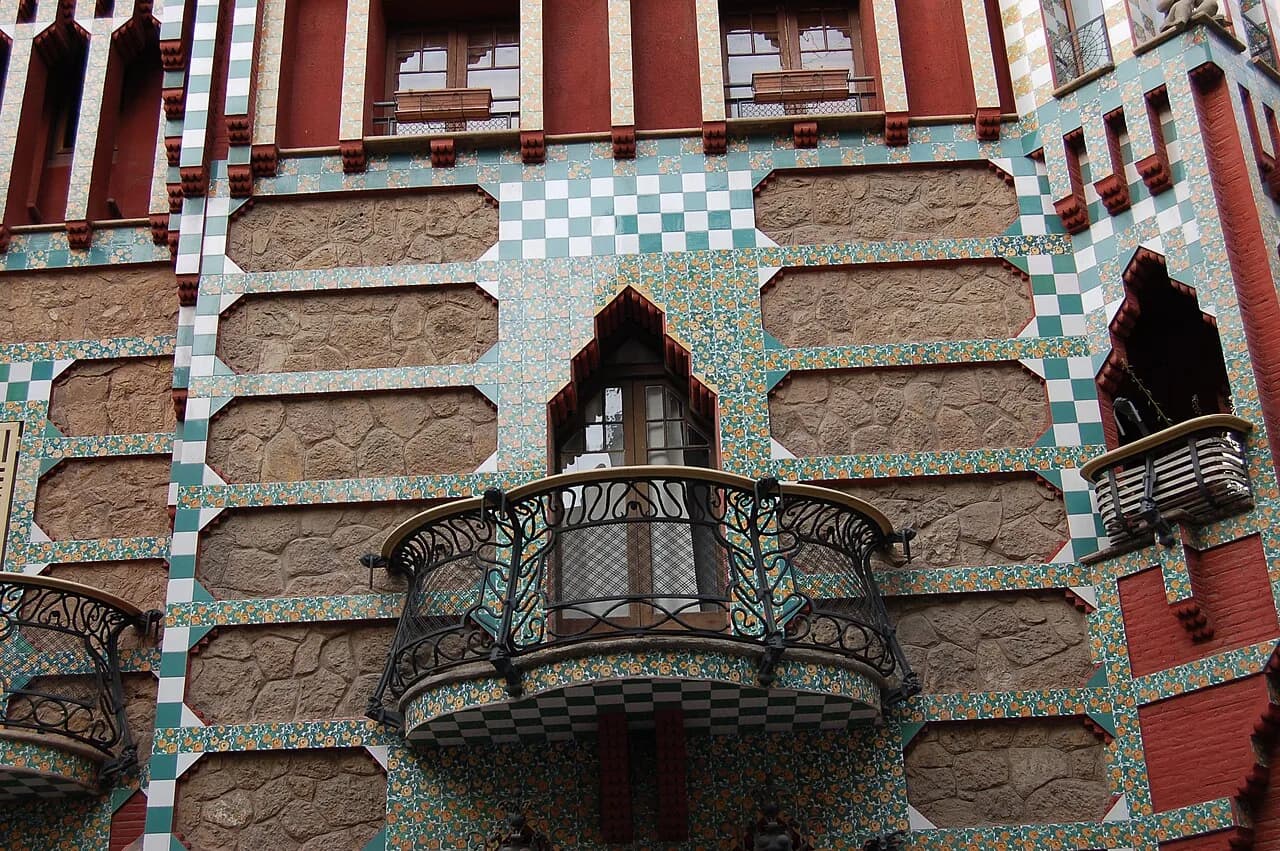
Casa Vicens is Gaudí's first house, built in the 1880s in the Gràcia district. The tilework is more overtly Moorish than anything in Palau Güell, and the scale is more domestic. Visiting both buildings in sequence makes the step-change in Gaudí's ambition between his first and second major commissions very clear.
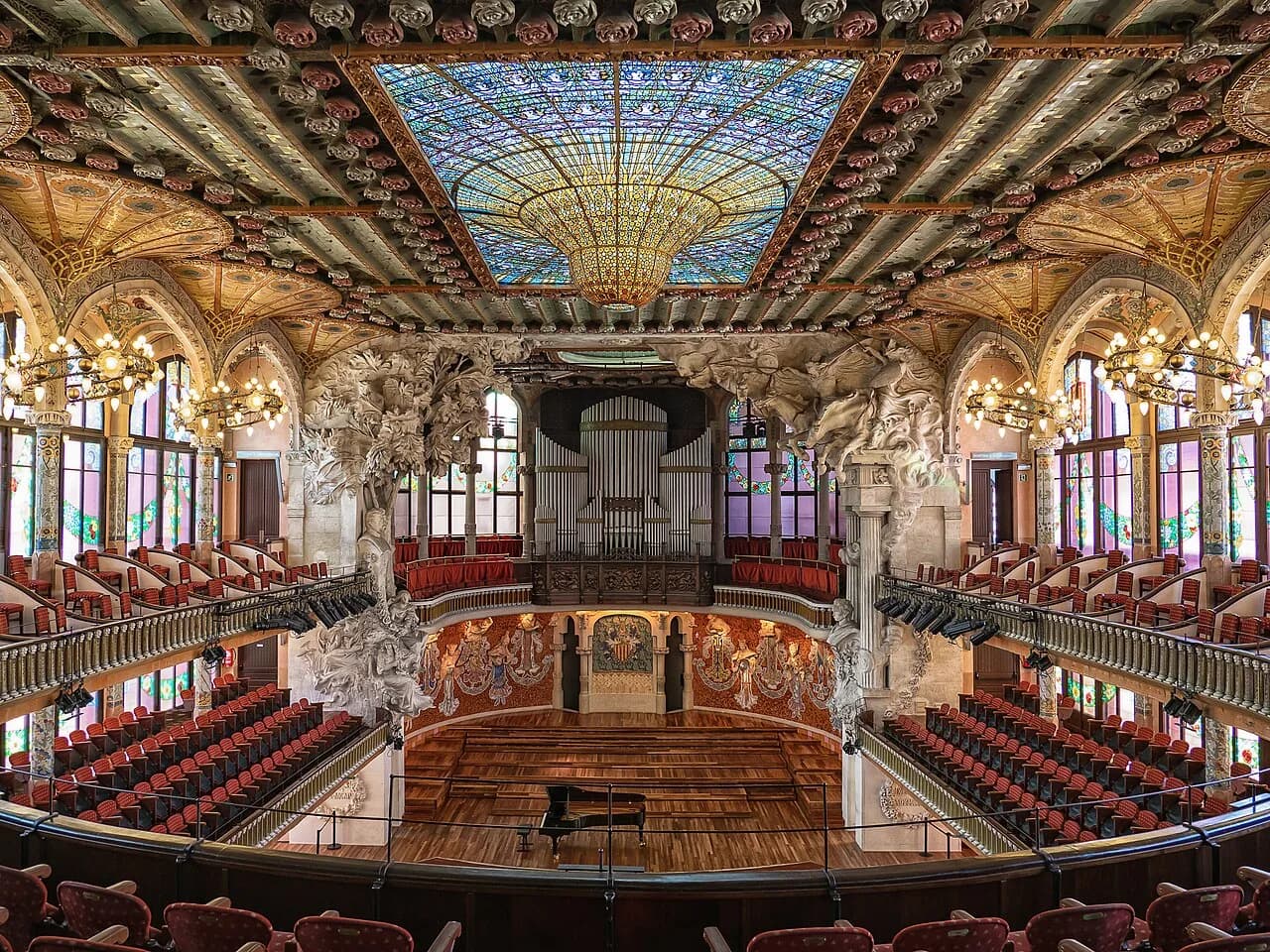
The Palau de la Música Catalana, designed by Lluís Domènech i Montaner and completed in 1908, shows a different current within Modernisme — brighter, more decorative, and organized around light as spectacle rather than structure. It is most rewarding attended as a concert, but guided tours run most mornings from El Born and take about one hour.
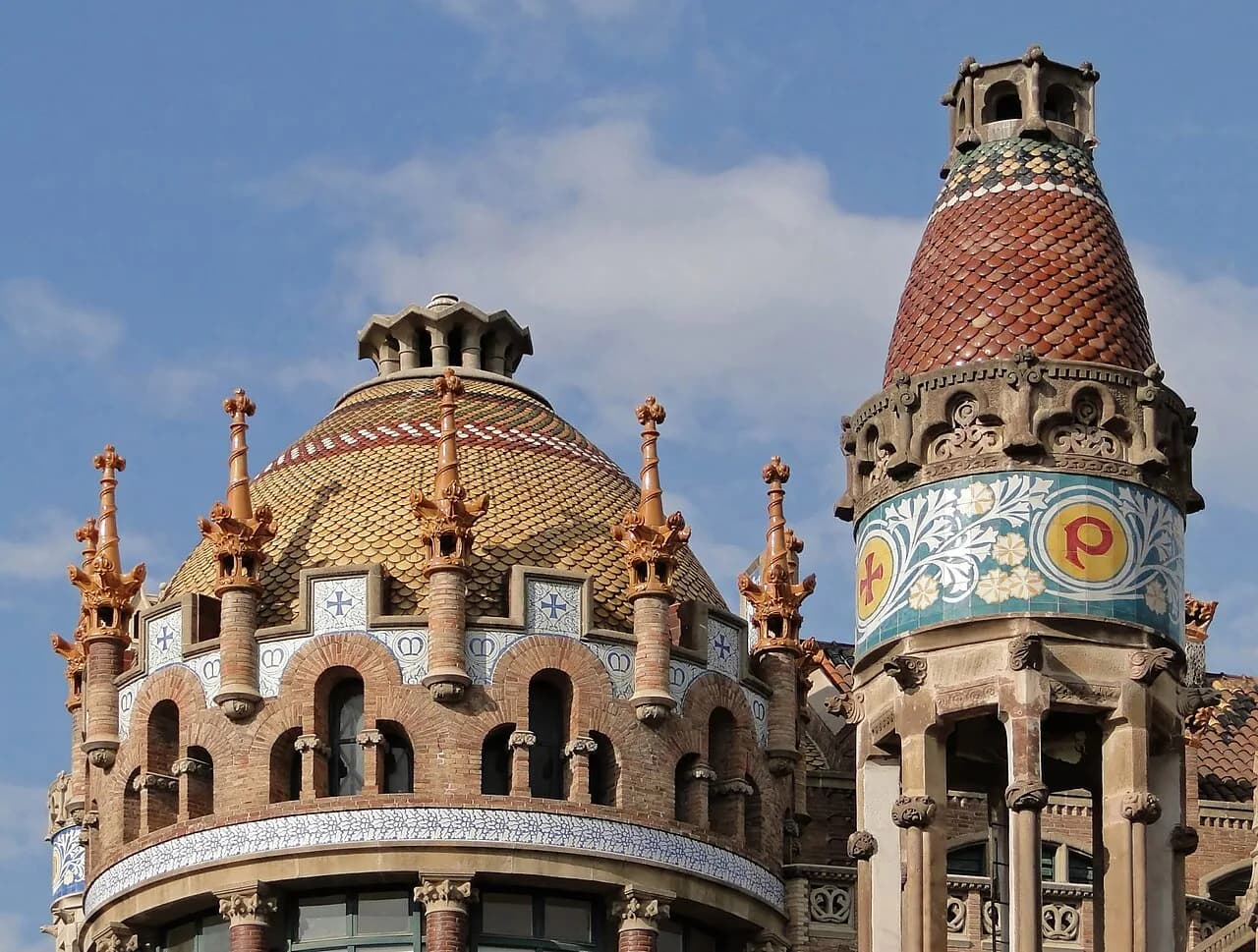
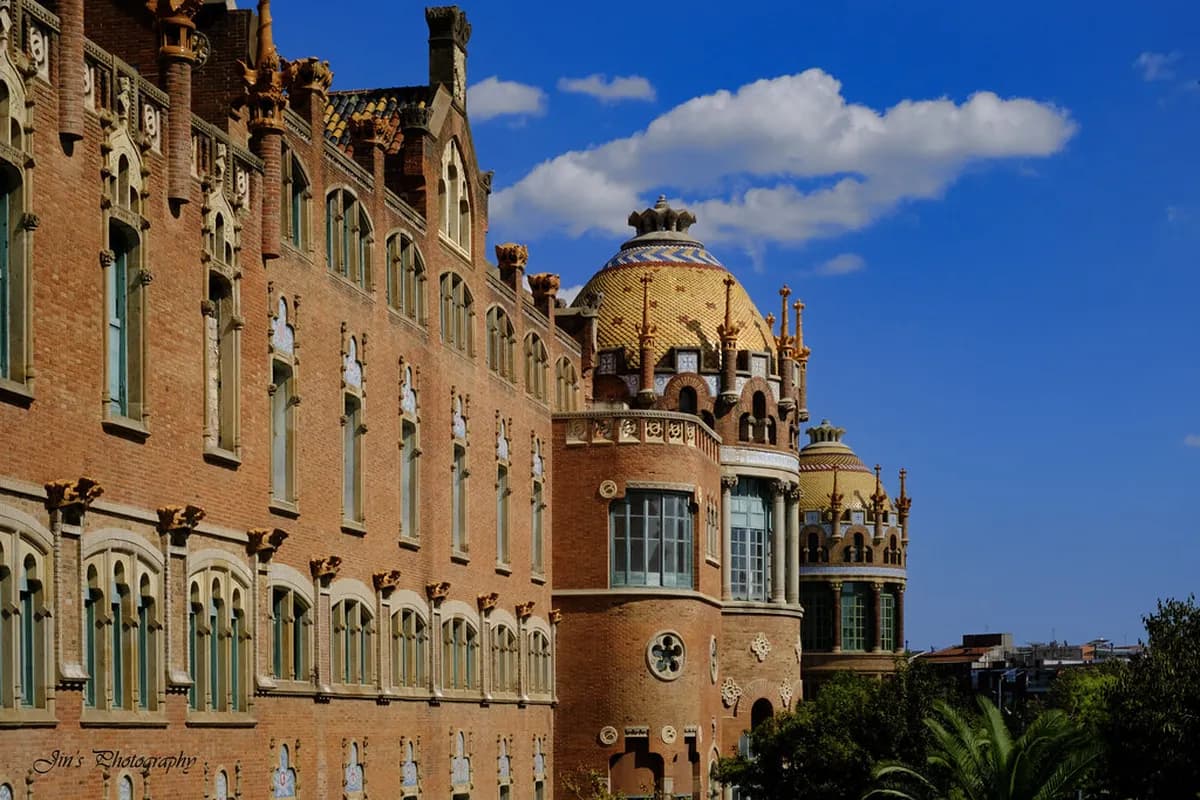
The Hospital de Sant Pau, also by Domènech i Montaner, is a UNESCO site that most Barcelona visitors miss entirely. The former hospital-city sits in its own gardens with tiled pavilions of extraordinary quality. Visit on a weekday to avoid the weekend rush and allow at least 90 minutes.
Frequently Asked Questions About Palau Güell
The most common questions about visiting Palau Güell — from pricing and hours to photography rules — are answered below.
Frequently Asked Questions
How long does a visit to Palau Güell take?
A typical visit to Palau Güell usually takes between 1.5 to 2 hours to fully explore all areas. This includes time for the audio guide and appreciating the intricate details. You can adjust your pace, but allow enough time for each floor.
What can you see at Palau Güell?
Visitors can explore various levels, including the underground stables, the grand central hall, and the private family quarters. The highlight for many is the rooftop, adorned with Gaudí's iconic, colorful sculptural chimneys. Each area showcases unique Modernista design.
When is Palau Güell free?
Palau Güell offers free entry on the first Sunday of each month, but tickets must be reserved online in advance. Availability is limited, so booking immediately when they become available is crucial. Check the official website for specific dates and booking windows.
Where is Palau Güell and how to get there?
Palau Güell is located at Carrer Nou de la Rambla, 3-5, in Barcelona's El Raval district, very close to La Rambla. You can reach it easily by metro (L3 Liceu/Drassanes) or several bus lines. Walking from the city center is also a convenient option.
Palau Güell is one of the most rewarding places to spend 90 minutes in Barcelona. The crowds are thinner than at Gaudí's later landmarks, the building is small enough to understand in a single visit, and every floor adds something to the picture of how his style developed.
Book tickets in advance at palauguell.cat, arrive in the late morning for the best natural light in the central hall, and leave time for the rooftop. If you are planning a broader Gaudí circuit, visit Palau Güell first — it makes everything that followed easier to read.
For more on Barcelona and what to see nearby, explore the full attractions guide.
For the latest official information, see the Palau Güell official site and Palau Güell on Wikipedia.
For more Barcelona planning, see our Hidden Gems in Barcelona guide.
Continue exploring
More guides you'll find useful