Musée de Montmartre Visitor Guide: 8 Essential Tips
Plan your visit to the Musée de Montmartre with our expert guide. Discover Renoir's studio, hidden vineyards, ticket prices, and the best time to visit Café Renoir.
On this page
Musée de Montmartre Visitor Guide: 8 Essential Tips
The Musée de Montmartre offers a deep dive into the bohemian history of Paris.
This hidden gem sits atop the famous Butte at 12 rue Cortot, surrounded by ivy-covered walls and cobblestone streets.
It serves as a portal to the era of Renoir, Valadon, and the legendary cabarets that made the 18th arrondissement famous across the world.
Travelers seeking an authentic experience in Paris will find this museum essential for any itinerary focused on Impressionism or French cultural history.
The History of Musée de Montmartre: From Renoir to Valadon
The museum occupies a cluster of 17th-century buildings at the top of the Butte, the oldest of which is the Maison du Bel Air. This building is widely considered the oldest surviving house in Montmartre. A second structure on the grounds, the Hôtel de Demarne, later became the main exhibition space for the permanent collections. Understanding the distinction between the two buildings helps you navigate the site: temporary exhibitions and the ticketing desk are housed in the Hôtel de Demarne, while the permanent collection and the recreated Valadon studio occupy the Maison du Bel Air.
Pierre-Auguste Renoir lived and worked in the Maison du Bel Air during 1876, the same year he painted his celebrated La Balançoire (The Swing) and Le Bal du Moulin de la Galette in the gardens just outside. Both works are now in the Musée d'Orsay, but seeing the space that produced them adds a layer of meaning that reproductions cannot replicate. The light and atmosphere of the garden directly influenced his Impressionist technique. Similar artistic energy connects this site to the Musée de la Vie Romantique a short distance away.
Suzanne Valadon moved into the property in 1912, joined by her son Maurice Utrillo and her partner André Utter. Valadon was one of the first women to gain full recognition in the Parisian fine art world, having modeled for Renoir, Toulouse-Lautrec, and Degas before becoming a celebrated painter in her own right. Their shared studio-apartment was restored in 2014 and is one of the most vivid spaces in the museum. The museum opened to the public in 1960 and received classification as a Musée de France in 2003, anchoring its role as a national cultural institution.
Must-See Museum Highlights and Permanent Collections
The permanent collection covers the golden age of Montmartre, roughly 1850 to 1950, when the hilltop village transformed from a rural commune into the artistic capital of Europe. Central to this story is the cabaret culture that drove the district's fame. Original posters from Le Chat Noir and the Moulin Rouge line the walls, alongside documents, photographs, and programmes that bring the raucous atmosphere back to life. These artifacts are exceptional primary sources for anyone interested in the social history of Belle Époque Paris.
The recreated studio of Suzanne Valadon is a highlight that visitors consistently single out. It features authentic furniture, brushes, easels, and personal effects from the early 20th century, carefully assembled from archival research. Seeing the workspace alongside Valadon's own paintings helps you understand her method, which was more direct and less polished than the male Impressionists around her. This intimate look at the creative process parallels the experience at the Musée Gustave Moreau, another Paris house-museum where the artist's studio remains intact.
The museum also holds an extensive collection of works by Maurice Utrillo. His paintings depict the quiet, snow-dusted streets of the neighborhood he lived in for most of his life, offering a counterpoint to the vibrant cabaret imagery elsewhere in the building. Raoul Dufy also worked here during the museum's early years, and several of his paintings are on permanent display. Each room moves chronologically, building a coherent picture of how one small hill became the most creative address in Europe.
The Renoir Gardens and the Clos Montmartre Vineyard
The Renoir Gardens were replanted and restored to reflect the exact landscape that appears in Renoir's own paintings from 1876. There are three distinct garden areas surrounding the museum buildings, each planted with period-appropriate flowers, hedges, and climbing roses. Walking through them feels less like visiting a museum garden and more like stepping into an Impressionist canvas. The Café Renoir, set in a winter-garden pavilion at the edge of the grounds, looks directly out over the vines and the Paris rooftops beyond.
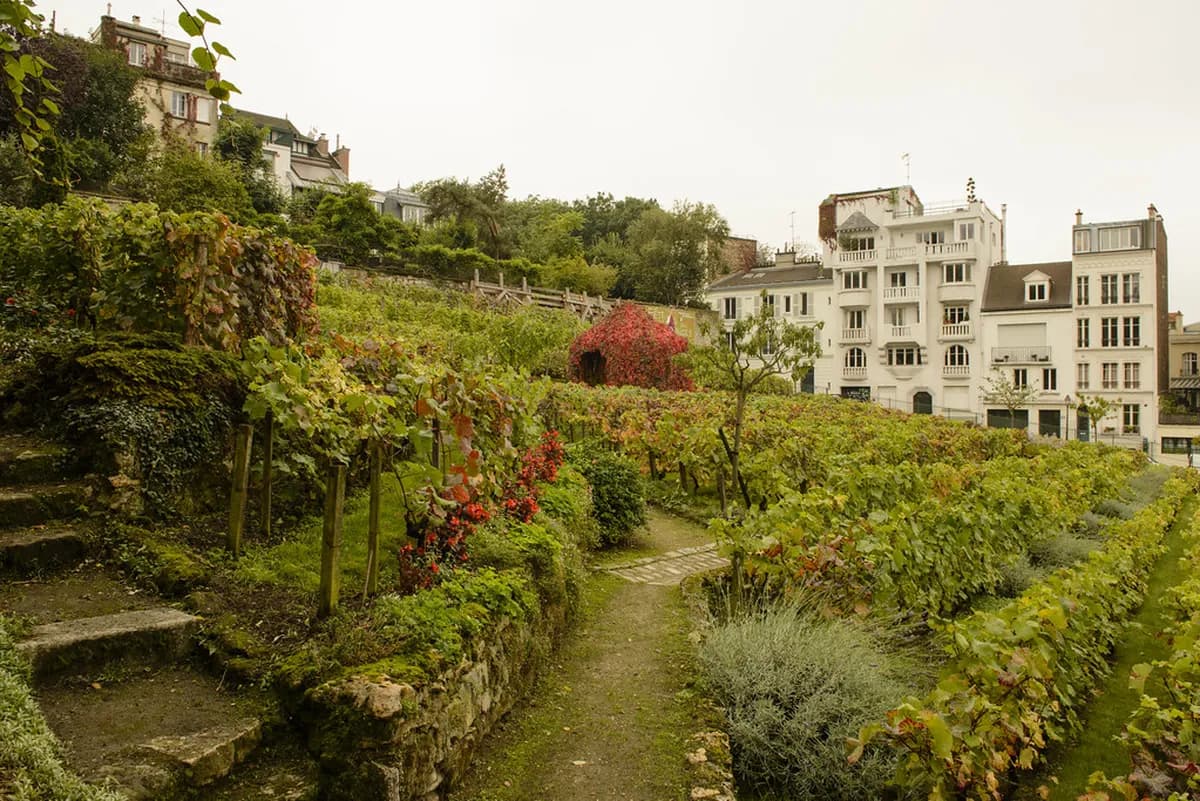
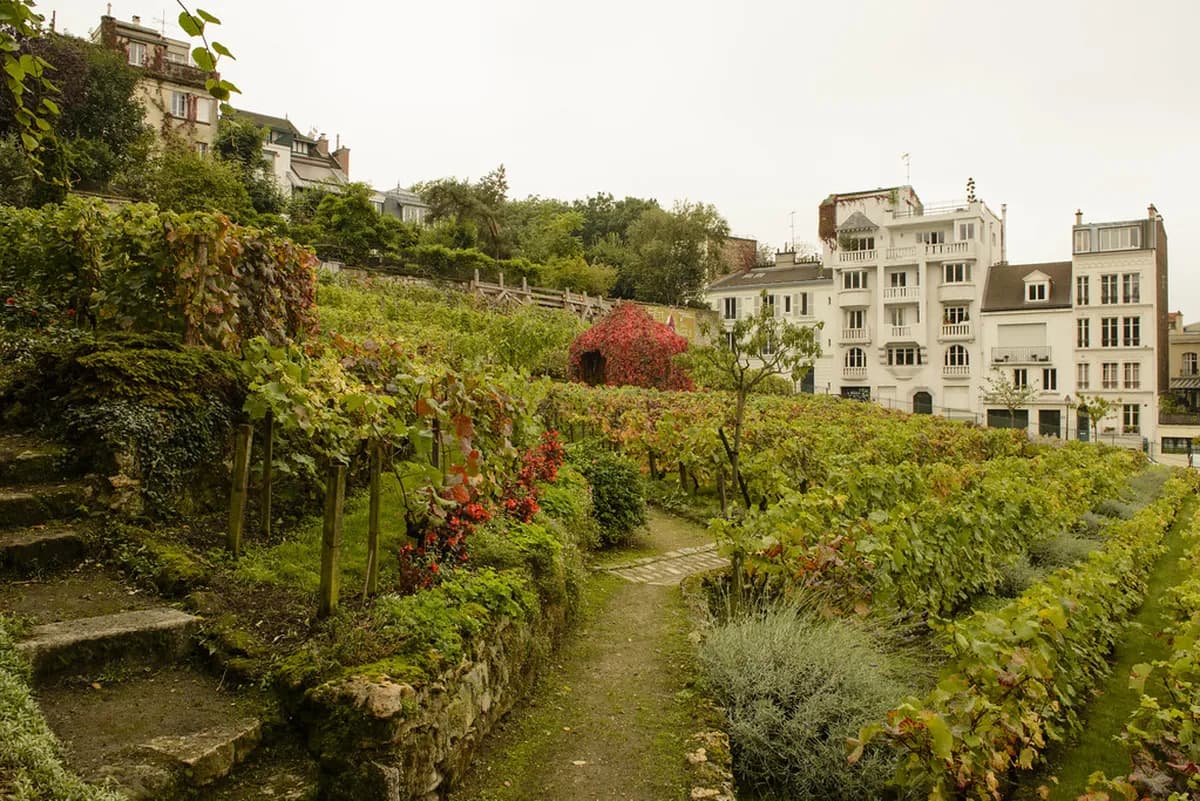
From the garden paths you get a close view of the Clos Montmartre vineyard — the last urban vineyard within the Paris city limits. The vineyard was replanted in 1933 by the Montmartre festival committee and currently produces around 1,500 bottles of wine per year. What most general guides leave out is that the entire harvest is auctioned each October at the Fête des Vendanges de Montmartre, and the proceeds go to charitable causes supporting Parisian children. The harvest festival typically falls on the second weekend of October; if your trip coincides with it, the gardens take on a completely different energy.
Photography is best in the swing area near the rear of the Maison du Bel Air, where Renoir positioned his easel for La Balançoire. Morning light between 10:00 and 11:30 is softest and avoids the harsh midday shadows cast by the surrounding buildings. Cherry blossoms appear in the gardens in late March to early April, making spring the most visually rewarding season for outdoor photography. Autumn visits in September and October let you see the vines heavy with Gamay grapes just before the harvest.
Practical Visitor Information: Hours, Rates, and Access
The museum is open daily from 10:00 to 19:00, including public holidays. Last admission is at 18:15 and the exhibition rooms close at 18:45. Arriving before 11:00 on weekdays keeps you ahead of the tour groups, which typically arrive between 11:00 and 13:00. Book tickets in advance on the Musée de Montmartre Official Site to skip the queue at the entrance on Rue Cortot.
Book tickets in advance on the official website to skip the queue. Arriving before 11:00 on weekdays helps you avoid tour groups that typically arrive between 11:00 and 13:00.
- Adult full price: €15 per person
- Students aged 18–25 with valid ID: €10
- Youth aged 10–17: €8
- Children under 10: free
- People with disabilities: €10
- Gardens-only entry: €6
- Free admission: holders of ICOM cards, professional tourism cards, guide-lecturer credentials, and members of the Vieux Montmartre association (valid proof required on the day)
The ICOM card is particularly useful for museum professionals and students enrolled in accredited museum-studies programs worldwide — it gives free entry here and at thousands of institutions globally, making it worth carrying if you hold one. The gardens-only ticket at €6 is the smartest option for visitors who simply want to sit at Café Renoir with a view of the vineyard without paying for the full collection.
| Ticket Type | Price |
|---|---|
| Adult | €15 |
| Students (18–25) | €10 |
| Youth (10–17) | €8 |
| Children (under 10) | Free |
| People with disabilities | €10 |
| Gardens only | €6 |
Be aware of genuine accessibility limitations. The temporary exhibition spaces in the Hôtel de Demarne are reachable by lift and are fully accessible. The Maison du Bel Air, which houses the permanent collections and the Valadon studio, involves narrow stairs, paving stones, and small steps that are difficult to navigate with a wheelchair or reduced mobility. The Renoir Gardens include gravel paths that may be uneven. Plan accordingly and contact the museum in advance if you need guidance on the accessible route.
For transport, three options cover the approach. Metro Line 12 to Lamarck–Caulaincourt drops you at the bottom of the Butte; the walk uphill via Rue Lamarck takes around 10 minutes and passes through quiet residential streets. Metro Line 2 to Anvers connects to the Montmartre Funicular, which requires a separate metro ticket or a Navigo pass and saves you the 197-step staircase climb. Bus 40 stops directly at Saules–Cortot and Montcenis–Cortot, placing you within two minutes of the museum entrance — the least-known option and often the fastest from central Paris.
Best Time to Visit the Musée de Montmartre
Weekday mornings from 10:00 to 11:30 offer the quietest experience inside the galleries. The museum draws heavy footfall on Saturday and Sunday afternoons from spring through autumn, when tour groups and Sacré-Cœur visitors spill into the surrounding streets. If you visit on a weekend, aim for opening time or the final hour before 18:45 last entry, when crowds have thinned considerably.
Seasonally, late March to mid-April gives you cherry blossoms in the Renoir Gardens at their peak. Summer is busy but means the Café Renoir garden terrace is in full bloom. October is the most atmospheric month for wine and garden lovers: the Fête des Vendanges de Montmartre harvest festival draws thousands to the district, and the vineyard vines turn gold and deep red before the grape-picking begins. Winter visits are quieter and the gardens are bare, but the permanent collection is unhurried and the café is warm — a different but equally valid way to experience the museum.
Guided Tours and Group Visit Options
Booking is mandatory for all groups from 12 or more people. Unscheduled large groups are refused entry during peak hours, and the policy is enforced strictly given the size of the rooms. Groups should contact the dedicated booking address at groupes@museedemontmartre.fr directly, as the online reservation form has experienced intermittent technical issues in 2026. Allow at least two weeks' notice for weekend visits.
The standard guided tour runs 90 minutes and covers the permanent collection or the current temporary exhibition. It costs €14 per person plus €130 for the museum lecturer, with one free guide provided per 20 adults. Educational tours for school groups and art students can be tailored to different age groups and focus specifically on Impressionist technique or the social history of the cabaret era.
The Vineyards and Montmartre Museum Package is a premium group option worth knowing about. At €40 per person (minimum 20 people, maximum 30), it combines a guided walk through the Clos Montmartre vines with a tasting of the estate wine, and each participant receives an engraved Clos Montmartre glass. Groups larger than 30 are split into successive sessions. This package is the most complete way to experience both the museum and the vineyard without the standard barriers that prevent individual visitors from entering the vines.
Where to Eat: Café Renoir and Local Gastronomy
Café Renoir sits inside the museum grounds in a glass-roofed winter garden overlooking the Renoir Gardens and the Clos Montmartre vineyard. It is open Wednesday through Sunday from 11:00 to 17:00 — note that it is closed Monday and Tuesday, and closes significantly earlier than the museum galleries each evening. If a café stop is central to your visit, plan accordingly and avoid arriving on a Monday. Access requires either a museum ticket or the gardens-only ticket at €6.
Café Renoir is closed Monday and Tuesday, and closes at 17:00 each evening while the museum galleries stay open until 18:45. Plan your café stop accordingly.
For a more substantial meal after your visit, Fric-Frac Montmartre is a few minutes' walk from the museum gates and specialises in gourmet croque-monsieur with a modern twist, including vegetarian variations. It is a local favourite rather than a tourist trap, and takeaway is available if you prefer to eat in the nearby streets. Bouillon Chartier on Boulevard de Clichy is a classic affordable option for a full French lunch, with a broad menu at prices that will surprise visitors used to central Paris restaurant bills.
For a morning visit, pick up breakfast from one of the boulangeries on Rue des Abbesses before climbing the hill. Pain Pain on Rue des Abbesses is well-regarded for pastries and has limited outdoor seating. Picnicking inside the museum gardens is not permitted to protect the historic landscaping, but several benches outside on Rue Cortot offer street-level views of the surrounding walls if you prefer to eat before entering.
Beyond the Museum: Exploring the Montmartre District
After your museum visit, the Sacré-Cœur Basilica is a five-minute walk south along Rue du Mont-Cenis. The panoramic view from the steps over the Paris rooftops is one of the best free vantage points in the city. Be aware that the stairs and surrounding area attract pickpockets — keep bags in front and phones pocketed. The Paris Je T'aime Montmartre District Guide has additional mapped routes connecting the main landmarks.
Fans of the film Amélie can find several filming locations within a few minutes of the museum. The Café des Deux Moulins on Rue Lepic, where Amélie works as a waitress, is still operating as a café and remains an easy detour. Place du Tertre, the central artists' square, is a classic stop: artists here hold licensed spots issued by a jury and have one square metre each, making the whole setup more regulated and interesting than it appears from a tourist brochure. The square itself is crowded at peak times, but the streets immediately behind it are genuinely quiet.
Literary and art enthusiasts might also explore the Maison de Balzac in another part of the city for a similar intimate house-museum atmosphere. Within Montmartre itself, the Wall of Love just off Place des Abbesses offers a quick stop — the ceramic mural shows "I love you" in 312 languages and has its own small park. Rue Lepic heading downhill from Place du Tertre is one of the most photogenic cobblestone streets in the district and leads naturally back toward the Blanche or Pigalle metro stations for onward travel.
For those visiting the Musée Jacquemart-André later in the day, the contrast between Montmartre's bohemian informality and the grandeur of the 8th arrondissement collector's mansion makes for a satisfying full-day arc. Both locations offer a refined but very different look at how art shaped Parisian private and public life in the 19th century.
Frequently Asked Questions
Is the Musée de Montmartre included in the Paris Museum Pass?
No, the Musée de Montmartre is a private museum and is not included in the standard Paris Museum Pass. You will need to purchase a separate ticket at the entrance or online. Consider visiting the Musée Jean-Jacques Henner if you are looking for other historic artist studios.
How much time do you need at the Musée de Montmartre?
Most visitors spend between 1.5 and 2 hours exploring the collections and gardens. If you plan to have coffee at Café Renoir or take the vineyard tour, allow for 3 hours. The peaceful atmosphere encourages a slower pace than larger city museums.
Can you visit the Montmartre vineyards?
You can view the vineyards from the museum gardens at any time with a standard ticket. However, physical access inside the vines is only possible through a guided tour package. These tours usually cost around €40 and include a wine tasting session.
Is Café Renoir open to the public without a museum ticket?
You generally need a museum or garden-only ticket to access Café Renoir. The garden-only ticket is a budget-friendly option at €6 for those who just want the café atmosphere. This allows you to enjoy the greenery without paying for the full museum exhibits.
Other Museums Built Around an Artists' Quarter
The Musée de Montmartre works because it sits in the actual houses and gardens its subjects used. Amsterdam's Rembrandt House Museum does the same for the Jodenbreestraat studio, down to the pigments on the workbench. In Barcelona, the Fundació Joan Miró was designed with Miró by his friend Josep Lluís Sert, so the building is part of the argument the collection makes.
The Musée de Montmartre remains one of the most evocative cultural sites in the city.
It perfectly balances art history with the natural beauty of the Renoir Gardens and the living heritage of the Clos Montmartre vineyard.
For a different but equally charming experience, visit the Musée Cognacq-Jay in the Marais district.
Exploring these smaller museums allows you to see the true heart of Parisian life beyond the headline attractions.
For authoritative information, refer to the Musée de Montmartre on Wikipedia.
Continue exploring
More guides you'll find useful