Museo Fortuny Visitor Guide: Tickets, Hours, & What to See in Venice
Plan your visit to Museo Fortuny in Venice with our comprehensive guide. Find information on tickets, opening hours, must-see collections, and how to make the most of your trip.
On this page
Museo Fortuny Visitor Guide: Plan Your Visit to Venice's Hidden Gem
Welcome to our Museo Fortuny visitor guide for 2026. This unique house-museum in Venice offers a close look at Mariano Fortuny y Madrazo, the Spanish-Venetian artist, designer, and inventor whose work shaped 20th-century textiles, fashion, lighting, photography, and stage design. Visiting his former residence, Palazzo Pesaro degli Orfei, feels less like entering a conventional gallery and more like stepping into a layered creative workshop.
This guide covers tickets, opening hours, how to get there, accessibility, what to see, and the common planning mistakes that can make a visit harder than it needs to be. Last updated June 2026, it treats the official museum data as the source of truth for practical details.
Quick Answer: Buy tickets online if you want the smoothest entry, allow about 1 to 1.5 hours for the palazzo and exhibitions, and remember that Museo Fortuny is closed Tuesdays. From April 1 to October 31 the museum is open 10:00-18:00 (last admission 17:00), and from November 1 to March 31 it is open 10:00-17:00 (last admission 16:00). During the summer (May 1-September 26, 2026) it stays open until 20:00 on Fridays and Saturdays.
Why Visit Museo Fortuny?
Museo Fortuny stands as a testament to the extraordinary vision of Mariano Fortuny. It is not just a museum but a preserved house and atelier, offering a rare window into his creative universe. Visitors can move between painting, photography, textiles, stage design, lighting experiments, and the atmosphere of the rooms where those disciplines overlapped.
This museum provides a quieter, more intimate experience than Venice's larger attractions. It is especially rewarding for travelers interested in art, fashion, interior design, theatre, and the history of craft. The palazzo itself, with its Gothic structure and grand internal courtyard, is part of the reason to come.
The visit is best for people who enjoy slow looking. Fortuny's innovations, including the Delphos Dress and his lighting designs, reward attention to material, texture, and technique. If you want a fast checklist attraction, the museum may feel subtle; if you want a Venetian house-museum with a strong creative identity, it is one of the city's most distinctive stops.
Allow 1 to 1.5 hours to explore the palazzo's atmospheric rooms, textiles, and temporary exhibitions. If you use the audio guide or want to read labels closely, budget closer to 2 hours.
Planning Your Visit: Tickets, Hours, and Location
Navigating your visit to Museo Fortuny requires some practical planning. The museum is central, but Venice's lanes around Campo San Beneto can be confusing, and hours change by season. Check the official website before you set out, especially if you are building the visit around a temporary exhibition.
Single tickets are available, and the Venice Museum Pass can be useful if you are also visiting other civic museums. Admission is €15.00 for the full adult ticket and €7.50 reduced. Entry is free for children aged 0-5, disabled visitors with a helper, Venetian residents, and ICOM members.
- Step 1: Choose Your Ticket Option
- Purchase a single ticket directly from the museum if Museo Fortuny is your only civic museum stop.
- Consider the Venice Museum Pass if you plan to pair Fortuny with other civic museums such as Ca' Rezzonico.
- Check whether the current temporary exhibition changes your priorities, because the displayed works can rotate across the palazzo's floors.
- Step 2: Book Tickets Online or On-Site
- Booking online via the official museum website is the safest option during high season, weekends, and exhibition openings.
- Expect to receive a confirmation email with your e-ticket, which you can show on your mobile device or print.
- On-site purchases are possible at the museum ticket office, but buying ahead avoids losing time in a small schedule window.
- Step 3: Check Opening Hours and Days
- From April 1 to October 31 the museum is open 10:00-18:00 (last admission 17:00), and from November 1 to March 31 it is open 10:00-17:00 (last admission 16:00).
- During the summer (May 1-September 26, 2026) it stays open until 20:00 on Fridays and Saturdays.
- Museo Fortuny is closed every Tuesday, year-round. Always verify current hours on the official opening-times page before your visit.
- Step 4: Get to the Museum
- Museo Fortuny is situated in Palazzo Pesaro degli Orfei, San Marco 3958, Campo San Beneto.
- The nearest Vaporetto stop is Sant'Angelo, followed by a short walk through narrow lanes.
- Walking from Rialto Bridge usually takes about 10 to 15 minutes. From Piazza San Marco, allow roughly the same amount of time, but keep a map open because the final turns are easy to miss.
- Step 5: Allocate Sufficient Time
- Most visitors spend about 1 to 1.5 hours exploring the palazzo's atmospheric rooms, Fortuny's textiles and lamps, and the rotating temporary exhibitions across its floors.
- Allow closer to 2 hours if you use the audio guide, read labels closely, or want time for photography where permitted.
- Avoid arriving close to last admission unless you only want a quick pass through the highlights.
| Ticket Type | Price |
|---|---|
| Adult | €15.00 |
| Reduced (students, seniors) | €7.50 |
| Children (aged 0–5) | Free |
| Disabled visitors with helper | Free |
A Brief History of Palazzo Fortuny
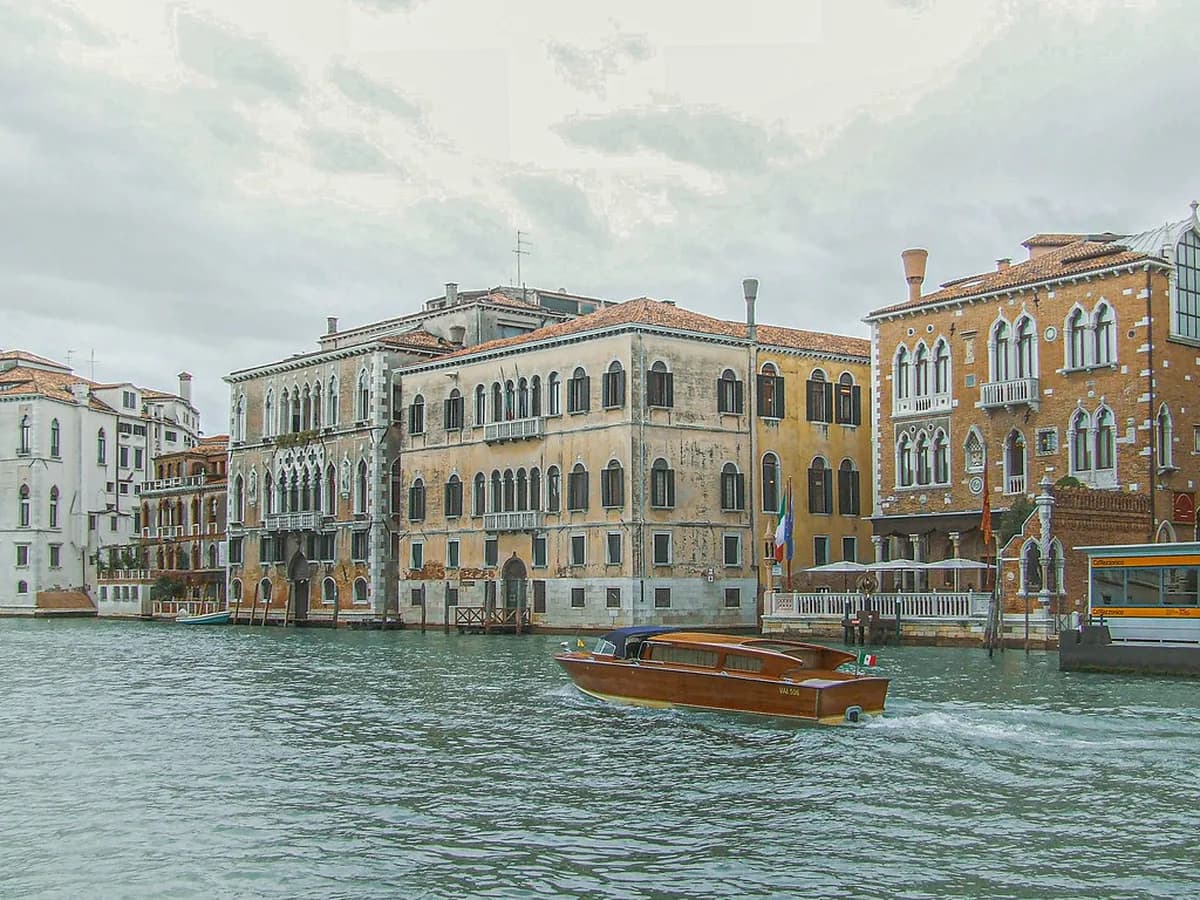
The building housing Museo Fortuny, Palazzo Pesaro degli Orfei, has a rich history predating Mariano Fortuny's arrival. It is a Gothic palace originally constructed in the 15th century, and its scale still reflects Venice's mercantile wealth and aristocratic past.
Fortuny began using the palace as a creative base in the early 20th century, turning it into a home, studio, showroom, archive, and experimental laboratory. That transformation matters because the museum is not only about finished objects. It also shows how one artist organized space for making, testing, displaying, and living with art.
On the ground floor, a large internal courtyard features two enormous porticoes, each 45 meters long. These architectural elements allow natural light to flood and illuminate the vast space, a crucial aspect for Fortuny's work. The palazzo itself became an integral part of his artistic expression and lifestyle.
Who Was Mariano Fortuny y Madrazo?
Mariano Fortuny y Madrazo (1871-1949) was a Spanish artist, designer, and inventor who made Venice his home. Born into a family of artists, he inherited a strong visual education from childhood. His father, Mariano Fortuny y Marsal, was a celebrated painter, and his mother, Cecilia de Madrazo, helped shape his knowledge of textiles and collecting.
Fortuny was a true polymath, working across painting, photography, sculpture, fashion design, textile printing, lighting, and stagecraft. He often collaborated with Henriette Negrin, whose role in textile and dress design is essential to understanding the Fortuny workshop. Together, their work favored artisanal process, historical reference, and technical experimentation over mass production.
He is celebrated for revolutionary textile printing techniques, pleated silk garments, and innovative lighting designs. His theatre work brought the same mindset to sets and illumination, where atmosphere mattered as much as object design. That breadth is why the museum appeals to visitors who might normally split their time between art museums, fashion collections, and design galleries.
Exploring the Fortuny Museum Collections
The Museo Fortuny collection introduces visitors to the range of Mariano Fortuny's output rather than isolating one discipline. You may see paintings, photographs, printed fabrics, pleated garments, lamps, theatrical material, personal objects, and changing exhibition works depending on the current installation.
A significant part of the museum's appeal is textile design. Fortuny's velvets, silks, wall hangings, and printed patterns often draw from ancient, Renaissance, Islamic, and Asian visual sources, then reinterpret them through his own workshop methods. Look closely at the density of pattern and color; these objects are easier to appreciate at a slow pace than in a quick walk-through.
The museum also displays examples of his lighting fixtures and stage-design thinking. These works show Fortuny's holistic approach: rooms, fabrics, lamps, costumes, and theatrical light were all part of a unified visual environment. His personal collections and studio atmosphere help explain why the palazzo still feels like a working archive rather than a neutral white-walled museum.
The Iconic Delphos Dress and Fortuny Lamp
Among Fortuny's most celebrated creations are the Delphos Dress and the Fortuny Lamp. These two innovations explain why his name still matters beyond Venice: one changed the language of modern fashion, while the other helped reshape theatrical and domestic lighting.
The Delphos Dress, patented in 1909, is famous for its finely pleated silk and simple flowing line inspired by ancient Greek dress. It moved away from rigid tailoring and allowed the body to move more naturally. For visitors interested in fashion history, it is one of the clearest examples of Fortuny's ability to combine archaeology, craft, and modern comfort.
The Fortuny Lamp, introduced in 1907, used a large reflector to create soft, diffused light. Its design was practical for theatre but also elegant enough for interiors. When you see Fortuny lamps in the museum, notice how they relate to the darker, fabric-rich rooms around them; the lighting was part of a complete atmosphere, not a separate product.
Examples of Delphos-style garments, textiles, and Fortuny lamps are among the main reasons visitors come. Displays can rotate, so check the current exhibition information if a specific object type is the reason for your visit.
The Delphos Dress showcases Fortuny's innovative pleating technique, which allowed fabric to move naturally without rigid tailoring. Look closely at the textile details—the density of patterns and color-work reward slow, careful observation rather than quick viewing.
Mariano Fortuny's Atelier: A Creative Hub
One of the most captivating aspects of Museo Fortuny is the sense of preserved atelier space. Fortuny transformed the palazzo into a vast laboratory for artistic experiments, using its rooms for painting, photography, textile research, fabric printing, theatre design, collecting, and display.
The best way to read the atelier is as a system. Fabrics relate to lamps, lamps relate to stage effects, paintings relate to photography, and the architecture frames all of it. This is the museum's strongest original experience: it shows how a multi-disciplinary artist could move between media without treating them as separate careers.
The trade-off is that the museum is not heavily interactive. Its value comes from atmosphere, objects, and context. It is best suited to visitors who like design details, quiet rooms, and creative-process stories; children may enjoy the visual richness, but it is not a hands-on family attraction.
Current and Upcoming Exhibitions at Museo Fortuny
Museo Fortuny frequently hosts temporary exhibitions that complement the permanent Fortuny context. These displays can change the balance of a visit, sometimes foregrounding contemporary art and sometimes highlighting specific parts of Fortuny's influence. Checking the exhibition schedule can help you decide how much time to reserve.
As of 2026, the museum's ground and upper floors are exhibition-driven, and the displayed art rotates with current shows such as "Erwin Wurm. Dreamers" (May 6-November 22, 2026). Temporary shows are announced on the museum's official website, and they are a good reason to revisit even if you have seen the palazzo before.
If your main interest is Fortuny himself, read the exhibition description before booking so you know how much of the visit will focus on the house-museum atmosphere versus the temporary installation. If your interest is contemporary art, the changing program may be the deciding reason to go.
Visitor Reviews and Tips for Museo Fortuny
Visitors consistently praise Museo Fortuny for its atmosphere, unusual collections, and calmer pace compared with Venice's headline sights. The people who enjoy it most tend to be interested in design history, textiles, photography, interiors, or artist homes. Travelers expecting a large museum of famous paintings may find it more niche.
One common tip is to take your time exploring each room, as there are many intricate details to discover. Consider downloading the official Muve App audioguide before you arrive for richer context. Guided tours and special visits can vary, so check the official site if you want a staffed tour rather than a self-guided visit.
For accessibility, plan carefully. The museum is housed in a historic palazzo with floors and steps that are irregular, slippery, and uneven in height, which can make access difficult. A free cloakroom is available, large luggage over one linear meter is not permitted, and disabled visitors with a helper enter free; check the official accessibility statement before visiting.
- Best Time to Visit
- Go soon after opening for the quietest rooms and easiest navigation.
- Use the Friday or Saturday evening extension between May 1 and September 26, 2026 if you want a later summer visit.
- Avoid Tuesdays, because the museum is closed year-round.
- Rainy days can make indoor attractions busier, so book ahead if the forecast pushes travelers indoors.
- Common Mistakes to Avoid
- Assuming every floor is easy to access. Check accessibility before arrival if stairs, uneven floors, or mobility support matter for your group.
- Arriving without a map. The museum is central, but the final approach through San Marco lanes is not obvious.
- Bringing large luggage. Use your hotel or station storage instead of relying on the cloakroom for oversized bags.
- Planning only 30 minutes. The objects, rooms, and audio-guide context need more time than a quick photo stop.
- Skipping the exhibition page. Temporary shows can strongly shape what you see inside.
Nearby Attractions and How to Combine Your Visit
Museo Fortuny's central location makes it easy to combine with other Venetian highlights. Planning a route that includes nearby museums can create a rich cultural day, especially if you are using the Venice Museum Pass.
For an 18th-century Venice pairing, walk to Ca' Rezzonico. The contrast is useful: Ca' Rezzonico is stronger for historic Venetian interiors and decorative arts, while Museo Fortuny is stronger for a single artist-designer's creative world.
For a modern-art pairing, continue to Ca' Pesaro International Gallery of Modern Art. This takes longer on foot, but it makes sense for travelers interested in the shift from historic palace spaces to modern and contemporary collections.
- Before You Go: Essential Checklist
- Confirm current opening hours and special exhibition dates on the official museum website.
- Purchase your tickets online in advance to save time and ensure entry.
- Download the Muve App audioguide to your phone before arriving for a richer experience.
- Use Sant'Angelo as the simplest Vaporetto reference point.
- Wear comfortable shoes, as you will be walking through both the museum and Venice's uneven streets.
- Bring a small bag; large luggage over one linear meter is not permitted.
- Do not plan around an in-museum cafe. Build coffee or lunch time into the surrounding San Marco area instead.
Frequently Asked Questions
How much time should I allocate for visiting Museo Fortuny?
Plan to spend approximately 1 to 2 hours at Museo Fortuny. This allows ample time to explore the collections, Fortuny's ateliers, and any temporary exhibitions. A more leisurely visit might extend to 2.5 hours.
Can I buy Fortuny Museum tickets online?
Yes, you can purchase Museo Fortuny tickets online through the official Fondazione Musei Civici di Venezia website. Booking in advance is highly recommended to secure your entry and avoid queues, especially during peak seasons.
What are the opening hours for Museo Fortuny?
From April 1 to October 31 the museum is open 10:00-18:00 (last admission 17:00), and from November 1 to March 31 it is open 10:00-17:00 (last admission 16:00). During the summer (May 1-September 26, 2026) it stays open until 20:00 on Fridays and Saturdays. It is closed every Tuesday, year-round.
Is Museo Fortuny included in the Venice Museum Pass?
Yes, Museo Fortuny is included in the Venice Museum Pass. This pass offers access to several civic museums across Venice, providing good value if you plan to visit multiple cultural institutions during your trip to Venice.
What are the main highlights of the Fortuny Museum collection?
Key highlights include Mariano Fortuny's innovative textile designs, especially the iconic Delphos Dress, and his groundbreaking Fortuny Lamps. Visitors also enjoy his paintings, photographs, and the preserved atelier spaces.
Who was Mariano Fortuny and why is he important?
Mariano Fortuny y Madrazo was a Spanish-Venetian artist, designer, and inventor known for pleated silk garments, printed textiles, lamps, photography, painting, and stage design. He is important because he treated art, fashion, lighting, and interiors as one connected creative system.
Are guided tours available at Museo Fortuny?
Guided visits and special programming can vary by exhibition season. If you want a guided experience, check the official museum website before booking; otherwise, the Muve App audioguide is the most reliable self-guided option.
What is the best way to get to Museo Fortuny?
The simplest Vaporetto reference point is Sant'Angelo, followed by a short walk to Campo San Beneto. You can also walk from Rialto Bridge or Piazza San Marco in about 10 to 15 minutes, but keep a map open for the final turns.
Are there any cafes or shops at Museo Fortuny?
Do not plan your visit around an in-museum cafe. The surrounding San Marco area has plenty of places for coffee or lunch, so it is better to schedule a break before or after your museum time.
Is Museo Fortuny suitable for children?
Museo Fortuny can suit older children and teens interested in fashion, design, photography, or unusual historic houses. It is quieter and less hands-on than many family attractions, so younger children may need a shorter visit.
Other Artists Who Kept Their Studio as the Museum
Mariano Fortuny turned a Gothic palazzo into workshop, showroom and home at once, and the museum still reads as a working building. Berlin's Georg Kolbe Museum does the same for a sculptor, with the casting hall and garden still in use. In Barcelona, the Fundació Joan Miró was designed with the artist by his friend Josep Lluís Sert, so the light and circulation are part of the work.
Museo Fortuny offers a truly distinctive and enriching cultural experience in Venice. It celebrates the extraordinary legacy of Mariano Fortuny, a visionary artist and designer. His former home provides a unique window into his creative genius and diverse artistic pursuits.
By following this comprehensive visitor guide, you can confidently plan your trip to this Venetian gem. Immerse yourself in a world where art, fashion, and innovation seamlessly intertwine. Museo Fortuny promises a memorable and inspiring visit for every traveler.
For the latest official information, see the Museo Fortuny on Wikipedia.
For more ideas around the city, see our guides to hidden gems in Venice, off-the-beaten-path Venice locals' guide, and map of Venice's canals and neighborhoods.
Continue exploring
More guides you'll find useful