San Giorgio Maggiore Campanile Visitor Guide: Tickets, Hours & Best Views
Discover how to visit San Giorgio Maggiore Campanile in Venice. Get practical tips on tickets, opening hours, how to get there, and what to expect from the panoramic views.
On this page
San Giorgio Maggiore Campanile Visitor Guide: Plan Your Visit
The San Giorgio Maggiore Campanile is one of Venice's best viewpoints because it looks back at the city instead of standing inside the busiest part of it. From the island of San Giorgio Maggiore, the tower frames St. Mark's Square, the Doge's Palace, the Grand Canal entrance, Giudecca, and the lagoon in one wide panorama.
This 2026 visitor guide is written for travelers planning the actual visit: which vaporetto to take, how much time to allow, what the elevator experience is like, when the light is best, and how to combine the campanile with the basilica and Fondazione Giorgio Cini. It also keeps the page focused as an attraction guide, not a general Venice blog post.
The main reason to go is simple: St. Mark's Campanile is famous, but San Giorgio Maggiore gives you the more photogenic view of St. Mark's itself. The island is quieter, the crossing is short, and the visit can be as compact as a one-hour detour or as slow as a half-day cultural stop.
Quick Answer:
Take vaporetto line 2 from San Marco / San Zaccaria to the San Giorgio stop; the crossing takes only a few minutes. The campanile is reached by elevator, the basilica is free to enter, and the bell-tower elevator costs around €8 for adults and €6 reduced. For a focused visit, allow 45 minutes to 1 hour; for the basilica, tower, waterfront photos, and Fondazione Giorgio Cini, plan closer to half a day.
Why Visit San Giorgio Maggiore Campanile?
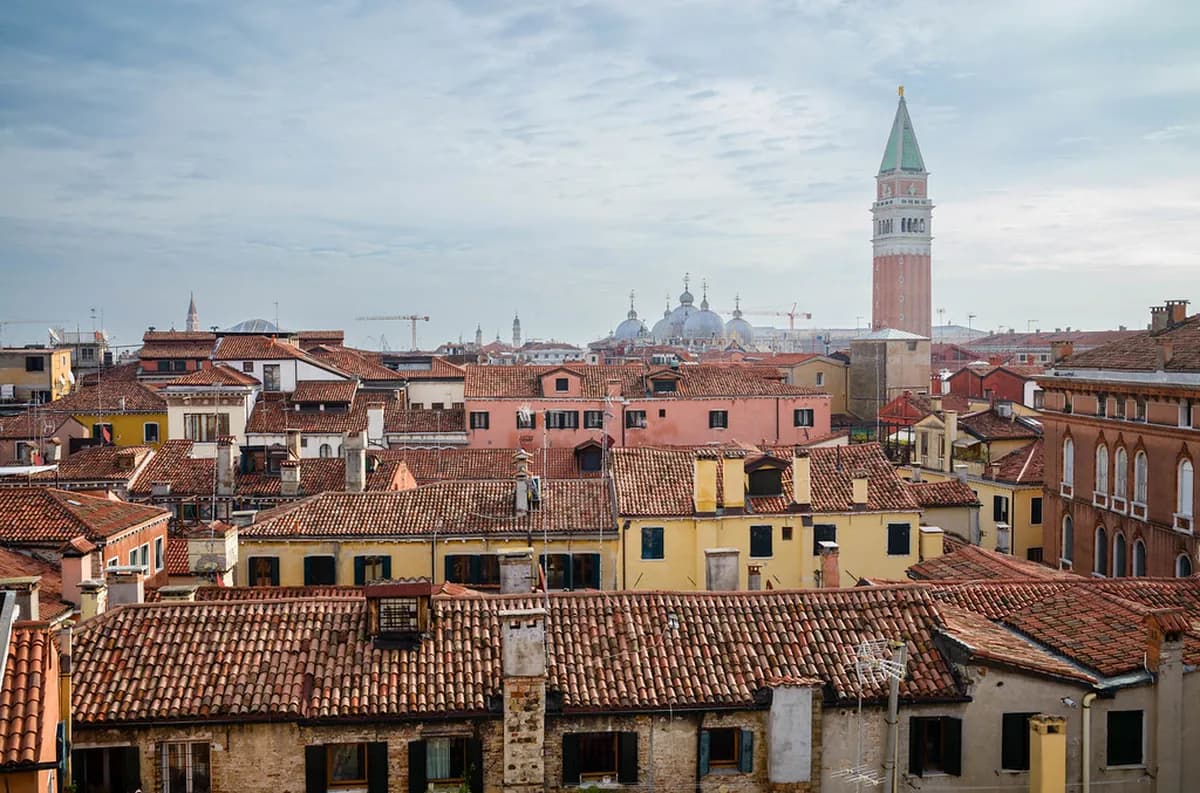
The San Giorgio Maggiore Campanile provides the cleanest wide-angle view of Venice's ceremonial skyline. From the viewing deck, St. Mark's Basilica, the Doge's Palace, the entrance to the Grand Canal, Santa Maria della Salute, and the sweep of the Bacino San Marco sit across the water in one readable scene.
It is especially useful for photographers. From St. Mark's Campanile you stand above the square, but from San Giorgio Maggiore you can photograph the square, the palace, and the basin together. The view is also less compressed by crowds, so you have more time to look, orient yourself, and wait for changing light.
The island adds more value than a viewpoint alone. You can step into Palladio's Basilica di San Giorgio Maggiore, pause along the quiet waterfront, and, if you book ahead, explore parts of the Fondazione Giorgio Cini complex. For travelers who want a calmer counterpoint to San Marco, this is one of the easiest escapes in Venice.
San Giorgio Maggiore vs St. Mark's Campanile
Both towers are worth considering, but they serve different purposes. Choose San Giorgio Maggiore if your priority is photographing Venice's skyline from across the water. Choose St. Mark's Campanile if you want the classic central tower experience without leaving Piazza San Marco.
| Decision point | San Giorgio Maggiore Campanile | St. Mark's Campanile |
|---|---|---|
| Main view | Looks back toward St. Mark's Basin, the Doge's Palace, and the Grand Canal entrance. | Looks down over Piazza San Marco and the dense historic center. |
| Crowd feel | Usually calmer, with shorter waits outside peak periods. | Busier because it sits in Venice's highest-traffic square. |
| Best for | Skyline photos, quieter visits, lagoon context, and a short island detour. | First-time landmark collectors and travelers staying only around San Marco. |
| Access | Requires a quick vaporetto crossing to San Giorgio. | Reached on foot from central San Marco. |
How to Get to San Giorgio Maggiore Island
Reaching San Giorgio Maggiore island is straightforward by vaporetto. The most practical route for most visitors is line 2 from San Marco / San Zaccaria to the San Giorgio stop. The island sits directly across the basin from St. Mark's, so the ride is short and scenic rather than a major transfer.
San Zaccaria has several landing stages, and this is where many visitors make their first mistake. Check the platform signs for line 2 before joining a queue, because nearby stops can serve different directions. If you are coming from elsewhere in Venice, use the ACTV route information or the AVM Venezia app before walking to the pier.
A single vaporetto ticket is €9.50 / ~$10.50 and is valid for 75 minutes. A 24-hour pass costs around €25 / ~$27, which can be better value if you will also ride to Giudecca, the railway station, or other parts of the lagoon. For more planning context, use the Venice attractions guide.
- Step 1: Walk to San Marco / San Zaccaria
- From St. Mark's Square, continue toward the waterfront and the Doge's Palace side of the basin.
- The San Zaccaria water bus area is close, but it is split across several signed platforms.
- Build in a few extra minutes if you are navigating with luggage, a stroller, or limited mobility.
- Step 2: Validate your ticket before boarding
- Buy tickets from ACTV booths, ticket machines, or the AVM Venezia app.
- Tap the ticket or pass on the validator before entering the boarding area.
- Keep the ticket accessible until the ride is finished, as checks can happen on board.
- Step 3: Take line 2 to San Giorgio
- Line 2 is the standard direct route from the San Marco waterfront to the island.
- The line N night service also calls at San Giorgio, useful if you are returning late from Giudecca or the waterfront.
- The crossing over the Bacino San Marco takes only a few minutes in normal service.
- Step 4: Walk from the stop to the basilica and tower
- The basilica facade and campanile are visible as soon as you arrive.
- The walk from the landing stage is short and mostly level, though vaporetto boarding conditions can vary with tides.
- If accessibility is important, confirm current conditions with the abbey before relying on a step-free visit.
San Giorgio Maggiore Campanile: Tickets, Hours & Practical Tips
Access to the bell tower is by elevator, so you do not need to climb a long staircase to reach the panoramic deck. The campanile elevator costs around €8 for adults and €6 reduced (students under 26, over 65, residents and groups of 10 or more), commonly paid in cash. Prices can change, so check the current rate when you arrive.
The bell tower is generally open roughly 09:00-19:00 from April to October and 08:30-18:00 from November to March, with the last ascent about 20 minutes before closing. On Sundays the tower is usually closed for visits from about 10:40 to 12:00 during Holy Mass. Hours shift seasonally, so verify before you go.
The bell tower stands at 63 meters (207 feet), and the elevator ride is quick. The viewing deck can still feel exposed to wind, bright sun, or rain, so treat weather as part of the decision. Clear days are best for distant island views; misty days can be atmospheric but may reduce visibility across the lagoon.
The campanile elevator costs around €8 for adults and is commonly paid in cash. Bring small euro notes or coins just in case card payment is unavailable.
- Know Before You Go Checklist
- Bring cash for the elevator ticket in case card payment is unavailable.
- Check the day's Mass schedule and seasonal hours before crossing the basin.
- Use a wide-angle lens or phone panorama mode for the St. Mark's Basin view.
- Wear comfortable shoes for the island, basilica, and Fondazione Cini routes.
- Carry water in warm months, especially if you plan to stay for photos or tours.
- Visit early or late in the day if you want fewer people on the viewing deck.
- Allow 45 minutes to 1 hour for the basic basilica and campanile visit.
The Panoramic Views from the Bell Tower
Ascending the San Giorgio Maggiore Campanile reveals Venice as a lagoon city first and a maze of streets second. The water, islands, and skyline all appear in relation to each other, which is why the view is so useful for understanding the city's geography.
Face northwest for the postcard view: St. Mark's Square, St. Mark's Basilica, the Doge's Palace, the Riva degli Schiavoni, and the mouth of the Grand Canal. Look west and southwest for Giudecca, the Giudecca Canal, and Santa Maria della Salute. On clear days, the view can stretch toward the Lido and the northern lagoon islands, including Murano and Burano.
For photos, avoid rushing straight to the most obvious angle. First take the full St. Mark's Basin panorama, then isolate details: domes, bell towers, boat traffic, the Doge's Palace facade, and the line of the Riva. Late afternoon often gives warmer side light, while morning can be better if you want clearer visibility and fewer visitors.
On Sundays, the bell tower is closed for visits from about 10:40 to 12:00 during Holy Mass. Plan your visit time accordingly and check seasonal hours before crossing the basin.
Exploring the Basilica and Fondazione Giorgio Cini
Beyond the campanile, San Giorgio Maggiore island offers art, architecture, gardens, and cultural visits in a compact area. The Basilica di San Giorgio Maggiore was designed by Andrea Palladio and begun in 1566. Its bright, balanced interior is a sharp contrast to many darker Venetian churches.
Inside the basilica, look for major works by Tintoretto, including large canvases near the presbytery. Entry to the basilica itself is free, which makes it easy to pair with the paid tower elevator even on a short itinerary.
The island is also home to the Fondazione Giorgio Cini, a cultural institution with exhibition spaces, research collections, cloisters, and guided routes. The Borges Labyrinth is one of the best-known experiences, but access is normally tied to specific visits or bookings rather than casual wandering. Check the Fondazione Giorgio Cini official website before building your day around it.
History of San Giorgio Maggiore Island and Campanile
San Giorgio Maggiore has long been tied to Benedictine monastic life and to the visual identity of Venice. Its position across from San Marco made it prominent in processions, paintings, and the ceremonial landscape of the Venetian Republic.
The basilica's Renaissance character comes from Andrea Palladio, whose design gave the island its classical white facade and calm proportions. The present campanile is later than the church and is part of a longer history of rebuilding after damage, collapse, and restoration over the centuries.
The belfry and bells matter because this is still a living religious site, not only a viewpoint. Sunday late morning is the time to be most careful with planning: bell-tower visits are suspended around Holy Mass, and the island can feel more devotional than touristic. If you hear the bells, treat that as part of the place rather than a signal that the tower is open.
What Else to See on San Giorgio Maggiore
If you came only for the view, the campanile and basilica are enough. If you have more time, the island can become a slower cultural stop that balances Venice's crowded central routes.
- Basilica di San Giorgio Maggiore: Palladian architecture, free entry, and Tintoretto paintings.
- Fondazione Giorgio Cini: exhibitions, guided cultural routes, cloisters, and research spaces.
- Borges Labyrinth: a contemplative maze linked to Jorge Luis Borges, usually visited through bookable routes.
- Waterfront views: one of the easiest places to photograph San Marco from across the basin without joining the densest crowds.
- Giudecca pairing: if your vaporetto pass allows, combine San Giorgio with a Giudecca walk for a quieter half-day.
A Practical Half-Day Plan
For a compact visit, ride line 2 from San Zaccaria, visit the basilica first, then go up the campanile once you have checked the visibility and ticket desk. This version works well if you are fitting San Giorgio between St. Mark's and another central Venice attraction.
For a richer visit, give the island a half-day. Start with the basilica while it is quiet, ride the elevator up the campanile, pause on the waterfront for photos, then continue with a pre-booked Fondazione Giorgio Cini route if available. This avoids treating the island as only a tower stop.
A common mistake is arriving just before the midday Sunday Mass suspension or near the last ascent without checking the return vaporetto. Another is saving San Giorgio for a rainy gap in the schedule; the tower is still interesting in poor weather, but the main value is the view, so clear or lightly cloudy conditions are worth prioritizing.
Best Time to Visit San Giorgio Maggiore Campanile
The best time to visit San Giorgio Maggiore Campanile is early morning or late afternoon on a clear day. Early visits tend to be calmer, while late afternoon gives warmer light on the Doge's Palace, domes, and waterfront. Sunset can be beautiful, but only works if the tower hours and last ascent leave enough time.
Weekdays outside peak holiday periods are usually easier than Saturdays, Sundays, and cruise-heavy days. In summer, heat and glare can make midday less pleasant on the viewing deck. In winter, shorter daylight means you should check the weather and arrive earlier than you would in spring or autumn.
For a fuller day, pair San Giorgio Maggiore with other quieter Venice attractions instead of returning straight into the densest San Marco crowds. Nearby planning options on Yondli include Scala Contarini del Bovolo, Querini Stampalia, and Ca Rezzonico.
- Troubleshooting / Common Problems
- Wrong vaporetto platform: Recheck the line 2 direction at San Zaccaria before boarding.
- Sunday closure window: Avoid planning the tower ascent around the late-morning Mass suspension.
- Poor visibility: Save the campanile for a clearer slot if the forecast is foggy or rainy.
- Elevator wait: Arrive earlier or later in the day if you see a group ahead of you.
- Cash issue: Bring small euro notes or coins for the elevator ticket.
- Accessibility assumptions: The elevator helps, but vaporetto boarding and the island approach may still involve steps or gaps.
- Return timing: Check the next vaporetto rather than assuming immediate service, especially in the evening.
Frequently Asked Questions
Where is the island of San Giorgio Maggiore in Venice?
San Giorgio Maggiore is a small island located directly across the Bacino di San Marco from St. Mark's Square in Venice. It is easily recognizable by its prominent bell tower and Palladian basilica.
What else can you see at San Giorgio Maggiore besides the bell tower?
You can visit the Basilica di San Giorgio Maggiore, see Tintoretto paintings, enjoy the waterfront views back toward San Marco, and book cultural routes through Fondazione Giorgio Cini, including the Borges Labyrinth when available.
How much time should you plan for visiting San Giorgio Maggiore Campanile?
Allocate at least 45 minutes to 1 hour for visiting the San Giorgio Maggiore Campanile. This allows time for the vaporetto journey, ticket purchase, elevator ride, and enjoying the panoramic views.
Is San Giorgio Maggiore Campanile worth including on a short Venice itinerary?
Yes, if you want a quieter viewpoint and a direct panorama of St. Mark's Basin. It is easy to include as a one-hour detour from San Marco because the vaporetto crossing is only a few minutes.
How do you get tickets for San Giorgio Maggiore Bell Tower?
Tickets for the bell tower elevator are usually bought at the campanile entrance on the island. Bring cash, check the current rate on arrival, and confirm the day's opening window before you queue.
Is the view from San Giorgio Maggiore better than St. Mark's Campanile?
Many visitors find the view from San Giorgio Maggiore superior for photography because it offers a direct, unobstructed panorama of St. Mark's Square and the Doge's Palace. It is also generally less crowded.
What is the history of the San Giorgio Maggiore Bell Tower?
The current bell tower belongs to a long religious and architectural history on San Giorgio Maggiore, an island shaped by Benedictine monastic life and Palladio's Renaissance basilica. The campanile has been rebuilt and restored over time and remains part of an active religious site.
Can you visit the church and the bell tower together?
Yes, you can visit both the Basilica di San Giorgio Maggiore and its campanile. They are located adjacent to each other on the island, and a combined visit typically takes 1.5 to 2 hours.
The San Giorgio Maggiore Campanile is one of the simplest ways to change how Venice looks and feels. A few minutes by vaporetto takes you from the densest part of San Marco to a quieter island where the city's skyline opens across the water.
Go for the view, but leave time for the basilica, the waterfront, and the cultural side of Fondazione Giorgio Cini if your schedule allows. With the right weather, a checked timetable, and a little flexibility around Mass and vaporetto timing, this is one of Venice's most rewarding short detours.
To verify current details, consult the San Giorgio Maggiore Campanile official site and San Giorgio Maggiore Campanile on Wikipedia.
Fold this into a wider itinerary with our guides to hidden gems in Venice, free things to do in Venice, and guide to the Venetian lagoon islands.
Continue exploring
More guides you'll find useful