Two Temple Place Visitor Guide: Free Exhibition, Opening Times & History
Plan your visit to Two Temple Place, the free Astor mansion on Victoria Embankment. Includes the annual free exhibition pattern, 2026 opening times, neo-Gothic history, and travel tips.
On this page
Two Temple Place Visitor Guide
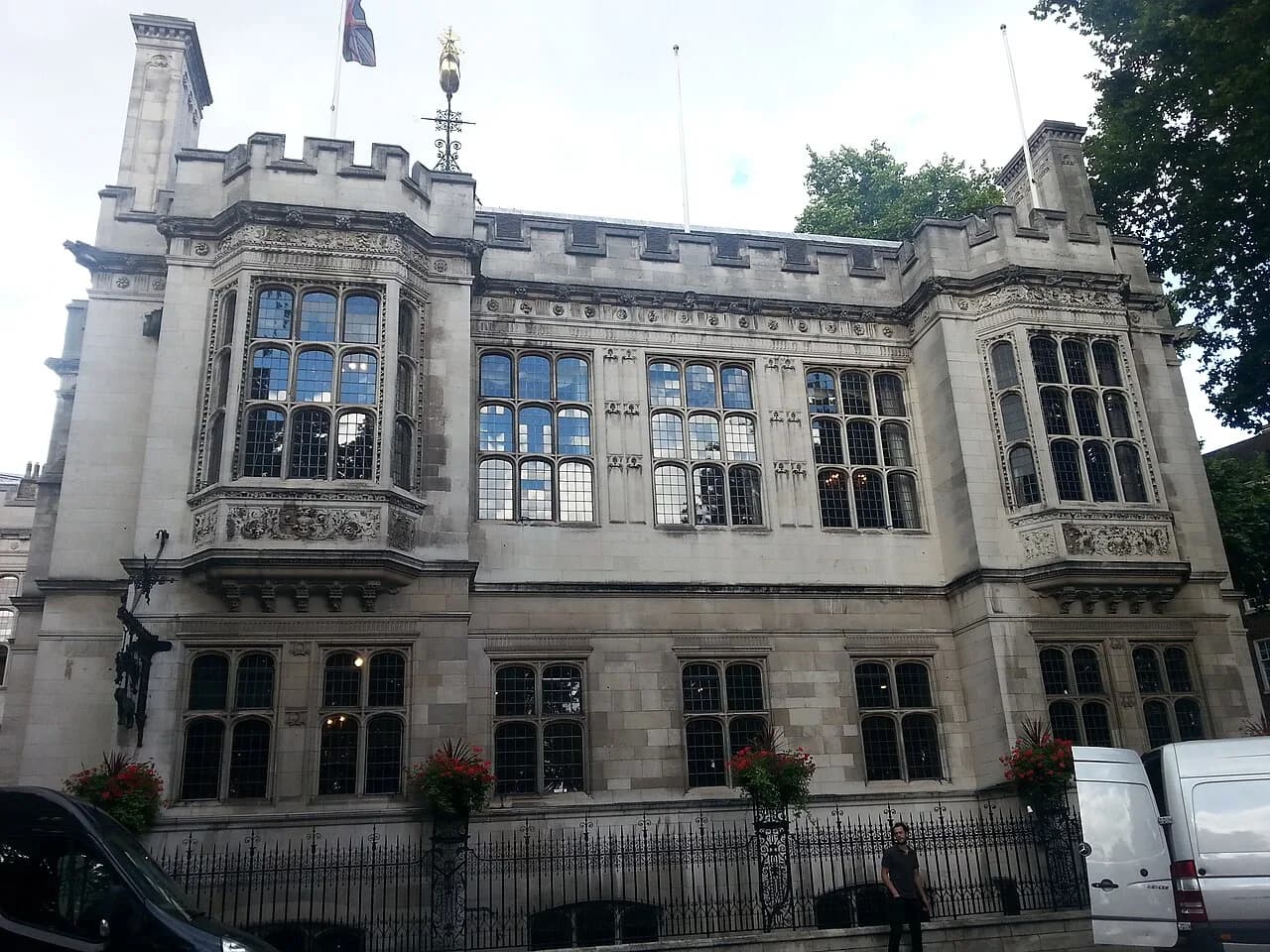
Two Temple Place is one of central London's most extravagant secrets: a lavish neo-Gothic mansion on the Victoria Embankment that opens its doors to the public free of charge for a single temporary exhibition each year. Built in 1895 for the American millionaire William Waldorf Astor, the house was designed as a private estate office and hides some of the finest late-Victorian craftsmanship in the capital behind a fairly restrained Portland stone facade. This two temple place visitor guide focuses on the practical details you need in 2026: when the free exhibition runs, opening times, what to expect inside, transport, and how to combine it with other quiet London attractions.
The crucial thing to understand before you plan a trip is that Two Temple Place is not a conventional museum with year-round opening. For most of the calendar it operates as a private events and filming venue, hosting weddings, dinners, and corporate hire behind closed doors. The one reliable window when ordinary visitors can walk in is the annual winter-to-spring exhibition, historically running from late January to mid or late April. Outside that window, and outside occasional heritage-open days, the building is generally closed to the public.
Because entry to the annual exhibition is free and requires no booking, the mansion is a superb choice for travellers hunting unusual free things to do in London. You get a museum-quality loan exhibition, world-class interiors, and a riverside location a few minutes from the Strand, all at no cost. The trade-off is timing: you have to visit during the exhibition season, so checking the official What's On page before you travel is essential rather than optional.
The History of Two Temple Place and the Astor Estate
The story of Two Temple Place begins with William Waldorf Astor, at one time reputedly the richest man in America, who moved to England in 1891 partly to escape the intense press attention he faced in New York. Wary of intrusion, he commissioned a discreet but richly appointed building to serve as the estate office from which he would manage his vast property and business interests. The result, completed in 1895, was less a home than a private headquarters dressed as a Gothic palace.
Astor turned to the eminent architect John Loughborough Pearson, better known for his cathedrals and churches, including Truro Cathedral. Pearson's ecclesiastical instincts are visible throughout the house, from the soaring proportions to the reverent attention to material and detail. The building was constructed entirely of Portland stone and finished with a level of craftsmanship that few private commissions of the period could match, reflecting Astor's near-limitless budget and his taste for narrative, literary, and historical decoration.
For decades the house remained a working office, passing through various commercial hands after the Astor family's involvement ended. It survived the Second World War with some damage and later restoration. Today the building is cared for by the Bulldog Trust, a charitable foundation that has used the mansion as its base since the late 20th century and which funds its charitable work partly through commercial venue hire.
The pivotal moment for visitors came on 28 October 2011, when Two Temple Place opened as a public gallery for the first time. Since then the Bulldog Trust has staged an annual free exhibition, usually developed in partnership with regional UK museums to bring collections rarely seen in London to a wide audience. That programme is the reason the general public can now step inside one of the city's most opulent Victorian interiors at all.
The Annual Free Exhibition: How Public Access Works
Public access to Two Temple Place is built around one flagship event: a temporary loan exhibition that is completely free to enter and requires no advance booking. The Bulldog Trust curates this show in partnership with museums from around the country, using the mansion's period rooms as the setting for objects and artworks that would normally sit in regional collections. Past editions have covered subjects as varied as British studio glass, textiles, sculpture, and social history, so the theme changes each year.
The exhibition follows a consistent seasonal rhythm. It typically opens in late January and runs through to mid or late April, occupying the quieter winter-to-spring months. As a concrete reference point, the 2024 exhibition, The Glass Heart, ran from 27 January to 21 April, which is a good guide to the sort of window you can expect. For 2026, follow the same assumption of a late-January-to-April season, but treat the exact opening and closing dates as provisional until the official programme is confirmed.
Beyond the main winter exhibition, Two Temple Place occasionally opens for a handful of special public events during the rest of the year, such as heritage open days and building tours, where the focus is on the architecture rather than a curated show. These openings are irregular, sometimes ticketed, and announced ahead of time, so they should be seen as a bonus rather than a dependable way to get inside.
Two Temple Place is only open to the public during its annual free exhibition (historically late January to mid/late April) and a few occasional special openings. For most of the year it is a private events venue and you cannot simply turn up and walk in. Always confirm the 2026 exhibition dates on the official What's On page before travelling.
Opening Times and Visitor Information for 2026
During the exhibition season, Two Temple Place keeps generous gallery-style hours. The building is typically closed on Mondays and open Tuesday to Saturday from 11:00 to 18:00, with a late opening on Wednesday until 21:00, and on Sunday from 11:00 to 16:30. These hours apply only while the annual exhibition is running; outside that window there are no standard public opening times at all.
Admission is free and, in most years, no ticket or reservation is needed to see the main exhibition. You can simply arrive during opening hours and walk in, which makes the mansion an easy, low-commitment stop to slot into a central London day. Some special events, guided architectural tours, and talks may be ticketed separately, so check the listing if you want more than the self-guided exhibition experience.
Because the exact 2026 exhibition dates and any updated hours may not be published far in advance, the single most important planning step is to check the official What's On page close to your trip. The summary table below captures the reliable pattern so you can gauge whether your travel dates are likely to fall inside the public window before the official calendar is confirmed.
- Cost: Free entry to the annual exhibition
- Booking: Not usually required
- Season: Late January to mid/late April (typical)
- Typical hours: Tue-Sat 11:00-18:00 (Wed to 21:00), Sun 11:00-16:30
- Closed: Mondays and outside the exhibition season
- Confirm: Official What's On page for 2026 dates
| Detail | Information | Notes |
|---|---|---|
| Admission | Free | No booking usually required |
| Exhibition season | Late Jan to mid/late April | Confirm 2026 dates on What's On |
| Typical open days | Tuesday to Sunday | Closed Mondays; late Wed to 21:00 |
| Typical hours | 11:00 to 18:00 (Sun to 16:30) | Exhibition season only |
| Rest of year | Closed to general public | Private events venue |
Must-See Interiors Inside the Astor Mansion
The interiors are the real reason to visit, and they reward slow looking even when the exhibition on display is not to your taste. The centrepiece is the Great Hall, a double-height room crowned by a hammerbeam-style roof carved from Spanish mahogany. The warm, dark timber and the sheer verticality of the space give the room the feel of a Gothic hall transplanted into a Victorian office, and it is where much of the annual exhibition is usually staged.
The grand staircase is the single most photographed feature of the house. Its mahogany newel posts are carved with characters from Alexandre Dumas' The Three Musketeers by the sculptor Thomas Nicholls, a playful literary flourish that runs throughout the building's decorative scheme. Look up as you climb and you will see how the craftsmanship intensifies rather than fades on the upper floors, a deliberate choice to reward those who explore fully.
Light pours into the upper rooms through stained-glass windows by the celebrated firm Clayton and Bell, whose panels include idyllic landscape scenes rather than the religious subjects the studio was famous for elsewhere. Combined with a gilded frieze of 54 carved portrait heads depicting historical and fictional figures, the decoration turns the house into a kind of three-dimensional anthology of literature, history, and legend.
Because the rooms are compact and richly detailed, the experience is intimate rather than exhausting. Most visitors spend between forty-five minutes and ninety minutes inside, depending on how deeply they engage with the exhibition and how long they linger over the woodwork, glass, and ceilings. It is an easy visit to combine with other sights rather than a full day out on its own.
Even if the year's exhibition theme is not your usual interest, the building itself justifies the trip. Give yourself time to study the mahogany staircase, the hammerbeam roof of the Great Hall, and the Clayton and Bell stained glass, as these fixed features are on show whenever the mansion is open.
Location and Directions: Getting to the Embankment
Two Temple Place sits at 2 Temple Place, London WC2R 3BD, tucked between the Strand and the River Thames on the Victoria Embankment. Despite its central position, the short cul-de-sac it occupies is quiet and easy to miss, which is part of why the mansion stays under the radar of most visitors. The riverside setting also makes it simple to fold into a walk along the Thames.
The nearest Underground station is Temple on the District and Circle lines, roughly a three-to-five-minute walk away, though Temple station can have reduced weekend service, so check before you rely on it. Embankment station, served by the District, Circle, Northern, and Bakerloo lines, is about a ten-minute walk and is the more dependable option at weekends. Charing Cross and Blackfriars mainline stations are also within comfortable walking distance.
If you prefer buses, several routes run along the Strand and the Aldwych a short walk to the north. Arriving on foot from Covent Garden, Somerset House, or the Courtauld Gallery takes only a few minutes and is a pleasant way to approach through the legal quarter of the Temple. Cyclists will find docking stations nearby along the Embankment.
- Underground (recommended)
- Station: Temple (District/Circle)
- Walk: 3-5 minutes
- Weekend note: Use Embankment instead
- Alternative Tube
- Station: Embankment
- Walk: About 10 minutes
- Lines: District, Circle, Northern, Bakerloo
- On foot
- From: Somerset House / Strand
- Walk: A few minutes
- Route: Via Victoria Embankment
Facilities, Accessibility, and What to Expect
As a historic mansion rather than a purpose-built museum, Two Temple Place offers a focused experience rather than a full suite of visitor facilities. During exhibitions there is usually a small welcome desk, exhibition interpretation, and often a modest shop or information point, but there is no large cafe or restaurant on site. Plan to eat before or after your visit at one of the many options around the Strand and Aldwych.
Accessibility is reasonable given the age of the building, with step-free access typically available to the ground floor via a side entrance and lift access to the upper level, though arrangements can vary by exhibition. Visitors with specific mobility, sensory, or access needs should contact the venue in advance to confirm the current provision, as the historic layout means some features cannot be fully adapted.
Photography for personal use is generally permitted in the interiors, which is a real draw given how photogenic the staircase and Great Hall are, but check any signage or exhibition-specific rules on arrival. Because the mansion is small and popular during its short open season, weekday mornings and the Wednesday late opening tend to be the calmest times to appreciate the rooms without crowds.
Nearby Attractions Around Temple and the Strand
The area around Two Temple Place is dense with culture, which makes it easy to build a satisfying half-day around a free exhibition visit. Somerset House, with its courtyard, riverside terrace, and the Courtauld Gallery, is only a few minutes' walk along the Strand and pairs naturally with the mansion for anyone interested in art and architecture.
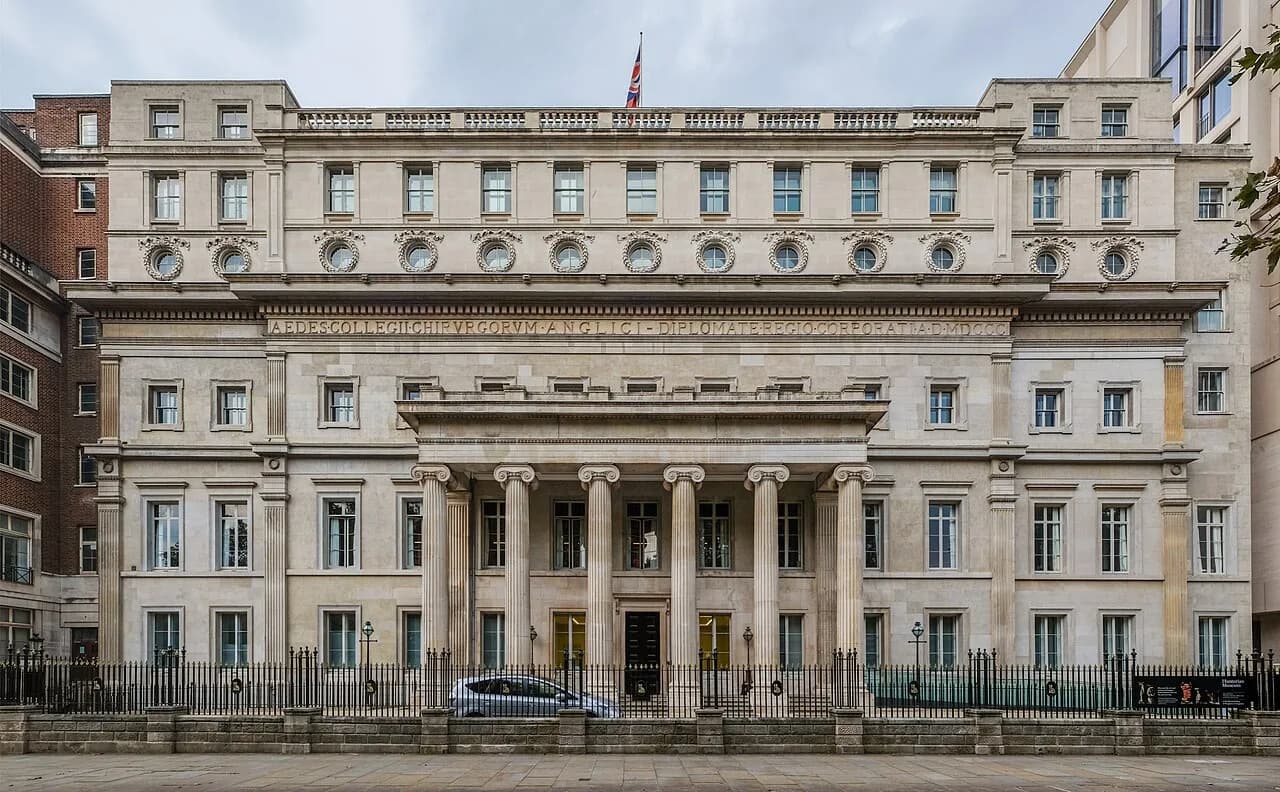
For more of London's quieter, characterful museums, the neighbourhood is well placed. The Sir John Soane's Museum at Lincoln's Inn Fields is a short walk north and is another free house-museum crammed with idiosyncratic treasures. Nearby you can also reach the Hunterian Museum at the Royal College of Surgeons, and, a little further into Clerkenwell, the historic almshouse complex of The Charterhouse.
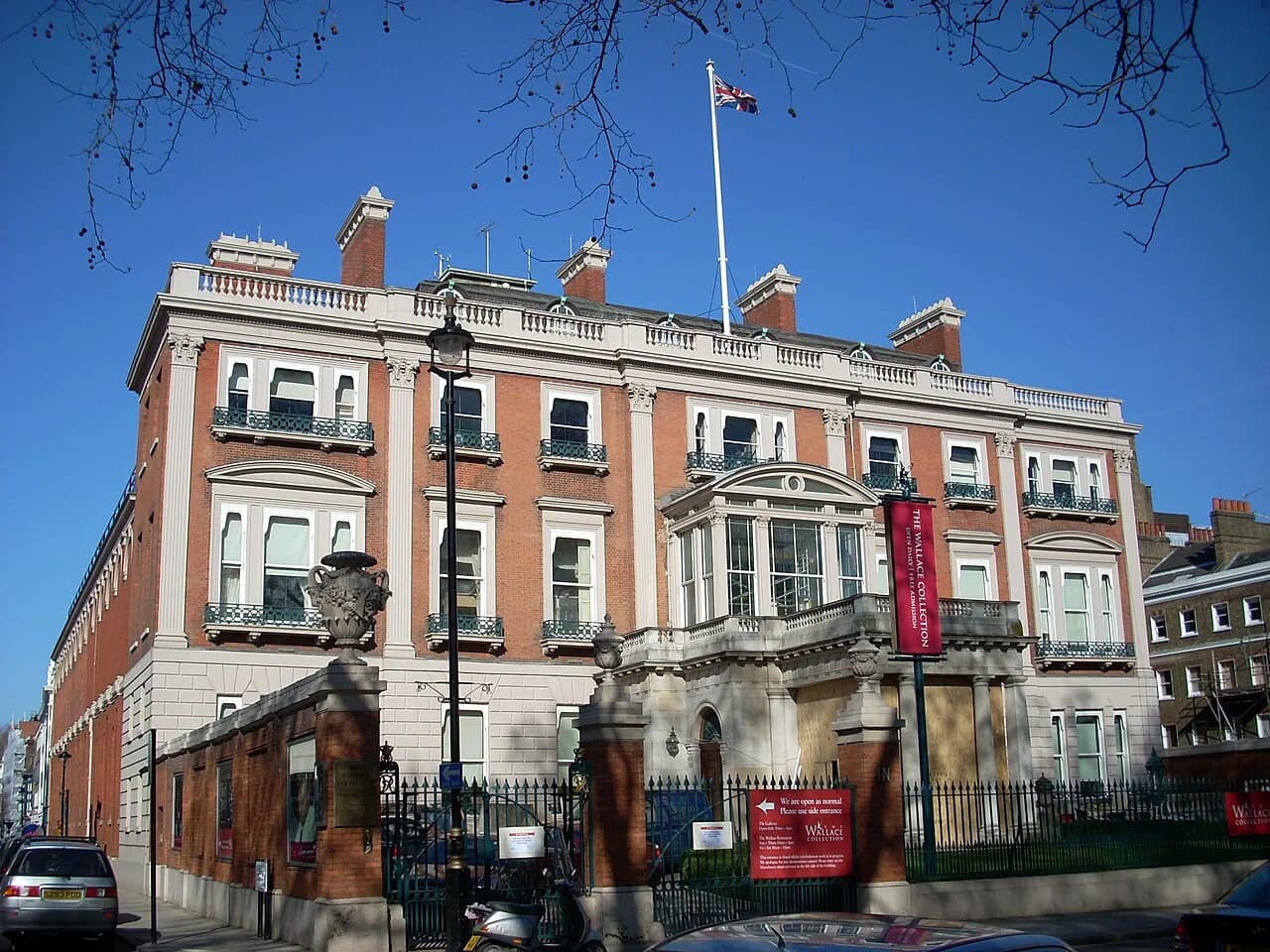
If you are willing to travel a little further to complete a day of grand interiors and fine collections, the opulent Wallace Collection in Marylebone makes an excellent companion visit. Together these sites show off the range of London's smaller, often overlooked museums, from Victorian mansions to specialist collections, all within easy reach of the centre.
Tips for Getting the Most From Your Visit
The overriding tip for Two Temple Place is to plan around the calendar rather than the clock. Because the building is only open during its annual free exhibition and a few special days, the biggest mistake is turning up outside the season and finding the doors closed. Confirming the 2026 exhibition dates on the official What's On page before you commit to a date is the difference between a memorable visit and a wasted journey.
Once you know the exhibition is running, aim for a weekday morning or the Wednesday evening late opening for the quietest experience. Allow at least an hour so you are not rushing past the staircase and stained glass, and pair the visit with a nearby site such as Somerset House or the Courtauld to make the trip into central London worthwhile.
Finally, treat the exhibition theme as a bonus rather than the main event. The subject changes every year and may or may not match your interests, but the neo-Gothic interiors are a constant. Approaching the visit as a chance to see one of London's most extravagant Victorian buildings, with a curated exhibition layered on top, tends to leave visitors far happier than treating it purely as a gallery show.
Frequently Asked Questions
Is Two Temple Place free to visit?
Yes. Entry to the annual exhibition at Two Temple Place is completely free and, in most years, no booking is required. You can simply arrive during opening hours while the exhibition is running. Some special guided tours and events may be ticketed separately.
When is Two Temple Place open to the public in 2026?
Two Temple Place is normally open to the public only during its annual free exhibition, which historically runs from late January to mid or late April, plus a few occasional special openings. Confirm the exact 2026 exhibition dates on the official What's On page before you travel, as the building is otherwise closed to general visitors.
What are the opening hours of Two Temple Place?
During the exhibition season, Two Temple Place is typically open Tuesday to Saturday from 11:00 to 18:00, with a late opening on Wednesday until 21:00, and on Sunday from 11:00 to 16:30. It is closed on Mondays and has no standard opening hours outside the exhibition season.
Why is Two Temple Place closed most of the year?
For most of the year Two Temple Place operates as a private events and filming venue, hosting weddings, dinners, and corporate hire. This commercial income helps fund the charitable work of the Bulldog Trust, which cares for the building. The mansion opens to the general public mainly for its annual free exhibition.
Who built Two Temple Place and when?
Two Temple Place was built in 1895 for the American millionaire William Waldorf Astor as his estate office. It was designed by the architect John Loughborough Pearson, who is best known for his churches and cathedrals, and constructed entirely of Portland stone in a lavish neo-Gothic style.
How do I get to Two Temple Place?
Two Temple Place is at 2 Temple Place, London WC2R 3BD, on the Victoria Embankment. The nearest station is Temple (District and Circle lines), about a three-to-five-minute walk, though Embankment station is more reliable at weekends and is roughly ten minutes away on foot.
Other Mansions Built Mainly as a Statement
William Waldorf Astor spent extravagantly on a neo-Gothic estate office, and it now opens to the public only for its winter exhibition season. Milan's Museo Bagatti Valsecchi is the same historicist impulse furnished as a Renaissance home. Madrid's Museo Cerralbo shows what happens when the owner leaves instructions that nothing may be moved.
Two Temple Place is one of London's most rewarding free experiences, but only if you time it right. For a few months each winter and spring, the Astor mansion throws open its doors so that anyone can walk in and admire its hammerbeam roof, carved staircase, and stained glass, all wrapped around a thoughtfully curated exhibition drawn from regional collections. The rest of the year it retreats behind its role as a private events venue.
For the smoothest 2026 visit, confirm the exhibition dates on the official What's On page, aim for a quiet weekday morning, and pair the mansion with a nearby stop such as Somerset House or one of central London's smaller museums. Approached as a chance to step inside an extraordinary Victorian interior at no cost, Two Temple Place consistently delights the travellers who make the effort to catch it during its short open season.
Continue exploring
More guides you'll find useful