Mãe D'água Das Amoreiras Reservoir: The Ultimate Visitor Guide
Plan your visit to Mãe d'Água das Amoreiras Reservoir with our ultimate guide. Discover its history, immersive art, practical tips, and nearby attractions in Lisbon.
On this page
Mãe D'água Das Amoreiras Reservoir Visitor Guide
Behind a modest stone facade on Praça das Amoreiras sits one of Lisbon's most undervisited monuments: the Mãe d'Água das Amoreiras Reservoir.
Its exterior gives little away, but inside is a cavernous 7.5-metre-deep cistern that once held 5,500 cubic metres of water and supplied an entire capital city through 14 kilometres of aqueduct.
This guide covers the reservoir's history, exactly what to see inside, the two separate experiences now running within its walls, accurate 2026 ticket prices, opening hours, and the surrounding Amoreiras neighbourhood.
Introduction to Mãe d'Água das Amoreiras Reservoir
The Mãe d'Água das Amoreiras Reservoir stands at Praça das Amoreiras 10, in the quiet district between Rato and the Bairro Alto. It was designed by the Hungarian-born architect Carlos Mardel from 1746 and completed in 1834, serving as the terminal point of the Águas Livres Aqueduct — the baroque hydraulic system that carried water from springs roughly 14 kilometres northwest of the city into Lisbon's fountains, convents, palaces, and factories.
The name translates as "Mother of the Water," a reflection of the reservoir's role as the source from which the entire city drank. For nearly a century it was the most critical piece of infrastructure in Lisbon. The structure was classified as a national monument in 1910 and today forms part of EPAL's Museu da Água, the network managing the city's surviving hydraulic heritage.
The Águas Livres Aqueduct is recognised as the last great classical aqueduct built anywhere in the world, commissioned by King Dom João V and constructed between 1731 and 1799 across a total length of 58 kilometres. Mãe d'Água is where that extraordinary journey ended, making the reservoir's interior inseparable from the scale of engineering that preceded it.
What to See and Do Inside Mãe d'Água
The main cistern is the centrepiece. Four stone columns rise from the floor of the 7.5-metre-deep tank, supporting a barrel-vaulted ceiling above a space that once held around 5,500 cubic metres of water. Water historically poured in through a carved dolphin's head onto a cascade below — the dolphin's head waterfall is still in place and, when lit during the immersive art sessions, is one of the most photographed details in the building.
Walkways around the perimeter of the cistern allow visitors to look directly down into the tank. The stone walls and vaulted ceiling create remarkable acoustics: even quiet footsteps echo. Visiting during regular museum hours rather than during a show gives you a lit interior and the chance to study the architecture properly.
Above the vault, a staircase leads to the rooftop terrace. It is one of the quieter panoramic viewpoints in the city, overlooking the terracotta rooflines of the Amoreiras and Rato districts. The view is best in the early afternoon when light falls directly on the surrounding facades.
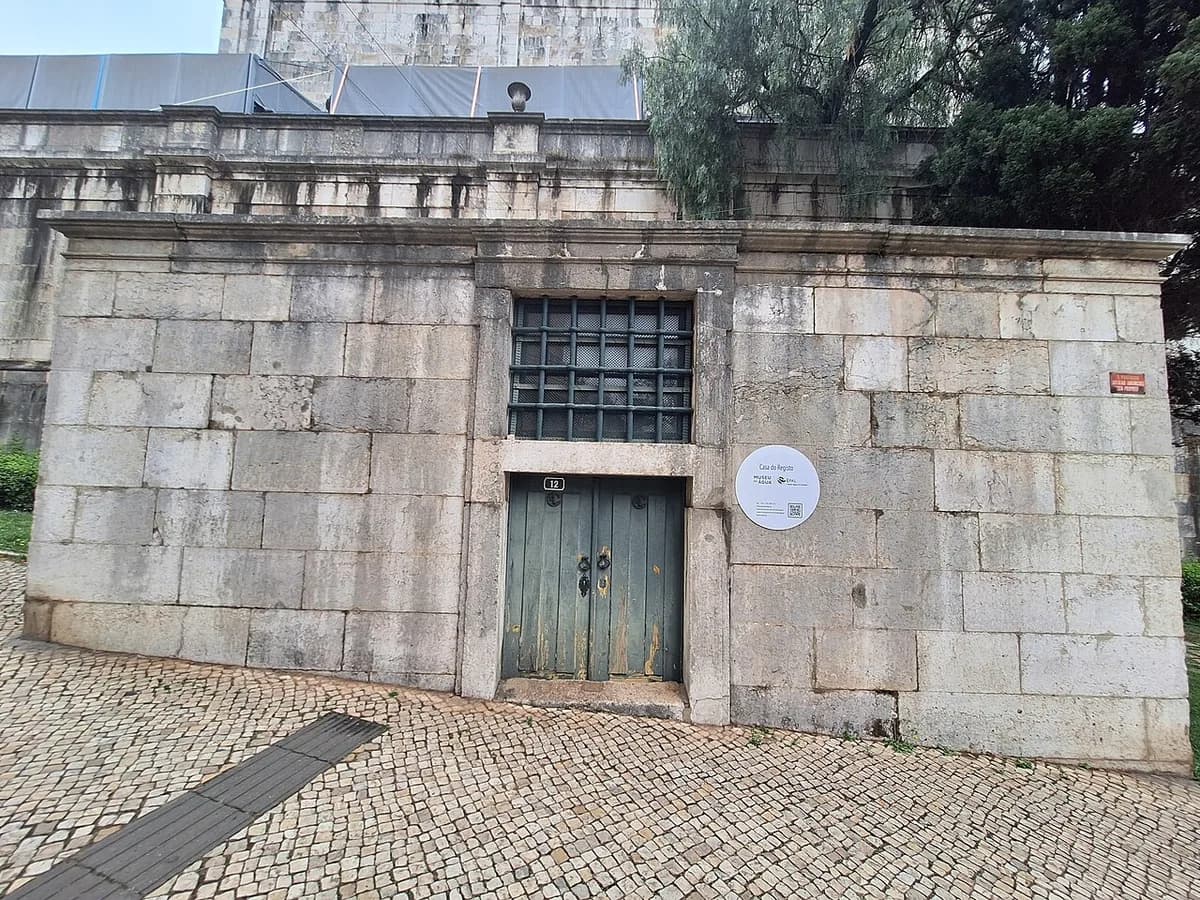
Just outside the main building at Rua das Amoreiras stands the Gauge House, the small control structure where flows to the Loreto and Esperança underground galleries were regulated. Most visitors walk past it without realising its function. It controlled exactly how much water reached each neighbourhood of the city and is worth a few minutes of attention before or after your visit to the cistern.
Experiencing Immersive Art at Mãe d'Água
The Mãe d'Água now houses the Immersivus Gallery Lisboa, a venue for large-scale digital projection shows that use the reservoir's stone walls, arches, and ceiling as their canvas. Past exhibitions have featured projections based on Monet, Klimt, Van Gogh, and Ancient Egypt, surrounding visitors in orchestrated colour, imagery, and sound for approximately 30 minutes per session.
One practical distinction that catches visitors off guard: the Immersivus Gallery is a completely separate operation from the Water Museum. The €4 Water Museum ticket covers the cistern and the rooftop terrace. The Immersivus Gallery requires its own separate booking at a different price point: a premium ticket at approximately €15 per adult includes a seat on a floating wooden platform positioned in the centre of the tank. You can also stand along the perimeter with an equally clear view of the projections — and, during the summer months, a cooler position than the central platform where humidity accumulates. Children are not permitted on the floating platform. Lisboa Card holders receive a 15% discount on Immersivus tickets.
Book Immersivus Gallery tickets in advance, especially in July and August when peak visitor numbers mean sessions frequently sell out on the day.
Sessions typically run Tuesday to Sunday, with showings usually starting around 14:30. Check the Immersivus Gallery website directly for the current exhibition title and session schedule before booking in 2026, as programming changes regularly. Book tickets in advance, especially in July and August when peak visitor numbers mean sessions sell out on the day.
Practical notes worth knowing: the interior has no air conditioning; the stone cistern stays cool but the platform area can feel humid in summer. The show involves sustained projection patterns and flashing visuals and is not recommended for visitors with epilepsy or heightened sensitivity to flickering light. The museum gates open only a few minutes before the session begins, so arrive early and expect the interior to be dark from the moment you enter.
The interior has no air conditioning and can feel humid in summer. The immersive show involves sustained projection patterns and flashing visuals, and is not recommended for visitors with epilepsy or heightened sensitivity to flickering light.
Planning Your Visit: Practical Information
The reservoir is open Tuesday to Saturday, 10:00 to 17:30. It is closed on Sundays, Mondays, and on public holidays including 1 January, 1 May, and 25 December. Standard admission is €4 for adults. Students and family tickets receive a 50% reduction (approximately €2). Children aged 0 to 12 enter free. Guided tours cost €6 per person. Entry to the Water Museum is free on the first Sunday of each month. Lisboa Card holders receive a 50% discount on the standard ticket.
The reservoir is at Praça das Amoreiras 10, 1250-020 Lisbon. The nearest metro station is Rato on the Yellow Line, a five-minute walk. Several bus lines stop on Rua Escola Politécnica and Rua de São Bento nearby. There is no dedicated car park at the site. Public restrooms are in a separate building within the museum gates. The ground-floor cistern level is accessible to visitors with reduced mobility; the rooftop terrace involves stairs. Contact EPAL in advance to confirm current accessibility arrangements.
- Address: Praça das Amoreiras 10, 1250-020 Lisboa
- Metro: Rato (Yellow Line), 5-minute walk
- Hours: Tue–Sat 10:00–17:30; closed Sun, Mon, and public holidays
- Water Museum ticket: €4 adult / 50% reduced for students and families / free under 12 / free first Sunday of the month / guided tours €6 / Lisboa Card 50% off
- Immersivus Gallery: separate ticket and booking required; approximately €15 premium platform / 15% off with Lisboa Card
| Ticket Type | Price | Notes |
|---|---|---|
| Adults | €4 | Standard admission |
| Students/Families | €2 | 50% reduction |
| Children (0–12) | Free | Free entry |
| Guided tours | €6 | Per person |
| First Sunday of month | Free | Full access |
| Lisboa Card holders | €2 | 50% discount |
Exploring the Water Museum Network: Related Sites
Mãe d'Água is one of four main sites in the Museu da Água network, each covering a different chapter of Lisbon's hydraulic history. They can be visited independently, and each has its own opening hours.
The Águas Livres Aqueduct is the most dramatic related site. Built between 1731 and 1799, it crosses the Alcântara valley on arches that reach 65 metres at their highest point. The walkable stretch between Campolide and Monsanto Forest Park is open Tuesday to Saturday, 10:00 to 17:30, and takes around one hour to walk. This is the upstream origin of the water system that ends at Mãe d'Água — walking the aqueduct before visiting the reservoir makes the scale of the infrastructure tangible in a way that museum displays cannot replicate.
The Patriarcal Reservoir (Reservatório da Patriarcal) is hidden beneath the lake in the Jardim do Príncipe Real, completed in 1864, with a capacity of around 880 cubic metres across an octagonal chamber supported by 31 pillars. It is open Saturdays only, 10:00 to 17:30 — a narrow visiting window, so plan accordingly. The contrast with Mãe d'Água (smaller, darker, more intimate) makes it worth the short walk from Bairro Alto.
The Barbadinhos Steam Pumping Station (Estação Elevatória a Vapor dos Barbadinhos) operated from 1880 to 1928 and drove Lisbon's domestic water supply expansion. Its original steam pumps remain in place and the building houses the Water Museum's permanent exhibition on urban water history, science, and sustainability. Open Monday to Saturday, 10:00 to 17:30. Budget 60 to 90 minutes.
The Loreto Gallery is the piece of this network that most visitors never hear about: a 1746 underground stone conduit running from the Gauge House at Rua das Amoreiras beneath the streets to the São Pedro de Alcântara belvedere in Príncipe Real. Guided tours through the actual channel are bookable in advance via EPAL's Water Museum site. Walking through the conduit that carried water from this cistern beneath the city to its fountains is one of the most distinctive experiences available in Lisbon — and because it is rarely publicised, availability is usually better than for the immersive art sessions at the reservoir itself.
Beyond the Reservoir: Amoreiras Neighbourhood Guide
The Jardim das Amoreiras wraps around the reservoir's entrance and is a genuinely calm green space in this part of the city. A snack bar kiosk operates just outside the museum gates — a practical stop for coffee or water before the Immersivus session. The garden is free and open at any time, making it an easy place to wait if you arrive before the museum opens.
A ten-minute walk south brings you into Príncipe Real, where the Patriarcal Reservoir is located beneath the garden lake. The neighbourhood has several respected wine bars and restaurants along Rua Dom Pedro V and makes a natural lunch stop if you plan to visit both reservoir sites in the same afternoon. The weekend design and antique market in the Jardim do Príncipe Real adds another reason to be in this part of the city on a Saturday.
The Amoreiras Towers, a few minutes on foot from the reservoir, house the Amoreiras 360 observation deck on the rooftop of the shopping centre — a modern viewpoint that offers a useful visual context for understanding the city's geography. The shopping centre itself is convenient for air conditioning and essentials after a warm afternoon outside.
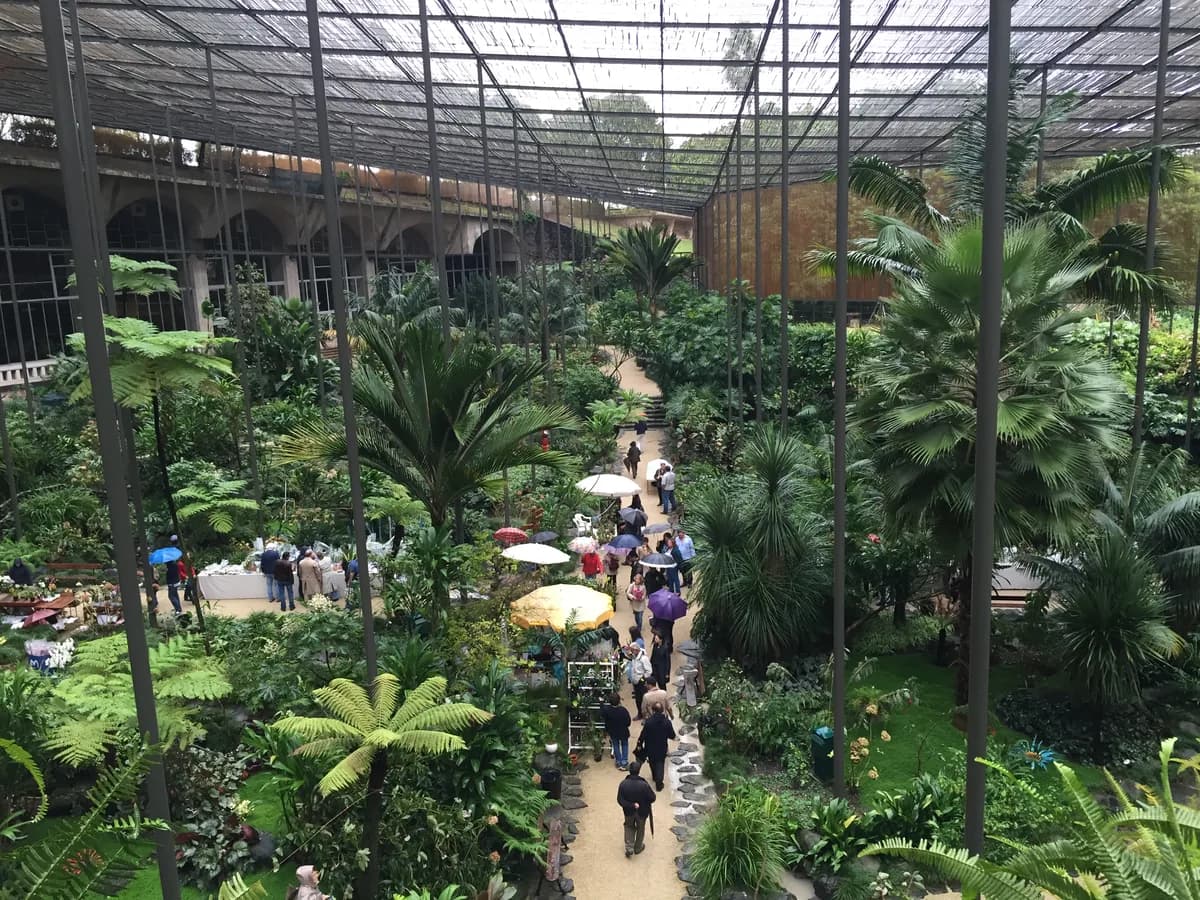
For a full-day pairing, combine Mãe d'Água with the Estufa Fria botanical garden in Parque Eduardo VII, roughly 15 minutes on foot. Both sites share a similar off-the-main-circuit character and both are better visited on a weekday morning when visitor numbers are low.
Tips for a Memorable Visit
Weekday mornings between 10:00 and 12:00 are the quietest period. Arriving early means you may have the cistern largely to yourself, which is the best way to hear the acoustics and appreciate the scale without crowds. Weekends, especially after 14:00 when the Immersivus sessions begin, are considerably busier.
If you plan to combine the Water Museum and an Immersivus Gallery session in a single trip, arrive at 10:00 for the museum, take the cistern and terrace at your own pace through the morning, then return for the afternoon show with a gallery ticket already booked. Attempting to book an Immersivus ticket on arrival in July or August frequently results in a sold-out session. The two experiences use different entrances and have different operators, so keep both confirmation emails to hand.
The underground Loreto Gallery guided tour is worth planning around if you want an experience genuinely unlike anything else in the city. Walking the actual 1746 stone conduit from Mãe d'Água beneath the streets to Príncipe Real — the channel through which this cistern supplied water to Lisbon's fountains — takes the site from interesting museum to living infrastructure. Book through EPAL's Water Museum page well in advance. Because it rarely appears in standard Lisbon itinerary lists, group sizes tend to be small and availability better than expected.
Wear flat, comfortable shoes on stone surfaces. Bring a light layer even in summer — the cistern stays cool regardless of outdoor temperature. For families, the visit works well for older children who respond to the immersive show format; the Gauge House and cistern walkways also hold attention for curious younger visitors. Combine with the Gulbenkian Museum a few minutes north for a full morning of cultural content with a natural midday break in the neighbourhood between them.
Frequently Asked Questions
How much time should you plan for Mãe d'Água das Amoreiras Reservoir?
Plan for about 1 to 1.5 hours to fully explore the Mãe d'Água das Amoreiras Reservoir itself. If you intend to experience an immersive art exhibition, allocate an additional 45 minutes. This allows for comfortable viewing and enjoying the panoramic terrace.
What is the Immersivus Gallery at Mãe d'Água?
The Immersivus Gallery is a unique art space within the Mãe d'Água das Amoreiras Reservoir. It uses large-scale projections and sound to create immersive exhibitions. These shows transform the historic reservoir walls into dynamic canvases, offering a modern artistic experience.
Are tickets required for Mãe d'Água das Amoreiras Reservoir?
Yes, tickets are required. Standard admission to the reservoir (part of EPAL's Museu da Água) is €4, with students and family tickets at 50% off and children up to 12 free; entry is also free on the first Sunday of each month and Lisboa Card holders get 50% off. Note that the separately-ticketed Immersivus projection shows cost more and should be booked in advance. Check the official Water Museum website for current pricing.
Is Mãe d'Água das Amoreiras Reservoir worth including on a short itinerary?
Absolutely, Mãe d'Água das Amoreiras Reservoir is worth it, even on a short itinerary. Its unique blend of historical engineering and modern immersive art offers a distinct experience. It provides a fascinating insight into Lisbon's past and present, easily fitting into a half-day plan. You can combine it with a visit to the Gulbenkian Museum nearby.
Other Waterworks Built Like Cathedrals
A stone reservoir with a vaulted chamber and a five-thousand-cubic-metre tank, fed by the Águas Livres aqueduct and open to walk into. London's Crossness Pumping Station is the Victorian equivalent, polychrome ironwork wrapped around beam engines. Naples's Napoli Sotterranea is the aqueduct itself, quarried by Greeks and used as a shelter two millennia later.
The Mãe d'Água das Amoreiras Reservoir is one of the few places in Lisbon where historic engineering and contemporary art share the same space. The cistern alone is worth the €4 entry fee. The Loreto Gallery underground tour and the Immersivus projections extend a single-site visit into a half-day of genuinely varied experiences. Whether you are drawn by the architecture, the art, or the aqueduct's wider story, the reservoir rewards a deliberate visit rather than a passing stop.
To verify current details, consult the Mãe d'Água das Amoreiras Reservoir official site and Mãe d'Água das Amoreiras Reservoir on Wikipedia.
Planning more of your trip? See our guides to hidden gems in Lisbon and secret Lisbon viewpoints.
Continue exploring
More guides you'll find useful