Westend Munich Schwanthalerhöhe Travel Guide
Explore Westend Munich Schwanthalerhöhe with top sights, food picks, transit tips, and seasonal timing advice for planning a smoother 2026 visit.
On this page
Your Guide to Westend Munich Schwanthalerhöhe
Westend sits just west of Munich's city center, and locals often call it by its official name, Schwanthalerhöhe. This dense, working-class quarter has quietly turned into one of the city's most interesting neighborhoods for food, art, and everyday Bavarian life. Small courtyards, corner cafés, and a handful of surprising landmarks make Westend Munich Schwanthalerhöhe worth a slower look.
Munich splits into distinct districts, and Westend rarely tops a first-time visitor's list the way the old town does. That gap makes it worth closer attention, especially alongside a broader Munich Neighborhoods Guide: Best Areas to Explore. This guide walks through the sights, food scene, and history that give the district its character.
Where Westend Munich Schwanthalerhöhe Sits
Westend stretches between Donnersbergerbrücke, the Theresienwiese fairground, and Westpark on Munich's west side. Its official administrative name is Schwanthalerhöhe, though most residents and visitors just say Westend. The district ranks among Munich's most densely populated, packed with apartment blocks, courtyards, and corner shops.
Public transport reaches Westend easily, with the Hackerbrücke S-Bahn stop sitting right on its eastern edge. Trams and buses also connect the neighborhood to central Munich in under fifteen minutes. Compared with a livelier district like the one covered in the Glockenbachviertel neighborhood guide, Westend feels quieter and more residential.
Ludwigsvorstadt and the Theresienwiese fairground border Westend directly, so Oktoberfest crowds spill in nearby every autumn. That closeness makes early morning or late evening the calmer times to explore on foot.
Top Sights and Local Landmarks in Westend
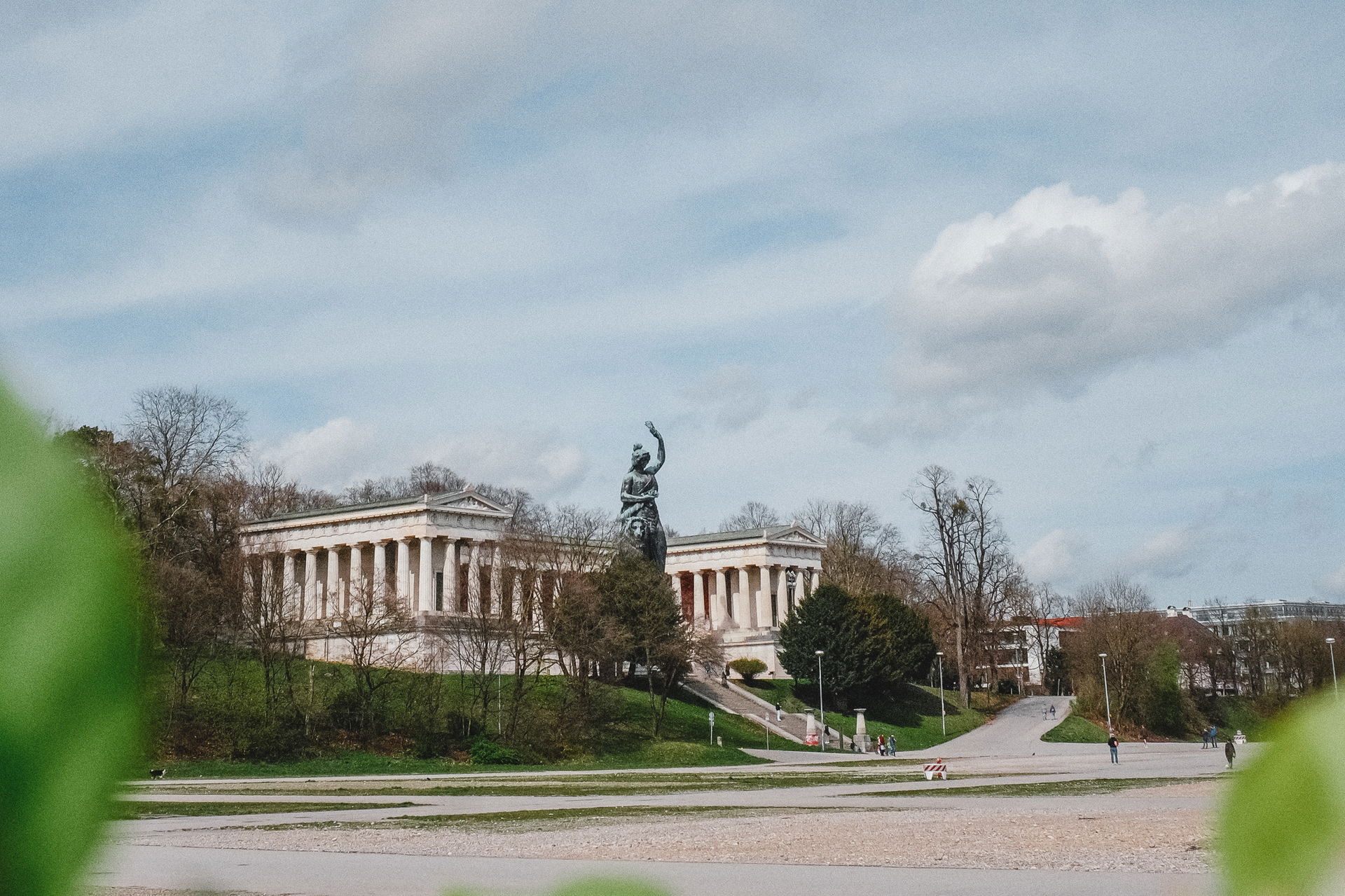
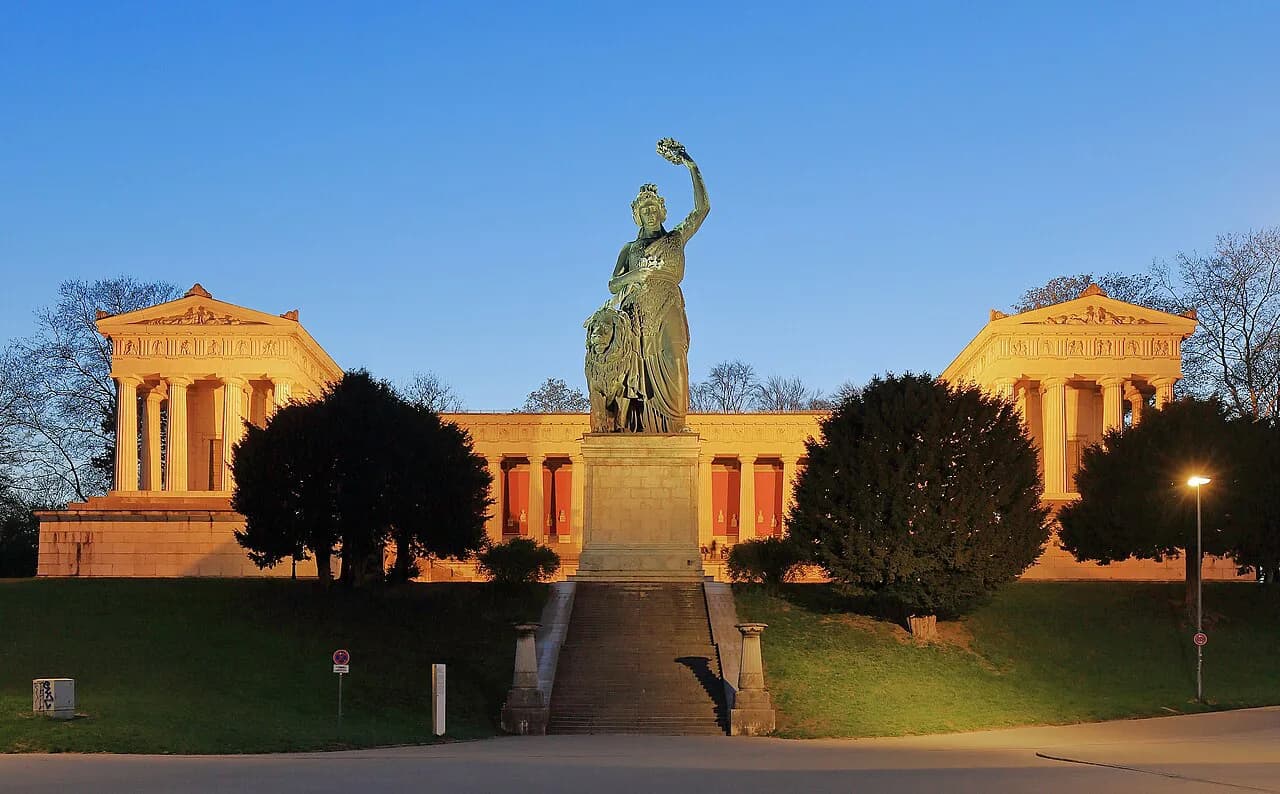
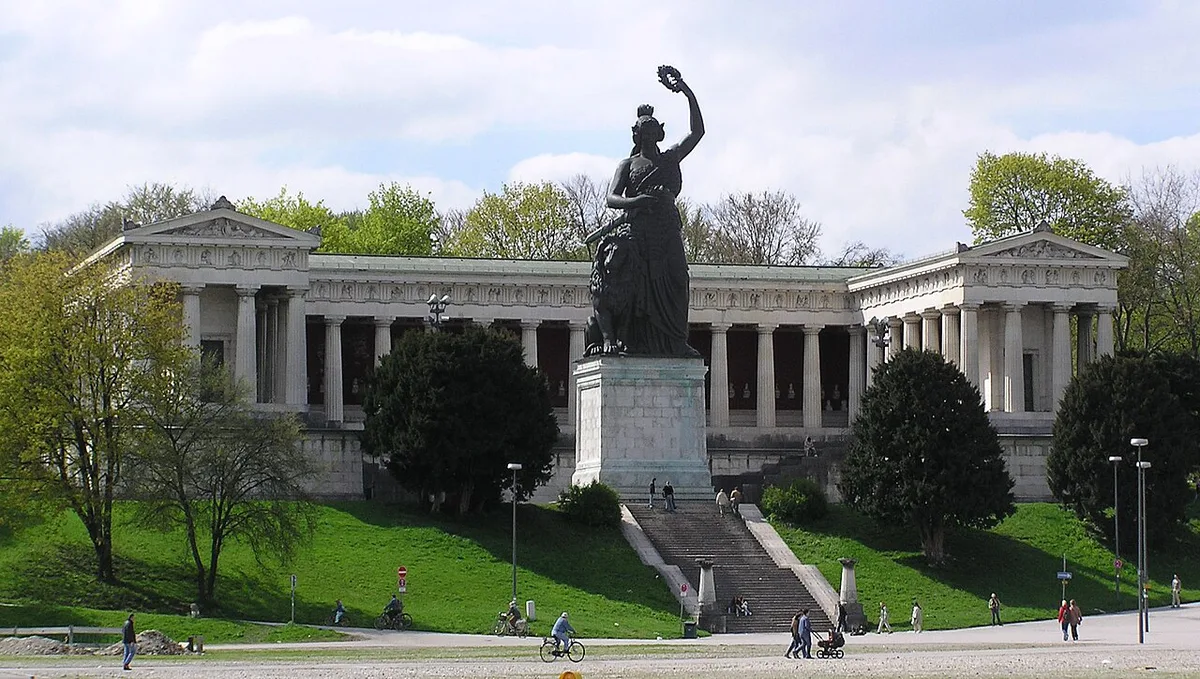
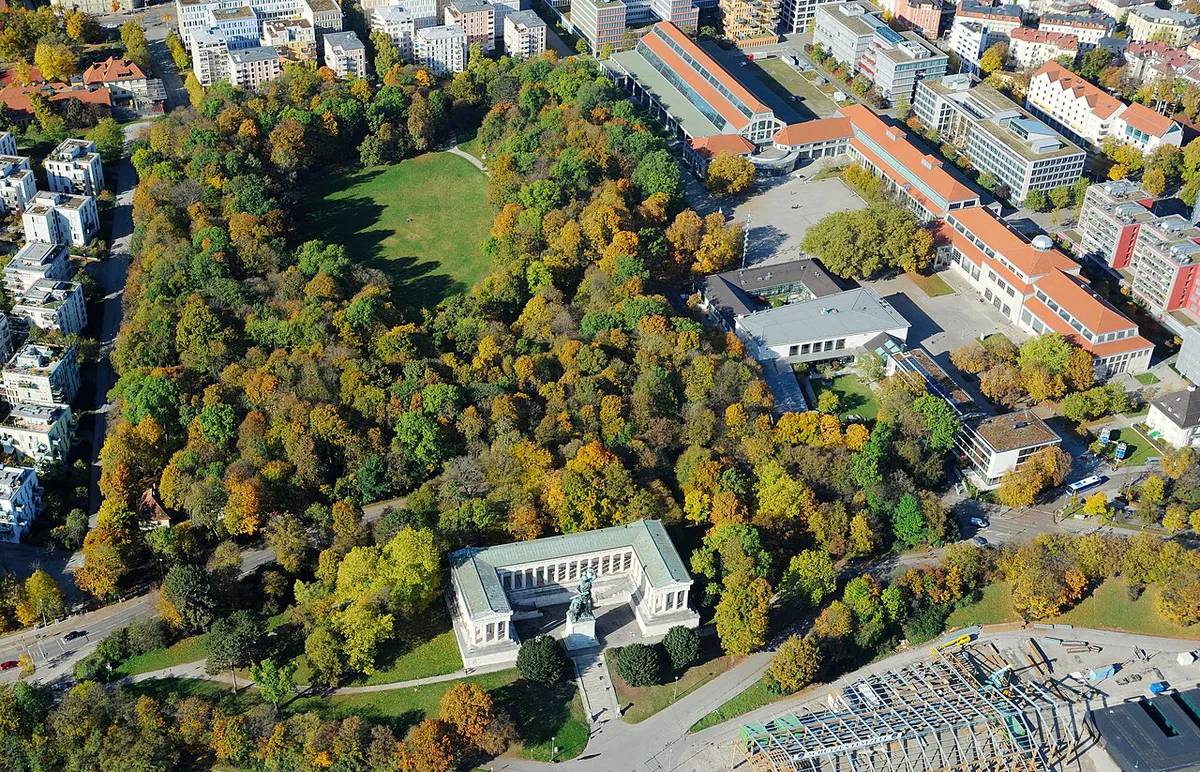
The Bavaria statue and its Ruhmeshalle hall overlook the Theresienwiese from the edge of the district. Cast from bronze salvaged from decommissioned naval cannons, the statue rises about 18 meters into the sky. It fits the kind of overlooked spot featured in a broader hidden gems in Munich guide.
Climbing to the statue's head costs around 5 euros and rewards visitors with a wide skyline view. Because entry prices and hours can shift year to year, confirm current details through Hier informiert die Münchner Stadtverwaltung before a visit.
| Landmark | Location | Entry Fee | Best For |
|---|---|---|---|
| Bavaria statue & Ruhmeshalle | Theresienwiese edge | ~5 euros (to climb) | Skyline views |
| Bavariapark | Westend | Free | Picnics, sunbathing |
| Endless Staircase | Ganghoferstraße 29 courtyard | Free | Photo stop |
| Hackerbrücke bridge | Steps from station | Free | Sunset views |
| Georg-Freundorfer-Platz | Westend | Free | Families, picnics |
A handful of smaller landmarks round out a short walking loop through the district. Each one adds a different flavor, from public art to a genuine neighborhood park. A photo of this Theresienwiese skyline view, credited to (c) Lilli Wermuth | 1000things, shows why the viewpoint draws photographers.
- Bavaria statue and Ruhmeshalle viewpoint
- Height: about 18 meters tall
- Material: bronze from old cannons
- Climb fee: around 5 euros
- Best for: skyline views
- Bavariapark green space and lawns
- Type: public park with lawns
- Landmark: Sweet Brown Snail sculpture
- Best for: picnics and sunbathing
- Nearby: beer garden on-site
- Endless Staircase art installation
- Location: Ganghoferstraße 29 courtyard
- Artist: Ólafur Elíasson
- Note: display only, not climbable
- Best for: quick photo stop
- Hackerbrücke bridge sunset spot
- Connects: Westend and Maxvorstadt
- Access: steps from Hackerbrücke station
- Best for: sunset and skyline views
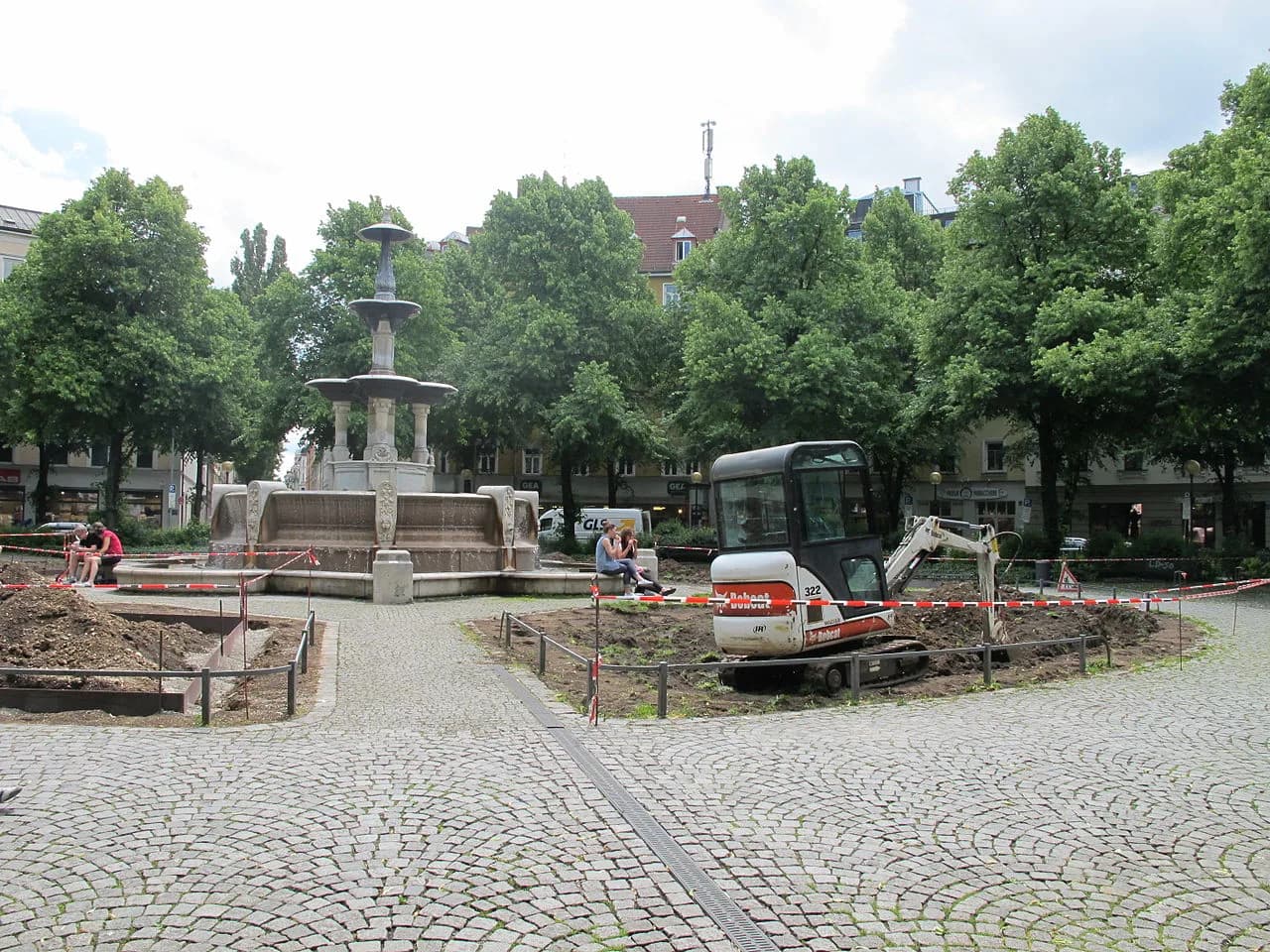
- Georg-Freundorfer-Platz neighborhood square
- Features: playground, chess, basketball
- Market day: Thursdays, roughly 10am-6pm
- Best for: families and picnics
Where to Eat and Drink in Westend
Parkstraße functions as the neighborhood's main food strip, packed with cafés, bars, and restaurants side by side. Options range from a French-style three-course menu to Greek plates and creative sushi bowls. For a wider citywide comparison, the best local restaurants in Munich guide covers similar independent spots.
Gollierstraße runs parallel to Parkstraße and adds even more variety across different cuisines. Café Westend is one long-running local address worth a stop for coffee or brunch. Budget-minded visitors can still eat well here, since the district skips the markup found near the city center.
On certain days, the malty scent of the nearby Augustinerbrauerei brewery drifts through Westend's streets. The brewery has brewed in the area for centuries and still serves food at its own beer hall.
Schwanthalerhöhe's History and Change
Schwanthalerhöhe grew in the 1800s as a working-class quarter for craftsmen and factory laborers. Dense apartment blocks from that era still shape the streets between Bavariaring and Westpark. That layered past makes Westend a natural stop for anyone chasing the Off the Beaten Path in Munich: 2026 Travel Guide theme.
Munich's old trade fair grounds once sat on part of what is now Westend. After the fair moved east to Riem in the late 1990s, the site turned into housing and cultural space. That shift from industrial use to apartments and studios still defines the neighborhood's mixed character today.
Rents in Westend still run lower than trendier districts, though prices have climbed as more newcomers arrive. That trade-off suits travelers who want an authentic, lived-in feel over a polished tourist strip.
Planning a Smooth Visit to Westend
Spring and early fall bring milder weather and thinner crowds than the Oktoberfest weeks in September. Weekday mornings work best for photos at quieter spots like the endless staircase or Georg-Freundorfer-Platz. For a citywide view of timing, check the best time to visit Munich without crowds guide.
Visit on weekday mornings for quieter landmark photos and thinner crowds. Spring and early fall bring milder weather than Oktoberfest weeks. Most sights sit within a comfortable 20 to 30 minute walk of each other.
The Hackerbrücke S-Bahn stop sits on Westend's eastern edge and reaches central Munich in under 15 minutes. Parking near Theresienwiese fills fast during events. Public transit is the simplest way to reach the district.
Most sights in Westend sit within a comfortable 20 to 30 minute walk of each other. Comfortable shoes matter more than a strict schedule, since the district rewards slow wandering. Budget half a day for a relaxed loop, or a full day if food stops are the priority.
Weekday visits avoid the busier weekend brunch lines along Parkstraße and Gollierstraße. Public transit stays the simplest way in, since parking near Theresienwiese fills up fast during events.
Shopping in Westend: Boutiques and Design Finds
Westend's shopping scene stays low-key compared to Munich's city-center pedestrian zone, but a cluster of independent boutiques rewards a slower browse. Parkstraße 6, a converted courtyard tucked just off the main café strip, groups several small shops selling fashion, home goods, and design pieces from local makers — locals often shorthand the address as "Parke6." The format favors browsing over quick errands, and hours run shorter than a department store's, so a weekday afternoon works better than a weekend rush. Like most independent retail in Munich, these shops close on Sundays under Germany's general store-closing rules, so plan a visit for a weekday or Saturday morning instead. Gollierstraße, which runs parallel to Parkstraße and already appears in this guide for its food options, also mixes in a few secondhand and specialty stores between the restaurants, making it easy to combine a meal and a browse on the same walk through the district.
- Parkstraße 6 (Parke6): courtyard of independent boutiques for fashion, design, and gifts
- Gollierstraße: secondhand and specialty shops mixed among restaurants
- Most independent shops close Sundays under Munich's standard retail hours
Frequently Asked Questions
Is Westend Munich Schwanthalerhöhe worth visiting?
Westend rewards travelers looking for real neighborhood life over major tourist sights. Expect small cafés, a historic brewery, and a few landmarks like the Bavaria statue. It works well as a half-day add-on to a longer Munich itinerary, especially for repeat visitors.
How much time should you plan for Westend?
Budget half a day for the main landmarks and food streets, or a full day if you linger over meals. Most sights sit within a 20 to 30 minute walk of each other. A relaxed pace suits this district better than a rushed checklist.
What should travelers avoid when visiting Westend?
Avoid weekend brunch hours along Parkstraße, since tables fill quickly at popular cafés. Also skip driving during the Oktoberfest weeks, since nearby Theresienwiese parking disappears fast. Public transit through the Hackerbrücke stop stays the simpler option.
Are there free things to do in Westend?
Yes, Bavariapark, Georg-Freundorfer-Platz, and the endless staircase art installation cost nothing to visit. Only climbing inside the Bavaria statue charges an entry fee. For more no-cost options citywide, see this free things to do in Munich guide.
Which neighborhood is closest to Westend for a comparison walk?
Glockenbachviertel sits a short tram ride away and offers a livelier nightlife scene. Both districts share a walkable, local feel rather than a tourist-heavy one. Pair the two for a fuller sense of residential Munich beyond the old town.
Other Working Districts Mid-Change
Westend is what Munich looks like before a district finishes gentrifying — Turkish grocers, old Wirtshäuser and new coffee, on the same street. Brussels's Dansaert made the same transition around its Flemish shopping strip. Ljubljana's Šiška is earlier in the process and cheaper for it.
Westend rewards visitors who trade a packed checklist for a slower afternoon of wandering. Its mix of industrial history, everyday food spots, and a few standout landmarks feels distinctly local. Few other Munich districts pack this much character into such a compact, walkable footprint.
Plan around a weekday visit, wear comfortable shoes, and leave room to follow side streets. The Bavaria statue, Bavariapark, and Parkstraße's food scene make a solid half-day starting point. From there, Westend Munich Schwanthalerhöhe tends to reveal its own favorite corners.
Continue exploring
More guides you'll find useful