Au Munich District Travel Guide
Discover the Au district in Munich: top landmarks, local festivals, Isar riverbank walks, and practical tips for a smooth, memorable trip today.
On this page
Exploring the Au District of Munich
The Au Munich district sits quietly along the Isar River, just south of the city center. Locals know it for calm streets, a lively farmers market, and easy access to the riverbanks. Despite its central location, Au keeps a village-like pace that feels different from the busier core.
Travelers researching this Munich neighborhood often find a compact area with genuine local character. Expect a short walk to Glockenbachviertel's bars, a stretch of the Isar for summer picnics, and a historic square. This guide covers Au's landmarks, culture, family-friendly spots, and the best way to plan a visit.
What Is the Au Munich District?
Geographically, Au hugs the Isar River right at the edge of Munich's city center. Its boundaries stretch from the Deutsches Museum in the north to the Wittelsbacherbrücke bridge in the south. That central spot, combined with the riverside setting, makes Au a genuinely convenient home base.
World War Two destroyed more than half of the households once standing in Au. Most buildings visible today date from the 1950s and 1960s rebuilding period. Even after the rebuild, Au kept a quieter, small-scale feel unlike much of downtown Munich.
Administratively, Au forms one borough with neighboring Haidhausen, detailed further in the Haidhausen and Au neighborhood guide. The two districts share transit connections, seasonal events, and a similarly relaxed residential mood. Walking between them takes only a few minutes, so pairing both areas works well for one visit.
Background from en.Wikipedia.org notes the district has been part of Munich's urban core for well over a century. That long history shows in the mature trees, older apartment blocks, and settled feel of the streets.
The official Munich.travel profile calls Haidhausen and Au a charming village in the middle of the city. That description captures how Au keeps a small-town rhythm despite sitting minutes from downtown.
Must-See Attractions and Landmarks in Au
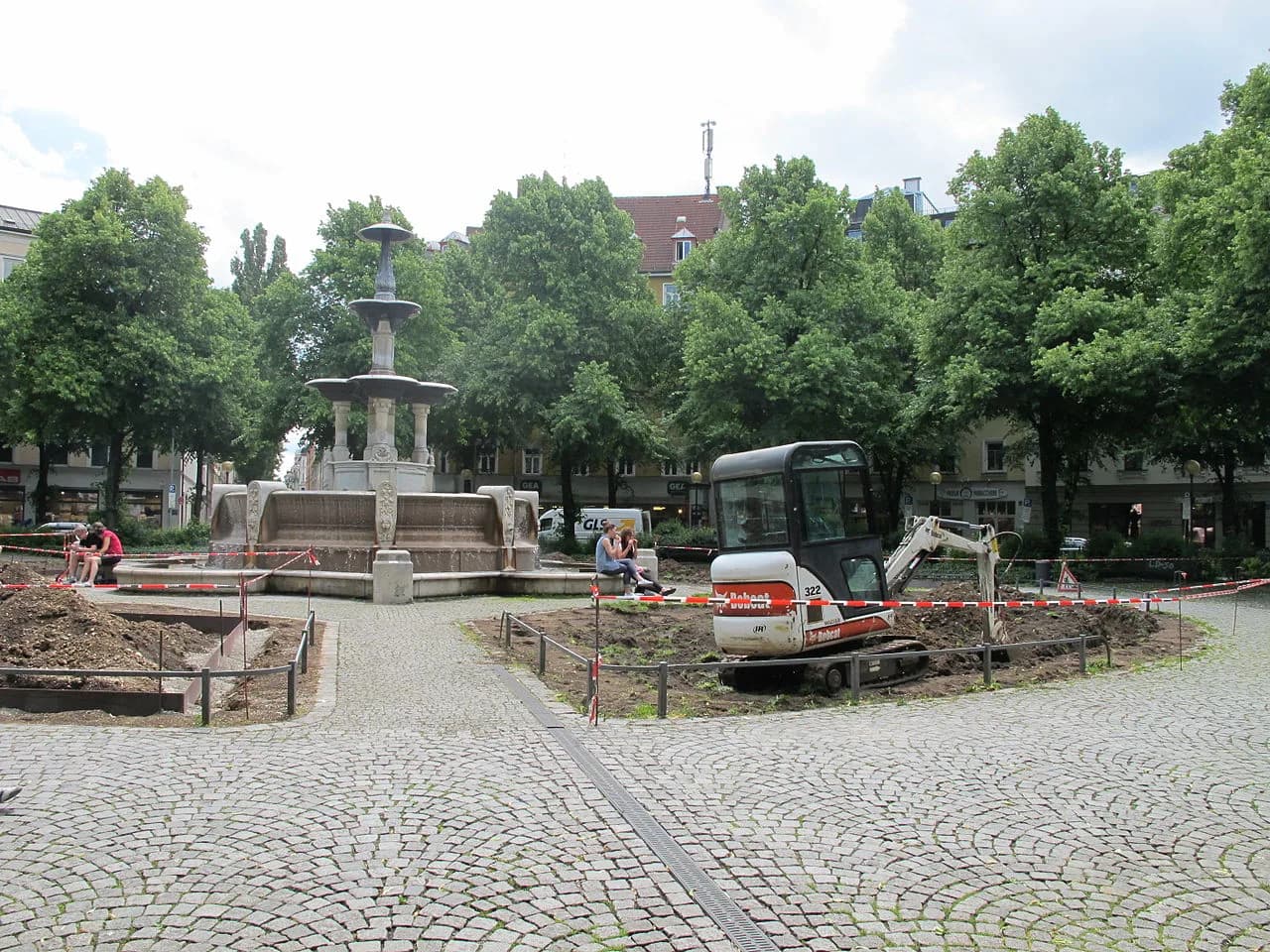
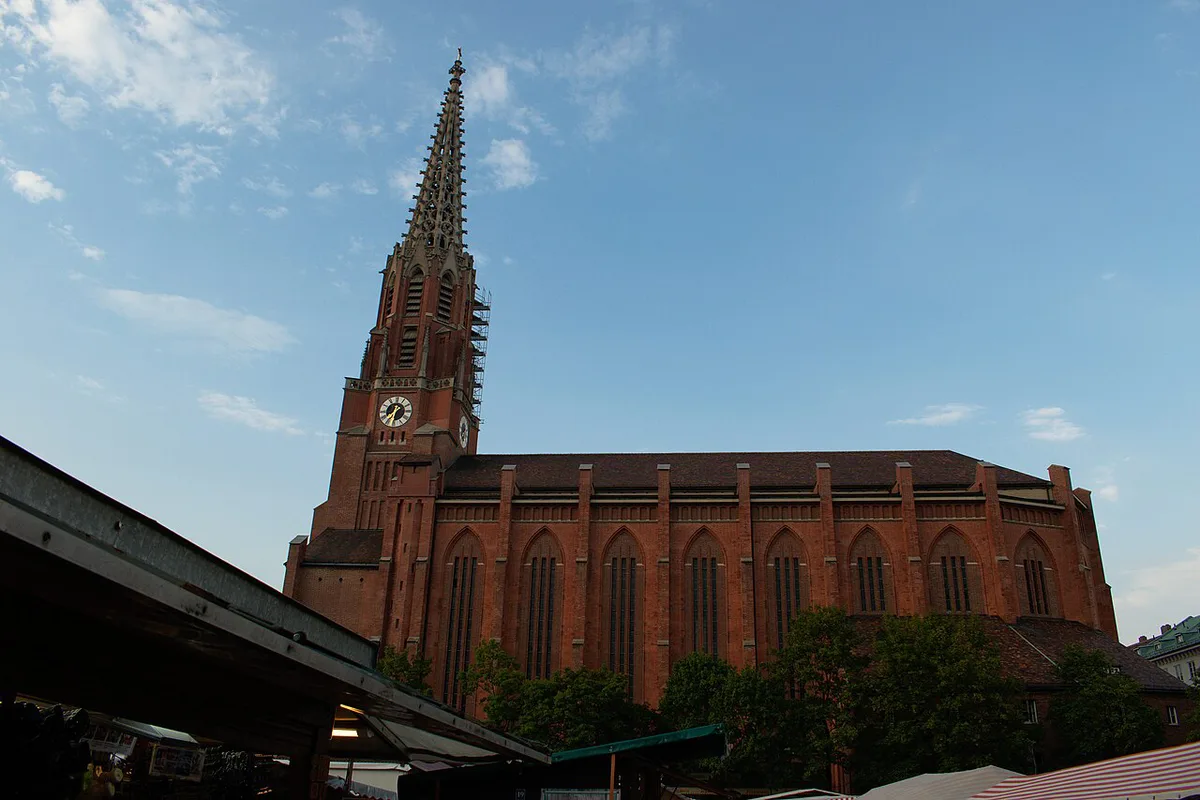
Mariahilfplatz forms the heart of Au, anchored by the twin-spired Mariahilf church. A farmers market sets up on the square twice a week, drawing residents from nearby streets. Three times a year, the square also hosts the Auer Dult, a fair for antiques and street food.
South of the square, the Wittelsbacherbrücke bridge crosses the Isar and marks Au's southern edge. The bridge offers open river views and connects easily to walking paths on both banks. It works well as a quick photo stop before continuing toward the riverside promenade.
Because Au stays quiet compared to central Munich, it fits naturally into any off-the-beaten-path exploration of the city. Few tour groups pass through, so the pace stays local and unhurried.
- Mariahilfplatz and Mariahilf Church
- Type: main square and church
- Market: farmers market twice weekly
- Fair: Auer Dult three times yearly
- Cost: free to browse
- Wittelsbacherbrücke River Bridge
- Type: historic Isar crossing
- Location: southern edge of Au
- Best for: river views and photos
- Isar River Promenade
- Type: riverside walking path
- Best for: walks and picnics
- Access: free, open year-round
- Deutsches Museum Border
- Type: science museum landmark
- Location: marks Au's northern edge
- Note: short walk from Mariahilfplatz
Parks, Isar Riverbanks and Outdoor Life
The Isar riverbanks give Au some of its best outdoor space, right within walking distance of home. Gravel paths and grassy stretches line the water, popular for walking, jogging, and cycling. In summer, locals gather along the banks for informal barbecues after work or on weekends.
The Isar riverbanks offer free access year-round with gravel paths, grassy stretches, and shaded areas ideal for walking, jogging, and summer picnics. Benches appear regularly along the promenade for rest stops.
The riverside setting stays free to enjoy, with no entry fee or booking required. That makes it an easy addition to a longer day of sightseeing in central Munich. For more no-cost options nearby, check the guide to 10 Free Things to Do in Munich in 2026 (Local Guide).
Shade from riverside trees keeps the promenade comfortable even during warmer summer afternoons. Benches appear at regular intervals, useful for a short rest between longer walks. Cyclists share the path with pedestrians, so a steady, unhurried pace works best here.
Local Festivals, Culture and Family Life
Every July, the Wirtshaus an der Au hosts the Royal Bavarian Lederhosen Festival. The event works as a traditional rehearsal ahead of the larger Oktoberfest celebrations downtown. Traditional Bavarian attire takes center stage, with plenty of food and beer alongside it.
Each year, the Starkbieranstich opens the season's first barrel of strong stout beer. The Salvator brewery at Nockerberg hosts the event, drawing a large local crowd. It reflects a Bavarian tradition tied closely to the changing seasons and local brewing.
Most residents in Au are singles or couples, since the district stays fairly compact overall. Schools and kindergartens sit just outside Au's borders, in the closely neighboring districts. For a family day out, pair a walk here with a stop at one of the 10 Best Beer Gardens in Munich for 2026.
The Munich.travel local-love feature on Au highlights how residents describe their own neighborhood pride. That local perspective echoes the quiet, community-first feel travelers notice while walking through Au.
Au vs. Munich's Other Neighborhoods
Munich counted about 1,597,049 residents across roughly 31,073 hectares, according to 2024 data. That scale makes Au's quiet, village-like streets feel unusual so close to a major metropolis. The contrast between big-city infrastructure and small-neighborhood charm defines much of Au's appeal.
Glockenbachviertel sits just next door, offering a livelier scene of bars and restaurants after dark. Visitors often combine both areas, using the Glockenbachviertel neighborhood guide to plan an evening out. Lehel lies across the river too, adding a third option with museums and elegant streets.
| Neighborhood | Vibe | Distance | Best For |
|---|---|---|---|
| Au | Calm and residential | Short walk to center | River walks, local festivals |
| Glockenbachviertel | Trendy and social | Walking distance from Au | Evenings out |
| Haidhausen | Village-like streets | Joint borough with Au | Cafes and markets |
| Lehel | Elegant, museum-adjacent | Across the Isar River | Art and architecture |
Choosing between these districts usually comes down to pace, since each offers a different rhythm. Au rewards travelers who want quiet river walks over crowded shopping streets or nightlife.
- Au: quiet riverside village feel
- Vibe: calm and residential
- Distance to center: short walk
- Best for: river walks, local festivals
- Glockenbachviertel: lively bars and dining
- Vibe: trendy and social
- Distance from Au: walking distance
- Best for: evenings out
- Haidhausen: shared historic borough
- Vibe: village-like streets
- Relation: joint borough with Au
- Best for: cafes and markets
- Lehel: refined riverside district
- Vibe: elegant, museum-adjacent
- Location: across the Isar River
- Best for: art and architecture
Planning a Smooth Visit to Au
Two U-Bahn lines and several bus routes connect Au to central Munich and nearby districts. That access makes it simple to arrive without a car or worry about parking. Trains run frequently through the day, so waiting times stay short during most visits.
Plan a two- to three-hour visit. Arrive weekday mornings for quieter streets, or weekend afternoons for the farmers market. Comfortable walking shoes are essential.
Weekday mornings tend to feel calmer, before the Mariahilfplatz market draws its usual crowd. For a broader view of seasonal crowd patterns, see the guide to the Best Time to Visit Munich Without Crowds (2026). Weekend afternoons work well for the farmers market and a relaxed riverside walk.
Before heading out, pull up the district on maps.Apple.com to confirm walking routes and distances. Comfortable shoes help, since most of the appeal here comes from walking rather than driving. Plan two to three hours to cover the square, the riverbanks, and a nearby beer garden stop.
Pair this with our broader Munich tourism attractions guide for the full city overview.
Müllersches Volksbad: Au's Art Nouveau Swimming Hall
One landmark missing from most Au overviews is the Müllersches Volksbad, a Jugendstil (Art Nouveau) public swimming hall built directly on the Isar riverbank near the Wittelsbacherbrücke. Completed in 1901 to a design by architect Carl Hocheder, it is Munich's oldest indoor public pool still in daily operation and one of the city's most photographed pieces of historic municipal architecture. The building is a protected historic monument, recognizable for its ornate brick facade, copper-clad dome, and vaulted, tiled swimming halls.
Inside, the Volksbad holds two separate pools — a grand main hall and a smaller, quieter pool — along with a historic sauna and steam bath section, all still run by Stadtwerke München as a working public bath rather than a museum piece. Because it sits only a short walk from the Isar promenade and Mariahilfplatz, it fits naturally into the same visit:
- Check current opening hours before visiting, since pool and sauna sessions run on separate schedules
- Bring a swimsuit and towel if planning to swim rather than just view the exterior
- Pair the stop with the riverside walk or a Mariahilfplatz market morning
Frequently Asked Questions
Where is the Au district located in Munich?
Au sits along the Isar River, just south of Munich's city center, between the Deutsches Museum and the Wittelsbacherbrücke bridge. It forms a joint borough with neighboring Haidhausen and stays within easy reach of downtown Munich by U-Bahn and bus.
What is Au-Haidhausen known for?
Au-Haidhausen is known for riverside walks, the Mariahilfplatz farmers market, and Bavarian festivals like the Starkbieranstich. The borough blends a village-like atmosphere with easy access to central Munich, making it popular with locals and visitors seeking a quieter pace.
Is Au-Haidhausen a safe area to visit?
Au-Haidhausen is generally considered a safe, low-key residential area popular with families, singles, and couples. Standard travel precautions still apply, as in any city, but the district's quiet streets and steady foot traffic make it comfortable to explore on foot, day or evening.
What do Bavarians call Munich?
Bavarians commonly use Munich's German name, München, since the city carries a strong regional Bavarian identity. Traditions like Lederhosen festivals and strong-beer taps, both found in districts such as Au, reflect that distinct local character.
What is the nicest area of Munich to visit near Au?
There is no single best area, since Munich's neighborhoods each offer something different. Au suits travelers who want quiet river walks, while Glockenbachviertel offers nightlife and Haidhausen adds village-style charm. For a fuller comparison, see the Munich Neighborhoods Guide: Best Areas to Explore.
Au offers a quieter side of Munich, built around the Isar River and a handful of local landmarks. From Mariahilfplatz's market to summer barbecues on the riverbank, the district rewards slower exploration. Its festivals and beer traditions add real local color beyond typical tourist stops downtown.
Pair a visit to Au with nearby Glockenbachviertel or Haidhausen for a fuller neighborhood picture. Good transit links mean the district works well as a half-day add-on to any Munich itinerary. Plan around market days and festival dates for the most rewarding visit to Au.
Continue exploring
More guides you'll find useful