Istanbul Local Food Guide: What to Eat and Where Locals Actually Go
A 2026 istanbul local food guide covering must-try dishes, street food, kebabs, and neighborhood hubs, with prices, locations, and practical eating tips.
On this page
Istanbul Local Food Guide: What to Eat and Where to Find It in 2026
Last updated July 2026, this istanbul local food guide moves past the standard kebab-and-baklava checklist to show where Istanbul's Balkan, Middle Eastern, and Central Asian culinary threads actually converge on a plate. Getting the full picture means crossing the Bosphorus to Kadıköy's fish market streets and slipping into the backstreets of Beyoğlu, not just circling the Sultanahmet tourist core. Use this guide to build entire days around breakfast rituals, street-side snacks, and late-night cravings, then pair it with a neighborhood-by-neighborhood plan for where each dish tastes best.
The Istanbul Local Food Guide to Where East Meets West on a Plate
Istanbul's food culture sits at a genuine crossroads: Balkan pastry techniques, Middle Eastern spice blends, and Central Asian grilling traditions all show up in the same meal, sometimes on the same plate. Centuries as an imperial capital left the city with layered flavors that a single kebab stand or dessert shop cannot fully represent, which is why locals treat eating as a citywide itinerary rather than a single stop. Pairing a day of eating with other unique Istanbul experiences — a ferry crossing, a hammam visit, a wander through a covered bazaar — is how residents naturally build their weekends, and it is the fastest way for visitors to move past the tourist-menu version of Turkish cuisine. Expect this guide to walk through breakfast, street food, regional kebabs, adventurous local picks, sweets, and the neighborhoods that anchor each category.
Where to eat shapes the experience as much as what to eat: Sultanahmet's tourist restaurants charge inflated prices for assembly-line food, while Kadıköy's fish market, Beyoğlu's backstreets, and Karaköy's dockside stalls serve mostly locals at better value and authentic flavor.
The Istanbul Breakfast Ritual: Simit, Menemen and Börek
Breakfast in Istanbul is unhurried by design, built around a shared kahvaltı spread of white cheese, olives, tomatoes, cucumbers, and warm bread rather than a quick coffee and pastry. Three items define the ritual for visitors working through this guide: simit, menemen, and börek, each suited to a different pace of morning. For a sit-down version with strong tea and slower service, head to Cihangir's café-lined backstreets, where a full kahvaltı spread stretches for a couple of hours rather than a couple of minutes.
- Simit: The 'Turkish bagel,' a sesame-crusted ring of bread. Street-cart versions are cheaper and crispier, starting from around ₺10, while bakery versions run higher and lean softer and chewier.
- Menemen: Scrambled eggs cooked with tomatoes and green peppers, served bubbling in its own pan with bread for dipping — best suited to a slow morning rather than a rushed one.
- Börek: Flaky, layered pastry filled with cheese, spinach, or minced meat, sold by weight at bakeries and best eaten warm, close to when it comes out of the oven.
Iconic Istanbul Street Food for Quick, Budget-Friendly Eats
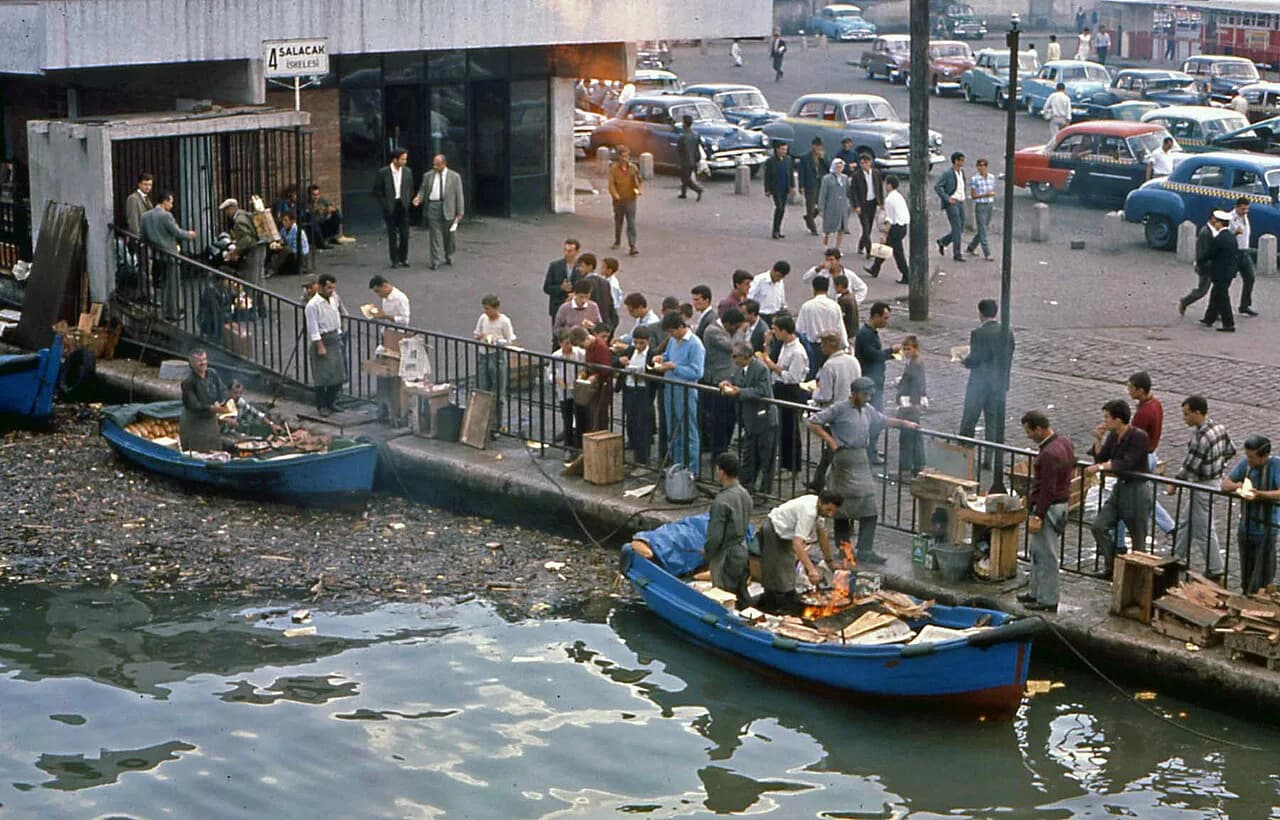
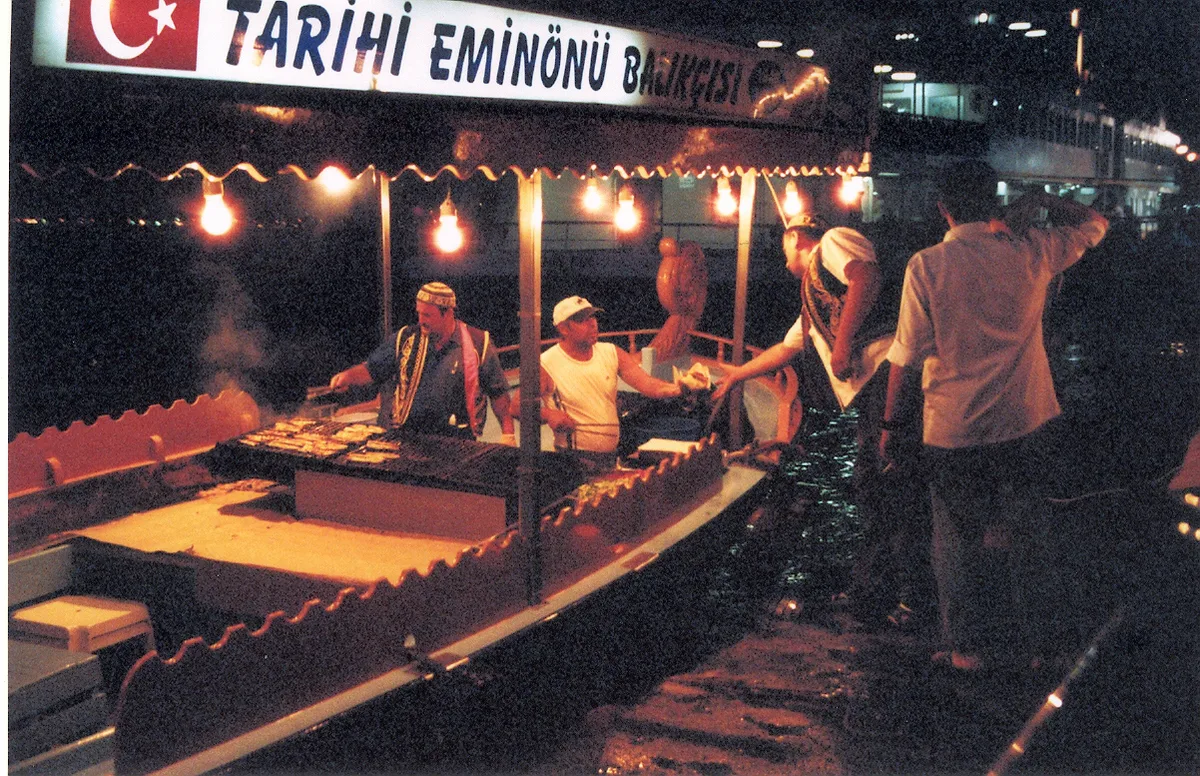
Istanbul's street-food core rewards visitors who know where a dish is best rather than just what it is. The classic balık ekmek — grilled mackerel stuffed into fresh bread with onions, lettuce, and lemon — is sold boat-side in Eminönü near the Galata Bridge, a scene built for the postcard moment as much as the flavor. For a tighter, less touristy take, the balık dürüm wraps grilled along Karaköy's dockside grills tend to come off the coals faster for a thinner crowd. Some of the best versions of these stalwarts turn up away from the main avenues — the under-the-radar street stalls profiled elsewhere on this site are a good starting point for tracking them down.
- Balık ekmek (Eminönü): Grilled mackerel in bread, sold boat-side near the Galata Bridge — the classic version of Istanbul fish sandwich.
- Balık dürüm (Karaköy): The same grilled fish wrapped instead of breaded, cooked at a faster clip for a mostly local crowd.
- Midye dolma: Spiced rice-stuffed mussels sold from trays around Beyoğlu and the ferry docks; the safest window to buy them is the evening rush, when turnover is highest and trays are least likely to have sat out.
- Gözleme: A folded savory crepe cooked to order on a flat griddle, usually filled with cheese, spinach, or potato.
- Fresh fruit juice: Pomegranate and orange stalls squeezing juice to order, a reliable palate cleanser between heavier bites.
Regional Kebab Deep Dive: Cağ Kebab, İskender and Döner
Kebab in Istanbul covers far more ground than the rotating meat tower most visitors picture. Cağ kebab, native to Erzurum in eastern Turkey, is cooked on a horizontal spit over open charcoal rather than the vertical grill used for döner, then sliced off in thin ribbons; Şehzade Cağ Kebap, mentioned via the guide to standout sit-down restaurants, is a long-running local favorite for trying it done properly. İskender kebab, which traces back to Bursa, stacks thinly sliced döner meat over pieces of pide, then finishes it with tomato sauce, melted butter, and a side of yogurt — a heavier, sit-down dish rather than a walking snack. Standard döner varies enormously in quality: commercial tourist-strip versions can taste flat and greasy, while wood-fired stalls serving mostly locals tend to slice to order and use a drier spice rub. As a rough 2026 price guide, street-stall döner runs from roughly ₺80 to ₺150 depending on the filling, climbing past ₺200 in the busiest tourist pockets near major landmarks. Lahmacun, the thin and crispy 'Turkish pizza,' is topped with minced meat, tomato, onion, and herbs, then rolled up with fresh parsley and a squeeze of lemon before eating — treat it as a two-bite street food rather than a knife-and-fork meal. A cold glass of ayran, the salted yogurt drink, is the traditional pairing with almost anything grilled, and it is sold alongside kebab counters as reliably as bottled water.
Adventurous Local Picks: Kokoreç and Dolma
Kokoreç, seasoned and grilled lamb intestines minced and stuffed into fresh bread with oregano and chili flakes, is the dish most likely to divide a table — and the one locals order without hesitation after a night out. It functions as Beyoğlu's unofficial late-night food, with stalls doing their steadiest business well after midnight; Sampiyon Kokoreç near Taksim is a well-known option for a first taste. Dolma — vine leaves or peppers stuffed with spiced rice, herbs, and sometimes pine nuts — takes a gentler approach and works equally well as a cold meze starter or a light lunch. Both dishes tend to show up on menus that skip the main tourist strips, so pairing this guide with a route through the city's less-touristed eating corners or an off-the-beaten-path exploring day is a reliable way to land at the places locals actually queue for.
Sweets, Coffee and Late-Night Cravings
Dessert and drink culture in Istanbul shifts with the time of day and the season, moving from syrup-soaked pastries in the afternoon to hot drinks built for a slow walk after dark.
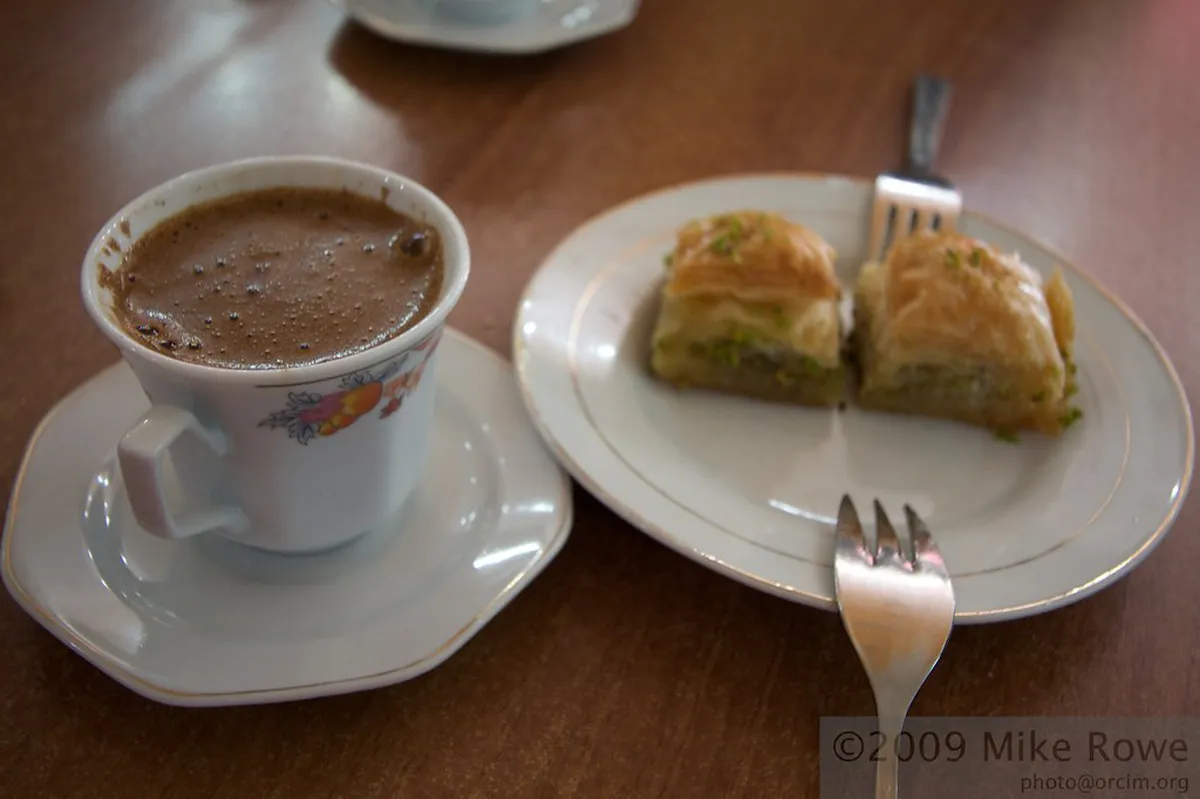
- Baklava: Layered pastry soaked in syrup; pistachio quality is what separates an average version from a memorable one — look for a bright green filling rather than a dyed one.
- Irmik helvasi: Toasted semolina halva made with butter, sugar, and milk, traditionally reserved for special occasions and often served with a scoop of plain (sade) dondurma.
- Künefe: Shredded pastry layered around melted cheese and soaked in syrup, served hot as a dessert or a very sweet late-afternoon snack.
- Turkish sand coffee: Brewed slowly in a copper pot buried in heated sand for precise temperature control; a handful of cafés near the Spice Bazaar (Mısır Çarşısı) still prepare it this traditional way.
- Salep: A warm, thickened winter drink made from ground orchid root and dusted with cinnamon, replacing fruit juice as the cold-weather street drink of choice.
Neighborhood Food Hubs: Where to Eat Like a Local
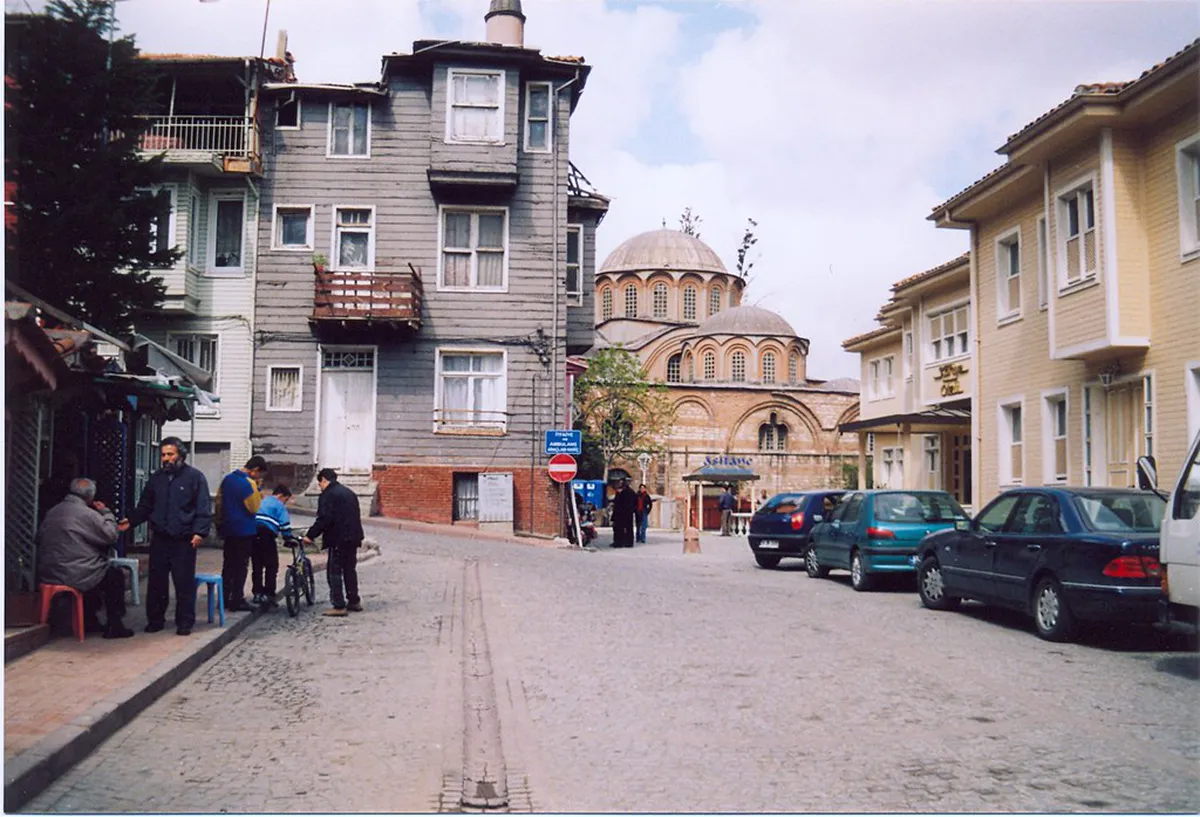
Where you eat in Istanbul matters as much as what you order, and each neighborhood leans toward a different version of the local food scene. Kadıköy's fish market streets on the Asian side are the center of modern local dining, with a produce and seafood market surrounded by meyhane taverns, kebab counters, and dessert shops that see far more residents than tourists. Beyoğlu and Karaköy run the opposite scene after dark: rooftop and backstreet meyhane venues fill up with a rakı-and-meze spread for what regulars call a boozy night out, working through small plates of cold and hot meze before the main course arrives. Balat and Fener sit at the quieter end, known for traditional bakeries and photogenic tea houses tucked among the colorful houses that define Balat's historic streets. For something calmer still, the wooden houses and neighborhood cafés of Kuzguncuk's quiet lanes or the antique shops and tea gardens around Çukurcuma's café corners offer a slower pace than the main tourist circuit. For a fuller breakdown of what each district specializes in, the citywide neighborhood breakdown is the natural next stop.
Planning Your Istanbul Food Journey: Costs, Tours and Mistakes to Avoid
Street food is where the budget stays low: a simit costs from around ₺10 at a cart, a street-stall döner runs roughly ₺80 to ₺150, and a full pide from a bakery or casual restaurant starts near ₺300, with all three climbing higher near major landmarks such as the Blue Mosque and Sultanahmet Square. Sit-down meze spreads with rakı at a meyhane cost considerably more per person once several small plates, bread, and drinks are added up, so budget-conscious travelers can mix cheap street stops with the occasional splurge dinner rather than committing to one style for the whole trip. For more no-cost ways to fill the rest of the day around meals, pair this guide with the no-cost Istanbul activities roundup.
Find quality food by observing: midye dolma is safest from busy stalls with high turnover, baklava's bright green pistachios signal better quality, avoid very informal juice vendors, and seek less-touristed corners to discover where locals queue.
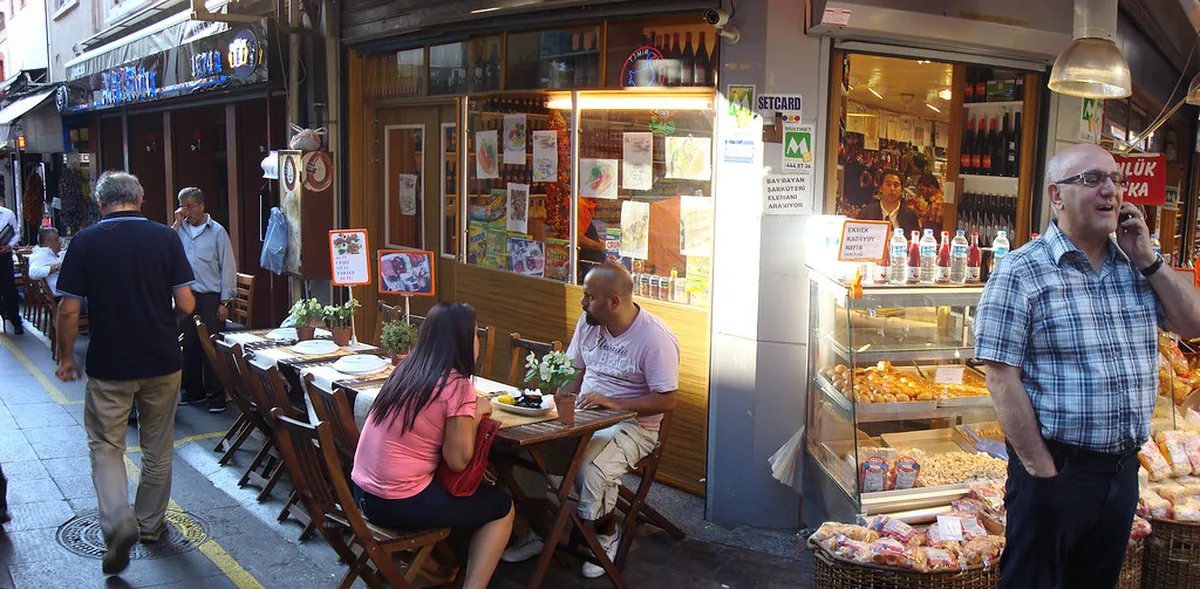
Guided food tours make sense for travelers short on time or wary of ordering blind, particularly ones that cross the Bosphorus by ferry from the Spice Bazaar to Kadıköy; some cover as many as eight stops and more than twenty tastes in a single outing, which is more ground than most visitors would cover solo in a day. The trade-off is less flexibility and a fixed schedule, so travelers who prefer wandering on their own timeline may get more value treating this guide as a self-directed route instead. Timing matters either way: booking outside peak season lines up with the shoulder-season crowd patterns covered elsewhere on this site, since food stalls and sit-down spots alike get noticeably calmer with fewer visitors competing for tables.
A handful of avoidable mistakes shape a first Istanbul food trip more than any single dish choice. Eating directly around the Blue Mosque and the rest of Sultanahmet Square usually means inflated prices and food built for tour-bus turnover rather than flavor, so walking a few streets further is almost always worth it. Skipping tap water in favor of bottled or filtered water is standard practice, and it is worth extending that caution to freshly squeezed juice or ice sold at very informal stalls. A day trip to Büyükada in the Princes' Islands is a worthwhile change of pace — covered in more detail via a Princes' Islands day trip guide — but the food there tends to run more expensive and less distinctly local than a meal on the mainland, so it works best as a scenery trip rather than a food pilgrimage. Finally, do not skip the simplest ritual of all: buying a simit and a glass of tea for the ferry crossing across the Bosphorus is one of the most repeated local habits in the city, and it costs next to nothing compared with a sit-down meal.
| Dish | Style | Approx. 2026 Price | Best For |
|---|---|---|---|
| Simit | Street cart | From ₺10 | Breakfast, snack, ferry ride |
| Döner | Street stall | ₺80–150 | Quick lunch |
| Döner | Tourist hotspot | ₺200+ | Convenience over value |
| Pide | Bakery or casual restaurant | From ₺300 | Shareable meal |
| Meze and rakı | Sit-down meyhane | $$–$$$ per person | Evening, boozy night out |
How to Order a Meyhane Meal in Istanbul
A meyhane is Istanbul's classic tavern meal, and it works differently from ordering one main course. Start by choosing several cold meze from the tray or display case: haydari, ezme, fava, sea beans, stuffed vine leaves, and grilled eggplant are common picks. Hot meze such as fried calamari, grilled octopus, or liver may follow before fish, köfte, or another main dish.
For the most local atmosphere, look around Nevizade and Asmalımescit in Beyoğlu, the side streets of Karaköy, or the meyhane lanes around Kadıköy's fish market. Rakı is the traditional drink, served with water and ice, but mineral water or ayran are normal alternatives if you are not drinking. Portions are meant for sharing, so two people can build a satisfying meal from four or five meze plus bread rather than ordering separate mains immediately.
For trip-planning details, see Turkish cuisine – Wikipedia.
Frequently Asked Questions
What is the best local food to try first in Istanbul?
A simit paired with tea and a balık ekmek sandwich near the Galata Bridge cover both ends of the everyday food scene, from breakfast staple to iconic street snack, without requiring a sit-down reservation.
Is Midye Dolma (stuffed mussels) safe to eat from street stalls?
Midye dolma is generally safest when bought in the evening rush, when trays turn over quickly and are less likely to have sat out for hours; a stall with a steady stream of customers is a reliable sign of fresh stock.
What is the difference between İskender Kebab and regular Döner?
Döner is sliced meat served in bread or on a plate, while İskender kebab layers that same sliced meat over pieces of pide bread, then finishes it with tomato sauce, melted butter, and yogurt — a heavier, sit-down version rather than a walking snack.
Should you eat near the Blue Mosque or in Sultanahmet?
Restaurants directly around the Blue Mosque and Sultanahmet Square tend to charge tourist-oriented prices for food built for fast turnover rather than flavor, so walking a few streets away toward Karaköy, Kadıköy, or Beyoğlu's backstreets usually delivers a better meal for less.
How much should a day of eating in Istanbul cost in 2026?
Sticking to street food such as simit, döner, and pide keeps costs low, roughly from ₺10 for a simit up to ₺150–200 for a filling döner, while adding a sit-down meze spread with rakı at a meyhane pushes the total for a day noticeably higher.
Is a guided food tour worth booking, and how much time should I plan for it?
Guided tours, especially ones that cross the Bosphorus by ferry from the Spice Bazaar to Kadıköy, suit travelers who want a packed, structured introduction to multiple dishes in a single outing lasting several hours; independent travelers who prefer setting their own pace may get more value treating this guide as a self-directed route instead.
Continue exploring
More guides you'll find useful