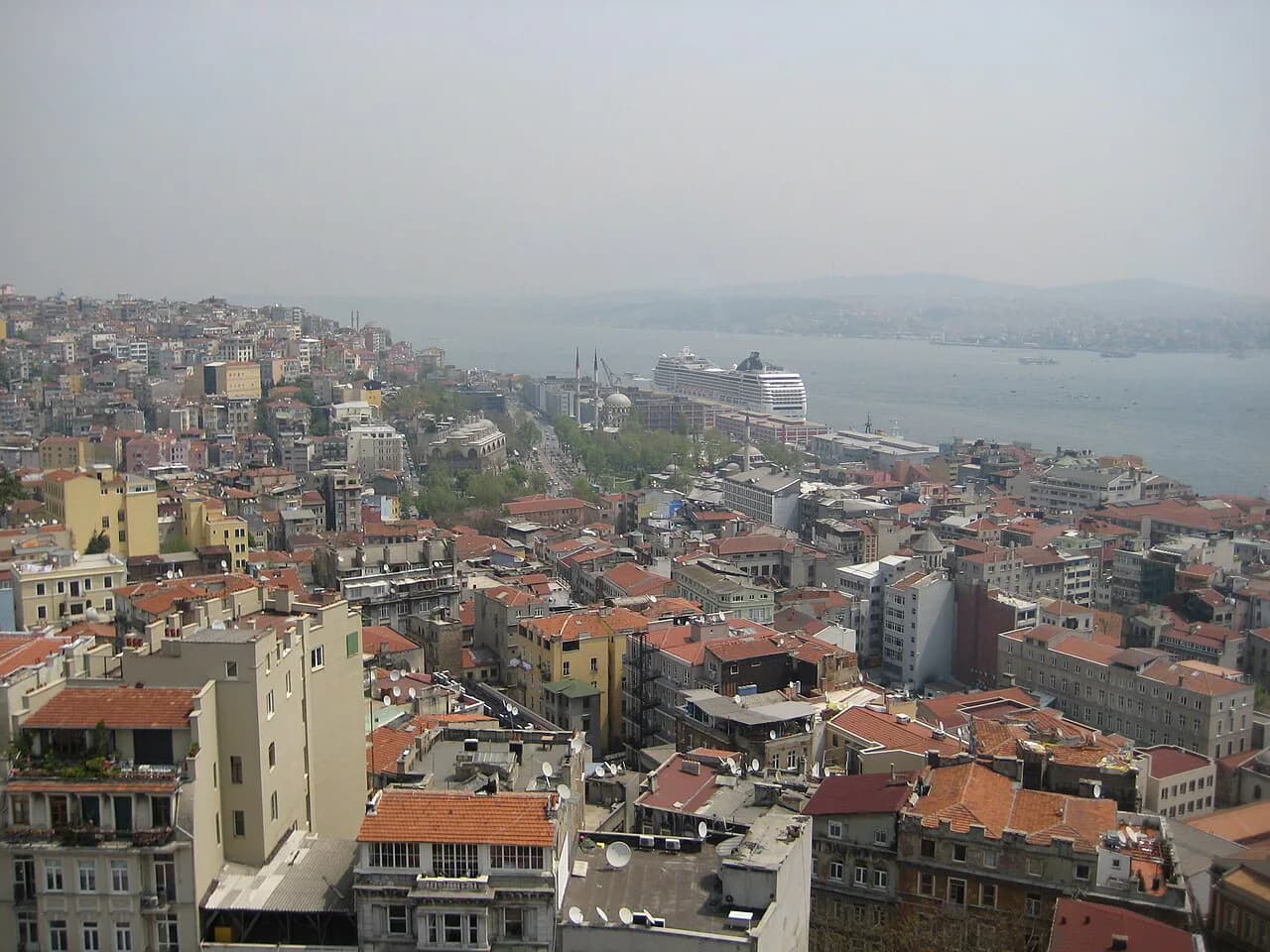
Hidden Şerefiye Cistern, Istanbul: 2026 Hours & Tickets
Buried for decades before its rediscovery, this 5th-century water hall now has set hours and ticket prices — plus how long to budget for a Historic Peninsula visit.
On this page
Şerefiye Cistern, Istanbul
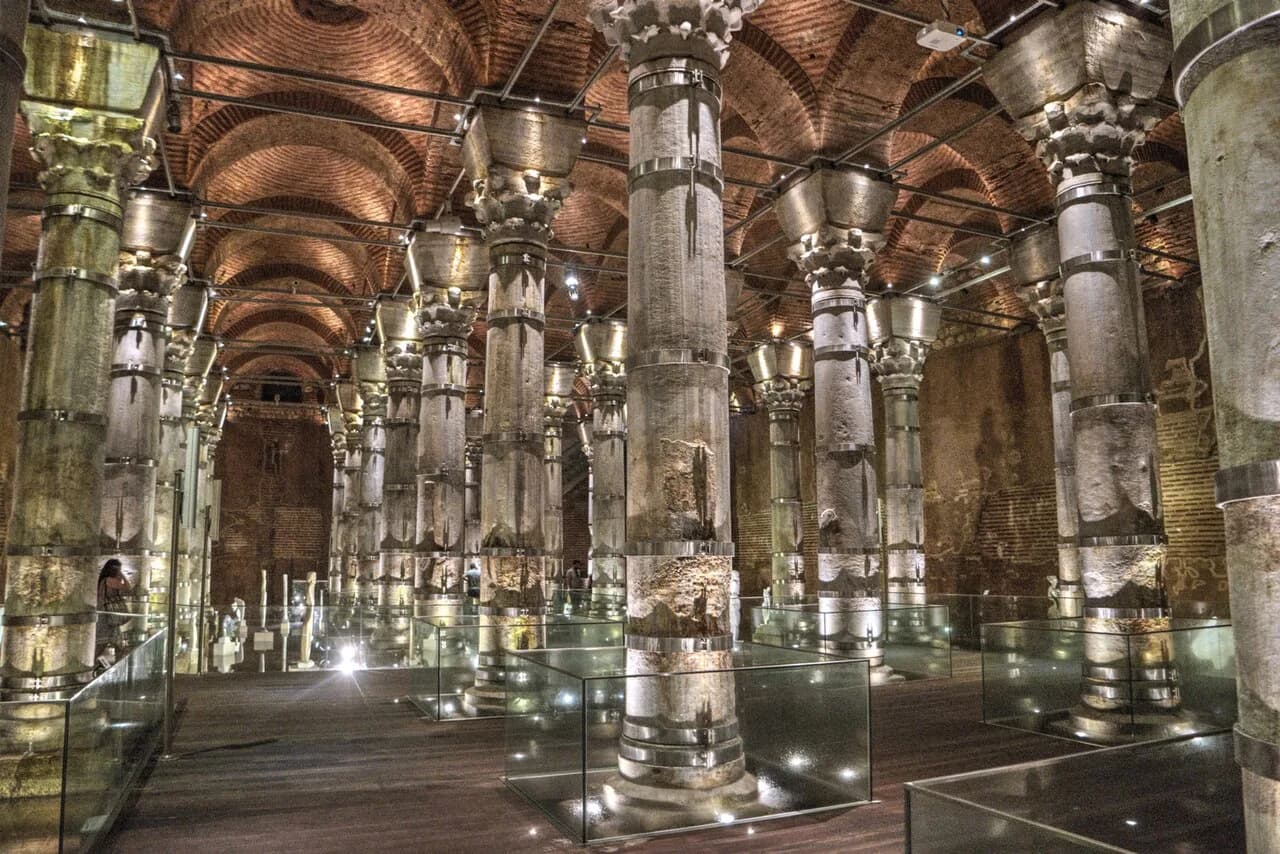
Last updated July 2026: the Şerefiye Cistern in Istanbul is one of the historic peninsula's most striking rediscovered monuments, a fifth-century water hall that sat buried beneath a municipal building near Beyazıt Square for decades before its 2010 rediscovery. This guide covers what to expect inside, current hours and ticket guidance, how the site compares to the Basilica Cistern and Binbirdirek Cistern, and how much time to budget on a Historic Peninsula itinerary. Expect noticeably thinner crowds than the Basilica Cistern, plus a 360-degree projection experience layered onto genuine Byzantine architecture that many first-time visitors never see.
What Is the Şerefiye Cistern in Istanbul?
The Şerefiye Cistern, known as Şerefiye Sarnıcı in Turkish and identified academically as the Theodosius Cistern, is a restored Byzantine-era underground water reservoir in Fatih, on Istanbul's Historic Peninsula. It answers a simple question fast: it's worth building into a Historic Peninsula day if there's time beyond the headline sights, because it delivers genuine fifth-century engineering with far less foot traffic than its famous neighbor. The cistern once formed part of Constantinople's water-distribution network, storing supply that fed the Nymphaeum, the Baths of Zeuxippus, and the Great Palace of Constantinople. Unlike many of the city's landmarks, it carries no dedicatory inscription, so its construction date is inferred from architectural style rather than a carved record. Guides covering under-the-radar sights in Istanbul and secret spots around the city increasingly flag Şerefiye precisely because so many travelers walk straight past its unmarked Fatih entrance on the way to the Basilica Cistern queue a few streets over.
Once supplying water to the Great Palace and Baths of Zeuxippus across Constantinople's network, the Şerefiye today anchors quieter half-day itineraries on the Historic Peninsula rather than standing as a must-see attraction.
History and Architecture: From Theodosius II to Today
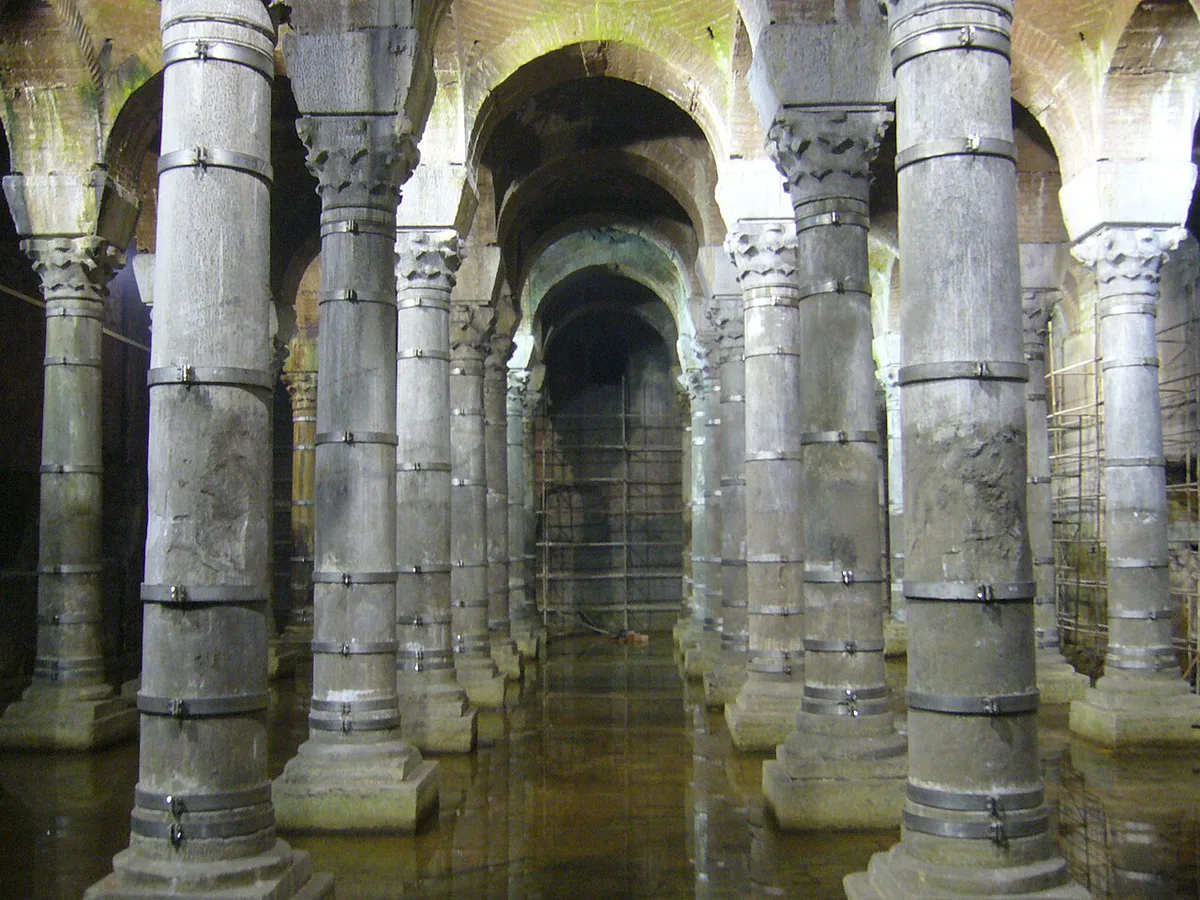
Historical sources credit the Şerefiye Cistern's construction to Roman Emperor Theodosius II, built between 428 and 443 to hold water carried into the city by the Valens Aqueduct. It's one of many roofed and open-air cisterns Constantinople built over the centuries to compensate for the historic peninsula's weak natural water supply and to withstand long sieges. Architecturally, the cistern covers roughly 20 by 40 meters, with a roof of 45 sail vaults carried on 32 marble columns about 11 meters tall, each topped with a Corinthian capital and carved acanthus leaves; the column marble was quarried on Marmara Island, the interior walls were sealed with waterproof plaster, and the corners were curved to handle water pressure. Cisterns fell out of favor under the Ottomans, who considered still water unhealthy, and by the late 18th or early 19th century Şerefiye had vanished from public memory beneath a private estate, later absorbed into municipal use from 1912 onward. It stayed buried until 2010, when Istanbul Metropolitan Municipality demolished the annex building above it and rediscovered the chamber intact. Eight years of restoration followed, and by 2018 the cistern reopened with a 360-degree projection mapping system built into the structure — the feature that now defines a visit as much as the columns do.
- Built: 428–443 CE under Emperor Theodosius II
- Size: approximately 20 by 40 meters
- Columns: 32 marble columns, about 11 meters tall, with Corinthian capitals
- Rediscovered: 2010, after being buried since the late Ottoman era
- Reopened: 2018, following an eight-year restoration
Hours, Tickets, and How to Book in 2026
According to the official Şerefiye Cistern website, the site is open daily from 10:00 to 18:00, with a standard adult ticket listed at ₺900, bookable online in advance or purchased at the entrance on Piyer Loti Caddesi. Treat both figures as a starting point rather than gospel: they come from a single official listing with no independent corroboration in this research, and Istanbul museum and cistern pricing has moved more than once in recent years. Before finalizing a 2026 Historic Peninsula itinerary, check the official Şerefiye Cistern site directly for the current hours and ticket price, and book online ahead of a summer visit if the cistern is a fixed stop rather than a maybe. If the itinerary is built around dodging peak-season crowds, pair this stop with the broader shoulder-season logic in visiting Istanbul without the crowds, which applies across the Historic Peninsula's indoor sights too.
Before booking a 2026 visit, verify hours and ticket price on the official site: this quieter alternative to the Basilica Cistern, which draws notably heavier crowds, is worth scheduling in advance if it's a planned stop.
Getting There and How Much Time to Allow
The Şerefiye Cistern's entrance sits at Binbirdirek Mahallesi, Piyer Loti Caddesi No:2/1, in Fatih — squarely on the Historic Peninsula and near Sultanahmet and the Basilica Cistern. Worth flagging clearly: this Piyer Loti Caddesi address in Fatih has nothing to do with Pierre Loti Hill in Eyüp, a separate, distant landmark that just happens to share part of a name — don't route toward Eyüp if the cistern is the target. In our editorial assessment, most travelers move through the Şerefiye Cistern in around 30 to 45 minutes, enough time to take in the column hall and the 360-degree projection sequence without rushing; allow extra time if visiting during a special exhibition or event inside the space. Because it sits within the same compact cluster of Historic Peninsula landmarks as the Basilica Cistern, it slots naturally into broader day trip itineraries from Istanbul rather than requiring a dedicated outing.
Şerefiye Cistern vs. Basilica Cistern and Binbirdirek Cistern
All three of the Historic Peninsula's restored Byzantine cisterns are open to the public again, but they don't deliver the same visit. Weigh the differences before deciding whether to see one, two, or all three on the same day.
| Cistern | Scale & Style | Crowd Level | What Makes It Different |
|---|---|---|---|
| Şerefiye Cistern | Roughly 20 by 40 meters, 32 columns, 45 sail vaults | Noticeably lighter than the Basilica Cistern | 360-degree projection art layered onto Byzantine architecture; ₺900 ticket per the official site (verify current price) |
| Basilica Cistern | Istanbul's largest surviving cistern, with a dense forest of columns | Typically the busiest of the three, especially at midday | The best-known of the peninsula's cisterns and most first-time visitors' default choice; ticketed separately — confirm current pricing on its own official channel |
| Binbirdirek Cistern | Second-largest historic cistern on the peninsula | Generally quieter than the Basilica Cistern | Frequently hosts exhibitions and events alongside standard visits; ticketed separately — confirm current pricing on its own official channel |
Mistakes to Avoid
A few avoidable missteps show up repeatedly in Historic Peninsula planning around this stop:
- Confusing the cistern's Piyer Loti Caddesi entrance in Fatih with Pierre Loti Hill in Eyüp — they share part of a name and nothing else.
- Treating the ₺900 ticket price and 10:00–18:00 hours as fixed — reconfirm both on the official site shortly before a 2026 visit.
- Skipping Şerefiye entirely in favor of only the Basilica Cistern, then missing the quieter alternative on the same peninsula.
- Arriving without checking whether the 360-degree projection runs on a schedule rather than a self-paced walkthrough.
- Budgeting only 10 minutes for the stop — most travelers need closer to 30 to 45 minutes to see the space properly.
Nearby Things to Do in Fatih
Şerefiye Cistern's Fatih location puts it within walking range of the Historic Peninsula's core sights, and it fits neatly alongside a broader look at Istanbul's Istanbul's neighborhoods guide when mapping out where to base a stay versus where to sightsee. The nearby nearby Balat neighborhood, with its layered Ottoman-era streets, makes a scenic add-on for travelers with a half-day free after the cistern visit, and it pairs well with an off-the-beaten-path itinerary built around quieter corners of the peninsula. When it's time to eat, check a guide to best local restaurants nearby or a broader local food guide for Istanbul before picking a spot, since Sultanahmet's most convenient restaurants aren't always its best value; for travelers hunting unique things to try beyond the standard sights, the cistern is a strong anchor for that kind of afternoon.
Frequently Asked Questions
What is the Şerefiye Cistern known for?
It's known for being a fifth-century Byzantine water reservoir that vanished from public memory for well over a century before Istanbul Metropolitan Municipality rediscovered it in 2010, and for the 360-degree projection mapping experience layered into the restored column hall today.
How much time do you need at the Şerefiye Cistern?
In our editorial assessment, most visits run about 30 to 45 minutes — enough to see the column hall, take in the historical context, and watch the projection sequence without feeling rushed.
Is the Şerefiye Cistern worth visiting compared to the Basilica Cistern?
It depends on the itinerary. First-time visitors with limited time typically prioritize the larger, better-known Basilica Cistern, while repeat visitors or anyone chasing a quieter alternative on the same peninsula tend to find the Şerefiye Cistern the more rewarding stop.
What are the current opening hours and ticket price?
Per the official Şerefiye Cistern site, the reported hours are daily from 10:00 to 18:00 with a standard adult ticket at ₺900. Reconfirm both directly on the official site before a 2026 visit, since this figure comes from a single uncorroborated source.
How do you get to the Şerefiye Cistern in Fatih?
The entrance is at Binbirdirek Mahallesi, Piyer Loti Caddesi No:2/1 in Fatih, near Sultanahmet and the Basilica Cistern — and distinct from Pierre Loti Hill in Eyüp, which is a separate landmark despite the similar street name.
Is the Şerefiye Cistern a good fit for a short Istanbul itinerary?
Yes, if the itinerary already includes the Historic Peninsula's core sights. Its Fatih location and roughly 30-to-45-minute visit length make it easy to slot in without adding a separate trip across the city.
Continue exploring
More guides you'll find useful