Rakowicki Cemetery Krakow Travel Guide
Plan your visit to Rakowicki Cemetery in Krakow with history, notable graves, war memorials, opening details, and practical tips for a smoother trip.
On this page
Rakowicki Cemetery Krakow: A Visitor's Guide
Rakowicki Cemetery in Krakow holds one of Poland's richest layers of history. Established in 1803, it spans roughly 42 hectares and holds more than 75,000 graves. Painters, poets, actors, and soldiers from three centuries of Polish history rest within its tree-lined avenues. Last updated July 2026, this guide covers what to see, when to go, and how to plan a respectful visit.
Many travelers treat Rakowicki Cemetery as an off the beaten path stop in Krakow away from Old Town crowds. Its Avenue of Merit gathers several widely recognized figures from Polish culture in one walkable stretch. A separate Commonwealth War Graves plot adds a somber layer of twentieth century military history. Expect a slower, reflective pace rather than a typical sightseeing stop.
History and Layout of Rakowicki Cemetery
Rakowicki Cemetery opened in 1803 as Krakow's main municipal burial ground. It grew to cover about 42 hectares and now holds over 75,000 graves. The grounds serve both ordinary residents and some of Poland's most recognized cultural and political figures. Poland's monument register added the cemetery in 1976, recognizing its historical value.
The oldest section was laid out like a park, centered on a chapel. Paths fan out from that chapel in a semicircle, echoing a gate to eternity. This layout mirrors 19th-century European cemetery design, blending burial ground with landscaped garden. Mature trees now shade most of the older avenues, softening the atmosphere.
The cemetery sits north of Krakow's Old Town, in the Prądnik Czerwony district. That location places it outside the main tourist loop most visitors follow. Pairing it with a broader look at the Krakow Neighborhoods Guide: Best Areas for 2026 helps with orientation. Trams and buses connect the area to central Krakow in about 15 to 20 minutes.
Notable Graves on the Avenue of Merit
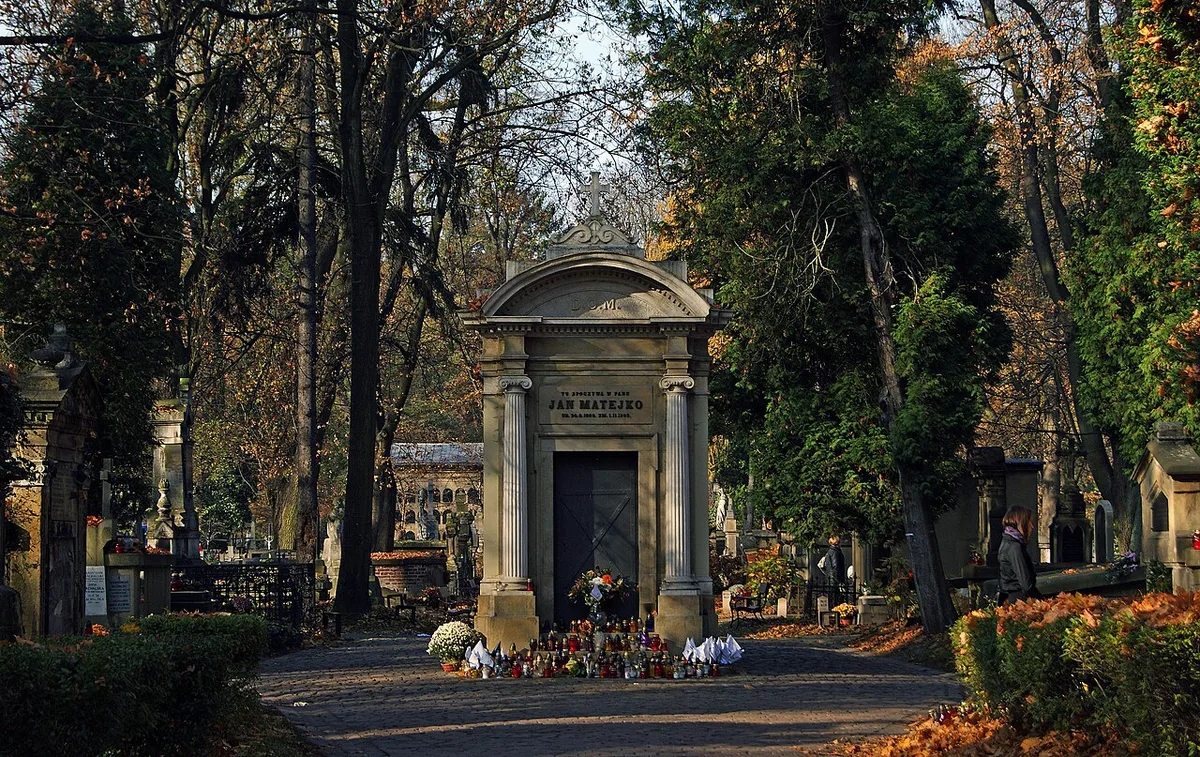
Avenue of Merit functions as a pantheon for modern Polish culture. Painters, actors, musicians, and writers from the 19th and 20th centuries rest along this stretch. Their graves range from simple headstones to elaborate sculptural monuments. Walking the avenue takes roughly 20 to 30 minutes at an unhurried pace.
Painter Jan Matejko lies along the main avenue, alongside actress Helena Modrzejewska. A gravestone sculpture of a boy at a school bench, designed by Tadeusz Kantor, marks a well-known stop. Kantor based the figure on a character from his play The Dead Class.
Nobel laureate Wisława Szymborska rests in a family tomb on the Avenue of Merit. Singer and poet Marek Grechuta is remembered with a bust memorial nearby. Cabaret founder Piotr Skrzynecki's grave carries a small bell, echoing his stage performances. Several more painters, actors, and pianists share this same section of the cemetery.
Locating specific graves works best with a cemetery map from the entrance gate. Travelers drawn to 13 Hidden Gems in Krakow (2026): Local Guide often add this avenue to a quieter afternoon itinerary. Photography is welcome, though visitors should stay on marked paths near active graves.
- Jan Matejko, historic Polish painter
- Location: main avenue near the chapel
- Known for: monumental historical paintings
- Era: 19th century
- Helena Modrzejewska, celebrated stage actress
- Location: main avenue
- Known for: international 19th-century stage career
- Wisława Szymborska, Nobel Prize poet
- Location: Avenue of Merit family tomb
- Known for: 1996 Nobel Prize in Literature
- Marek Grechuta, singer and poet
- Location: Avenue of Merit
- Known for: bust memorial marker
- Tadeusz Kantor's Dead Class monument
- Location: near the main avenue
- Known for: boy-at-school-bench sculpture
Commonwealth War Graves and WWI History
A separate military section holds soldiers from multiple conflicts across two centuries. Veterans of the January Uprising rest here alongside Austro-Hungarian and Russian troops killed in World War One. British, Soviet, and German soldiers from World War Two also have dedicated quarters. Red Army soldiers hold a separate section, with remains transferred here from other sites in 1997.
The Commonwealth War Graves Commission maintains a dedicated plot inside the cemetery, detailed on Cwgc.org. This plot holds 483 Commonwealth casualties from the Second World War, most of them former prisoners of war. Many graves came from the camp hospital at Stalag VIIIB, also known as Stalag 344 after 1943. The plot also includes 24 non-war graves and 15 Polish war graves.
Reach the Commonwealth plot by entering the main cemetery gate on Jana Prandoty street. Walk straight for about 100 meters, then turn left at the CWGC signpost. Continue roughly 200 more meters to find the marked Commonwealth War Graves section. Parking near the cemetery gets tight during Polish holiday periods, so plan extra time.
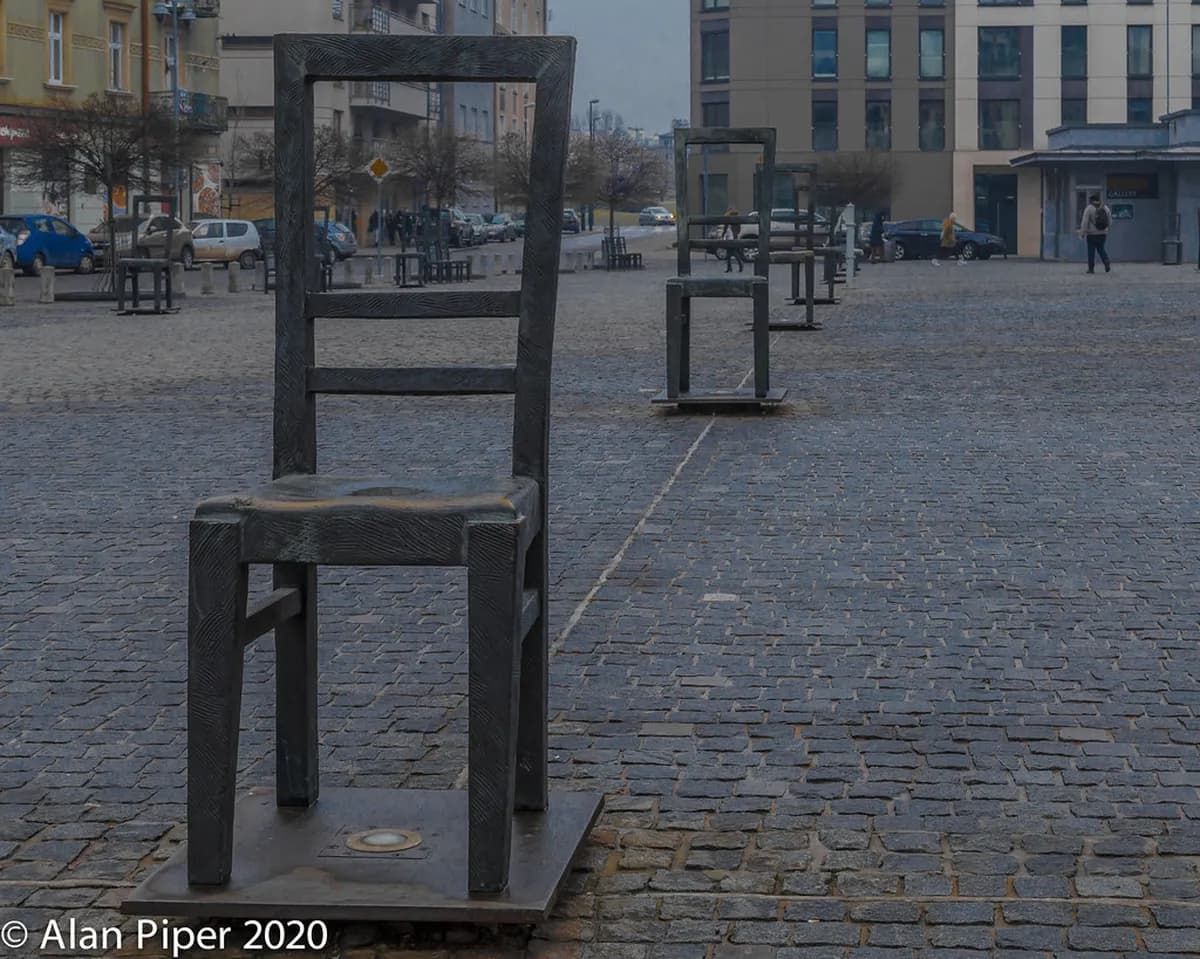
This military history pairs naturally with Krakow's other WWII sites across the city. The Ghetto Heroes Square in Krakow covers a different chapter of the same wartime period. Together, both sites round out a fuller picture of the city's twentieth-century history.
Best Time to Visit Rakowicki Cemetery
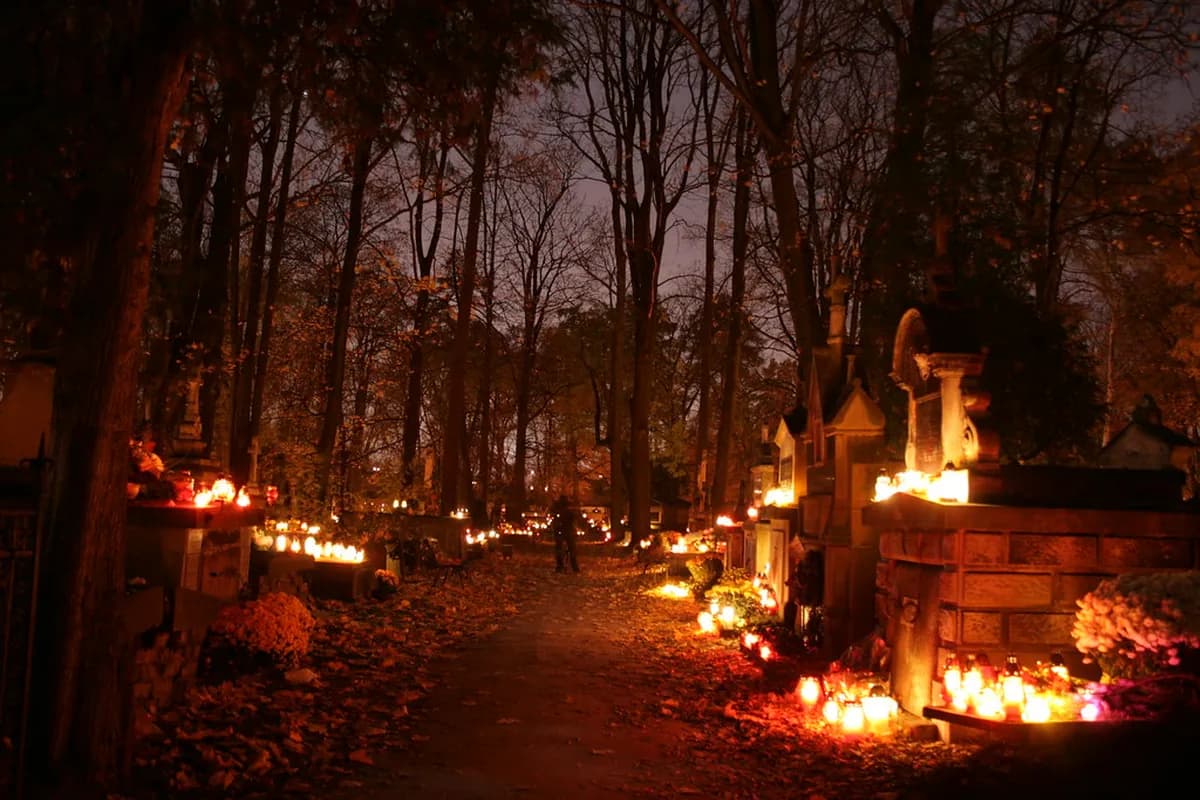
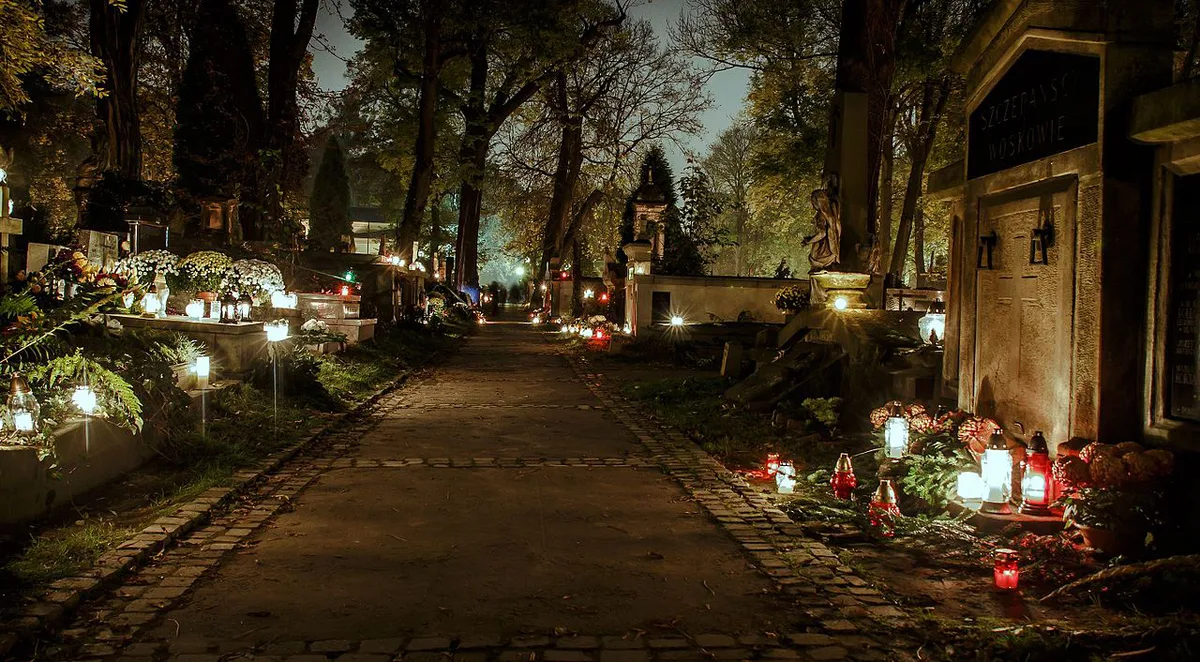
Rakowicki Cemetery changes character sharply around All Saints Day on November 1st. Families fill the avenues with candles and flowers, creating a striking but crowded scene. Local tradition treats this week as one of the most important dates on the calendar. That week draws the heaviest foot traffic and the tightest parking of the year.
All Saints Day (November 1st) draws the heaviest crowds and tightest parking; weekday mornings outside the holiday season offer the quietest experience with mild weather in spring and early autumn.
| Season/Time | Weather | Crowds and Conditions | What to Pack |
|---|---|---|---|
| Spring and Early Autumn | Mild | Suitable for long walks, quieter weekday mornings | Comfortable shoes, water |
| Summer | Warm | Limited shade in newer sections | Water, sun protection |
| Winter | Short daylight, cold | Icy paths, gravel can freeze overnight | Sturdy footwear |
| All Saints Day Week (Nov 1) | Variable | Heaviest crowds, tightest parking | Plan extra time |
Weekday mornings outside the holiday season offer the quietest, most reflective visit. Spring and early autumn bring mild weather that suits the long walking paths. Summer visits can get warm with limited shade in the newer sections.
General crowd patterns across the city follow similar seasonal swings. Cross-checking the Best Time To Visit Krakow Without Crowds Travel Guide helps align a cemetery stop with a lighter travel week. Early morning visits, regardless of season, tend to feel calmest.
Winter visits bring shorter daylight hours and occasional icy paths underfoot. Sturdy footwear matters more in winter than during any other season. Check forecasts before a winter visit, since gravel paths can freeze overnight.
Planning a Rakowicki Cemetery Krakow Visit
Rakowicki Cemetery sits at ulica Jana Prandoty, 31-519 Kraków, a short ride from the Old Town. No admission fee applies, which fits neatly among 15 Best Free Things to Do in Krakow (2026). Trams and city buses stop within a short walk of the main gate.
Admission is free. Plan 60 to 90 minutes for a relaxed walk. Wear flat, comfortable shoes since paths are gravel and uneven. Bring water and a map to locate specific graves.
Cemetery hours generally run from early morning until dusk throughout the year. Hours can shift around religious holidays, so confirm current details on Krakow.travel before visiting. Allow 60 to 90 minutes for a relaxed walk through the main avenues.
Comfortable, flat shoes matter most, since paths are gravel and uneven in places. Bring water on warmer days, as shaded benches are limited near the entrance. A paper or phone map helps locate specific graves without backtracking. Photography is generally accepted, though visitors should stay quiet near active mourners.
Respectful behavior matters throughout the grounds, since Rakowicki Cemetery remains an active burial site. Keep voices low and avoid walking directly across grave plots. A calm, unhurried pace suits the reflective mood of the whole visit.
- Confirm the address and entrance point
- Address: ul. Jana Prandoty, 31-519 Kraków
- Main entrance: near the central chapel
- Parking: limited during Polish holidays
- Time the visit around opening hours
- Typical hours: dawn to dusk daily
- Quietest window: weekday mornings
- Tip: verify current hours before visiting
- Locate the Commonwealth War Graves plot
- Route: straight 100 meters, then left at CWGC sign
- Distance: 200 more meters to the plot
- Look for: CWGC signposting
- Pack for a walking-heavy visit
- Footwear: flat, comfortable shoes
- Bring: water and a paper map
- Duration: allow 60 to 90 minutes
Funerary Art and Memorial Details to Look For
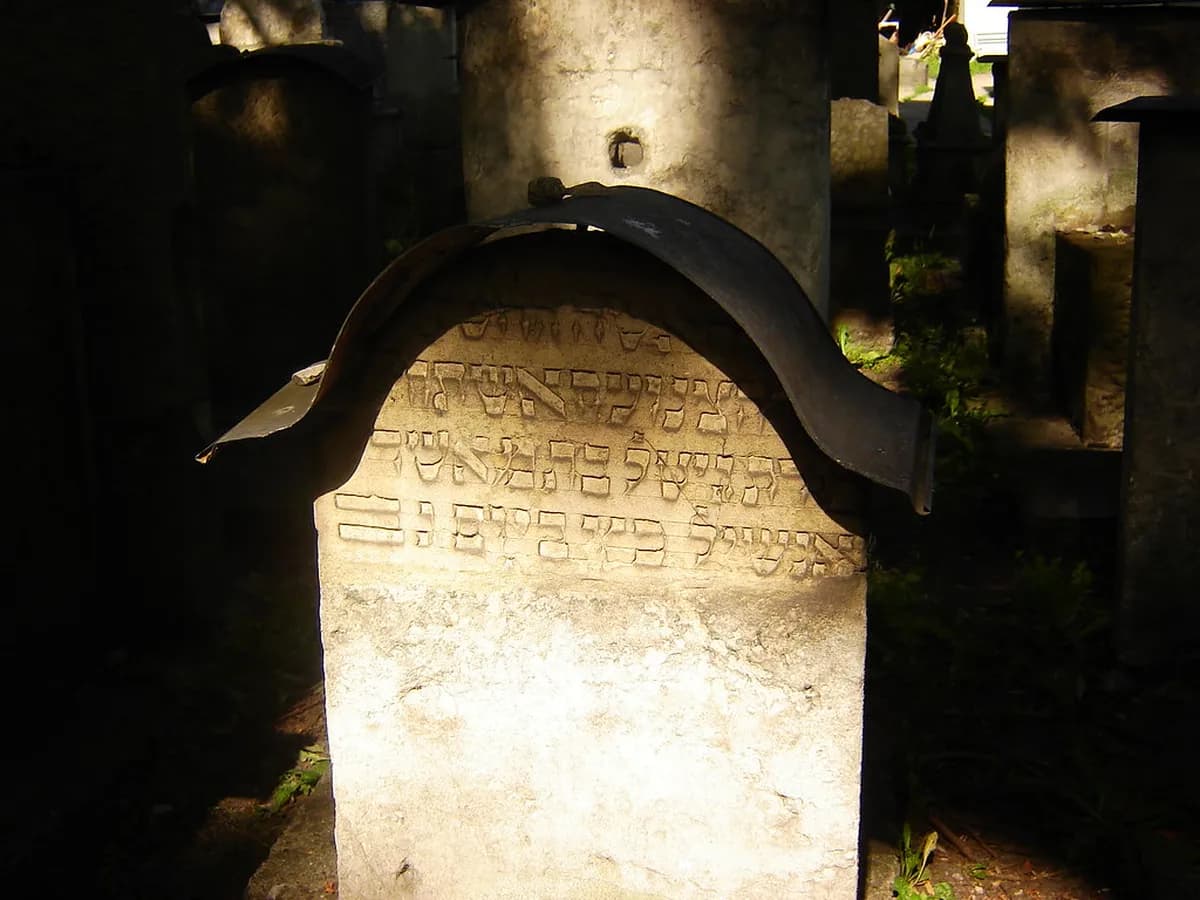
Rakowicki is also worth treating as an open-air sculpture walk, not only a list of famous graves. Start near the central chapel and the Avenue of Merit, where older family tombs show the cemetery’s 19th-century park layout through carved angels, urns, crosses, portrait medallions, and ironwork. The most memorable stop for many visitors is Tadeusz Kantor’s Dead Class memorial, a seated schoolboy sculpture tied to his theatre work rather than a standard headstone.
Look closely at materials and condition as you walk: polished black stone, weathered sandstone, bronze busts, and small enamel portraits tell different periods of Krakow memorial design. Keep to the paths and photograph from a respectful distance, since many graves are still actively tended by families. If time is short, focus on the chapel area, Jan Matejko’s grave, Helena Modrzejewska’s memorial, Wisława Szymborska’s family tomb, and Kantor’s sculpture before continuing to the Commonwealth War Graves plot.
Frequently Asked Questions
Who are the most famous graves at Rakowicki Cemetery in Krakow?
Notable graves include painter Jan Matejko, actress Helena Modrzejewska, and Nobel Prize poet Wisława Szymborska. Singer-poet Marek Grechuta and cabaret founder Piotr Skrzynecki also rest along the Avenue of Merit. Full grave records appear on Findagrave.com for further research.
Is Rakowicki Cemetery free to visit?
Yes, entry to Rakowicki Cemetery carries no admission fee. It functions as an active public burial ground rather than a ticketed attraction. Bring cash only if planning to buy flowers or candles from vendors near the gates.
Where are the Commonwealth War Graves located inside the cemetery?
The Commonwealth War Graves Commission plot sits about 300 meters past the main entrance on Jana Prandoty street. Walk straight for 100 meters, then turn left at the CWGC sign, and continue 200 meters further. Full location details appear on en.Wikipedia.org.
How much time should visitors plan for Rakowicki Cemetery?
Plan 60 to 90 minutes for a relaxed walk through the main avenues and the Avenue of Merit. Add extra time during All Saints Day week, since paths get crowded. Pair the stop with 8 Best Day Trips From Krakow (2026) Travel Guide for a fuller itinerary.
Where is the largest cemetery on Earth, and how does Rakowicki compare?
World rankings for cemetery size vary by source and definition, so treat exact answers cautiously. Rakowicki Cemetery covers about 42 hectares, modest next to some sprawling international burial grounds. Its value lies in historical density rather than sheer size, given the number of notable graves per hectare.
Other Cemeteries the City Treats as a Park
Rakowicki holds Polish national figures and ordinary Kraków families in the same overgrown grid, and it is busiest on All Saints' Day rather than in tourist season. Munich's Alter Südfriedhof reached the same state by neglect. Copenhagen's Assistens Cemetery is used openly as a park by the surrounding streets.
Rakowicki Cemetery rewards visitors willing to slow down and read the details in stone. History, art, and quiet respect all sit side by side across its 42 hectares. From Jan Matejko's grave to the Commonwealth War Graves plot, the site spans multiple centuries of Polish and European history. Few places in Krakow pack this much layered history into a single afternoon walk.
Plan around the timing tips above, confirm current hours before traveling, and wear comfortable shoes. A single visit blends easily with a broader day exploring Krakow's quieter corners. Treat the trip as a reflective pause rather than a typical checklist attraction.
Continue exploring
More guides you'll find useful