Ghetto Heroes Square Krakow Travel Guide
Plan your visit to Ghetto Heroes Square in Krakow with history, the empty chairs memorial, transit tips, and smart timing advice for a 2026 trip.
On this page
Ghetto Heroes Square Krakow
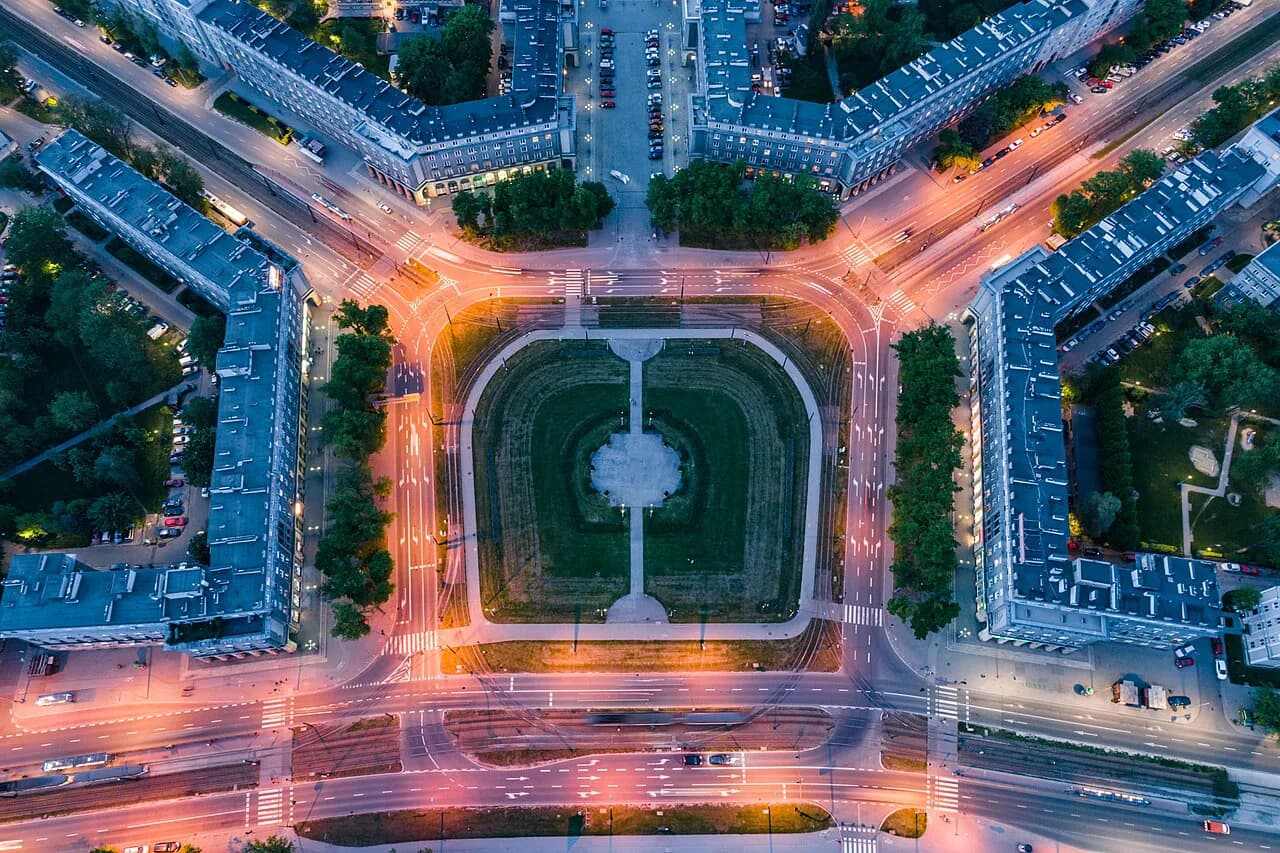
Ghetto Heroes Square sits in Krakow's Podgórze district, on the site of the wartime Jewish ghetto. Seventy empty chairs of different sizes now fill the plaza, each one standing in for lives lost or scattered. The square costs nothing to visit and stays open around the clock, so it fits easily into any Krakow itinerary. Last updated July 2026.
This guide covers the square's history, the chair memorial, and the walk over from Krakow's Old Town. It also flags nearby sites worth pairing with a visit, plus timing tips most short write-ups skip. Read through before you go, so the stop means more than a quick photo.
Ghetto Heroes Square: A Brief History
Before World War Two, this plot in Podgórze was a modest trading square called Zgody Square. Krakow's Jewish population then numbered around 60,000, with many families rooted in the historic Kazimierz Jewish quarter across the river. Nazi Germany occupied Krakow in 1939, and the persecution that followed reshaped this corner of the city. By March 20, 1941, authorities had sealed off part of Podgórze as the Krakow Ghetto, not Kazimierz.
Life inside the ghetto walls was cramped and harsh, with several families often sharing one small apartment. Zgody Square still worked as one of the only open spaces, where residents met, traded food, and swapped news. That small relief ended once the deportations started.
From May 30, 1942, the square became the assembly point for mass deportations to nearby camps. The final liquidation happened over March 13 and 14, 1943, emptying the ghetto for good. Roughly 11,000 people were sent to Belzec, 3,000 to Auschwitz, and 2,000 to the Plaszów labor camp. Around 2,000 more, mostly elderly residents and children, were killed in the square before ever boarding a train.
Only about 5,000 of Krakow's Jewish residents survived the war, a steep fall from the prewar 60,000. For more background, Absolute Tours has traced this history of the square in detail.
The Empty Chairs Memorial Today
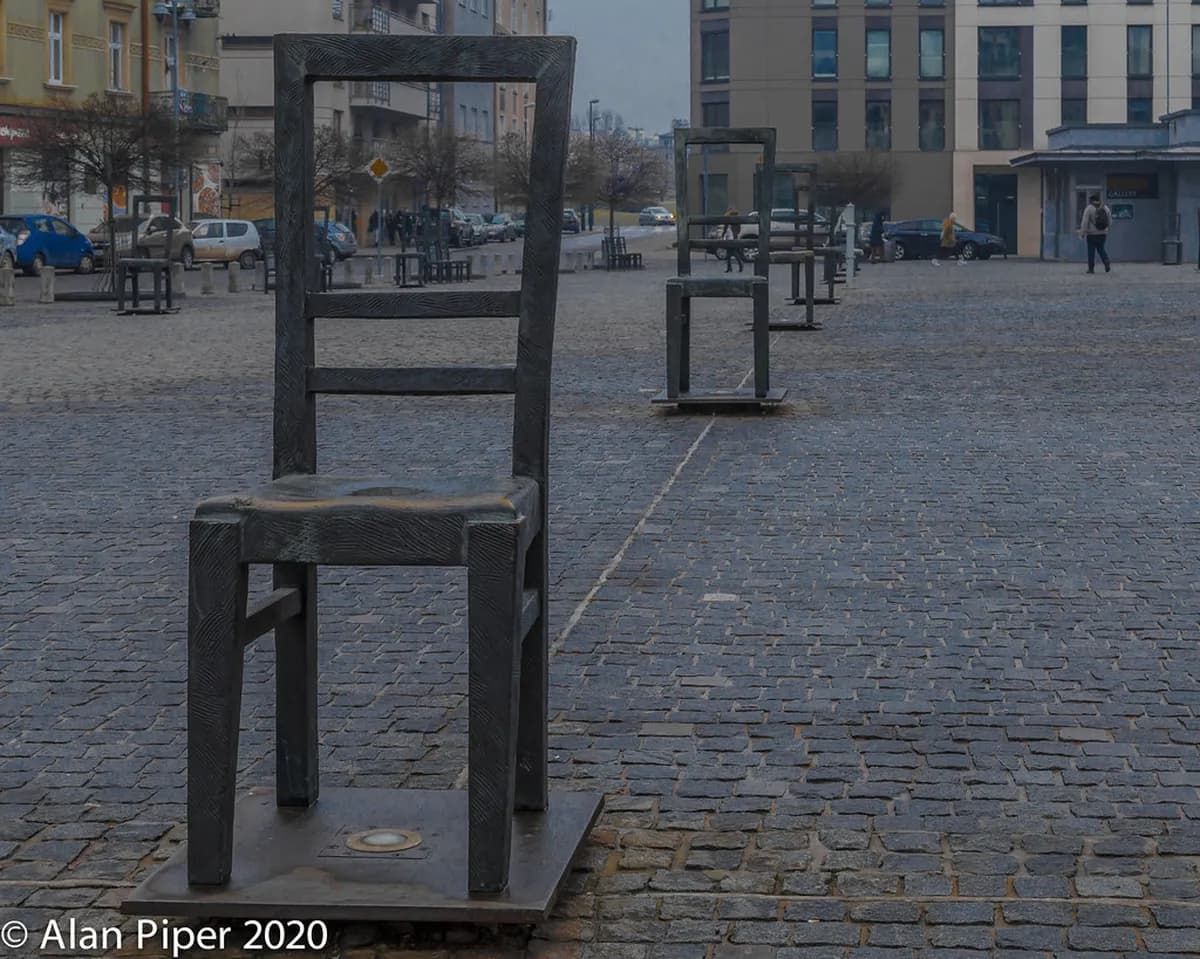
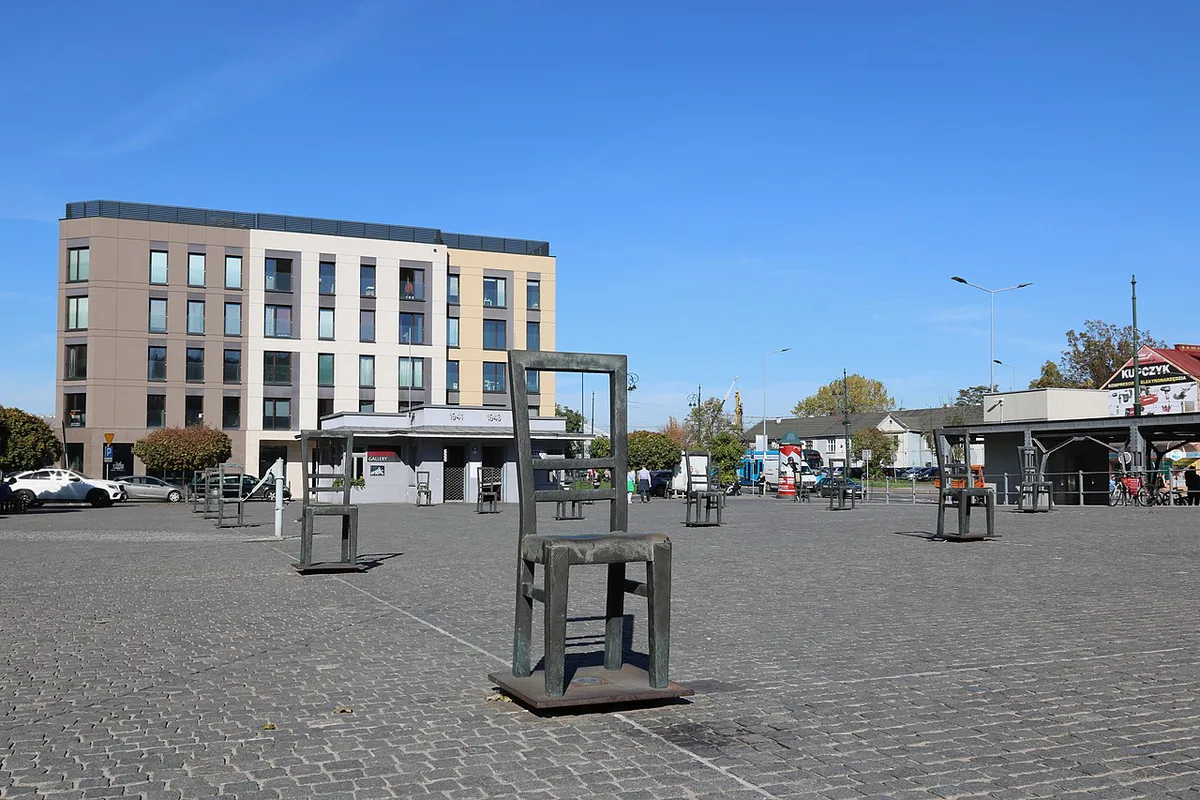
Today the square holds a memorial of 70 empty chairs, each a different size. The chairs face the direction thousands once walked toward the trains, and never returned. Some visitors expect something more dramatic and walk past without stopping.
The 70 empty chairs don't count victims or provide street seating. They symbolize absence: kitchens, bedrooms, schools, and family life emptied during the ghetto's liquidation in March 1943.
That reaction misses the point, since absence is exactly what the memorial represents. Krakow's Jewish population dropped from 60,000 before the war to about 5,000 after it. Empty chairs, scattered across an empty square, are meant to sit uneasily with anyone who stops.
A plaque on the square's north side honors those who resisted German troops before the ghetto's liquidation. It reads that they fought for three lines in history, to show Jewish youth did not go like sheep to the slaughter. Reading it slowly changes how the rest of the square feels.
Getting to Ghetto Heroes Square in Krakow
Ghetto Heroes Square sits southeast of Krakow's Old Town, across the Vistula River in Podgórze. Walking from the Main Square takes about 30 minutes, crossing one of the river bridges into Podgórze. The route passes ordinary Krakow streets, a useful contrast before reaching the memorial.
Public transit is faster if time is tight or the weather turns. The tram and bus stop named Plac Bohaterów Getta sits directly beside the square. Several city routes stop there, so check the current schedule before heading out.
| Method | Time & Cost | Best For |
|---|---|---|
| Walk from Main Square | 30 minutes, free | Route contrast across Vistula bridge into Podgórze |
| Tram or bus to Plac Bohaterów Getta | Standard city fare | Quick access in any weather |
| Train to Kraków Zabłocie station | 3-minute walk | Pairing with Schindler's Factory Museum |
Travelers arriving by regional rail can use Kraków Zabłocie station, about a 3-minute walk from the square. That stop also works well if pairing the visit with Schindler's Factory Museum nearby.
- Walk from Krakow's Main Square
- Time: about 30 minutes
- Cost: free
- Route: cross a Vistula bridge into Podgórze
- Tram or bus to Plac Bohaterów Getta
- Stop: right beside the square
- Cost: standard city fare
- Best for: quick access in any weather
- Train to Kraków Zabłocie station
- Walk time: about 3 minutes
- Best for: pairing with Schindler's Factory Museum
Jewish Ghetto Guided Tour Options
Several Krakow operators run walking tours that trace the former ghetto, usually combining the square with the Eagle Pharmacy and Schindler's Factory Museum. A guide adds context that's easy to miss reading plaques alone, especially around the deportation timeline. Tours typically run two to three hours on foot, covering Podgórze at a walking pace.
Guided walks suit first-time visitors who want the full history without independent research. They also work well for travelers already exploring 13 Hidden Gems in Krakow (2026): Local Guide beyond the Old Town's main sights. Group sizes and prices vary by operator, so confirm details directly before booking.
A self-guided visit works fine for travelers short on time or budget. The square, chairs, and plaque are easy to understand without a guide, especially with background read in advance. Choose a guided tour if pairing the square with Schindler's Factory in one outing, since combined tickets and routes save time.
Nearby Sites Worth Pairing With a Visit
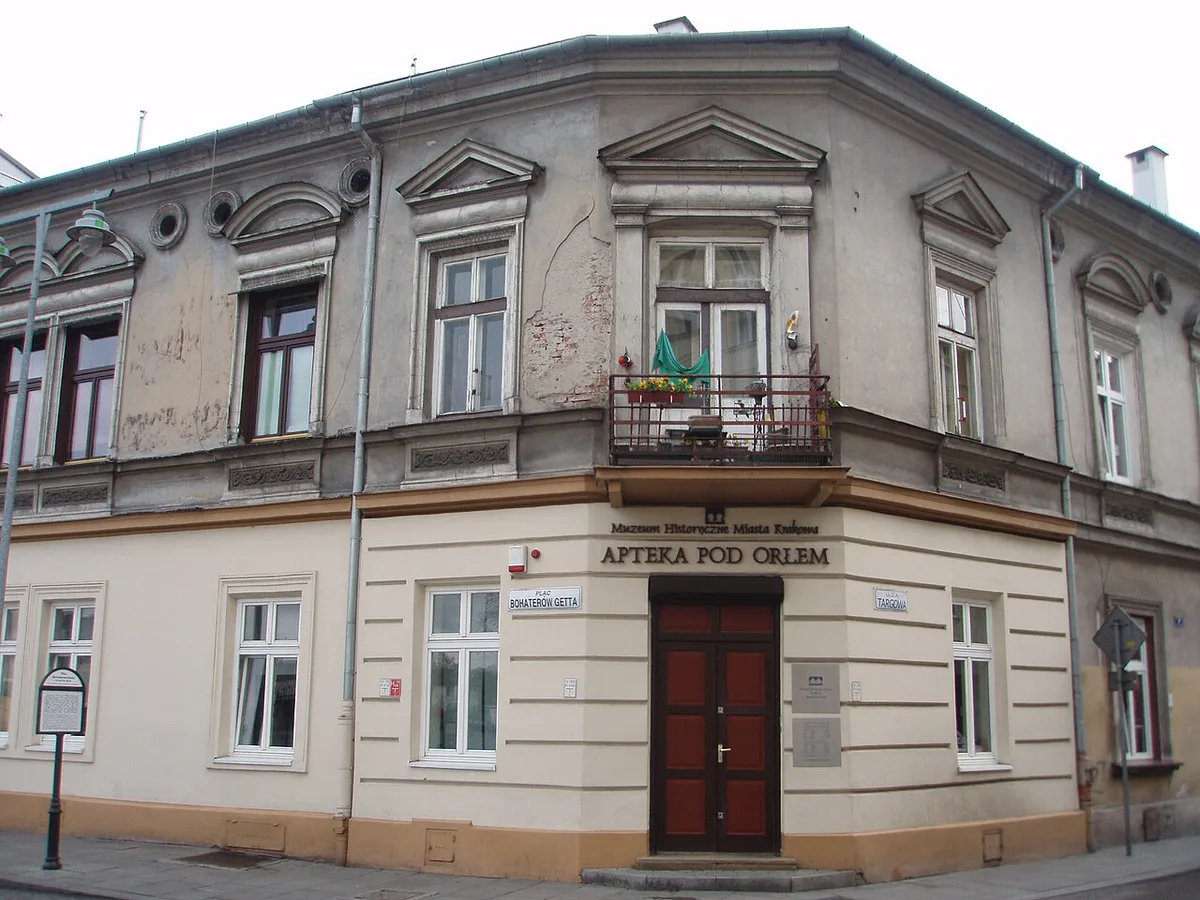
The Eagle Pharmacy sits right on the square's edge, where a Polish pharmacist once helped ghetto residents in small, dangerous ways. It now operates as a small branch museum, worth a short stop before or after the memorial. Check current hours on the museum's official site before visiting, since schedules shift seasonally.
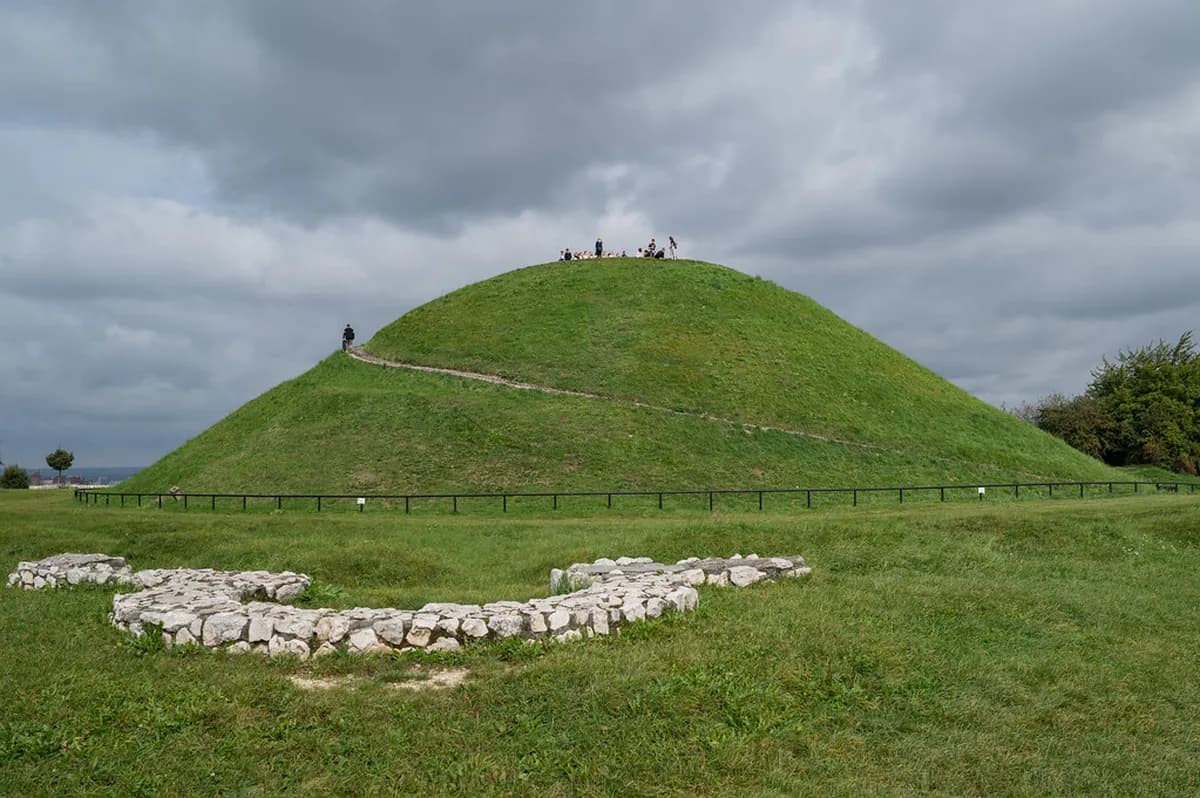
Schindler's Factory Museum sits about 15 minutes away on foot, in the Zabłocie district. It covers Krakow's wartime occupation in far more depth than the square alone can. For a quieter contrast, the Krakus Mound in Podgórze offers skyline views a short walk or tram ride further.
Visiting the mound after the ghetto sites gives some breathing room before returning to the Old Town. Building a short loop through Podgórze this way turns a single stop into a fuller afternoon.
- Eagle Pharmacy museum, on the square
- Type: small WWII history museum
- Distance: on-site
- Note: confirm hours before visiting
- Schindler's Factory Museum in Zabłocie
- Distance: about 15-minute walk
- Type: occupation-era museum
- Best for: deeper WWII context
- Krakus Mound in Podgórze
- Distance: short walk or tram ride
- Type: ancient mound with skyline views
- Best for: a quieter finish to the visit
Planning Tips: Timing, Cost, and Etiquette
Ghetto Heroes Square is free to enter and never closes, unlike the ticketed museums nearby. Early morning tends to bring the fewest people and the softest light for photos. For a broader sense of Krakow's quieter windows, see the guide on visiting Krakow without crowds.
Most visitors rush past without stopping. Spend at least 15–20 minutes, reading the plaque and sitting with what the square represents. This transforms the experience from a quick photo stop into something meaningful.
Budget travelers can treat this as a genuinely free stop, with no ticket or donation required to view the memorial. Only the nearby museums, like the Eagle Pharmacy or Schindler's Factory, carry an entrance fee. That makes the square an easy add-on even on a tight Krakow budget.
Most visitors give the square only a passing glance, which is the most common mistake travelers make here. Slowing down for five or ten minutes, reading the plaque, and sitting with the numbers changes the experience. Children often climb on the chairs, so keep an eye on younger travelers and encourage a quieter pace.
One travel blogger's account of visiting Krakow's ghetto sites, shared on Living in Another Language, echoes this same advice to slow down. Give the square at least 15 to 20 minutes, longer if pairing it with the pharmacy museum next door.
Who Designed the Empty Chairs Memorial
The chair memorial is not an older wartime monument. It was installed in 2005 as part of a redesign of Plac Bohaterów Getta by Krakow architects Piotr Lewicki and Kazimierz Łatak. The idea draws on accounts from the ghetto liquidation, when furniture and personal belongings were left scattered across Zgody Square after residents were forced from their homes and assembled for deportation.
That detail helps explain why the square can feel unusually bare. The large metal chairs are not meant to be comfortable street furniture or a literal count of victims. They point instead to absence: kitchens, bedrooms, schools, and family life emptied out in public view. When visiting, walk the whole plaza rather than stopping at one chair for a photo. The memorial works best from several angles, especially with the Eagle Pharmacy behind you and the tram stop nearby, where ordinary city movement continues around the site.
Frequently Asked Questions
What is Ghetto Heroes Square in Krakow?
Ghetto Heroes Square, or Plac Bohaterów Getta, marks the center of Krakow's wartime Jewish ghetto in Podgórze. A memorial of 70 empty chairs now stands where residents once gathered before deportation to nearby concentration camps. The square is open to the public at all times and has no entrance fee.
How many chairs make up the Ghetto Heroes Square memorial?
The memorial uses 70 empty chairs of different sizes, arranged facing the direction deportees once walked toward the trains. Each chair stands in for lives disrupted or lost during the ghetto's liquidation in March 1943. The design deliberately avoids figures or names, leaning instead on stark absence.
How do you get to Ghetto Heroes Square from Krakow's Old Town?
It's about a 30-minute walk southeast across the Vistula River into Podgórze. The Plac Bohaterów Getta tram and bus stop sits directly beside the square for a faster option. Travelers arriving by rail can also use Kraków Zabłocie station, roughly 3 minutes away on foot.
Is it free to visit Ghetto Heroes Square?
Yes, the square is free to visit and stays open around the clock, with no ticket required. It pairs well with other 15 Best Free Things to Do in Krakow (2026) if traveling on a tight budget. Only the nearby museums, like Schindler's Factory, charge an entrance fee.
How much time should you plan for a visit?
Most travelers need 15 to 20 minutes to see the chairs and read the memorial plaque properly. Add another 30 to 45 minutes if pairing the stop with the on-site Eagle Pharmacy museum. Guided ghetto walking tours typically run two to three hours and cover several nearby sites.
Ghetto Heroes Square rewards travelers who slow down rather than rush past on the way to Schindler's Factory. The chairs, the plaque, and the quiet of Podgórze together tell a piece of Krakow's history the Old Town doesn't show. Plan at least 20 minutes here, more if pairing the stop with nearby museums.
Afterward, Podgórze and neighboring Zabłocie offer a quieter, less touristy side of Krakow to explore further. Round out the day with a meal nearby, since the area has grown its own dining scene worth a stop. The local restaurant guide for Krakow is a solid place to plan the rest of the day.
Continue exploring
More guides you'll find useful