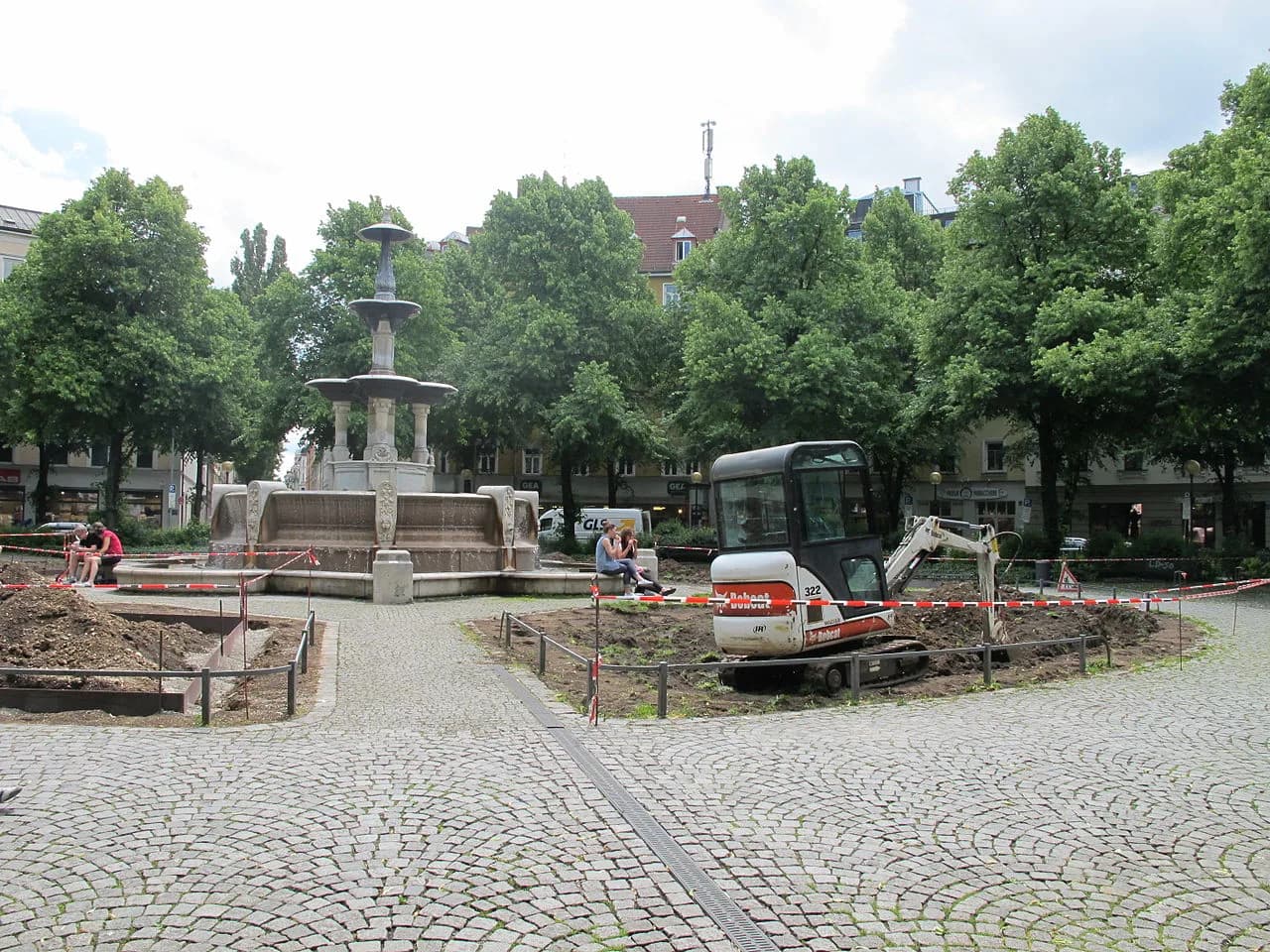
Asamkirche Munich Travel Guide
Visit Asamkirche Munich with 2026 hours, prices, history, and access tips for the rococo church on Sendlinger Strasse. Plan your visit today.
On this page
Asamkirche Munich: A Complete Visitor Guide
Asamkirche Munich hides in plain sight along a busy pedestrian street near Marienplatz. Shoppers walk past its narrow facade every day without noticing the rococo details above the door. Step inside, though, and the small church opens into one of Bavaria's most detailed interiors. This guide covers the history, the art, and the practical details needed for a smooth visit.
Two brothers built this private chapel between 1733 and 1746 as a personal statement of faith. Public pressure eventually pushed them to open its doors to the wider parish. Today it ranks among the Hidden Gems in Munich Travel Guide that reward a slow, curious look. Expect rich stucco, dramatic lighting, and a story tied closely to Munich's patron saint.
Inside Asamkirche: A Rococo Masterpiece
The facade on Sendlinger Strasse measures only eight meters wide, yet it announces something dramatic behind it. Two massive rocks appear to grow from the entrance columns, framing a statue of St. Nepomuk above the door. Angels flank the saint, while carved virtues of Faith, Hope, and Love crown the pediment overhead.
Inside the entrance hall, a golden face representing the sun sits atop an oval ceiling. Marble statues of Greek gods surround it, alongside a striking golden statue of Death cutting a life thread. Confessional alcoves line this outer room, since the founders intended the church partly for younger worshippers. A donation box and votive candles wait near the entrance for anyone wanting to light one.
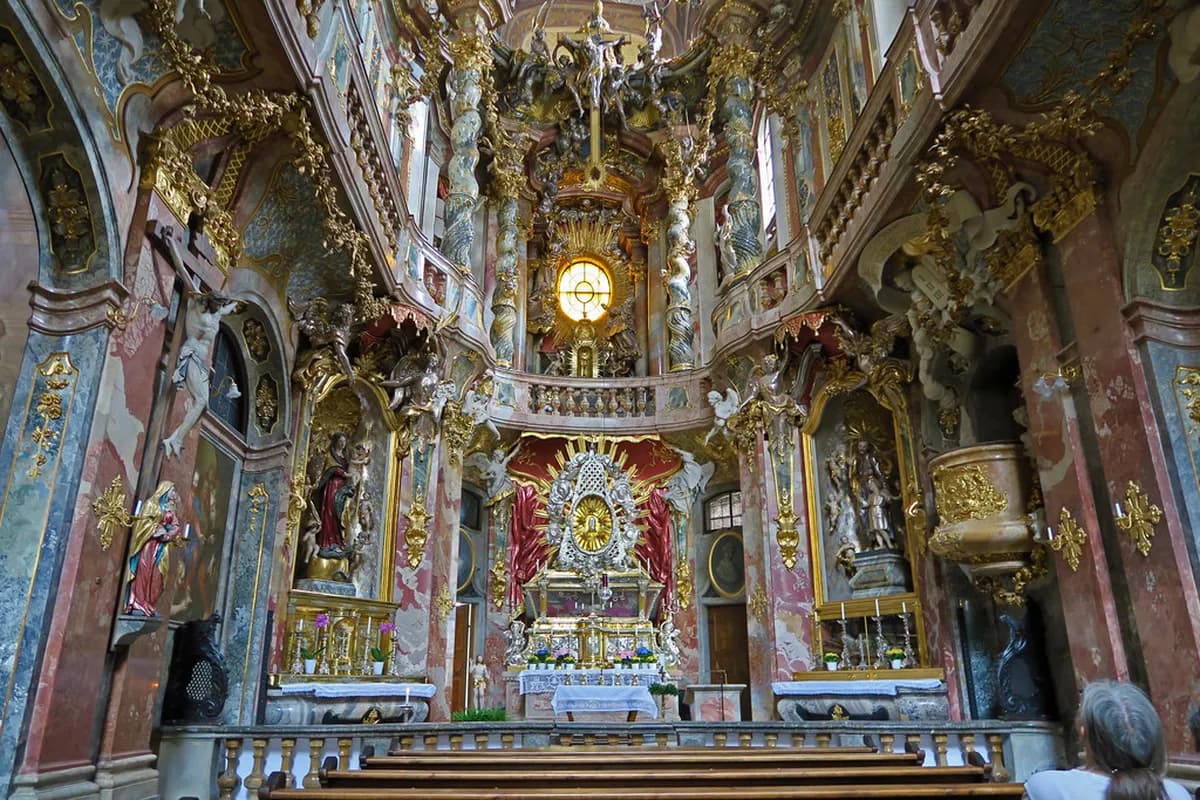
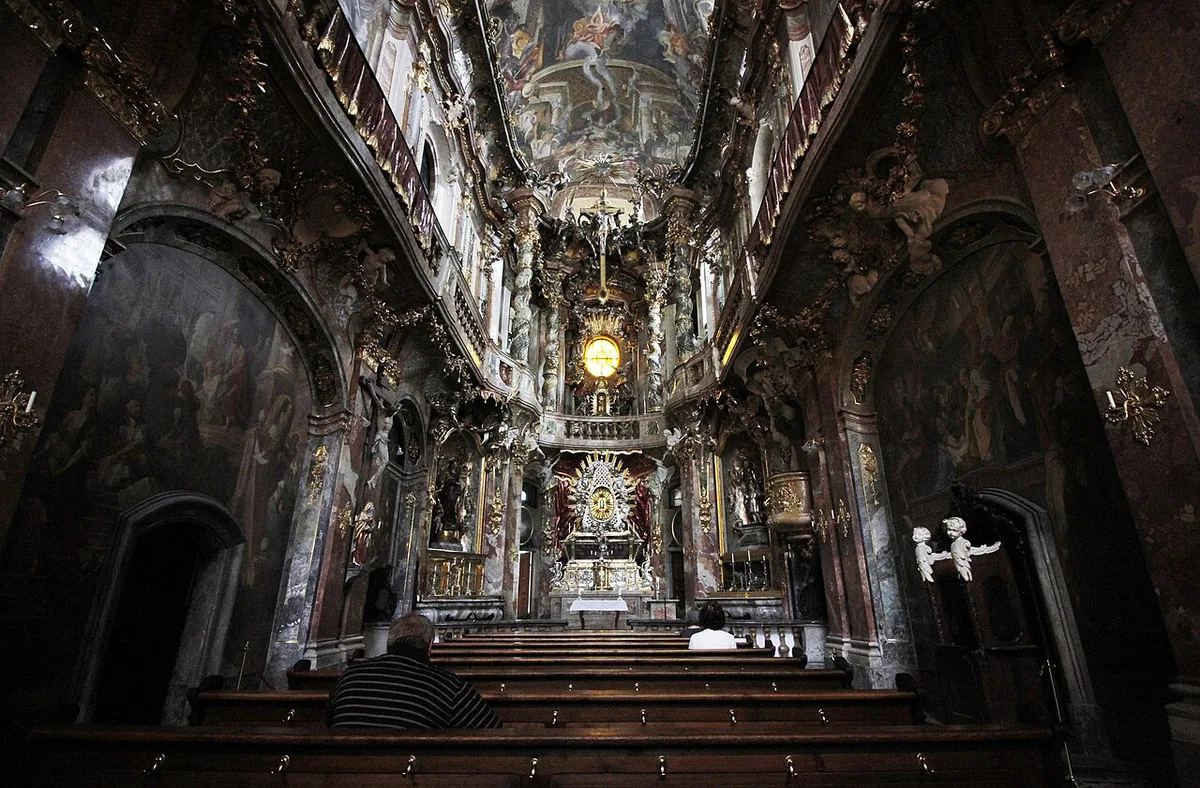
Beyond the ornate gates, the main chapel hall reveals three vertical levels of light and color. The lowest level near the pews stays dark, symbolizing suffering in the world below. A middle band in white and blue represents divine and imperial authority. The uppermost level glows brightest, opening onto a painted vision of God and eternity.
Four spiral columns frame the high altar, echoing the Bernini columns found in Rome. Overhead, God the Father appears enthroned above a carved triple papal tiara. Morning visits catch soft light from the east window, adding a quiet, almost theatrical glow.
History of Asamkirche and the Asam Brothers
Sculptor Egid Quirin Asam and painter Cosmas Damian Asam built this church as their private chapel. The brothers purchased four houses on Sendlinger Strasse in 1733 to make room for the project. They demolished the two middle houses and constructed the church between the remaining buildings.
Because they owned the property outright, no client or church committee dictated the design. Construction ran from 1733 to 1746, giving the brothers over a decade to refine every detail. The finished building measured just eight meters wide and twenty two meters deep. That narrow footprint forced a vertical design, stacking symbolism from floor to ceiling instead of side to side.
Neighbors and church officials pressured the brothers to open their private chapel to the public. They eventually relented, and the church has welcomed worshippers and visitors ever since. Its spot in the Munich neighborhoods near Marienplatz kept it central to daily city life. Sendlinger Strasse remained a working commercial street, so the church grew up surrounded by shops and trade.
Historians count Asamkirche among the finest examples of Late Baroque design in southern Germany. Its scale stayed small, but its ambition never did. That contrast between a modest footprint and maximalist decoration still surprises first-time visitors today.
Why Asamkirche Honors St. John Nepomuk
John of Nepomuk served as a preacher and confessor in Bohemia during the 14th century. King Wenceslaus IV reportedly demanded he reveal the queen's private confession, and Nepomuk refused. He was tortured and thrown into the river, where he drowned rather than break his vow. Legend says a strange brightness appeared over the water at the exact spot he died.
The church canonized Nepomuk in 1729, only a few years before construction began on Sendlinger Strasse. He quickly became known as a patron saint of bridges, towns, and structures near water. Believers still call him the martyr of the confessional, honoring his refusal to break a vow of silence.
Historians offer a few explanations for why the Asam brothers chose this particular saint. Nepomuk was already the patron saint of the Electorate of Bavaria at the time. The foundation stone was also laid on his name day, a detail unlikely to be coincidence. A separate legend claims the brothers survived a dangerous storm on the Danube after praying to him for protection.
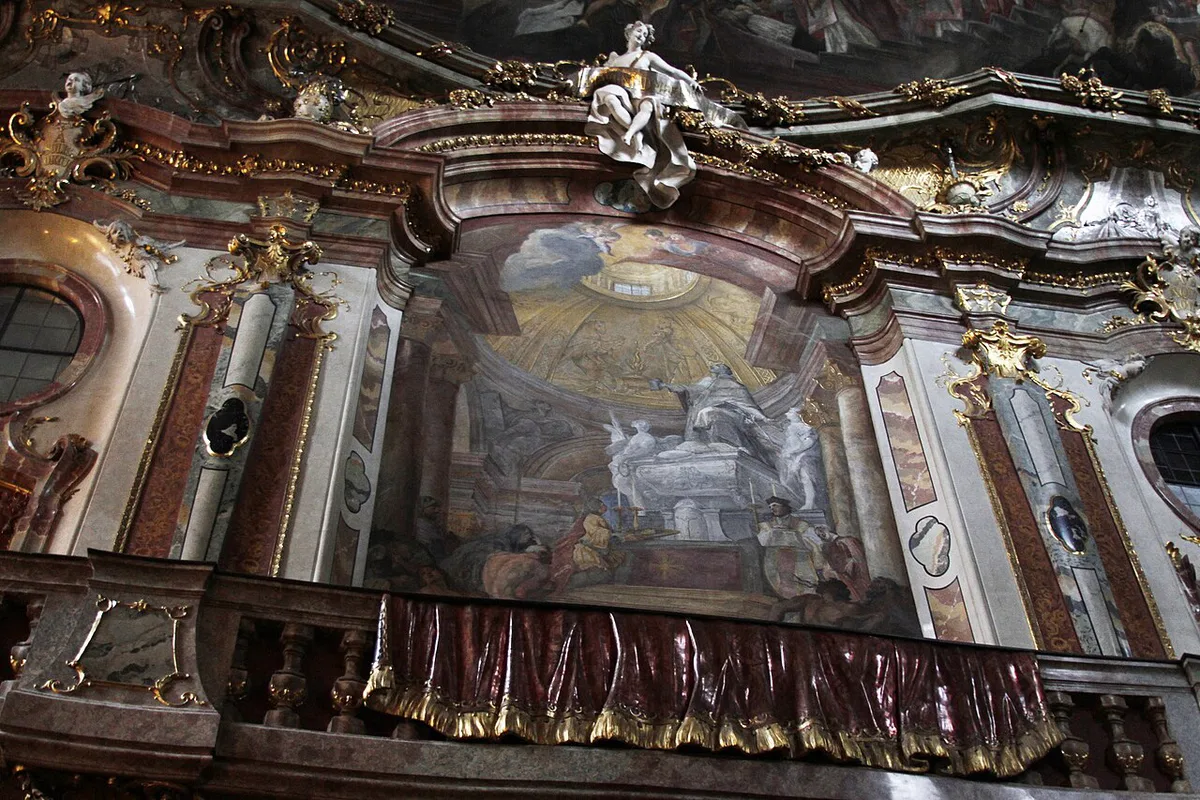
The ceiling fresco titled Life of Saint Nepomuk spans the full length of the nave. Cosmas Damian Asam painted the scenes, using light from the upper windows to bring them alive. Panels trace his imprisonment, his death in the river, and his acceptance into heaven as a saint. Visitors who look straight up near the altar get the clearest view of the full sequence.
Asamkirche Munich: Opening Times and Prices
Asamkirche Munich opens most days from 9 a.m. to 6 p.m., Saturday through Thursday. Friday hours run shorter, from 1 p.m. to 6 p.m., to accommodate parish activities. Confirm current hours before an early visit, since a working church can adjust its schedule for services.
Entry to Asamkirche costs nothing, making it one of the simplest 10 Free Things to Do in Munich in 2026 (Local Guide) to add to any itinerary. Donations toward upkeep are welcome but never required at the door. Votive candles are available to purchase inside for anyone wishing to light one in prayer.
A short list of house rules keeps the working church calm for worship and quiet reflection. Most rules focus on noise, food, and photography rather than restricting where visitors can walk.
None of these rules take long to follow, and most visitors barely notice them. They exist to protect a working parish, not to make sightseeing difficult. Budget roughly fifteen to twenty minutes inside to see the highlights without feeling rushed.
- Keep noise to a minimum
- Rule: silence expected near worshippers
- Reason: active Catholic parish
- Tip: whisper during group visits
- Skip food and drinks inside
- Rule: no eating or drinking
- Reason: protects historic stucco work
- Tip: eat beforehand nearby instead
- Avoid hats and flash photography
- Rule: hats and flash discouraged
- Reason: preserves a calm atmosphere
- Tip: rely on natural light
- Leave dogs and pets outside
- Rule: pets stay outside always
- Reason: church remains an active parish
- Tip: pair with a nearby park
- Expect the top floor closed
- Access: upper gallery usually roped off
- Reason: preservation and safety limits
- Tip: focus on the high altar
How to Reach Asamkirche in Central Munich
Asamkirche sits on Sendlinger Strasse, a pedestrian shopping street in the heart of central Munich. The narrow rococo facade can be easy to miss between storefronts and cafes lining the block. Look for tall windows and a carved stone entrance, since the doors often appear closed from outside.
Entrance doors may appear shut from the street but stay open during posted hours. Push firmly to enter. Step quietly inside to respect active worshippers and parish services.
Public transport makes the church easy to reach from almost anywhere in the city center. Marienplatz station sits roughly 500 meters away, about a six-minute walk along Sendlinger Strasse. Trams and buses serving Sendlinger Tor also stop within a short walk of the entrance.
The church borders the Glockenbachviertel neighborhood, a good base for cafes and evening plans. Pair a visit with a wider stroll through the surrounding lanes near Sendlinger Tor. Many travelers combine the stop with Marienplatz and the nearby Viktualienmarkt on the same walk.
The entrance doors often look shut from the street, which stops some visitors from trying them. Push firmly, since the church stays open to the public during posted hours. Step quietly inside once through the door, out of respect for anyone already praying.
Best Time to Visit and Where to Eat Nearby
Morning visits tend to reward patient travelers with the best light inside Asamkirche. Sunlight through the east window creates a warm glow across the high altar early in the day. Weekday mornings before lunch also tend to bring smaller crowds than afternoon hours.
Visit mornings for warm light through the east window on the high altar. Weekday mornings attract fewer crowds, making it easier to notice rococo stucco and mural details. Plan fifteen to twenty minutes.
Weekends and summer afternoons draw heavier foot traffic along Sendlinger Strasse. Visiting on a weekday, or pairing the stop with an early Marienplatz walk, usually feels calmer. Fewer crowds make it easier to notice smaller details in the stucco and murals.
Sendlinger Strasse and the surrounding lanes hold plenty of options once sightseeing wraps up. A Munich Local Food Guide: Best Bavarian Eats 2026 can help plan the next stop after admiring the church. Bakeries and small cafes near Sendlinger Tor make an easy pause before continuing the day.
Whichever time works best, plan for a short but memorable stop on any Munich itinerary. The church rewards even a quick fifteen-minute visit between other city-center errands.
Frequently Asked Questions
Why is Asamkirche in Munich so famous?
Asamkirche is known for a rococo interior built between 1733 and 1746 by brothers Cosmas Damian and Egid Quirin Asam. Its narrow eight-by-twenty-two-meter footprint hides dramatic stucco work, a golden statue of Death, and a ceiling fresco depicting the life of Saint Nepomuk.
Is entry to Asamkirche free?
Yes, entry to Asamkirche is free every day it opens to visitors. Donations toward its upkeep are welcome but never required at the door. Votive candles are also sold inside for anyone who wants to light one during a quiet moment.
Is Asamkirche a Catholic church?
Yes, Asamkirche is a Roman Catholic church still used for regular services today. It was dedicated to Saint John Nepomuk, a Bohemian preacher canonized in 1729 and remembered as a patron saint of bridges. Quiet, respectful behavior is expected from every visitor inside.
Is Asamkirche worth visiting?
Most travelers find Asamkirche worth visiting, since it packs rococo detail into a short stop near Marienplatz. Entry costs nothing, and it pairs well with other 10 Unique Things to Do in Munich (2026) nearby. Its compact size means it rarely needs a long detour.
How much time should visiting Asamkirche take?
Plan around fifteen to twenty minutes inside Asamkirche to see the altar, ceiling fresco, and entrance hall details. Add extra time during quieter morning hours, when soft light shows the stucco and murals more clearly.
Asamkirche Munich proves that size has little to do with impact in architecture. A tiny rococo chapel on a busy shopping street still holds one of the region's most detailed interiors. History, art, and a dramatic saint's story all fit inside eight by twenty two meters.
Free entry and a short visit time make it easy to add to almost any Munich day. Morning light, quieter weekdays, and a respectful pace all help the visit feel unhurried. Pair the stop with nearby streets, food, or a longer look at Germany travel guides for the wider trip. Save the address, check current hours, and let the rococo details do the rest.
Save this Asamkirche guide before heading out, since signal can be spotty near Sendlinger Strasse. Share via WhatsApp with travel companions planning the same Munich stop.
Continue exploring
More guides you'll find useful