Eisbach Wave Surfing Munich Travel Guide
Discover Eisbach wave surfing in Munich, from the river wave's 2025 closure to safer spots, gear tips, and etiquette advice for planning your visit.
On this page
Eisbach Wave Surfing Munich
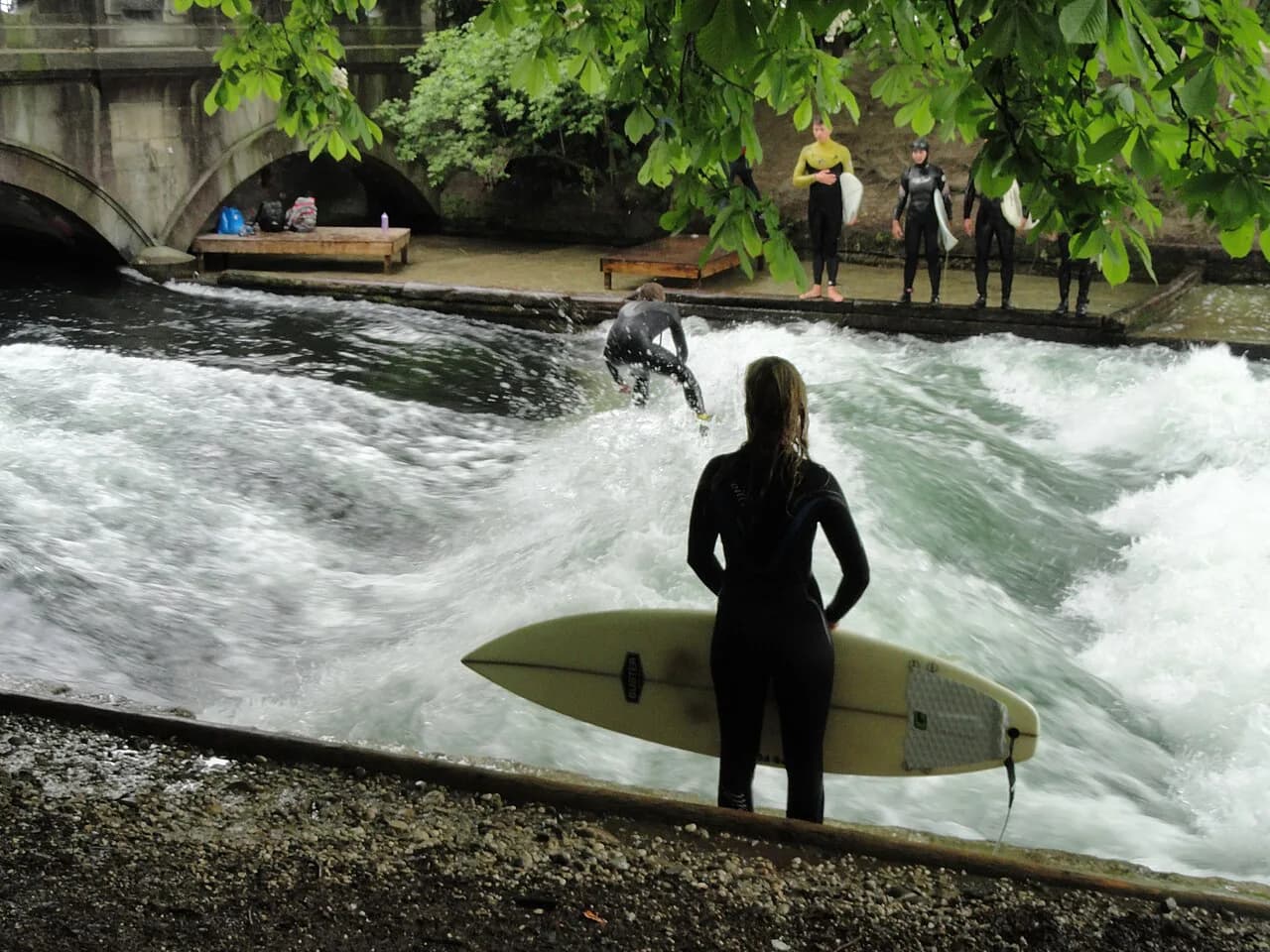
Eisbach wave surfing in Munich turns a quiet stretch of parkland into one of Europe's most-watched surf spots. The Eisbach is a narrow, man-made canal that branches off the Isar River near the Englischer Garten. Surfers ride a standing wave here every day of the year, rain, shine, or snow.
Recent dredging work disrupted the wave in late 2025, so its exact condition can shift week to week. This guide covers the wave's history, current status, nearby alternatives, and the gear and etiquette every surfer should know. Expect practical detail on skill levels, board sizes, and where to watch safely from the bank.
What Is the Eisbach Wave in Munich?
The Eisbach is a small, man-made side arm of the Isar River, running through central Munich. Locals and surfers call the main wave the E1, though most visitors simply know it as the Eisbachwelle. It sits right next to the Haus der Kunst museum, at the edge of the Englischer Garten park.
City engineers say the wave typically peaks around five feet, or roughly one and a half meters, at its tallest point. A hydraulic jump forms the wave, created by fast-moving water passing over a sediment bump on the riverbed. Technical University of Munich hydrologist Markus Disse explains that a precise mix of water speed and bed shape keeps the wave standing.
Surfing along this stretch was technically illegal until 2010, when the city arranged a land swap with the Bavarian state. That deal legalized surfing on the Eisbachwelle and turned a local secret into an official tourist attraction. Munich Tourism now promotes the wave as a symbol of the city's outdoor sports culture. Watching the wave has become one of the 10 Unique Things to Do in Munich (2026) for first-time visitors.
Eisbach Wave Surfing Munich: Status Update
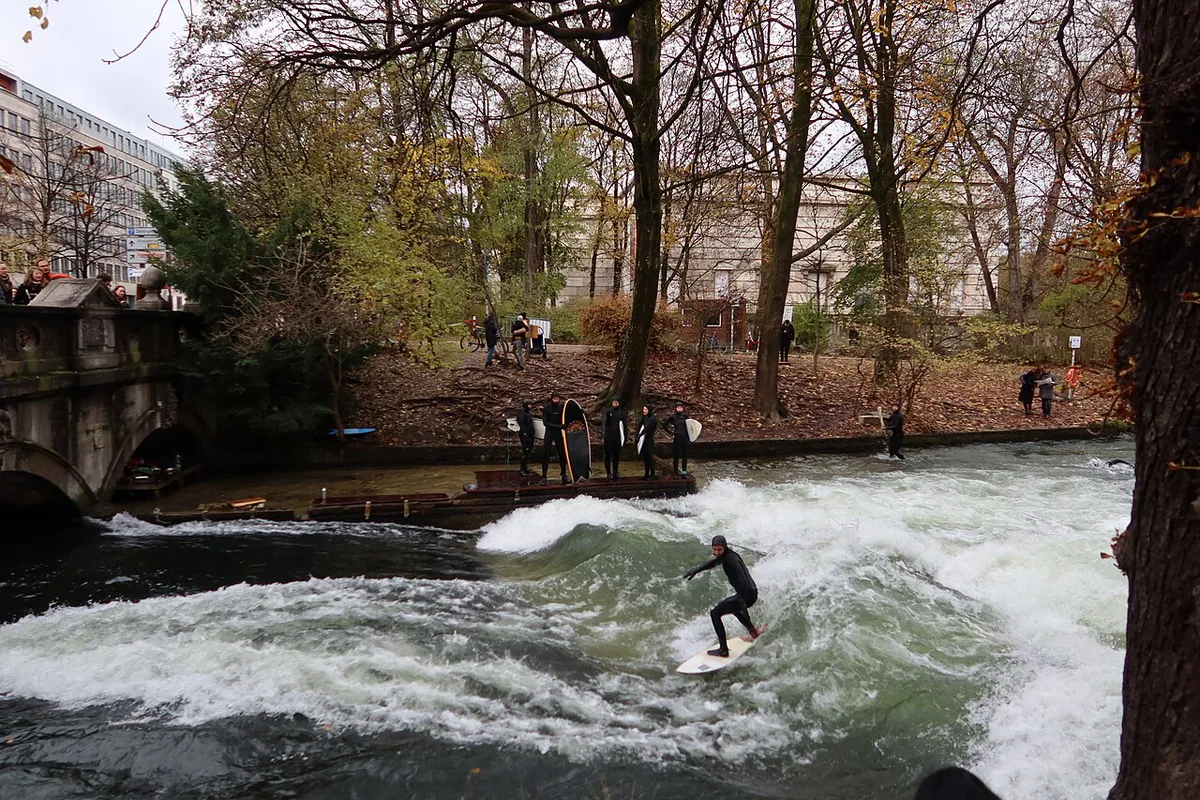
Eisbach wave surfing in Munich hit a major snag in November 2025, when routine dredging removed the wave entirely. Engineers were clearing the canal bed for its annual autumn clean-up, a job usually finished within a couple of weeks. This time, crews worked with extra caution following a surfer's drowning death on the wave that April.
Recent dredging work in November 2025 altered the wave's form. Conditions can change weekly. Confirm current status with Munich Tourism or local surf clubs before visiting.
Once the floodgates reopened, the signature meter-and-a-half swell had shrunk to a small, uneven ripple. Disse's research shows the crew likely removed too much of the underwater sediment bump that shapes the hydraulic jump. An NPR audio report captured local surfers describing the wave as unrecognizable right after the dredging.
Impatient surfers built a wooden ramp in the canal about a week later, and the wave briefly reappeared. City authorities called the structure illegal and removed it, a setback covered in a Guardian report from late December 2025. A Hamburg engineering team has since used sonar and GPS gear to map the riverbed and test water flow.
Some later coverage, including Afar magazine, has reported the wave reopening for surfing after further adjustments. Conditions can still change quickly, so confirm current status with Munich Tourism or local surf clubs before a visit. Expect the wave to look different from photos taken before the November 2025 works, at least for now.
Other River Surf Spots in Munich
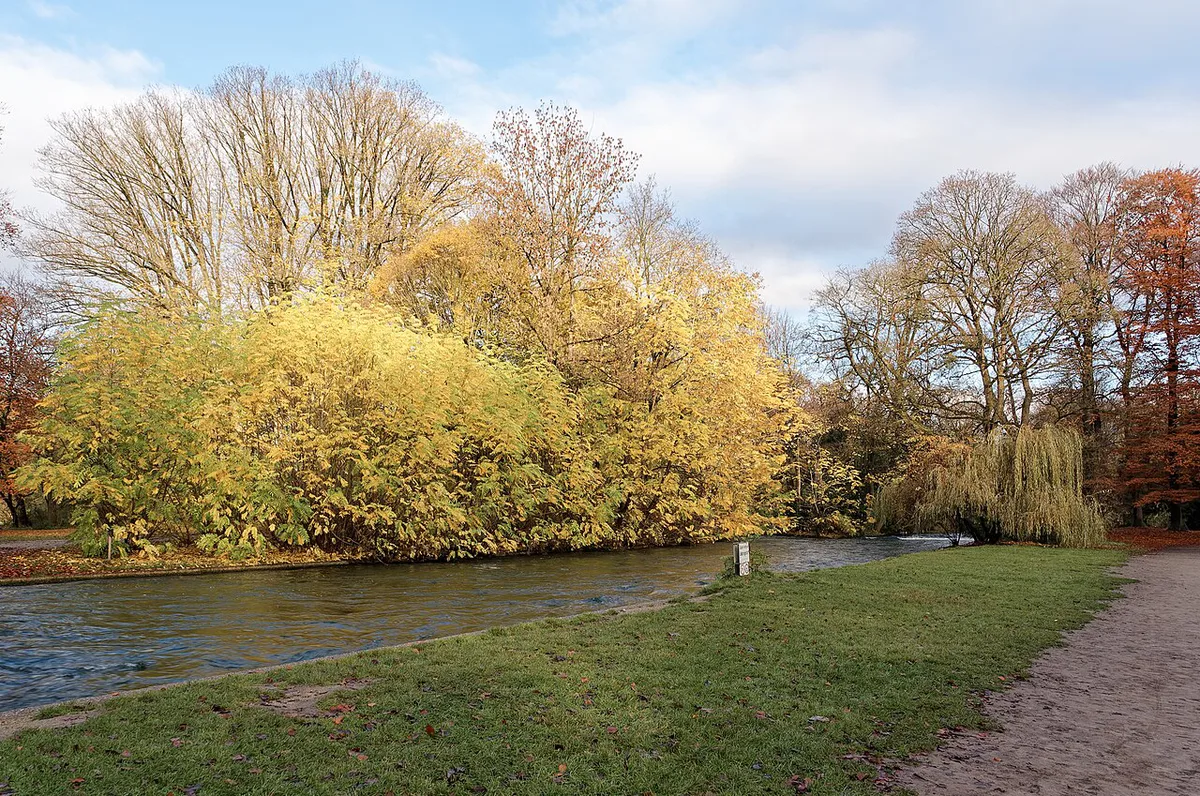
Munich's surf scene doesn't begin and end with the Eisbach, even with its outsized fame. Several other standing waves sit along the Isar and its side channels, each suited to a different skill level. Together they explain why the city carries a reputation as a landlocked capital of river surfing.
E2, also called the Dianabadschwelle, sits a few hundred meters downstream from the Eisbach. It offers a mellower, less steep ride that suits intermediate surfers more than total beginners. A fence installed in February 2025 has made the usual entry point harder to reach. City and state officials announced in July 2025 that E2 would gain the same legal protections as the Eisbachwelle.
| Wave | Skill Level | Board Length | Current Status |
|---|---|---|---|
| Eisbach (E1) | Pro-level surfers only | Short, 5–6 feet | Affected by 2025 dredging repairs |
| E2 (Dianabadschwelle) | Intermediate, mellow style | Minimum 6 ft, soft-top favored | Legal upgrade announced July 2025 |
| Floßlände | Better for building confidence | Six feet and up | Calmer current, warm-up spot |
Floßlände, south of the center in Thalkirchen, gives surfers calmer water and a gentler learning curve. It works well as a warm-up spot before attempting the faster, more technical waves closer to downtown. Local surf clubs often point newcomers here first, rather than straight to the Eisbach.
Floßlände rarely appears on typical sightseeing lists, which makes it one of the city's Secret Spots in Munich: 2026 Travel Guide for a quieter afternoon. Bring your own board or borrow one from a local club before heading out.
- Eisbach Wave (E1) near Englischer Garten
- Skill level: pro-level surfers only
- Board length: short, five to six feet
- Access: near Lehel metro station
- Status: affected by 2025 dredging repairs
- E2 Wave at Dianabadschwelle downstream
- Skill level: intermediate, mellow style
- Board length: minimum 6 ft, soft-top favored
- Access: fenced entry since February 2025
- Status: legal upgrade announced July 2025
- Floßlände Wave in Thalkirchen
- Skill level: better for building confidence
- Water: calmer current than Eisbach or E2
- Access: south of the city center
- Best for: warm-up before tackling Eisbach
River Surfing Safety and Etiquette
River surfing carries real risks, and Munich's own guidelines describe it as tolerated, not officially sanctioned. Strong currents, concrete structures beneath the water, and crowded takeoff zones all add danger for the unprepared. Every wave in the city rewards caution over bravado, especially for anyone trying it for the first time.
River surfing is tolerated, not officially sanctioned. Only experienced surfers should attempt the Eisbach. Strong currents and hidden concrete structures pose real risks in swift, cold water.
At the Eisbach, surfers exit the wave at a flat angle to avoid the concrete blocks sitting just downstream. Only experienced river surfers should attempt this wave, since mistakes happen fast in swift, cold water. At E2 and similar spots, anyone approaching from upstream always has the right of way.
Hundreds of people swim the canal on hot summer days, so surfers need to watch constantly for swimmers in the water. If someone in the water looks like they need help getting out, local etiquette expects surfers to step in and assist. Waiting your turn at the bank, rather than crowding the takeoff point, keeps sessions safer for everyone.
A common mistake among visiting surfers is underestimating how technical these waves are compared to ocean breaks. Ocean surfing rewards patience and timing with the swell, while river surfing demands constant micro-adjustments against a fixed current. Renting or borrowing a board without any river-surfing instruction is one of the fastest ways to get hurt here.
Where to Find Surf Gear and Shops
Board choice matters more in river surfing than most beginners expect, since river waves behave differently than ocean swells. Eisbach-style boards run short, often between five and five-foot-eight for men and slightly shorter for women. E2 and Floßlände favor longer boards, six feet and up, usually with more volume for stability.
Munich carries several boardsport retailers that stock river-ready gear alongside standard surf and skate equipment. Blue Tomato, a well-known action sports chain with a Munich location, is a common starting point for basic gear. Specialist river-surfboard makers, including brands built specifically around Eisbach-style shapes, offer boards tuned for flat rockers and thin rails.
Buying new from a specialist maker costs more and takes longer to ship, but the shape matches the wave exactly. A general retailer gets a board in hand faster, though the shape may compromise on performance for serious surfing. Renting or borrowing through a local club works best for a single trip or a first attempt.
Munich's nonprofit surf organizations, including groups like the Munich River Surfers' Association, support surfers beyond retail. These clubs often share safety updates, organize river clean-ups, and lobby the city on access issues like the E2 fence. Joining one is a practical way to learn local etiquette before paddling out solo.
- Buying from Munich board shops
- Best for: visitors wanting to try soon
- Retailers: general boardsport shops like Blue Tomato
- Trade-off: limited river-specific stock
- Ordering from river surfboard specialists
- Best for: dedicated river surfers
- Examples: dedicated river-shape makers
- Trade-off: longer lead time, higher cost
- Joining a nonprofit surf club
- Best for: locals building skills long-term
- Groups: Munich River Surfers' Association
- Trade-off: membership commitment required
Tips for Visiting the Eisbach Wave
Most visitors come to watch rather than surf, and the Eisbach makes for an easy, free stop in central Munich. The wave sits inside the Englischer Garten, within walking distance of the Lehel neighborhood and its metro station. Trains on lines U4 and U5 stop at Lehel station, just a few minutes' walk from the bank.
A small kiosk near the wave sells drinks and snacks for anyone settling in to watch for a while. The terrace at Goldene Bar, behind the Haus der Kunst museum, offers a shaded seat with a similar view. Several beer gardens sit inside the same park, making it easy to combine a visit with a longer stroll.
Morning and late evening tend to bring smaller crowds along the bank, even in peak summer months. Weekday visits generally beat weekends, when both surfers and spectators pack the narrow footpaths. Munich's shoulder seasons, spring and early autumn, tend to feel calmer than the height of summer.
Watching the wave costs nothing and takes only a few minutes, making it an easy addition to any Munich itinerary. Pair the visit with a walk through the wider park, since the Eisbach is only one small piece of it. Bring a light jacket even in summer, since the spray off the wave keeps the bank noticeably cooler.
Jochen Schweizer Arena: Munich's Indoor Wave Surfing Alternative
Munich's river-surfing scene has an indoor counterpart at the Jochen Schweizer Arena in Taufkirchen, a southern suburb roughly a 20-minute drive or S-Bahn ride from the city center. The arena runs a stationary FlowRider-style wave that recirculates water over a sloped surface, producing a consistent, controllable break with nothing to do with river flow, seasonal dredging, or weather. That makes it a practical fallback while the Eisbach's condition stays unsettled after the November 2025 works, and a lower-risk starting point for anyone put off by the Eisbach's currents and concrete hazards.
- Beginners can book instruction and work on pop-ups and balance before ever paddling into the Eisbach or E2.
- Wetsuits and boards are typically available on-site, so first-timers don't need to bring their own gear.
- The arena sits alongside other action-sports attractions, including climbing and adventure courses, making it easy to combine with a half-day trip outside central Munich.
Frequently Asked Questions
Why is the Eisbach wave closed?
Routine dredging in November 2025 removed too much sediment from the Eisbach's riverbed. That sediment bump normally shapes the wave's hydraulic jump, so the Eisbachwelle collapsed into a small ripple. Engineers are now testing water flow and gravel fixes to restore it. Always confirm current conditions before planning a trip around the wave.
What is the famous wave in Munich?
The famous wave is the Eisbachwelle, a standing wave on the Eisbach canal beside the Englischer Garten park. It formed after the city legalized surfing there in 2010 and has since become a symbol of Munich's outdoor culture. Surfers ride it year-round, weather and repairs permitting.
Can you still swim in the Eisbach?
Yes, swimming is common in the Eisbach canal, especially on hot summer days when hundreds of people float downstream. Surfers are expected to watch for swimmers and give them the right of way near the waves. Strong currents and hidden concrete structures make caution essential for everyone in the water.
What happened to surfers in Munich after the wave disappeared?
After the Eisbachwelle vanished in November 2025, impatient surfers built an illegal wooden ramp that briefly brought the wave back. City authorities removed the structure within days, as later reported by the Guardian. Engineering teams continue testing fixes while local surf clubs push for a faster, permanent solution.
When is the best time to watch surfers at the Eisbach?
Early mornings and weekday visits usually mean smaller crowds along the bank. For a wider view of Munich's calmer travel windows, see this guide to the Best Time to Visit Munich Without Crowds (2026). Surfing itself continues year-round, so timing mainly affects comfort, not availability.
Eisbach wave surfing in Munich remains a singular sight, even while the wave itself recovers from 2025's dredging work. Its future shape depends on ongoing engineering fixes, so status can change between one visit and the next. Surfers should always verify conditions locally, while spectators can enjoy the show from the bank regardless.
Beyond the Eisbach, spots like E2 and Floßlände give the city's river-surfing culture room to grow. Watching the wave is one of the simplest 10 Free Things to Do in Munich in 2026 (Local Guide), no ticket or booking required. Whether visiting to surf or simply to watch, Munich's rivers reward a little patience and preparation.
Continue exploring
More guides you'll find useful