Hidden Gems in Pisa: Quieter Places Beyond the Leaning Tower
A practical guide to Pisa's lesser-known places, from Santa Maria della Spina to the other leaning towers, with honest tips on what each stop offers.
On this page
Most visitors arrive at the Campo dei Miracoli, take the obligatory photograph and leave within an hour. That routine misses a compact city of painted facades, riverside churches and quieter corners within easy walking distance of the tower. This guide treats Pisa as a half-day or full-day city rather than a checklist, pointing to places that are genuinely quieter or less visited and flagging where you need to check details yourself.
The organizing idea is simple: work outward from the Campo dei Miracoli, follow the Arno where the streets open up, and finish in the smaller squares of the historic centre. One practical reference point comes from a Tuscan-based writer who says her family likes to spend at least half a day, sometimes a full day, exploring Pisa rather than stopping only at the tower. Treat that as a sensible editorial suggestion, not official guidance, and build your own pace around what you actually want to see.
How the Quieter Sights Fit Together
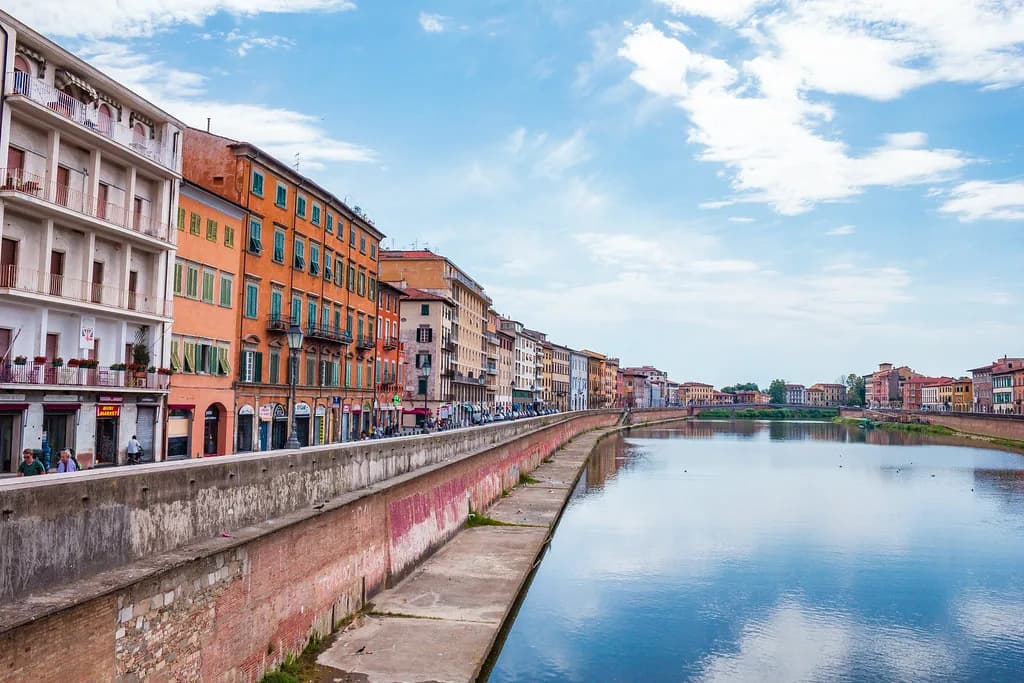
Almost everything in this guide lies within a walkable band running from the Campo dei Miracoli eastward through the centre and along the Arno. Santa Maria della Spina sits on the riverbank, Piazza dei Cavalieri and the Haring mural are in the historic core, and the second lesser-known leaning tower stands further east. The Botanical Garden is a short walk from the main square, making it an easy mid-morning or afternoon break.
If you arrive by train, Pisa Centrale is roughly a 20 to 25 minute walk from the Leaning Tower, and that walk passes close to several of these stops. That makes a simple plan possible: leave the station, see the mural or the riverside church on the way, and reach the Campo dei Miracoli with the crowd-heavy sight already behind you. Distances are short enough that you rarely need transport between stops once you are in the centre.
Santa Maria della Spina: A Small Gothic Church on the Arno
Santa Maria della Spina is a small church beside the Arno, built in a Pisan Gothic style and frequently photographed from the riverbank. Its name refers to a thorn from the crown of thorns that was once kept here and is now held in another church in the city. The exterior is the draw: intricate stonework on a modest building, which rewards a slow walk around rather than a quick glance from a passing bus.
Treat the church as an outdoor stop first. The riverside setting can be enjoyed without committing to an interior visit, and that keeps your day flexible if you are running behind. Whether the interior is open on your dates is something to confirm locally or through the diocese before you plan around it, since published opening information changes.
Piazza dei Cavalieri and the Painted Palazzo della Carovana
Piazza dei Cavalieri, also called Knight's Square, holds the Palazzo della Carovana, home to the Scuola Normale Superiore, and the Palazzo dell'Orologio. The facade of the palazzo is covered in painted zodiac signs and mythological figures, and the carved detail at ground level is easy to miss if you only look up. Give the square ten or fifteen minutes and walk its full perimeter rather than crossing it on the diagonal.
This is one of the best free-feeling pauses in the city: a square rather than a ticketed attraction, where the pleasure is architectural. Because it sits in the historic core, it pairs naturally with a wander through the surrounding lanes and with the shopping streets nearby. If you want a fuller route through the centre, the Pisa Self-Guided Walking Tour: A Route Through the Historic Centre threads these stops together on foot.
The Other Leaning Towers
Pisa has more than one leaning tower, and the others see a fraction of the attention given to the bell tower on the Campo dei Miracoli. One is close to the main square: walk about ten minutes south along via Santa Maria and it appears on your left at San Nicola. The second is the bell tower of San Michele degli Scalzi, at the eastern end of the city. Both are churches with leaning bell towers rather than visitor attractions, so approach them as a passer-by and keep quiet if services are underway.
The San Michele degli Scalzi tower sits further out, so it suits travellers who are happy to extend the walk east or combine it with other stops on that side of the city. There is no need to build a whole morning around either tower; they work best as deliberate detours that show how ordinary parts of Pisa look and feel. Check a current map before setting out, since street layouts and access around church grounds are not something to guess.
Keith Haring's Tuttomondo
Tuttomondo is painted on the side of the church of Sant'Antonio Abate in the centre of Pisa, and it was Keith Haring's last creation before his death in 1990. The mural is large, colourful and free to look at from the street, which makes it one of the easiest additions to any itinerary. It is also a natural stop between the train station and the river.
Across from the mural is a cafe named for the artist, with outdoor seating that lets you watch the wall rather than rush past it. Whether that cafe is open, and what it serves now, is worth checking on the day rather than trusting an old recommendation. Plan the mural as a fifteen-minute stop with a coffee, not a destination in itself.
Pisa Botanical Garden: A Shady, Uncrowded Break
Pisa's Botanical Garden was founded in 1543 and is described as the first university botanical garden in the world. A local writer singles it out for variety, shade and the fact that it is not crowded, which makes it a practical escape from both the heat and the groups around the tower. Bring a snack, sit on a bench, then wander the greenhouses and ponds.
It is about a five-minute walk from the Leaning Tower and the Campo dei Miracoli, so it slots neatly into a day without extra transport. Because it belongs to the university, entry arrangements and any seasonal closures are best confirmed through the garden's own published information before you go. Do not assume a ticket bought elsewhere covers it.
Ticketed Collections: Ancient Ships and Palazzo Blu
The Museo delle Navi Antiche, Pisa's museum of ancient ships, holds a collection of recovered vessels in the city centre and suits anyone interested in maritime and Roman-era history. Palazzo Blu is the counterpart for art lovers, hosting exhibitions in a riverside palazzo. These are separate ticketed collections, so treat them as individual stops with their own entry arrangements rather than as part of a combined sightseeing pass.
Because exhibition programmes rotate at Palazzo Blu, the honest approach is to check the current show and visitor terms on the venue's own site before committing an afternoon. If you are choosing between the two on a short trip, pick the one that matches your interest rather than trying to fit both in. Prices and hours change, and no reliable current figures are published in the sources used here.
Streets, Squares and an Evening Wander
Corso Italia runs north from Piazza Vittorio Emanuele II, and once you cross the bridge you can continue into Borgo Stretto for more browsing and narrow lanes. This is window-shopping territory rather than a ticketed attraction, and it is where the city feels most lived-in on an ordinary afternoon. It also connects naturally to Piazza dei Cavalieri and the river.
In the evening, Piazza Garibaldi beside the river draws people gathering for a drink, and the surrounding streets have plenty of bars and restaurants open late. It is a low-effort way to end a slow day without needing a reservation or a plan. For more on where the city's eating is concentrated, the Pisa Local Food Guide covers dishes and neighbourhoods rather than single venues, since restaurant recommendations age quickly.
A Suggested Half-Day and Full-Day Pace
For a half day, an editorial suggestion is to start at the Haring mural, walk to Santa Maria della Spina and the river, cut inland to Piazza dei Cavalieri, then finish at the Campo dei Miracoli with the Botanical Garden as a shaded break. That sequence keeps you moving toward the tower rather than backtracking, and it leaves the busiest sight for last. It is a suggestion, not an official route.
With a full day, add one ticketed collection in the morning and one of the lesser-known leaning towers as a walk east in the afternoon. Bear in mind that climbing the main tower needs a reserved time slot, so book that separately and build the rest of the day around it. A writer based in Tuscany recommends reserving the climb in advance and allowing time to drop bags at luggage storage first.
Practical Orientation and Common Mistakes
Walking is the default between these stops, and the centre is compact enough that a car becomes a liability. If you do drive in, note that unattended car parks exist near the sights, and the writer warns against leaving luggage in the vehicle at the lot she uses. Beach traffic builds on Friday afternoons toward the coast and in the opposite direction on Sunday evenings, so time your drive accordingly if you are combining Pisa with a seaside stop.
One mistake visitors make is trying to picnic on the lawns of the Campo dei Miracoli; signs posted there ask people to stay off the grass. Use the Botanical Garden benches instead if you want a seated break among greenery. Also remember that the cathedral, baptistery and tower each have their own entry arrangements, so do not assume one ticket covers the whole complex.
If you are staying overnight and want to understand which parts of the city suit different budgets and moods, the Pisa Neighbourhoods Guide: Where to Stay and What to Expect explains the centre, the river area and the streets around the station. It pairs well with this route because where you sleep determines which of these quieter stops is easiest to reach first thing in the morning.
Plan Your Visit
Pisa is not a one-photograph city, but it does reward a little structure. Pick two or three of the places above, group them by side of the river, and leave the tower for its own reserved slot rather than trying to squeeze everything into a single march from the station. The result is a day that feels like a visit rather than a queue.
Before you go, verify current opening arrangements for the Botanical Garden, Palazzo Blu and the Museo delle Navi Antiche on their own websites, and check the town's tourism pages for any temporary closures. If you are extending the trip beyond the city, Best Day Trips from Pisa: Nearby Towns and the Coast covers Lucca and the coast as separate outings rather than add-ons to a packed Pisa morning.
More Pisa guides
- Best Day Trips from Pisa
- Best Time to Visit Pisa
- Getting Around Pisa
- Giugno Pisano
- Pisa at Night
- Pisa Churches Guide
- Pisa for Families
- Pisa in Three Days
- Pisa in Two Days
- Pisa Local Food Guide
- Pisa Neighbourhoods Guide
- Pisa on a Rainy Day
- Pisa Self-Guided Walking Tour
- Pisa's Riverside
- Camposanto Monumentale in Pisa
- Climbing the Leaning Tower of Pisa
- Museo dell'Opera del Duomo
- Museo delle Sinopie
- Museo Nazionale di Palazzo Reale
- Museo Nazionale di San Matteo
- Orto Botanico di Pisa
- Palazzo Blu Visitor Guide
- Piazza dei Miracoli Guide
- Piazza delle Vettovaglie
- Pisa Baptistery Visitor Guide
- Pisa Cathedral Visitor Guide
- San Paolo a Ripa d'Arno
- Santa Maria della Spina
Frequently Asked Questions
What lesser-known places in Pisa are worth seeking out beyond the Leaning Tower?
The most rewarding quieter stops are Santa Maria della Spina on the Arno, Piazza dei Cavalieri with its painted Palazzo della Carovana, Keith Haring's Tuttomondo mural on Sant'Antonio Abate, the Botanical Garden founded in 1543, and the two lesser-known leaning towers at San Nicola and San Michele degli Scalzi. Each is a short walk from the Campo dei Miracoli, so they combine into a half or full day without transport.
Are there other leaning towers in Pisa?
Yes. Walk about ten minutes south of the main square along via Santa Maria and you reach the leaning tower at San Nicola, and the bell tower of San Michele degli Scalzi leans at the eastern end of the city. Both are church towers rather than attractions, so visit quietly and check a current map before setting out.
Is the Pisa Botanical Garden worth visiting?
It is worth it if you want shade, benches and breathing room away from the crowds. Founded in 1543 and described as the first university botanical garden in the world, it sits roughly five minutes on foot from the Leaning Tower. Confirm current entry arrangements through the garden itself, since it belongs to the university and its rules can change.
Where is the Keith Haring mural in Pisa?
Tuttomondo is painted on the side of the church of Sant'Antonio Abate in the centre of Pisa, and it was Haring's last creation before his death in 1990. It is viewable from the street and fits naturally into a walk between the train station and the Arno. A cafe opposite the mural is a convenient place to pause.
How long do you need in Pisa to see the lesser-known sights?
Allow half a day for a compact loop of the mural, the riverside church, Piazza dei Cavalieri and the main square, or a full day if you add a museum and one of the other leaning towers. This is an editorial suggestion rather than official guidance. If you also want to climb the tower, reserve a specific time slot and build the rest of the day around it.
What can you do in Pisa for free?
Squares, streets and outdoor sights cost nothing to look at: Piazza dei Cavalieri, the Haring mural, the exterior of Santa Maria della Spina, and a wander along Corso Italia and Borgo Stretto. Interiors and museums are separate ticketed collections with their own arrangements. Because entry rules and prices change, confirm current terms on each venue's own website rather than relying on older guides.
How do these stops fit a day trip from Florence or Lucca?
Pisa is easy to reach by train from Florence and Lucca, and the centre is walkable once you arrive. For a day trip, choose the mural, the river church, Piazza dei Cavalieri and the main square, then head back. If you want to stay later, the evening atmosphere around Piazza Garibaldi is a good reason to take a later train home.
Sources
Continue exploring
More guides you'll find useful