Museo delle Sinopie: Pisa's Fresco Preparatory Drawings Guide
What sinopie are, why Pisa's museum holds Camposanto preparatory drawings revealed after the 1944 fire, which artists appear, and how to plan a visit.
On this page
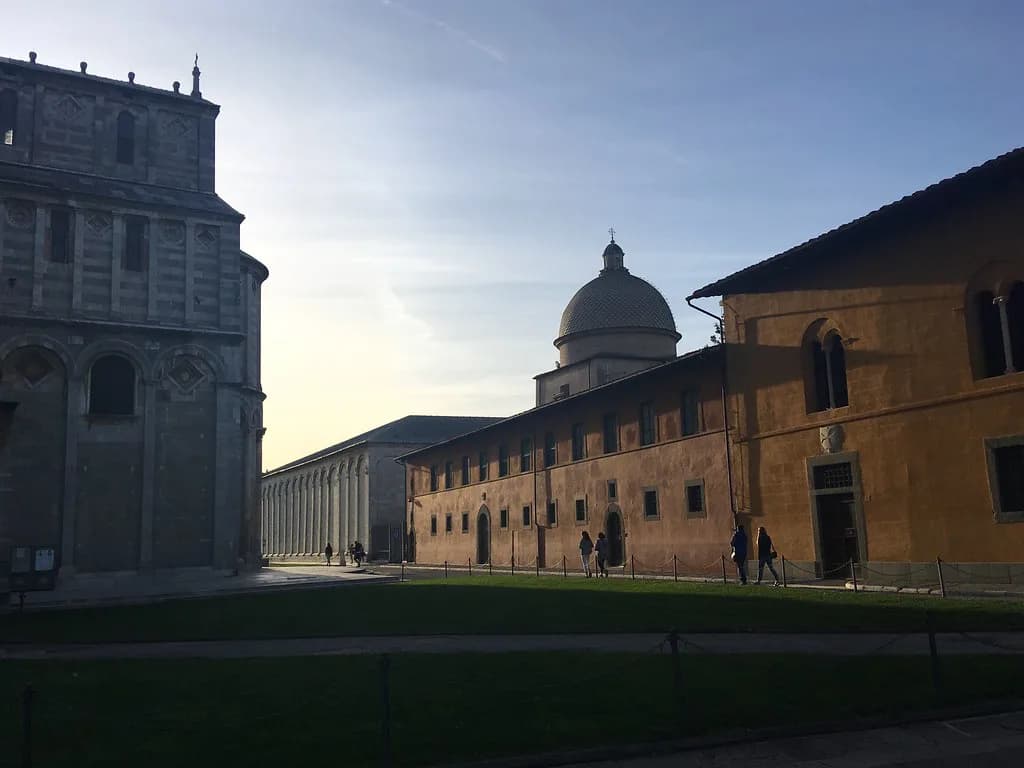
The Museo delle Sinopie occupies the former Spedale building on the southern edge of Pisa's Piazza dei Miracoli, a short walk from the Leaning Tower but well down most visitors' lists. Its contents were never meant to be seen: they are the preparatory drawings that painters laid on rough plaster before the finished fresco went on top. Seeing them is a lesson in how a medieval wall painting was actually built.
Allow roughly 30 to 60 minutes if you like to study the panels closely, or about 15 minutes for a quick walk-through; that is a suggested pace, not an official figure. The museum is a separate, ticketed collection rather than part of a single all-inclusive square pass, so check the operator's ticket pages before you assume one purchase covers the Cathedral, Baptistery or Tower. Current prices and opening times are published by the Opera della Primaziale Pisana, the body that runs the monuments.
What a Sinopia Actually Is
A sinopia is the drawing a fresco painter made on the first, rough coat of plaster before the smooth finishing layer went on. The name comes from Sinope earth, a red clay pigment mixed with water and brushed on to block out scenes, outline figures and suggest volume with light and shade. Because the finished fresco covered it entirely, the drawing was a working tool, not a work of art in its own right.
That hidden position is exactly why the survivals matter. Paper and parchment drawings from the Middle Ages are extremely rare, so these full-scale sketches are among the few direct records of how early masters planned a composition. Look at them as the reverse side of the fresco: the scaffolding of the image rather than the image itself.
The technique also explains the patchwork look of some panels. A fresco painter could only lay down as much smooth plaster as could be painted before it dried, a section known as a giornata, or day's work. Edges between giornate are visible in finished frescoes, and the preparatory drawing had to be transferred or re-traced across those joins.
Why Pisa's Collection Exists: The 1944 Fire and the Strappo Technique
On 27 July 1944 an artillery shell hit the roof of the Camposanto, the monumental cemetery on the north side of the square, and fire swept through it. Molten lead from the roof ran down onto the frescoes that lined the walls. Conservators concluded that the only way to save the surviving painted surfaces was to detach them from the masonry.
Detachment used the strappo method, lifting the outer film of paint away from the plaster. Once that layer was removed, the red underdrawings beneath were exposed, and they were themselves detached from the cemetery walls. The sinopie have been housed in the present museum since 1979, according to the Opera's own account of the collection.
The result is a collection shaped by disaster rather than by curatorial choice. That context is worth holding in mind as you walk through: these are the preparatory layers of a fresco cycle that no longer exists in place, rescued because the finished paintings had to come off the wall.
Inside the Museum: The Former Spedale Building
The museum occupies a 13th-century building designed by Giovanni di Simone, the architect also associated with the original Camposanto. Sources name it variously as the Spedale della Misericordia, the Spedale di Santa Chiara and the Spedale Nuovo, and describe it as a former hospital for the poor, pilgrims and the sick. Its long hall, the Pellegrinaio degli Infermi, was roofed with timber trusses and decorated with simulated two-colour marble facing.
After roughly seven centuries of hospital use, the building was restored in the 1970s by Gaetano Nencini and Giovanna Piancastelli, with a further operation in 2005 that brought the hall into the museum route and added an information area. The setting is therefore part of the visit: you are reading fresco cartoons inside a medieval charitable institution, not a purpose-built gallery.
On the square, the building sits along the southern edge, close to the souvenir stalls and easy to miss while everyone faces the Tower. If you are mapping a route across the site, the Piazza dei Miracoli Guide sets out how the monuments relate to one another and where the entrances fall.
The museum is one of several distinct collections around the square. The Museo dell'Opera del Duomo, on the opposite side, holds the cathedral treasury and sculpture, while the Camposanto itself displays the frescoes that were detached and re-attached. Treating them as three separate visits rather than one sweep is the sensible approach.
Artists to Look For
The names on the labels belong to the painters who worked in the Camposanto between the 14th and 15th centuries. Bonamico Buffalmacco, author of the celebrated Triumph of Death, is the best known, and comparing his sinopia with the finished fresco shows how much of the final drama was already present in the red outline.
Taddeo Gaddi and Pietro di Puccio da Orvieto also appear; Pietro began the Stories from the Old Testament cycle, which Benozzo Gozzoli later completed. Seeing their drawings side by side is the quickest way to notice how individual hands differ in line weight, figure proportions and the way space is suggested.
The Opera describes the group as the most extensive cycle of 14th- and 15th-century graphic work known. That claim is the strongest argument for giving the museum real time rather than a glance on the way past.
Reading the Drawings: Sinopia, Finished Fresco and Giornata
The most rewarding habit here is comparison. Set each sinopia mentally against what the finished wall painting is known to have looked like, and watch for shifts in pose, added or dropped figures and rearranged groups. Positions of arms and legs sometimes changed between sketch and final work, which tells you the drawing was a live document rather than a fixed template.
Reid's guide notes that each full-size sketch is displayed with a photograph underneath showing an old etching of the finished fresco, so you can compare intention with result on the spot. Checking whether that display arrangement is still in place is worth doing when you arrive, since presentations change.
Keep the giornata in mind as you look. Because each day's plaster section had to be painted before it dried, joins and slight tonal shifts are normal in fresco work, and they sometimes show through in the areas where the underdrawing was re-traced.
How Long to Allow and How to Pace a Visit
Plan on 30 to 60 minutes if you read labels and compare panels, and about 15 minutes if you simply walk the hall. These are working estimates for pacing your day, not official visiting times. The museum is small enough that fatigue is unlikely, which makes it a good stop between larger sites.
A sensible sequence is to see the Camposanto first, then the sinopie, so the finished frescoes are fresh in your mind when you meet the drawings that preceded them. Our Camposanto Monumentale Pisa Guide covers that side of the square and what survived the war.
If you are climbing the Tower the same day, remember that the Tower runs on timed entry and is the fixed point in your schedule; the other collections can usually be worked around it. For the climb itself, the Leaning Tower of Pisa Visitor Guide: Tickets, Climbing and What to Expect sets out what the ascent involves.
Tickets and Orientation
Admission is arranged through the Opera della Primaziale Pisana, which publishes the current ticket options, reduced and free categories, and the reservation system on its tickets page. Prices and opening hours change, so confirm both there before you travel rather than relying on older guidebooks or third-party summaries.
Do not assume that one purchase opens every monument on the square. The Cathedral, Baptistery, Camposanto, Tower and the two museums are administered together but sold under different conditions, and some entries carry time slots. Read the scope of each option carefully and check whether the sinopie museum is included in the combination you are considering.
The museum is on the Piazza dei Miracoli in Pisa, within walking distance of the city's other central sights. If you want to pair it with quieter corners of the city away from the crowds, the hidden gems in Pisa guide suggests where to head next.
Is It Worth It? Who Should Prioritise the Museum
For travellers with a serious interest in medieval painting, this is one of the most rewarding stops in Pisa, because the material is rare and the display explains process rather than just product. Repeat visitors who have already done the Tower and Cathedral will also find it adds something genuinely new to the square.
If you have only an hour in Pisa and have never seen the square, prioritise the Cathedral, Baptistery and Camposanto first; the preparatory drawings will mean more once you know the frescoes they relate to. Families with young children may also find a hall of red outlines a harder sell than the leaning tower outside.
Either way, the museum is easy to overlook because it hides behind the souvenir stands along the southern edge of the piazza rather than announcing itself. That low profile is a reason to seek it out deliberately, not a reason to skip it.
Plan Your Visit
The Museo delle Sinopie rewards a small investment of time with a perspective on fresco painting you will not get from the finished works alone. Go after the Camposanto, carry the artists' names with you, and compare drawings against outcomes rather than rushing the hall.
Before you go, confirm the day's opening hours and ticket scope on the Opera della Primaziale Pisana website, since these are the details most likely to change between seasons. Everything else, from the red outlines to the wartime story behind them, stays the same.
Frequently Asked Questions
What is a sinopia and why is it called that?
A sinopia is the preparatory drawing a fresco painter made on the first rough layer of plaster before the smooth top coat and paint went on. It takes its name from Sinope earth, the red clay pigment usually mixed with water and brushed on to outline scenes and figures.
Why are the sinopie in a museum instead of on the Camposanto walls?
A 1944 artillery strike set the Camposanto roof alight and damaged the frescoes lining its walls. Conservators detached the surviving painted surfaces using the strappo technique, which exposed the red underdrawings beneath; those were then removed from the walls as well and have been displayed in the museum since 1979.
Which artists' preparatory drawings can I see at the Museo delle Sinopie?
Labels identify work associated with Bonamico Buffalmacco, painter of the Triumph of Death, along with Taddeo Gaddi and Pietro di Puccio da Orvieto, who began the Old Testament cycle later completed by Benozzo Gozzoli. Comparing their line and figure proportions is the quickest way to tell the hands apart.
Where is the Museo delle Sinopie located in Pisa?
It stands on the southern edge of the Piazza dei Miracoli, in the former hospital building associated with Giovanni di Simone, a short walk from the Leaning Tower and the Camposanto. The entrance is partly screened by the souvenir stands along that side of the square, so look for it rather than expecting a grand frontage.
Do I need to book tickets in advance for the Museo delle Sinopie?
The Opera della Primaziale Pisana sells and reserves tickets for the monuments on the square and publishes current options on its website. Whether advance booking is necessary depends on the season and on whether you are combining the museum with timed entries such as the Tower, so check the tickets page before your visit.
Do I need a separate ticket or should I see it with other Piazza dei Miracoli sites?
Do not assume a single ticket covers everything. The monuments are administered together but sold under different conditions, and some entries are timed. Read the scope of each option on the operator's site and decide whether the sinopie museum fits the combination you are buying.
Is the Museo delle Sinopie worth visiting?
It is a strong choice for anyone interested in how medieval frescoes were made, and for repeat visitors who have already seen the main monuments. First-time visitors with limited time should see the Cathedral and Camposanto first, then add the museum if the schedule allows.
Sources
- Opera della Primaziale Pisana: sito ufficiale – Tickets
- Opera della Primaziale Pisana: sito ufficiale – Sinopie Museum
- Pisa | Miracles Square - Museum of the Sinopie - Terre di Pisa
- Museum of Sinopie (Piazza dei Miracoli) - Pisa, Italy - ItalyGuides.it
- The Museo delle Sinopie in Pisa: journey into a unique heritage
- Museo delle Sinopie, Pisa
Continue exploring
More guides you'll find useful