Pisa at Night: Evening Walks, Arno Strolls and Where to Eat
Plan an evening in Pisa with a walk from Campo dei Miracoli to the Arno, Piazza dei Cavalieri and the Tuttomondo mural, plus central dining and aperitivo ideas.
On this page
Most visitors treat Pisa as a quick stop between the station and the Leaning Tower. Stay later and the city changes character: university students fill the squares, the Arno bridges catch the last light, and the crowds around the monuments thin out. This guide sets out a single evening on foot, in sequence, from the monuments to the river and the historic centre, with food stops along the way.
One concrete starting detail helps: the walk from Pisa Centrale to the Leaning Tower takes about twenty-five minutes on foot, according to a travel blog describing the route. That makes the station a sensible place to begin or end an evening, and it puts the Tuttomondo mural on your route rather than on a separate trip.
Why Pisa Works as an Evening City
Pisa is a university city with a lively social scene, and the compact historic centre means most of its sights sit within a walk of each other rather than a bus ride apart. That combination is what makes an evening work here: you can cover the monuments, the river and a couple of squares without committing to a fixed timetable.
The city's tourism board frames Pisa around themed itineraries and named zones, including the Lungarni and Piazza dei Miracoli, which is a useful reminder that the riverside and the monument square are distinct areas to plan rather than one continuous sight. Browse the tourism portal before you go to see what is scheduled during your dates, since temporary exhibitions and evening events can reshape a plan.
If you want more than the headline sights, our guide to the hidden gems in Pisa covers the quieter corners worth folding into the same walk.
Set the Timing Around the Day-Trippers
The single biggest improvement to a Pisa evening is simply being there after the coach groups leave. Day-trippers arriving from Florence or Lucca tend to compress their visit into the middle of the day, and the Campo dei Miracoli empties noticeably as afternoon moves towards evening.
A practical way to structure it: arrive mid-afternoon, see any interiors you have booked, then eat and walk as the light drops. If you are coming from elsewhere in Tuscany, our guide to the best day trips from Pisa includes how nearby towns connect by train, which helps you judge whether to base yourself in Pisa overnight rather than rush back.
Decide in advance whether your evening is purely outdoors or includes ticketed interiors. Outdoor squares and exteriors cost nothing and need no schedule; interiors require booking and close earlier, so mixing the two without planning is the usual reason an evening feels rushed.
Walk One: Campo dei Miracoli After Dark
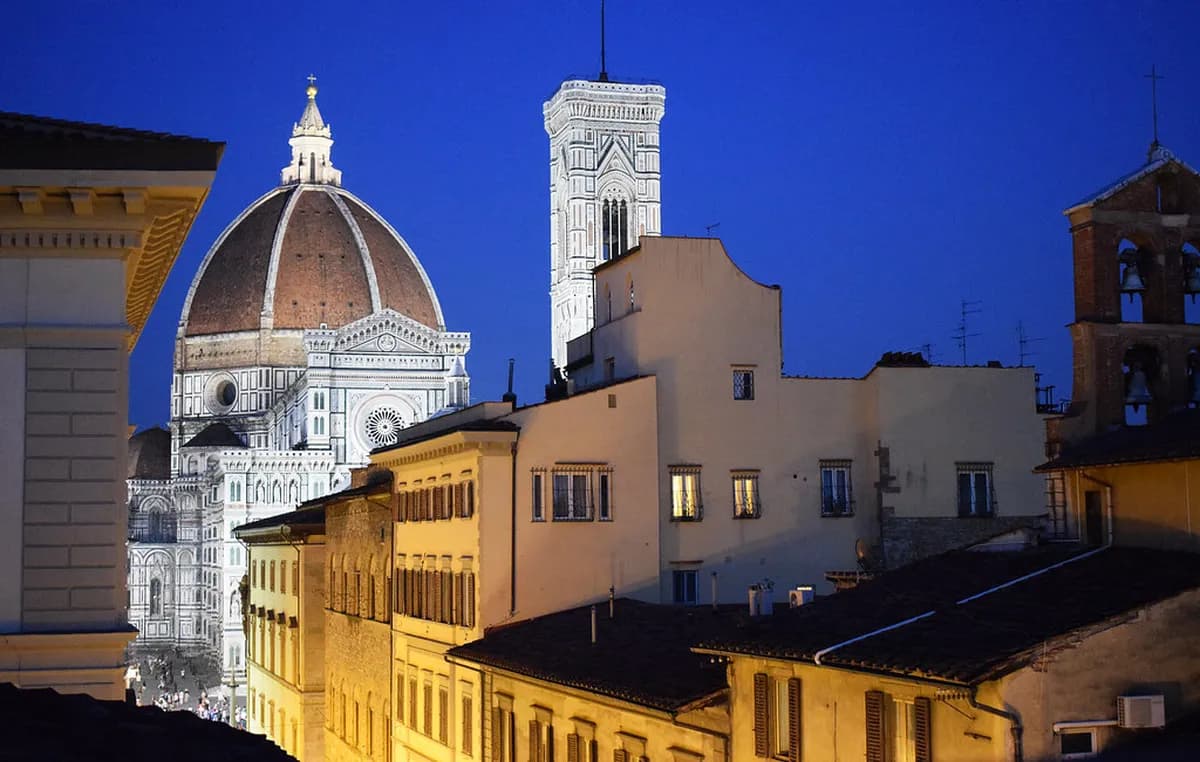
Start at the Campo dei Miracoli, the walled field holding the Leaning Tower, the Cathedral, the Baptistery and the Camposanto. It is a UNESCO World Heritage site visited by millions each year, and the tower itself, roughly eight centuries old, is the reason most people come.
The evening visit here is about exteriors: the marble buildings lit against a dark sky, the open lawn, and the tower seen from below rather than climbed. Treat the square and the buildings as two different things. Walking the grounds is one experience; going inside the Cathedral, Baptistery, Camposanto or up the tower is another, and each requires its own ticket arrangement rather than one pass covering everything. Check the official operator pages for what is open and bookable on your dates rather than assuming all four are available at the same time.
Day-trippers frequently leave disappointed because they photograph the tower and go, without giving the complex any time. Even a slow circuit of the outside rewards the effort. If you want to understand what you are looking at, our Pisa Attractions hub links individual guides to each monument.
Walk Two: Piazza dei Cavalieri and the Scuola Normale
From the monuments, head into the historic centre towards Piazza dei Cavalieri, the elegant square once dominated by the Palazzo della Carovana and reshaped in the sixteenth century under Cosimo I de' Medici for the Knights of the Order of Saint Stephen. Look for the Maltese cross on the facades.
The square has been the seat of the Scuola Normale Superiore di Pisa since 1846; the university was founded by Napoleon and modelled on the École Normale Supérieure in Paris, and it remains one of Italy's most prominent institutions. That academic identity explains the evening atmosphere: this is a working university quarter, not a museum set.
Expect a square that feels lived-in rather than staged. That is also why it is worth slowing down here instead of passing through on the way to dinner.
Walk Three: Down to the Arno and Santa Maria della Spina
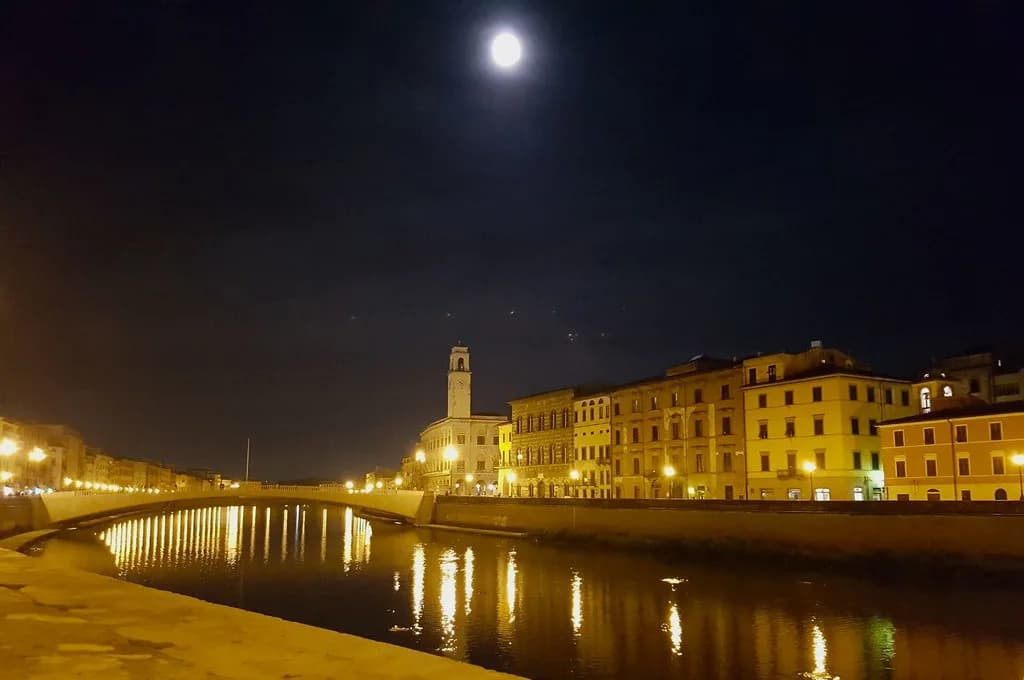
Continue downhill to the river. The Arno runs through the centre, and the Lungarni, the streets along both banks, are one of the zones the city's tourism board singles out for itineraries, which makes the riverside a natural spine for an evening walk.
Ponte Solferino is the classic viewpoint: stand on the bridge and look east along the water, where the historic buildings and the river combine at dusk. A few minutes' walk from there, the small thirteenth-century church of Santa Maria della Spina sits right at the water's edge, allegedly built to house a thorn from Christ's crown. Its interior is sparse, but the facade and its improbable position on the bank justify the detour.
For a fuller picture of the embankments in both directions, Pisa's Riverside: A Guide to the Arno Lungarnos sets out what lies along each bank.
A Short Detour: Haring's Tuttomondo
On the back wall of the Chiesa di Sant'Antonio Abate hangs Tuttomondo, Keith Haring's last public work, painted over about a week in 1989, a few months before his death. The mural covers roughly 180 square metres and is thought to be among the largest open-air public murals in Europe. It is free to see and accessible at any hour, which makes it ideal for an evening.
Its position makes it a natural pairing with the station walk: it sits between the historic centre and Pisa Centrale, so it slots in on arrival or on the way to a train. Haring is said to have stayed in a hotel opposite during the painting, now converted into an art-themed cafe, though the mural itself is the reason to come.
Where to Eat: Pisan Pizza, Cecina and Gelato
Pizzeria Il Montino is the local benchmark, popular with students and long-standing Pisans alike. Go with the right expectations: the base is thicker and crispier than Neapolitan style, and the cheese is generous. If you arrive expecting a blistered, chewy crust, you may misread the pizza entirely. Order the cecina too, the thin chickpea flatbread with stuffings, which is the more distinctly Pisan item. You can eat in at the outside tables on a backstreet or take it away.
For dessert, Gelateria De' Coltelli is the name most often cited for Pisa's best ice cream, with a second shop in Lucca. Gelateria Tuffo 13, just across the bridge, is the alternative: traditional flavours alongside vegan options, and biodegradable cups and spoons. Our Pisa Local Food Guide: What to Eat and Where expands on what else belongs on a Pisan menu.
Choosing between them is mostly about timing and appetite: pizza and cecina as a sit-down evening meal, gelato as the walk continues afterwards. Both fit the outdoor sequence without requiring a reservation.
Aperitivo and the Evening Passeggiata
Piazza delle Vettovaglie is Pisa's main produce market by day and shifts in the early evening into a gathering place for the university crowd, with small bars around the square. Nearby, Piazza Chiara Gambacorti south of the river offers a similar atmosphere. Both suit a relaxed aperitivo rather than a formal dinner, which is how many Pisans structure the walk before eating.
Weekends matter if you also want markets: antique and flea markets appear on the second weekend of the month in Piazza dei Cavalieri and along Ponte di Mezzo, and a flea market runs on Wednesday and Saturday mornings in Via San Martino. These are daytime events, so they shape a short break rather than a single evening. For a different kind of evening altogether, browse Pisa's attractions hub for museums and galleries that sometimes run later hours.
Practical Evening Planning
Book tower interiors as soon as your dates are fixed if you are travelling in peak season. Tickets can sell out days or even weeks ahead during busy periods, and the sensible trade-off is this: if you secure a slot, build the evening around it; if you cannot, keep the night outdoors and enjoy the lit exteriors instead of queueing hopefully.
Do not assume evening entry to the monuments. The city's official tourism site lists events and itineraries but does not guarantee late opening for the tower or the Cathedral complex, so confirm hours and availability directly with the operator before you rely on them. Treat any third-party listing of the tower as an evening attraction with caution; a lit exterior is not the same as a climbable interior.
Finally, keep the walk flexible. The sequence above runs monuments, square, river, mural, food, but reversing it works just as well if you want to eat first and stroll afterwards, which is closer to the Italian habit of walking after dinner. If you prefer a structured daytime route with specific stops, the Pisa Self-Guided Walking Tour: A Route Through the Historic Centre gives you one to adapt.
Plan Your Pisa Evening
An evening in Pisa does not need bookings, tickets or a fixed schedule to work. The monuments from outside, the Arno bridges, the university squares and a slice of cecina cover the essentials, and all of it sits within walking distance of the centre and the station.
Decide one thing before you arrive: whether you want to climb the tower or simply see it lit. That single choice determines whether you book ahead or keep the night entirely spontaneous, and either way the city is far better after the day-trippers have gone.
Frequently Asked Questions
What is there to do in Pisa in the evening?
The most rewarding evening is a walk rather than a checklist: see the Campo dei Miracoli buildings from outside, cross to Piazza dei Cavalieri, follow the Arno through the Lungarni and Ponte Solferino, stop at the Santa Maria della Spina church on the bank, and detour to Keith Haring's Tuttomondo mural near the station. Food fits naturally along the route, with Pisan pizza and cecina at Il Montino, gelato at De' Coltelli or Tuffo 13, and aperitivo around Piazza delle Vettovaglie. These are suggestions, not official schedules, and interior opening depends on operator timetables.
Is the Leaning Tower of Pisa open at night?
Do not count on it. Pisa's monuments keep daytime-oriented visiting arrangements, and the official tourism site does not present the tower as an evening attraction. Some third-party listings label it a night spot, but that usually refers to the illuminated exterior, which anyone can see from the square. If climbing the tower matters to you, check current opening hours and book through the official operator, and plan the evening around a daytime slot instead.
How long do you need for this Pisa evening walk?
For the evening route described here, allow three to four hours on foot, including a meal. That covers Campo dei Miracoli from outside, Piazza dei Cavalieri, the Arno bridges and Santa Maria della Spina, the Tuttomondo mural and a stop to eat. Add two to three hours if you plan to go inside the Cathedral, Baptistery or Camposanto, and note that each requires its own ticket arrangements rather than a single pass, so check availability before you build the day around it. These durations are suggestions, not official timings.
Where should you eat in Pisa in the evening?
Pizzeria Il Montino is the classic choice for Pisan-style pizza and cecina, eaten at outdoor tables on a backstreet or taken away. For something lighter, gelato at Gelateria De' Coltelli or Gelateria Tuffo 13 works well mid-walk. If you prefer a standing aperitivo, the bars around Piazza delle Vettovaglie and Piazza Chiara Gambacorti fill with a university crowd in the early evening. Hours vary by venue and season, so check before making a specific plan.
Is the Tuttomondo mural free to see?
Yes. Tuttomondo is painted on the exterior back wall of the Chiesa di Sant'Antonio Abate and can be viewed from the street at any time, with no ticket. Because it sits between the historic centre and Pisa Centrale, it pairs well with the walk to or from the station. Keith Haring painted it in 1989, over roughly a week, a few months before his death.
Is Pisa worth staying in overnight?
It can be. Pisa is a university city with a lively social scene, and the compact centre means the monuments, the Arno and the eating squares are all walkable in one evening. Staying overnight also lets you see the Campo dei Miracoli once the day-trippers have left. Whether it beats a late train back depends on your itinerary; if you are using Pisa as a base, check train connections to nearby towns before deciding.
Sources
Continue exploring
More guides you'll find useful