Pisa Day Trips: Nearby Towns, Villages and the Coast
Day trips from Pisa to Lucca, Volterra, the Pisan Mountain villages, Versilia beaches and Cinque Terre, with transport trade-offs and Pisa monument logistics.
On this page
Pisa works as a base because the options fan out in several directions: Lucca to the east, the Tyrrhenian coast to the west, the Cinque Terre further north and the hill towns of the Pisan Mountains to the north-east. Before choosing a destination, settle two practical questions: how you will travel, and how many hours you can be away. One concrete visitor detail belongs at the start, because it shapes any day you build around the Piazza dei Miracoli: the Leaning Tower is a timed visit that takes about 30 minutes and involves 251 steps, and children who have not turned 8 by the end of the year are not permitted to enter.
The Pisa tourism portal is the sensible first stop for what is actually running during your dates, since it lists events, itineraries and places in one place. Confirm an exhibition, market or seasonal programme there before you build a day around it, rather than relying on a blog post written in a different year.
How to Choose: Transport First, Then Day Length
Group your options by how you will move. Trains make Lucca and the Versilia coast straightforward without a car, while the Pisan Mountain villages and inland towns such as Volterra and San Miniato are far easier with your own vehicle. The Trammino cycle lane connects the city centre to Marina di Pisa, so a coastal half day can be done on two wheels without depending on a timetable.
Then decide how long you can be out. A half day suits Lucca's walls or the nearest coast, a full day opens up Viareggio with a stop at Pietrasanta, and a long day is what the Cinque Terre or Volterra demand once travel is added at each end. Be honest about the return leg: a late train back to Pisa is easier to recover from than a missed connection from a hill town. For arrivals and local movement, Getting Around Pisa: Arriving, Transport and Walking covers the city picture.
Lucca: Walls, Ramparts and a Manageable Half Day
Lucca's intact medieval walls are now a park, and cycling along them is the activity that works for adults and children alike. Inside, the elliptical Piazza dell'Anfiteatro and the Guinigi Tower are the usual anchors, with plenty of churches, shops and restaurants filling the gaps between them.
In a half day, pick the walls plus one square and stop there; in a full day, add a museum, a long lunch and a slow wander through the side streets. Because Lucca sits between Florence and the coast, it also combines naturally with a beach stop or with Pisa itself, though trying to do all three leaves little time anywhere. Check current departures with the rail operator rather than assuming a frequency.
The Coast Close to Pisa: Marina di Pisa, Tirrenia and San Piero a Prado
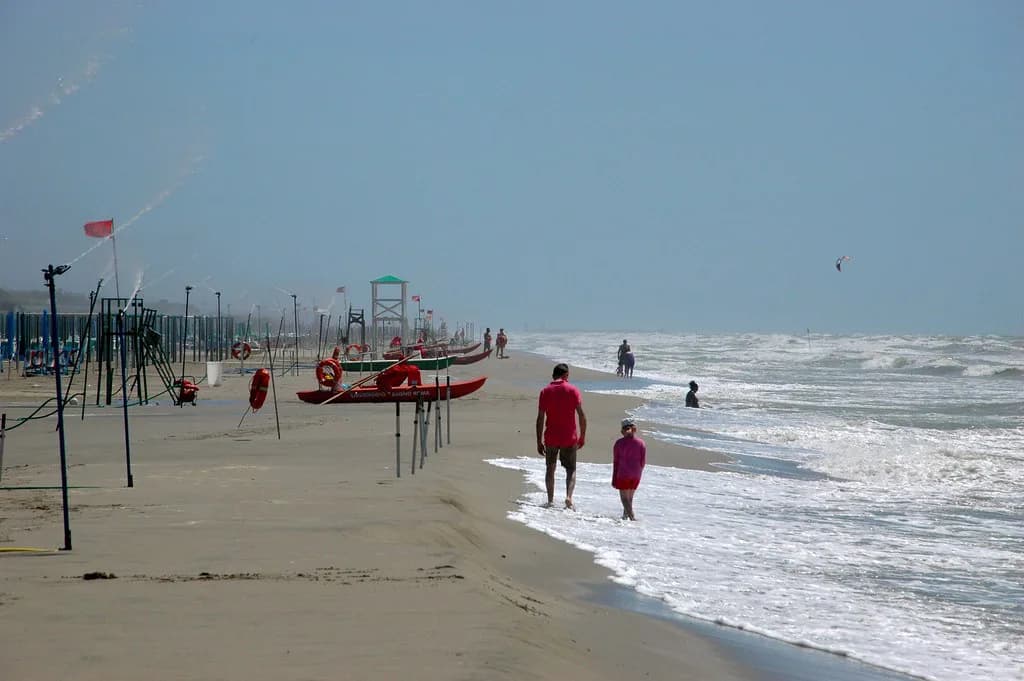
Marina di Pisa has beaches and a tourist port, and the Trammino bike lane links it to the city centre, which makes it the simplest coastal escape when you do not want to depend on a timetable. Tirrenia is the other nearby resort named in the same local listings. Treat these as a relaxed half day rather than a beach-holiday substitute, and bring what you need, since the appeal here is proximity.
On the road toward Marina di Pisa, the Basilica of San Piero a Prado is worth a deliberate stop for its Pisan Romanesque architecture and the legend that Saint Peter first landed in Italy at this spot. Combine it with the coast in a single loop by bike or car, which is more satisfying than treating either as a standalone trip.
Versilia: Viareggio, Pietrasanta and Forte dei Marmi
The Versilia coast is the nearest proper seaside resort stretch, and Viareggio is the easiest of the three to reach, with a long coast, cafes and restaurants. Pietrasanta sits just beside it, but the beach area is a bus ride from the station and taxis are not always waiting, so plan that connection before you commit. Forte dei Marmi is the upscale option, with designer stores and pricier beach clubs.
Budget is where beach plans usually go wrong. Much of the Versilia sand is operated as private concessions with paid sunbeds and umbrellas, and prices rise in the most upmarket resorts, so a spontaneous beach day can cost more than expected. Check public access and current rates directly with the beach establishments or the local tourist office, and decide in advance whether you want the serviced version or a free stretch of sand. Prices in older blog accounts are not a reliable guide to what you will pay.
Cinque Terre and Levanto: A Reality Check
The Cinque Terre suits scenery, walking and village-hopping far more than a lazy beach day. Sandy beaches are scarce and the villages are heavily visited, so the trip rewards an early start and a willingness to walk between viewpoints rather than queue for a sunbed. Seasonal concerts and events in the area change year to year, so confirm anything date-specific with the organisers before you plan around it.
Monterosso al Mare is the village with the most usable beach, including a crowded public stretch and rentable sunbeds, while Levanto just outside the five villages has a long beach and is included in the Cinque Terre train pass. Porto Venere, reached by bus or boat from La Spezia, offers swimming on a peninsula rather than in the villages themselves. Pick one or two bases for a day trip instead of trying to tick off all five.
Inland: Calci Charterhouse and the Pisan Mountains
The Charterhouse of Pisa at Calci, founded by Carthusian monks in the 14th century and renovated in the 18th, is a short drive from the city and houses the University of Pisa's natural history museum in one wing. That museum holds one of Europe's largest collections of cetacean skeletons, making Calci a strong rainy-day or family option that most short Pisa itineraries skip. Confirm visiting arrangements with the museum before you set out.
Vicopisano, fortified in the 15th century to a design by Brunelleschi, and Buti are among the picturesque villages of the Pisan Mountains, an area also known for high-quality olive oil and vineyards. These are car country: the pleasure is the drive between them and a long lunch, not a checklist of sights. If you have a spare half day and a vehicle, this loop delivers more atmosphere per kilometre than the coast on a crowded summer weekend.
Longer Inland Days: Volterra and San Miniato
Volterra keeps an almost intact medieval core alongside Etruscan heritage, including the Guarnacci Etruscan Museum and its celebrated collection of funerary urns, plus the Porta all'Arco and alabaster workshops. A Roman amphitheatre discovered in the town is under excavation, which adds a reason to linger. It sits about 60 km from Pisa, so give it a full day rather than squeezing it in beside another town.
San Miniato, a medieval town of Lombard origins that Frederick II used as a defence outpost in the 13th century, is known for white truffles and sits under 50 km from Pisa. It pairs well with a slow lunch in autumn, when truffle season gives the town its purpose, but check restaurant openings directly since small-town schedules vary.
Pontedera and the Piaggio Museum: A Focused Half Day
Pontedera, about 25 km from Pisa, is home to the Piaggio Museum, on the site where the Vespa was invented and produced from the mid-1940s. This is a compact, single-subject outing that suits a short morning or a rainy afternoon better than a full day. Pair it with a stop in one of the nearby Pisan Mountain villages if you have a car and want to make more of the drive.
Piazza dei Miracoli Logistics for Start and End Days
If your day trip bookends a Pisa stay, sort out the Campo dei Miracoli before you leave. Cathedral admission works by free pass, and buying any ticket includes one without a fixed time, but the fixed-time passes for the cathedral alone are limited and available only at on-site ticket offices. Ticketed monuments are separate and do not all share a single ticket, so read each option rather than assuming one purchase covers everything.
For the tower, arrive on time: latecomers are refused entry without a refund, and bags and luggage must go to the cloakroom before the climb. The stairway is narrow and the floor uneven and slippery, and the visit is not recommended for people with cardiovascular or muscular disorders. If you want context beyond the monuments, the Sinopie Museum displays the preparatory drawings recovered from the Camposanto after wartime damage, and Pisa Attractions covers the wider set of sights.
Sample Day Shapes by Duration
These are editorial suggestions, not official itineraries. For a half day, cycle the Trammino to Marina di Pisa, or take the train to Lucca and ride the walls. For a full day, choose Viareggio with a stop at Pietrasanta, or drive the Calci and Vicopisano loop with a long lunch. For a long day, commit to the Cinque Terre and accept an early start and a late return, or give Volterra the hours it deserves.
A combined Florence-and-Pisa day is possible but shallow: the pleasure of each city is in the slower corners, and trying to see both means spending much of the day in transit. If Florence is on your list, give it its own day and keep Pisa as the base. Two Days: A 2-Day Itinerary shows how to structure a stay that leaves room for excursions.
Practical Booking and Timing Advice
Book timed tower slots ahead of your visit, especially in spring and autumn when demand stays high, and leave slack in your plan so a delayed morning does not cost you the entry. Tickets for the tower can be modified or cancelled up to two hours before the chosen time, while orders without the tower can be cancelled until late on the day of the visit; unused tickets are not refundable.
For transport, check current timetables and buy tickets through the operator rather than relying on secondhand summaries, and remember that regional services vary by season and day of week. For a sense of when crowds and heat peak, Best Time to Visit Pisa: Seasons and Avoiding Crowds sets out the trade-offs. If you want the city's quieter layers before or after your excursions, the hidden gems in Pisa guide is the place to start.
Plan Your Visit
Pisa rewards a base-and-branch approach: keep the city for the monuments, the river and the quieter streets, and use it to reach Lucca, the Versilia coast, the Cinque Terre and the Pisan Mountains. Choose by transport first, then by how many hours you can spare, and resist the temptation to stack three destinations into one day.
Before you go, confirm tower slots and monument rules with the Opera della Primaziale Pisana, check trains with the operator, and verify beach access and any seasonal events directly with organisers. Those checks remove most of the ways a Pisa day trip goes wrong.
Frequently Asked Questions
What are the best day trips from Pisa without a car?
Lucca and the Versilia coast are the most straightforward without a car, since both are served by rail, and Marina di Pisa can be reached by bike along the Trammino lane. The Cinque Terre is possible by train but makes a long day, so start early. Always check current departures with the operator rather than relying on secondhand schedules.
Is Lucca or Siena a better day trip from Pisa?
Lucca is the easier outing from Pisa and works well in a half day, with its intact walls and compact centre. Siena is further and deserves a full day of its own, so it suits travellers staying longer in Tuscany. Pick Lucca if time is short and Siena if you can commit a whole day.
Can you do the Cinque Terre as a day trip from Pisa?
Yes, but treat it as a long day built around scenery and walking rather than a beach holiday. Sandy beaches are scarce and the villages are crowded, with Monterosso al Mare the most usable for swimming and Levanto a quieter alternative nearby. Choose one or two villages instead of trying to cover all five.
Are there beaches near Pisa, and are they free?
Marina di Pisa and Tirrenia are the closest resorts, and the Trammino bike lane links the city centre to Marina di Pisa. Much of the Versilia coast further north operates as private concessions with paid sunbeds, so a free beach day needs checking in advance. Prices and access change, so confirm with the beach establishments or the local tourist office.
How long does it take to visit the Leaning Tower and Piazza dei Miracoli?
The tower climb itself takes about 30 minutes over 251 steps, according to the Opera della Primaziale Pisana, and most visitors add time for the cathedral, baptistery and the square. Cathedral admission uses a free pass, while other monuments are ticketed separately. Allow at least a half day if you want to see more than one building.
Do you need to book Leaning Tower tickets in advance?
Entry is timed and numbers are limited, so booking ahead is sensible, particularly in busy seasons. Tickets can be modified or cancelled up to two hours before the chosen slot for the tower, and late arrivals are refused without a refund. Book through the official Opera della Primaziale Pisana channels.
Which Pisan Mountain villages are worth a day trip from Pisa?
Calci, with its Charterhouse and natural history museum, makes the strongest single stop, while Vicopisano and Buti offer picturesque streets, olive oil and vineyards. These work best with a car, combined into a loop with a long lunch. Confirm museum and monastery visiting arrangements with the sites before setting out.
Sources
- Home | Comune di Pisa - Turismo
- What to see around Pisa - Suggestions for day trips - Hotel Di Stefano
- 12 fantastic day trips from Florence you and your family will love in 2026 | Mama Loves Italy
- Where to Swim Near Pisa and Florence & Best Beaches in Cinque Terre
- Official event website
- Opera della Primaziale Pisana: sito ufficiale – A few words of advice before you buy your ticket
- Opera della Primaziale Pisana: sito ufficiale – Sinopie Museum
Continue exploring
More guides you'll find useful