Best Time to Visit Pisa: Seasons and Avoiding Crowds
Plan a calmer Pisa trip: long-term weather averages by month, when crowds build around Piazza dei Miracoli, and why an overnight stay beats a day trip.
On this page
Most visitors treat Pisa as a quick detour, but the city works better as a slow stop with a river, a university quarter and a compact centre you can cross on foot. Timing shapes that experience more than any single sight: a mild, bright day on the Lungarni feels nothing like a hot August afternoon among tour groups. This guide uses long-term monthly weather averages and visitor impressions to help you choose a season deliberately rather than by default.
The key decision is a trade-off between warmth and daylight on one side and the volume of day-trippers on the other. Summer delivers the strongest sun but also the heaviest pressure around the Leaning Tower and Duomo, while spring and autumn sit in a middle band that suits most travellers. Winter brings short days and cool air but a noticeably slower pace along the Arno.
Pisa's Climate at a Glance
Long-term averages show a clear arc across the year. Maximum daytime temperatures run from about 10°C in January to roughly 29°C in July, then slide back to around 11°C in December. Daily sunshine follows a similar curve, from about three hours in midwinter to roughly ten hours in July, which matters when you plan outdoor wandering.
Those figures are monthly averages, not forecasts, so treat them as a planning frame rather than a promise for any given week. They also explain why May, June and August surface as the warmest, sunniest stretch: May and June sit around 22–25°C with eight to nine hours of sun, while August holds near 28°C with about nine hours.
Rain is spread fairly evenly rather than concentrated in one dramatic wet season, so a waterproof layer earns its place in any month. Spring and autumn can serve bright days and showers in the same week. Build one indoor option into each day so a wet morning does not derail the trip.
Spring (April to June): Mild Days and Rising Visitor Numbers
April opens the pleasant stretch, with averages near 18°C and about six hours of sun, before May and June climb toward 22°C and 25°C with longer, brighter days. This is comfortable weather for walking the walls, crossing Ponte di Mezzo and lingering on the Lungarni without summer heat. It is also when day-trip traffic begins to build, especially around weekends and Italian public holidays.
June adds a local dimension: the city's June calendar brings events of its own, which can enrich a stay but also concentrate visitors in the centre. If you want a calm base, book early and favour mornings for Piazza dei Miracoli. Checking the city's official events listing before fixing dates saves unpleasant surprises.
Spring is also the season for using Pisa as a base rather than a stopover. The surrounding countryside and coast are pleasant before the summer heat, and short rail hops make longer excursions easy without a car. Our guide to the best day trips from Pisa maps out the practical options if you want to spread your time across Tuscany. For wider planning, see Best Day Trips from Pisa.
Summer (July and August): Warmest, Sunniest and Busiest
July is the statistical peak for both temperature and sunshine, with averages around 29°C and about ten hours of daily sun. August is only marginally cooler at roughly 28°C with nine hours. These are excellent conditions for river evenings and early walks, but poor ones for midday sightseeing with children or anyone sensitive to heat.
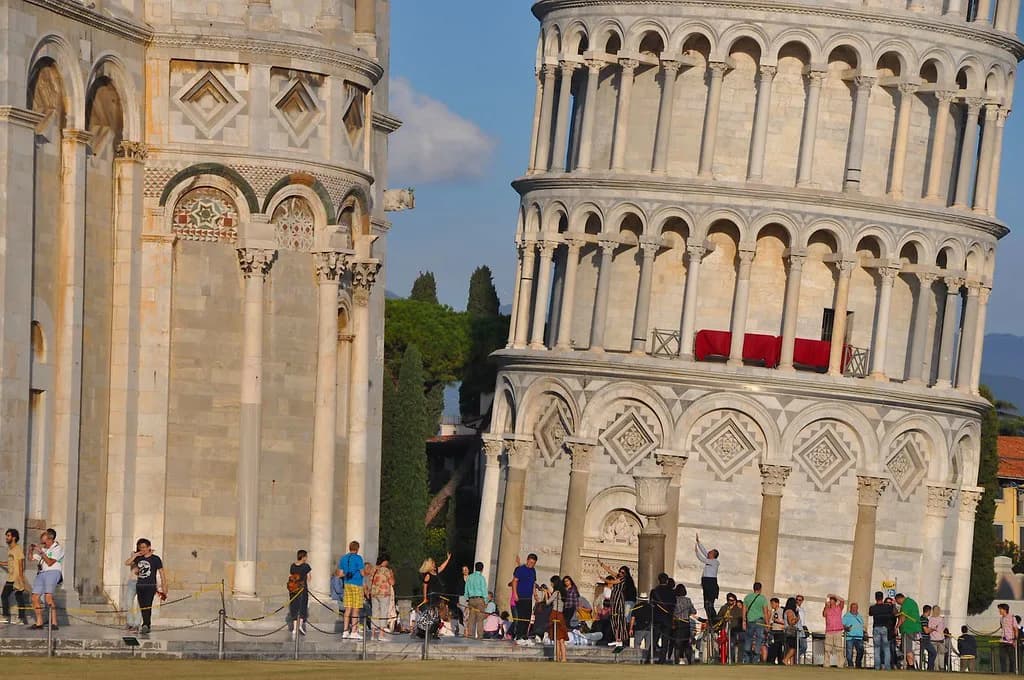
Crowd pressure peaks alongside the weather. Visitor accounts describe the tower area as unmistakably touristy, with everyone chasing the same photograph, even if the marble and bells still delight. The lesson is not to skip it but to schedule it: arrive at opening time, or see it in the evening light when groups thin.
Summer heat also argues for splitting the day. Reserve late morning for the Piazza dei Miracoli complex, retreat indoors or to a shaded café during the hottest hours, and return to the river in the evening. Staying overnight, rather than arriving and leaving on the same train, is the single most effective way to avoid the day-trip crush.
Autumn (September and October): Warmth That Lingers
September still averages about 25°C with seven hours of sun, and October remains workable at roughly 20°C with six hours, making early autumn one of the most balanced windows of the year. The light softens, the riverfront becomes comfortable for long strolls, and the atmosphere shifts as summer families depart. It is a strong choice for travellers who want warmth without the August intensity.
Autumn is also when the city's cultural calendar fills in. The official tourism portal lists exhibitions, small museum events and seasonal markets through October and into November, so a rainy afternoon usually has an indoor alternative. Check the events pages close to your dates, since listings change and some run for a single day.
Because autumn crowds thin but do not vanish, this is a good season to explore beyond the tower. The river quarter, the market square and the smaller churches reward unhurried walking, and the compact layout means you can cover a lot without transport. Our hidden gems in Pisa guide suggests where to head once the main square is behind you.
Winter (November to February): Quiet Streets and Short Days
Winter is cool rather than harsh, with averages between about 10°C and 15°C and only three to five hours of daily sunshine. Days are short, so plan outdoor time for the middle of the day and keep museum visits as a fallback. In exchange, the streets are calmer and the tower photographs are easier to take without a crowd in the frame.
This is a good season for travellers who prioritise atmosphere over sunbathing: cafés feel cosier, the Arno is moodier, and prices outside peak periods are generally easier on the budget. It is not a guarantee of solitude, and weekends and holidays still draw visitors. Pack layers and a rain jacket rather than relying on mild afternoons.
One practical caveat: shorter daylight limits how much you can fit in after arrival. If you are coming from Florence or another base, arriving early matters more in winter than in June. Our Pisa attractions hub links individual sight guides so you can pre-select two or three indoor stops before you travel.
Shoulder Season Versus Peak Season: What Actually Changes
The practical difference between seasons is less about opening hours or prices than about how much of your day is spent moving through crowds. In peak summer, the walk from the station to the tower can feel like a queue; in shoulder months, the same route is a pleasant urban stroll. Neither season is empty, and no month can be described as crowd-free.
Accommodation supply behaves differently too. Summer and major event weekends tighten the choice of rooms near the centre, while winter gives more flexibility for last-minute plans. If your dates are fixed by flights or school holidays, you cannot optimise the calendar, so optimise the hours instead: early mornings and evenings around the river consistently feel calmer.
A useful rule is to pair one busy sight with one quiet one each day. See the tower area, then walk ten minutes to a lesser-known church or a river bench, as first-hand accounts note how quickly the mood changes a few streets from the main square. That rhythm protects the day from feeling like pure queue management.
How to Handle Piazza dei Miracoli When It Is Busiest
The square holds the Leaning Tower, the Duomo, the Baptistery and the Camposanto in one compact space, which is exactly why it concentrates visitors. Decide in advance which interiors you actually want, since the complex is a cluster of separate spaces rather than one undifferentiated ticket. Check current access and booking arrangements on official pages before you travel, as these change seasonally.
Timing beats tactics. The first hour after opening and the final hours before closing are usually the most comfortable, whatever the month, while mid-morning to mid-afternoon in July and August is the least. If you dislike heights or long queues, the tower climb is a legitimate thing to skip; the views from ground level and the surrounding streets still justify the visit.
Keep an eye on the city's official tourism calendar for temporary exhibitions and one-off openings that can pull crowds or offer alternatives. It also flags seasonal initiatives, such as off-season trekking programmes, that pair well with a quieter visit. Verify details close to your dates rather than relying on a plan made months earlier.
Beyond the Tower: Using the Walkable Layout to Spread Your Time
Pisa's centre is small and flat enough to cross on foot, and that compactness is your best crowd-avoidance tool. Rather than clustering everything around the tower, build a loop that includes Borgo Stretto, Ponte di Mezzo, the Keith Haring mural on the river wall and the market square. Walking between them naturally disperses you away from the tour groups.
The riverbanks are the city's living room, and locals use them at sunset in every season, though winter visits need to be earlier. Pair a riverside walk with a garden or a small museum to balance outdoor and indoor time. The Orto Botanico is a good seasonal indicator: lush and shaded in spring and summer, quieter and cheaper to enjoy slowly in winter.
If you have more than a day, consider using the city as a hub. Rail links make Lucca and the coast plausible half-day outings, and returning in the evening lets you catch the calmer version of the centre. Our guide to Lucca and other nearby towns explains the logistics without tying you to a fixed schedule.
Where Season Meets Itinerary: A Two-Day Rhythm
A workable two-day shape starts with arrival and an evening walk to Piazza dei Miracoli, saving interiors for the next morning. Day two opens with the sight you care about most, then shifts to the river, a market lunch and a slow afternoon. This structure survives both heat and rain because the flexible parts sit in the middle of the day.
In summer, shift the whole pattern earlier and add a siesta; in winter, compress outdoor time into daylight and use evenings for food and indoor culture. Spring and autumn need the least adjustment, which is why they suit first-time visitors with mixed interests. Whatever the season, book the one timed entry you cannot miss and leave the rest loose.
Transport decisions should follow the season too. Arriving at Pisa Centrale puts you within walking distance of much of the centre, and the airport sits close by, but the walk is more appealing in mild months than in August heat. Our getting-around guide covers the practical choices so you can decide based on weather rather than habit.
Month-by-Month Quick Reference
January to February: cool and often bright, with averages near 10–12°C and few hours of sun; best for indoor sights and quiet walks. March to April: warming quickly, with March around 14°C and April near 18°C, and rain still possible. May to June: the sweet spot for most travellers, at roughly 22–25°C with long days.
July to August: hottest and sunniest, near 28–29°C, with the biggest crowds; start early and rest at midday. September to October: warm and softening, around 25°C then 20°C, and a strong shoulder-season choice. November to December: cooling to 15°C then 11°C, with short days and a slower pace.
Use these bands to shortlist dates, then check the city's event listings and the operator pages for the sights you plan to enter. Confirm any current access rules and timetables directly, since those details change with the season and are not fixed facts.
Plan Your Visit
Pisa's best season depends on what you value: May and June offer the most comfortable combination of warmth, light and manageable crowds, September and October trade a little heat for softer light and thinner groups, and winter suits anyone who prefers calm over sunshine. August is a deliberate choice for sun-seekers willing to manage heat and pressure.
Whichever month you pick, the practical levers stay the same: stay overnight rather than day-tripping, visit Piazza dei Miracoli early or late, and spend the middle of the day on the river or indoors. Confirm current opening arrangements and events on official pages close to your dates, then leave room for the city beyond the tower.
Frequently Asked Questions
What is the best month to visit Pisa for warm, sunny weather?
Long-term averages point to May, June and August as the warmest and sunniest stretch, with daytime maximums roughly between 22°C and 30°C and eight or more hours of daily sunshine. June and September often feel like the best compromise between pleasant weather and manageable visitor numbers. Treat these as averages rather than a forecast and check a short-range forecast close to departure.
How many days do you need in Pisa?
Two full days let you see the Piazza dei Miracoli interiors, walk the river quarter and still have time for a market and a slow meal. A single day covers the headline sights but leaves little room for the city beyond the tower. If your time is short, choose one paid interior and spend the rest outdoors.
Is Pisa worth visiting in winter?
Yes, if you value atmosphere and calm over beach weather. Winter days are cool, averaging roughly 10°C to 15°C, with only a few hours of sunshine, so plan outdoor time around midday and keep an indoor option ready. Crowds are lighter outside holidays, but no season is empty.
Should you visit Pisa as a day trip from Florence or stay overnight?
Staying overnight is usually the better choice because the centre becomes calmer in the evening once day-trippers leave. An overnight stay also lets you reach the tower area early the next morning. If you only have a day, arrive early and plan your return for the evening.
How do you avoid crowds at the Leaning Tower and Piazza dei Miracoli?
Treat it as a time-of-day problem first: go in the first hour after opening or in the late afternoon, avoid mid-morning in July and August, and check current access and booking details on official pages. Then use the compact centre to your advantage by pairing the square with quieter streets and the riverfront. No month is genuinely crowd-free.
What should you skip in Pisa if you dislike queues or heights?
The tower climb is the obvious candidate, since the view from ground level and the surrounding streets still justify the visit. If you dislike queues more than heights, keep the square but choose one interior rather than all of them. Spend the saved time on the river, the market square or a smaller church.
Is Pisa walkable enough to explore without transport?
The historic centre is compact and flat, so most of the main sights, the river and the market sit within an easy walk of each other. Bikes and scooters help for longer river stretches, and buses cover the airport and station links. Check current routes and tickets with the local operator.
Sources
Continue exploring
More guides you'll find useful