Pisa's Arno Lungarnos: A Riverside Walking Guide to Both Banks
A slow walk along Pisa's Arno covers Palazzo Blu and Santa Maria della Spina, Ponte di Mezzo, Borgo Stretto and quieter southern quays. Plan your route here.
On this page
Most visitors arrive in Pisa with a single monument in mind, yet the Arno is the line that actually organises the city. The lungarni, the paved promenades that follow both banks, connect museums, churches, bridges and cafés in one continuous walk. The city's own tourism portal lists the lungarni and Piazza dei Miracoli among its mapped zones, which is a useful hint that the river deserves the same afternoon as the Tower.
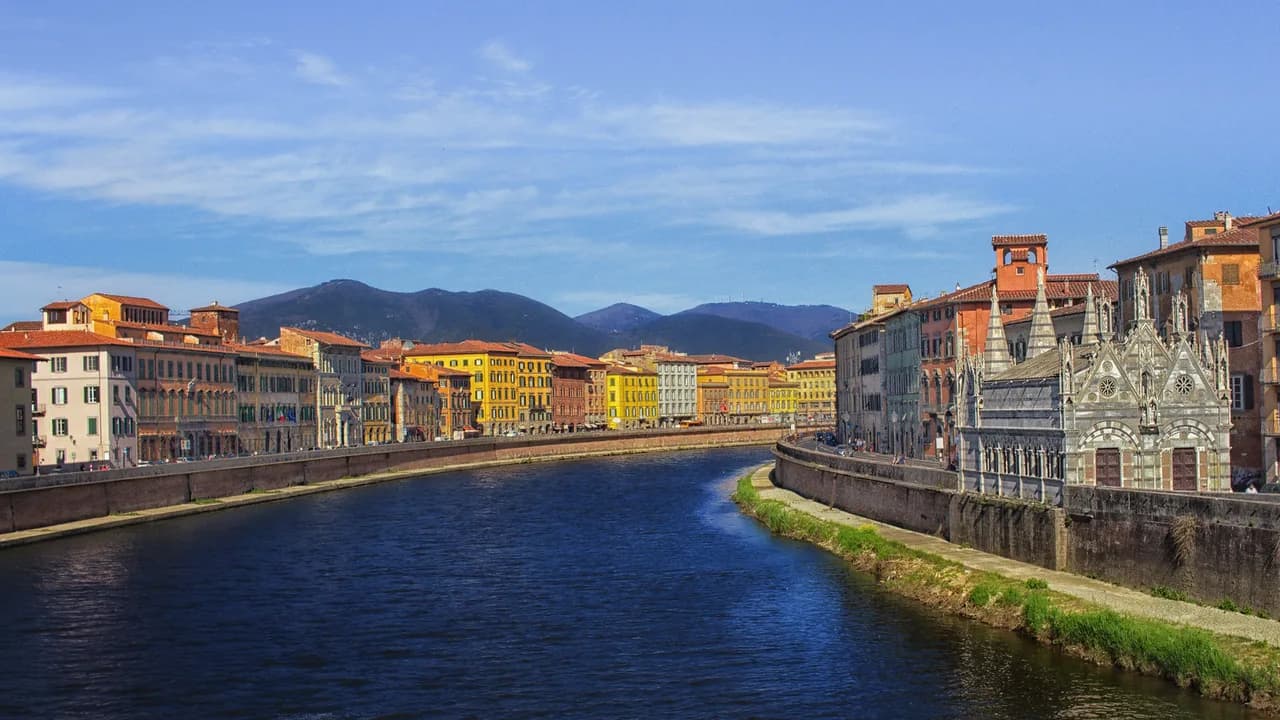
A good first concrete landmark is Santa Maria della Spina, a small Gothic church built directly on the riverbank along Lungarno Gambacorti. It is modest in size but densely ornamented, and it anchors the western stretch of the north bank. A walking guide that references it as a fixed point along the river describes the church at Lungarno Gambacorti in Pisa.
This guide treats the walk as two banks with distinct characters rather than one uniform promenade. You can shorten it at any bridge or extend it with a museum interior when the weather turns or your legs tire. Budget attention first, tickets second.
What and Where the Lungarni Are
The lungarni are the streets that run along the Arno through central Pisa, and the two main riverside promenades sit on opposite banks. The Arno functions as the city's historical and visual backbone, taking walkers past medieval facades, noble palaces, churches and small quays. That framing comes from a river-neighbourhood guide that treats the waterfront as a route rather than a single sight.
The tourist board presents Pisa as a set of itineraries and themed zones, and the lungarni appear among them alongside Piazza dei Miracoli. That structure is helpful when planning: you can pick a zone, walk it, and treat the rest of the city as a separate outing. It also means the riverside is officially part of the visitor map, not an improvised detour.
Walkers should understand that the quays, bridges and public streets are free to traverse, while interiors such as museums and some churches are separate, paid or time-limited visits. Decide before you set out whether the aim is a pure river stroll or a stroll with one cultural stop built in. That single decision shapes both the pace and the budget of the day.
Orientation: How the Two Banks Differ
The north bank, and especially Lungarno Gambacorti, concentrates cultural institutions, terrace cafés and elegant facades, which makes it the livelier of the two. It suits a walker who wants stops, viewpoints and a coffee within a few steps of the water. If this is your only riverside outing, start here.
The south bank, through the San Francesco district and the southern lungarni, reads as quieter and more residential. The same source notes that this side offers different panoramas back toward the historic facades across the water. Photographers often prefer that reversed angle because the landmark buildings sit in the frame rather than underfoot.
A neighbourhood overview describes the Lungarni as two riverside promenades flanking the Arno, with the waterfront described as a place locals spend evenings. It scores the area high for walkability and culture, though such ratings are editorial judgements rather than official data. Treat them as a nudge to walk rather than a guarantee about any individual street.
My suggestion is to pick a starting point based on energy rather than geography: cultural institutions first if you are fresh, southern quays first if you want to warm up with silence. Either direction works because the bridges let you switch banks at will. Nothing about the route requires a fixed order.
North Bank, West Stretch: Palazzo Blu and Santa Maria della Spina
Palazzo Blu on Lungarno Gambacorti is a restored palace turned art and exhibition centre, hosting temporary shows alongside its collection and archives. Its address is Lungarno Gambacorti 9, 56125 Pisa, which makes it easy to find mid-walk. Treat it as a cultural anchor rather than a mandatory stop.
Admission at Palazzo Blu varies with the exhibition on show, and published figures are indicative rather than stable. Check the palace's own listings close to your visit before building a budget around a specific show. Opening days also shift around special exhibitions, so confirm before travelling.
Santa Maria della Spina sits a short distance along the same quay and is often described as a tiny Gothic masterpiece on the water. Access can be limited, with openings sometimes split between morning and afternoon, and occasional closures. Photograph the exterior freely, but check locally if you specifically want to step inside.
For reflections and softer crowds, early morning and late afternoon are repeatedly recommended along this stretch. The light is lower, the water calmer, and the facades read clearly in photographs. This is a suggestion about timing, not an official schedule.
If you want to go deeper on the little church before you arrive, the Santa Maria della Spina Visitor Guide: Pisa's Jewel on the Arno covers its history and setting in more detail.
Crossing at Ponte di Mezzo
Ponte di Mezzo is the natural hinge of any riverside walk in Pisa, linking the busy banks near Piazza XX Settembre between Lungarno Galilei and Lungarno Pacinotti. Cross it slowly and look back: this is where the riverside facades line up best in a single view. Use it to shorten the walk, extend it, or simply reset your direction.
The bridge is also described as a gathering point for local events, competitions and seasonal markets. If something is happening, expect a crowd and plan to cross elsewhere or return later. Nothing needs booking to walk over it.
A neighbourhood guide highlights the view from Ponte di Mezzo as one of the area's draws, alongside the riverside promenade and Palazzo Blu. That aligns with the simple practical point: the bridge is a viewpoint first and a crossing second. Give it a few minutes rather than hurrying across.
Borgo Stretto and the Historic Riverside Centre
From Ponte di Mezzo, Borgo Stretto runs as a medieval pedestrian artery of arcades and traditional shops, parallel to the Arno. The shift is abrupt: within a short walk you move from open water to a narrow street grid. It is a useful reminder that Pisa's centre is layered, not a single waterfront.
The conventional approach starts at Piazza Cairoli and walks up past the Torre dei Galli toward the Cathedral, though that final stretch leaves the river behind. Save that direction for later if the Tower and Piazza dei Miracoli are on your list. The riverside rewards a slower, less linear pace.
The small alleys behind Borgo Stretto are where independent shops and studios tend to sit, away from the busiest frontage. Wander one or two of these lanes rather than committing to the whole street. It costs nothing and adds texture to the walk.
For a broader route through the same historic core, the Pisa Self-Guided Walking Tour: A Route Through the Historic Centre covers the streets around Borgo Stretto in sequence. It pairs well with a river walk on the same day.
North Bank, East Stretch: Pacinotti, Galilei and the Orto Botanico
Lungarno Pacinotti begins near Ponte di Mezzo and runs east under trees, with vantage points over older bridges and everyday life on the quays. Lungarno Galilei, closer to Ponte Solferino and the university area, is frequented by students and has a relaxed feel. Together they show a more residential side of the river.
The Orto Botanico di Pisa at Via Luca Ghini 13 is a green detour just off the Arno, with greenhouses, Mediterranean plants and quiet paths. Typical hours run through the daytime and vary by season, with some holiday closures, so verify before you go. Admission is separate from the riverside walk itself.
Cyclists share these stretches, and pedestrians should be given priority where paths narrow. Bring a water bottle and wear shoes that handle uneven paving. These are small preparations that make the eastern quays far more pleasant.
South Bank: San Francesco and the Quieter Quays
On the south bank, the San Francesco district and southern lungarni show a calmer, more residential Pisa. The church of San Francesco on Piazza San Francesco is an accessible religious building where opening times depend on services, often morning and late afternoon. Casual visits are typically free, with donations welcome.
Continue east and you pass barges, workshops and small businesses that reflect the Arno's working role in the city. These spots offer excellent angles for photographing the historic facades across the water. It is the quieter contrast to Lungarno Gambacorti rather than a rival to it.
Benches and shaded areas are more common on the south bank, while the north bank carries more activity. If you want a rest without ordering anything, this is the side to choose. Evening here is quieter and suits an aperitivo at sunset.
A polarising filter helps cut glare on the water when photographing from this bank, particularly in strong afternoon light. It is a small piece of kit that makes the reflections across the river far easier to capture.
Art Context Off the River: Museo Nazionale di San Matteo
The Museo Nazionale di San Matteo sits a short distance from the Arno at Piazza San Matteo in Soarta 1, holding an important collection of medieval art and sculpture taken from Pisane churches. It offers context for the facades and church interiors you have been passing all afternoon. Hours are typically daytime with a Monday closure, but confirm before relying on that.
Admission is a separate, ticketed visit, so budget for it independently of the free riverside walk. It is best used as an optional deepening rather than a scheduled stop. If time is short, choose one gallery and leave the rest.
For an overview of the city's other sights and how they fit together, the Pisa Attractions hub lists individual visitor guides. It helps you decide whether San Matteo or another collection earns your remaining hours.
Where to Pause: Benches, Quays and Picnics
The riverside is generous with pause points: steps down to the quays, small pedestrian bridges and shaded benches. The south bank has more of the shaded seating, while the north bank keeps you closer to cafés and terraces. Pick your rest stop by mood rather than by a list.
For a picnic, look for a salumeria on the south side and assemble pecorino, local ham and bread to eat on a riverside bench. Food markets usually run in the morning. Exact costs vary, so judge by the counter rather than by a guide.
If you sit at a terrace, check whether the bill includes the coperto and whether listed prices include tax before ordering. Ask for the total rather than estimating from the menu. This avoids surprises at the end of a relaxed meal.
Aperitivo hour works well on either bank: busier and more sociable on the north, quieter on the south. For more options after dark, see Pisa at Night: Evening Walks, Dining and Atmosphere.
Practical Rhythm: Surfaces, Weather and Light
Pavements along the quays can be uneven in places, so comfortable shoes matter more than any specific route. A water bottle is essential in summer, and a windproof layer helps on the banks in autumn and winter. These small preparations carry the day.
Early morning and late afternoon give the best light for reflections and draw softer crowds. A summer night walk along the lungarni, with bridges and palaces lit, is especially pleasant. This is a suggestion about timing rather than a published schedule.
Meal times around midday and early evening are the busiest in trattorias near the river, so shift your lunch or dinner slightly to avoid queues. If you are walking in the height of summer, plan a museum interior for the hottest hours. The river itself sets the rhythm.
Fitting the River Walk Into a Wider Pisa Trip
The lungarni pair naturally with Piazza dei Miracoli, since both sit on the tourist board's mapped zones and both are best walked rather than driven between. Do the Tower early, then follow the Arno in the softer light of late afternoon. This sequencing keeps the crowds on one side of the day.
If you want the city's less obvious corners, the hidden gems in Pisa guide pairs well with this riverside route. It covers the quieter, more overlooked places that a first-time visitor often misses. Use it to fill a second afternoon rather than to replace the river.
Beyond the city, the Best Day Trips from Pisa: Nearby Towns and the Coast suggests how to spend the following day. Lucca and the coast both work as short excursions from the same base. Build the river walk as the calm day between them.
Plan Your Visit
The Arno rewards the traveller who gives it an afternoon rather than a photo stop. Start on the north bank for Palazzo Blu and Santa Maria della Spina, cross at Ponte di Mezzo, and let the southern quays slow you down on the return. That simple loop covers the riverside's two distinct moods.
Before you go, check current opening days for Palazzo Blu, Santa Maria della Spina, the Orto Botanico and San Matteo on their own listings, since published hours and admission vary with season and exhibitions. The riverside itself needs no ticket. Pack water, wear good shoes, and leave room for one unplanned bench.
Frequently Asked Questions
How long does it take to walk Pisa's lungarni?
There is no official duration, and it depends entirely on how many stops you make. A brisk walk between the main bridges takes relatively little time, while a full loop with Palazzo Blu, Santa Maria della Spina and a bench stop on the south bank fills an afternoon. Decide how many interiors you want to enter before you set out, since each one adds time.
Which side of the Arno in Pisa is better for a walk?
It depends on what you want. The north bank along Lungarno Gambacorti is the livelier side, with cultural institutions, terrace cafés and elegant facades. The south bank through the San Francesco district is quieter, more residential and gives better angles back at the historic buildings across the water. Many walkers do both, crossing at Ponte di Mezzo.
Is walking along the Arno in Pisa free?
The quays, bridges and public streets are free to walk. Interiors such as Palazzo Blu, the Museo Nazionale di San Matteo and the Orto Botanico are separate visits with their own admission, so check their current listings before you go. Churches may be free to enter but can have limited opening times.
When is the best time of day to walk the Arno in Pisa?
Early morning and late afternoon are commonly recommended for calmer water, softer light and fewer people, which suits photography and slow walking. Summer evenings along the lit lungarni are also pleasant. Midday meal windows are busy in riverside trattorias, so shift lunch slightly to avoid queues.
Can you combine the Arno walk with the Leaning Tower of Pisa?
Yes, and it works well because both belong to the city's mapped visitor zones. Visit Piazza dei Miracoli earlier in the day, then walk down to the river for the softer light of late afternoon. That sequencing spreads the crowds across two parts of the day rather than concentrating them.
Sources
Continue exploring
More guides you'll find useful