Pisa Cathedral Guide: Free Pass, Interiors and Visit Tips
How Pisa Cathedral's free-pass rule works, who enters without a ticket, dress and Mass etiquette, and pairing the Duomo with the Tower and Baptistery.
On this page
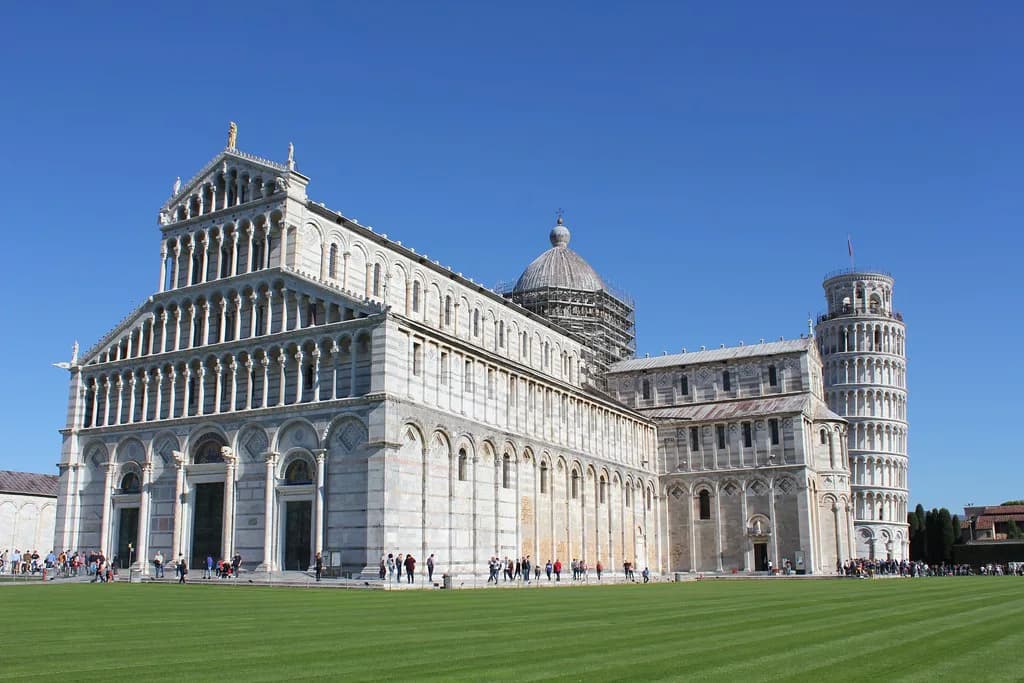
The Duomo di Pisa anchors Piazza dei Miracoli, the walled green square that also holds the Baptistery, the Camposanto and the Leaning Tower. Most visitors assume the Cathedral is simply free, but the operator's rule is more specific: admission is by free pass, not by open door. Knowing how that pass works prevents a wasted detour to the ticket office on the morning you planned to climb the Tower.
The pass is genuinely complimentary, yet it is not a skeleton key. It gets you into the Cathedral, and buying any monument ticket for the square also brings a Cathedral pass with it, but a Cathedral pass never opens the paid interiors. A sensible plan treats the Duomo as one visit and the Baptistery, Camposanto and museums as separate ticketed interiors, each with its own conditions.
Free Pass Versus Paid Monuments: What the Cathedral Pass Covers
The Opera della Primaziale Pisana states plainly that Cathedral admission is with a free pass. If you buy any ticket for the monuments, you receive a free pass to visit the Cathedral, and that pass is not tied to a fixed time. This one-way logic is the key: the paid ticket is the thing that produces the pass, not the other way around.
The reverse never applies. A Cathedral pass does not include the Baptistery, the Camposanto, the Sinopie Museum, the Opera del Duomo Museum or the Leaning Tower, and each of those is covered by its own ticket or ticket category. Anyone who buys only a Cathedral pass and then queues for the Baptistery will be turned back for a separate purchase.
The operator does not publish a single shared price for all monuments, and prices change, so verify current figures on the official ticket page before budgeting. Older visitor guides quote figures that may no longer match. Choose what you actually want to enter first, then confirm the current ticket options.
How to Get a Cathedral Pass: On-Site vs Bundled With a Purchase
If you want a timed pass for the Cathedral alone, the operator says those free passes are limited in number and issued exclusively at the ticket offices on the site. They cannot be booked in advance. Plan the Cathedral as an on-the-day decision, and expect to be given a slot rather than walking straight in at any hour.
Anyone who has bought a monument ticket, online or on site, is in a different position: the free Cathedral pass arrives as part of that purchase, and it is not fixed to a set time. That makes a combined purchase efficient. You queue once at the ticket office or book one online, then use the pass when you reach the Cathedral door.
Online sales for individual visits open within a set window before the visit date and run through the day itself, subject to availability, according to the operator's purchase conditions. Bookings are card-only in euros. For a Cathedral-only visit, the useful step is to check the on-site ticket office on arrival rather than assume an online pass exists.
Who Enters the Cathedral Without Any Ticket
Two groups skip the pass entirely. The operator grants free admission without a ticket to visitors with disabilities and their helpers, and to visitors under the age of 11 when accompanied by an adult. Valid ID or proof of entitlement in Italian or English is required, so bring documents rather than relying on appearance or explanation.
For families, this is worth checking before buying anything: a parent travelling with young children may need fewer passes than expected, but every adult still needs a pass unless a paid ticket supplies one. The operator does not publish every reduced category in the same place, so ask at the ticket desk if your situation is unusual. Access to the museums and the Tower has its own rules, and the Tower does not offer reduced-price tickets.
Dress Code, Behaviour and Group Rules
The Cathedral is an active place of worship, and the operator asks visitors to dress and behave appropriately out of respect for the building and the people praying there. In practice, that means covering shoulders and knees and keeping noise down. The operator sells shawls in the two museum bookshops, made through an environmental and job-placement project, if you arrive underdressed.
Groups of six or more may only give explanations through radioguides, a rule the operator frames as protecting the silence of a sacred space. Independent travellers with a guidebook or phone audio are unaffected. Keep phone calls, video calls and loud commentary for the lawn outside.
Mass and Ceremony Times: What Changes During Services
When Mass or a special ceremony is under way, visitors are confined to a limited area, photography is not allowed, and guides and escorts cannot give explanations. A free pass does not override this. Build flexibility into your day rather than assume a morning slot will let you walk the whole nave.
The operator has not published fixed daily Cathedral opening hours in a form that can be quoted safely here, and services can alter access, so check the current opening and closing times on the official Cathedral page close to your date. If the Cathedral is your priority, ask at the ticket office on arrival whether a service will interrupt the visit, then choose a paid interior for that window instead.
What to Look For Inside
The Cathedral rewards a slow walk rather than a photo stop. Attention usually turns first to the carved pulpit associated with Giovanni Pisano, described by visitor sources as a highlight of the interior, though it is not confirmed in the operator's own ticket pages. Treat that attribution as a reason to look, not as a claim the operator makes.
The interior combines striped marble, a long nave and a sense of scale that is easy to rush past. Because the Cathedral shares the square with the Baptistery's own celebrated pulpit and the Camposanto's fresco cycle, it helps to decide in advance which interior gets your closest reading. Our Pisa Baptistery Visitor Guide: Tickets, Acoustics and Nicola Pisano's Pulpit covers the neighbouring building's carving and sound demonstrations, so you can compare the two pulpits rather than blur them together.
Because the pass is untimed, the Cathedral suits a flexible slot: enter when a service gap opens, look at the pulpit and the apse end without rushing, then leave the paid interiors for their assigned times. Keep the visit modest in length, roughly forty-five minutes to an hour as a suggested pace, and do not try to absorb every chapel in one pass.
Cathedral vs the Other Piazza Buildings
The Baptistery, the Camposanto, the Sinopie Museum and the Opera del Duomo Museum are separately ticketed from the Cathedral pass, and their tickets carry their own validity. The operator states that tickets for the Baptistery, Camposanto, Sinopie Museum, Opera del Duomo Museum and temporary exhibitions are valid from the chosen date, not before, for one year while open and within opening times.
That long validity changes how you might buy. A ticket used on a later day still works, so a visit split across two mornings in Pisa is practical. The Camposanto is the walled cemetery on the northern side of the square, with a cloister and large restored frescoes, and it pairs well with the Cathedral, while the Museo dell'Opera del Duomo holds the cathedral's own collection, including works moved indoors for protection.
Adding the Leaning Tower: Age, Steps and Bag Rules
The Tower is a separate timed visit with its own rules. The operator states that the climb covers 251 steps and takes about thirty minutes on foot, with staff giving a short history at the start. Children who will not have turned 8 by the end of the year are not permitted, under-18s must be accompanied, and ID may be requested to prove age.
Bags, handbags and luggage must be left at the cloakroom before the climb, and only small bags within the published limits are accepted past security on site. The operator also warns that the Tower visit is not recommended for people with cardiovascular or muscular disorders and that the floor is uneven and slippery. Late arrivals are refused entry and not refunded, so treat the slot time as firm.
Reduced-price Tower tickets are not offered, and free Tower admission is limited to disabled visitors with a helper and suitable certification, with slots on the day restricted to early and late windows. Contact the operator in advance if that applies to you. Our Leaning Tower of Pisa Visitor Guide: Tickets, Climbing and What to Expect sets out how to plan around a timed climb.
Timing Your Visit and Avoiding the Worst Queues
Early morning and late afternoon bring smaller crowds to the square, according to visitor guides, and the Cathedral pass is best used in a gap between paid interiors rather than at peak photo time. Since Cathedral-only passes are issued on site and limited, start at the ticket office, get your slot, then buy any monument tickets you need in the same transaction.
If you are only passing through Pisa for a few hours, the free lawn and the Cathedral exterior alone fill a short stop, and a pass turns that into a proper interior visit. Adding the Tower requires a fixed slot, which is where a rushed day usually unravels. Decide between a viewing-only stop and a climbing stop before you book anything.
Where the Cathedral Fits in a Wider Pisa Day
Piazza dei Miracoli sits on the edge of the historic centre, so the natural sequence is the square first, then a walk back through Borgo Stretto toward the Arno and Piazza dei Cavalieri. The city's official tourism site is a useful source for current events and itineraries, separate from the monument ticket rules.
The centre is compact and flat, which makes it easy to walk from the square into the older streets after your Cathedral slot. Beyond the headline sights, the hidden gems in Pisa include riverbank corners and quieter churches that reward an unhurried afternoon, while our Pisa Attractions hub gathers every monument page in one place.
Plan Your Cathedral Visit
The Cathedral is easy to visit once you respect its one-way rule: get a free pass on site, or buy a monument ticket that includes one, and never expect the pass to cover paid interiors. Check the official pages just before you travel for opening times and current ticket information, dress for a church rather than a beach, and keep a service window in mind.
A half-day plan works well: arrive at the ticket office when it opens to secure a Cathedral slot, see the Cathedral and one neighbouring interior, then walk through the centre to the Arno before lunch. That sequence, roughly three to four hours as a suggested pace rather than an official figure, leaves the rest of the day for the Tower or a slower look at Pisa beyond the square.
Frequently Asked Questions
Is Pisa Cathedral free to enter?
Admission is by free pass rather than an open door. You can get a Cathedral-only pass on site, and any monument ticket purchase includes a Cathedral pass. Visitors under 11 with an adult, and visitors with disabilities with a helper, enter without a ticket when proof is shown.
Can I book a Cathedral-only pass online in advance?
According to the Opera della Primaziale Pisana, timed free passes for the Cathedral alone are limited and issued only at the on-site ticket offices, so they cannot be reserved in advance. A free Cathedral pass arrives with any monument ticket you buy online or on site, and that pass is not tied to a fixed time.
Does the Cathedral pass include the Baptistery or the Leaning Tower?
No. The free Cathedral pass covers only the Cathedral, while the Baptistery, Camposanto, Sinopie Museum, Opera del Duomo Museum and the Leaning Tower each require their own ticket. The one-way logic matters: buying a monument ticket gives you a Cathedral pass, but a Cathedral pass never gives you the monuments.
What should I wear and how should I behave inside?
Dress and behave as you would in an active church. The operator asks for appropriate clothing, which in practice means covering shoulders and knees, and for silence. During Mass or special ceremonies, visitors are limited to part of the building, photography is not allowed and guides may not give explanations.
Can children climb the Leaning Tower and how many steps are there?
The operator allows children only once they will have turned 8 by the end of the year, and under-18s must be with an adult, with ID possibly checked. The Tower climb covers 251 steps and takes about thirty minutes, with bags left at the cloakroom before entry. Late arrivals lose their slot and are not refunded.
Sources
Continue exploring
More guides you'll find useful