Certosa di Calci Guide: Charterhouse and Natural History Museum
Plan a visit to the Certosa di Calci near Pisa: what to see in the monastery, the Natural History Museum, how to get there and what to verify first.
On this page
Most people arrive in Pisa with one square in mind, spend an hour or two among the crowds, and leave. The Certosa di Calci offers a different rhythm: a walled monastic complex in the Valgraziosa valley at the foot of the Pisan Mountains, where the scale is human and the interiors still carry the imprint of a closed religious order. It works well as a half-day counterpoint to the city's famous monuments.
One thing to settle before anything else: the site holds two distinct attractions, the state museum of the charterhouse itself and the Natural History Museum of the University of Pisa, which occupies former service buildings on the same grounds. Do not assume a single admission covers both, and do not treat them as one coherent exhibition. Treat them as neighbours with separate identities, and plan accordingly.
Opening hours, tickets and guided-visit times are the details that decide whether the trip works, and they are precisely the details that change. The official museum pages are the place to confirm them. If you want a broader shortlist of what else is worth your time around the city, our guide to Pisa Attractions pairs well with a morning at Calci.
Where Calci Sits and Why It Matters
Calci is a small municipality near Pisa, set in the Valgraziosa beneath the Monti Pisani. The Certosa sits in that valley landscape rather than in the city fabric, which is exactly why the visit feels different: olive groves, hillside roads and a monastery that was deliberately founded away from urban noise. The municipality's own site is the reference point for local notices and civic information.
The relationship to Pisa is one of short distance and mental separation. This is not a walk from the Leaning Tower; it is a trip into the countryside that requires a deliberate decision about transport. That decision shapes the whole day, so make it early rather than at the last minute.
The tourism portal for Pisa is a useful starting point for the city's itineraries and events, and it helps to see Calci as part of a wider provincial picture rather than an isolated stop. Browse it before you fix dates if you want to align a Calci morning with something happening in Pisa itself.
If your instinct in Pisa is to escape the densest crowds, the Certosa belongs on your list alongside the quieter corners covered in our guide to hidden gems in Pisa. Both reward travellers who are willing to trade a checklist for a slower route through a place.
Two Halves of One Complex: Monastery Museum and Natural History Museum
The charterhouse is often described as divided into two usable parts. The monastic side functions as a national museum where visitors see authentic interiors: the church with its choir, the monks' cells, a library, and the pharmacy. The other side houses the university's natural history collections, including fossils, minerals and zoological specimens displayed in former service buildings.
That split is the single most useful thing to understand before arriving. A traveller expecting one continuous museum may be confused by the transition between devotional spaces and scientific display. Decide in advance which half matters more to you, especially if your time in the valley is limited.
The natural history collection has deep roots in university collecting, and its setting inside a former granary and service buildings is part of the appeal. Families with children often find the specimens an easier entry point than the monastic interiors. Our guide to Pisa for Families is a helpful companion if you are travelling with younger visitors.
The monastic side is run under the Italian Ministry of Culture, while the natural history museum belongs to the University of Pisa. Because two institutions share the site, facilities, ticket desks and guided arrangements may not behave identically. Check both before you go rather than extrapolating from one.
What You Actually See Inside the Charterhouse
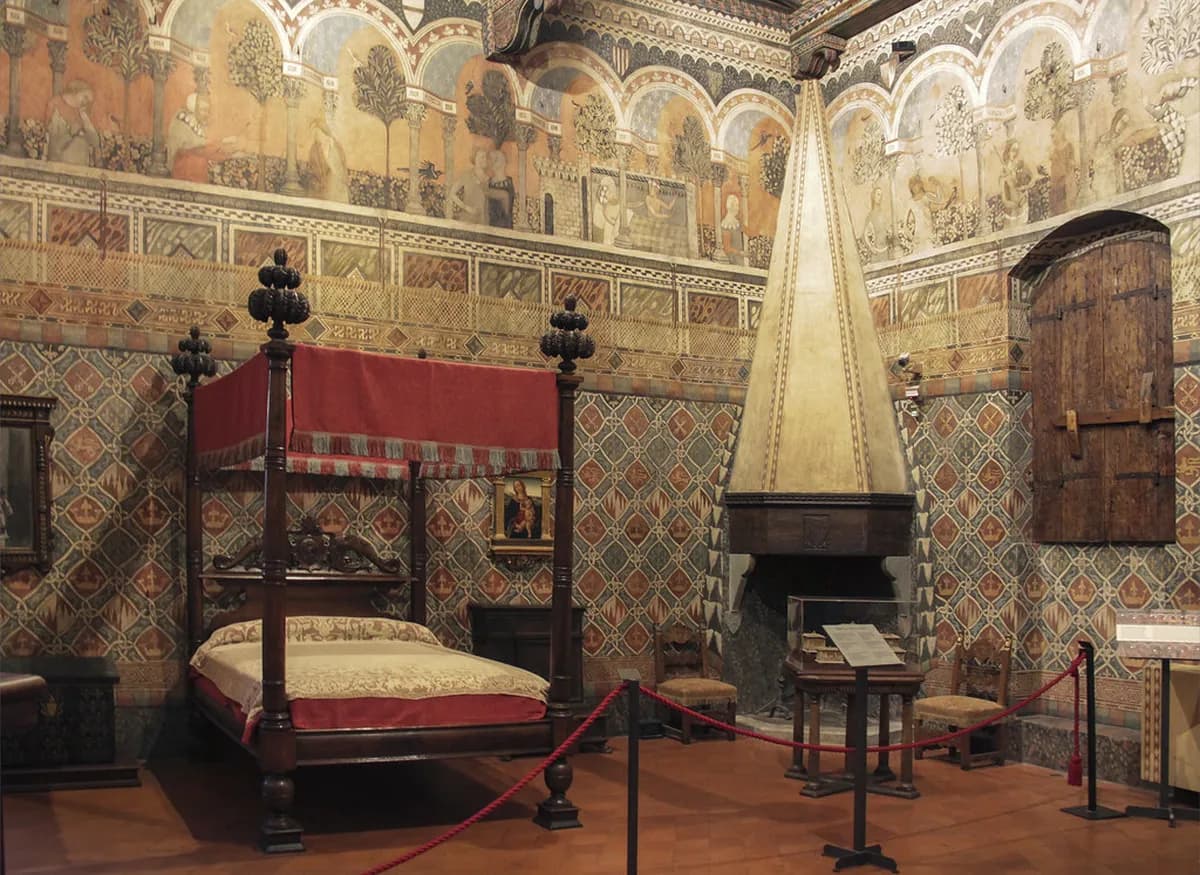
Start with the church and choir, where the Baroque transformation of the complex is most visible. Marble angels, carved choir stalls and a richly painted main altar give the interior a theatrical quality that contrasts sharply with the eremitic ideal behind the foundation. This is the room that most changes visitors' expectations of what a charterhouse looks like.
The Great Cloister, ringed by the monks' cells, is the heart of the visit. Looking inside a cell reveals how the Carthusian model balanced community and solitude: shared worship, private living. Reading the cloister as a piece of social architecture rather than a decorative courtyard makes the rest of the complex legible.
The pharmacy, founded in the 17th century, is a compact delight of painted cabinets and antique medicine jars. It is also a reminder that these monasteries were working institutions with practical knowledge, not just contemplative retreats. If your time is short, put the pharmacy near the top of your list.
The long granary now used by the natural history museum is a striking piece of utilitarian architecture, roughly a hundred metres in length according to descriptions of the site. Walking its length gives a physical sense of how much provisioning a monastic community required. It also makes a natural bridge between the two halves of your visit.
Background context helps: the monastery was founded in the 14th century and later closed and reopened through the Napoleonic era and Italian unification. Sources disagree on whether monastic life ended in 1969 or 1977, so treat the precise final date as approximate. The founding year of 1366 is the safer anchor for orientation.
Highlights When Time Is Short
With a tight schedule, prioritise the church, the Great Cloister with one cell interior, and the pharmacy. Those three give you the architecture, the monastic way of life and the working culture of the community in a single loop. Add the granary only if you are continuing into the natural history collections.
If science is your reason for coming, invert the order: head to the university collections first, then use the cloister as a quieter finish. A suggested duration of two to three hours covers a reasonably thorough visit to both halves, but that is my recommendation as a planner, not an official figure. Guided weekend programmes, when fuller tours have been offered, may stretch longer.
Photography-minded visitors often find the cloister and the granary more photogenic than the church, since the church interior is difficult to capture well without patience and consideration for other visitors. Plan your pauses rather than rushing between rooms with a camera raised.
The contrast with the Piazza dei Miracoli could hardly be sharper: one is a monumental square built for display, the other a closed world built for retreat. Holding both in mind makes each more interesting. Read our broader notes on hidden corners of the city if you want to extend that contrast across a full day of Pisa.
How to Reach Calci from Pisa
The most straightforward approach is by car or taxi from Pisa, with the valley lying a short countryside drive from the city. Public transport does connect Calci to Pisa, but route numbers, stops and timetables are exactly the kind of detail that shifts between seasons. Verify current services with the local operator rather than relying on a guidebook.
Self-driving pays off if you intend to combine the Certosa with other stops in the Monti Pisani. Tour operators in the area explicitly note that countryside destinations around Vicopisano and Calci are difficult to reach on public transport, which is a fair warning for anyone planning a multi-stop day. Our Best Day Trips from Pisa: Nearby Towns and the Coast covers the wider logic of using the city as a base.
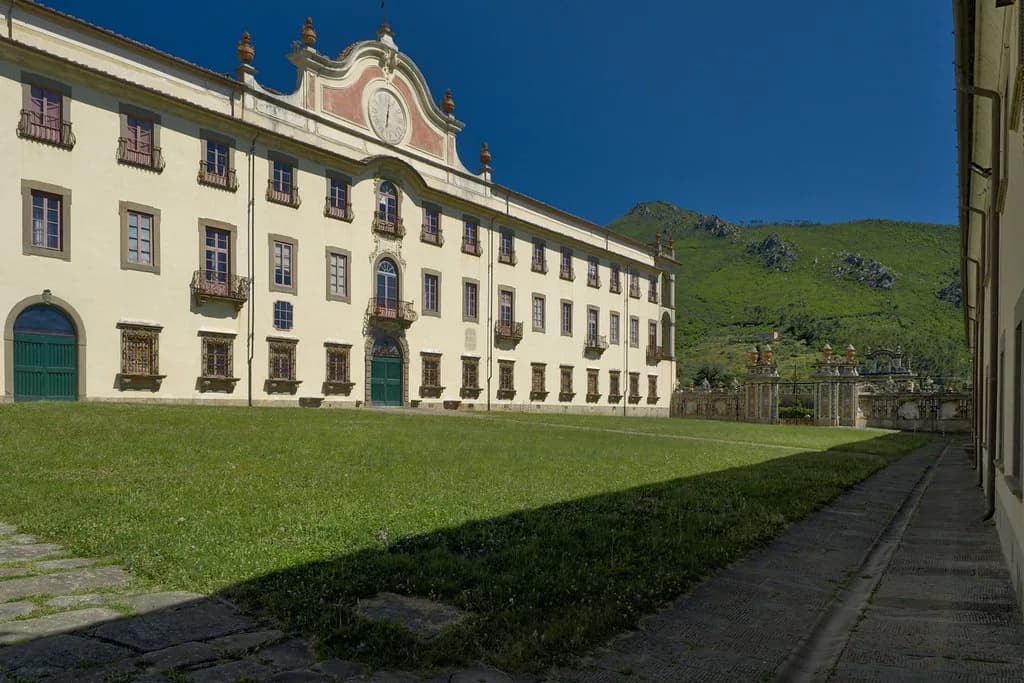
From the bus stop in Calci, a walk along an alley and pedestrian path leads up to the main entrance, with views of the Baroque facade along the way. Allow time for that final stretch, especially in heat, and wear shoes suited to uneven paving. Arriving flustered after a rushed connection undermines the point of coming.
If you are building a larger Tuscan itinerary, Calci slots neatly between Pisa and the Lucca side of the region. Our Pisa in Three Days: A 3-Day Itinerary is a reasonable framework if you want to place the Certosa on a specific day without overloading the rest.
Tickets, Hours and Guided Access to Verify
The operational details here are genuinely volatile, and the honest answer is that you must confirm them yourself. Opening days and time bands have been described as variable, with Monday commonly listed as a day off, but that is not a guarantee for your date. The official museum website is the authority, and it should be checked in the week you plan to travel.
Guided access exists and matters more than at a typical museum. Tours of the main halls have been described as running at set times with a guide, which means arrival time can determine what you see. On weekends, extended tours of the whole complex have sometimes been offered. Neither is worth assuming; confirm before booking transport.
Ticket scope is the second thing to pin down. Do not assume one admission covers both the monastic museum and the university's natural history collections, and do not assume online booking is required or even available for your slot. Ask the museum directly about combined access, concessions and group arrangements if cost matters to your plans.
The same applies to the Pisan city sights if you are pairing visits. The Pisa tourism portal publishes current exhibitions and events, which is a better check than a static list. For the monumental cemetery at the other end of the spectrum, our Camposanto Monumentale Visitor Guide: Frescoes, Cloister and Tickets explains why that site also rewards a booked, unhurried slot.
Pairing the Certosa with Vicopisano and Olive Oil Country
The lower Valdarno around Pisa hides country churches, fortresses and walled villages strung along the Monti Pisani. Vicopisano, with its tower houses, clock tower and the Brunelleschi fortress, is the natural companion to a Calci morning. The two sit in the same landscape and share the same olive-growing identity.
Olive oil from these hills, particularly around Buti and Vicopisano, is the region's signature product, and local tour programmes build tastings around it. A five-hour guided format combining the charterhouse, a village walk and an oil tasting exists as a commercial option, with rates published for 2026. If you prefer independence, build the same shape yourself around lunch.
Note the trade-off: organised tours remove transport headaches but fix your pace and add cost. Self-driving keeps flexibility but puts the burden of parking, route-finding and timing on you. Neither is wrong; the question is how much friction you want on a countryside day.
For travellers extending beyond Pisa, the same logic applies to Lucca and the coast. Our day trips guide sets out how to judge which nearby destinations justify a car and which work perfectly on foot or by rail. That framing is more useful than any single recommendation.
Accessibility, Pacing and What to Ask in Advance
The complex is large, spread across courtyards, stairs and long corridors, and the terrain between buildings is not uniform. Sources describe stairs and more challenging stretches on guided programmes that include the site. If anyone in your party has mobility or sensory needs, contact the museum before booking transport and ask specifically about step-free routes and seating.
Pace the visit deliberately. A common mistake is to treat the charterhouse as a quick add-on before lunch in Pisa, which leaves no time for the cloister's quieter logic. Arriving early in an opening band, with the church and cloister first, gives you the best chance of calm rooms.
Families should plan around energy rather than content. The natural history specimens tend to hold children's attention longer than monastic interiors, so consider a short monastic core followed by the science side. Our Pisa with Kids guide has more on pacing a city day with children in tow.
Plan Your Visit
The Certosa di Calci rewards preparation more than improvisation. Understand the two halves of the complex, decide whether you are driving or relying on public transport, and confirm hours, ticket scope and guided-tour times on the official museum website close to your travel date. That modest groundwork transforms the visit.
Then give it room. Pair the charterhouse with a walk in Vicopisano or an olive oil tasting in the hills, and let the day be slower than your Pisa itinerary. The contrast with the city's crowded square is the whole point, and it only works if you do not rush it.
Frequently Asked Questions
Is the Certosa di Calci the same as the Natural History Museum?
No. They share a site but not an identity. The monastic complex operates as a national museum with church, cloister, cells, library and pharmacy, while the University of Pisa's natural history collections occupy former service buildings including the long granary. Two institutions manage them, so confirm admission scope separately before you travel.
How do you get to the Certosa di Calci from Pisa?
By car or taxi is the simplest route, with the complex set in the Valgraziosa valley a short countryside drive from Pisa. Buses do connect Calci with Pisa, but routes and timetables change, so verify current services with the local operator. A guided tour is an alternative if you would rather not drive.
Do you need to book the Certosa di Calci in advance?
Guided access runs at set times, and weekend programmes have offered longer tours of the whole complex, so advance confirmation is wise. Whether booking is required, recommended or possible online depends on the current arrangements. Check the official museum website directly before committing to transport, and ask specifically about your date.
What should you see first at the Certosa di Calci?
Start with the church and choir to see the Baroque transformation, then walk the Great Cloister and look inside a monk's cell, which explains the eremitic layout better than any label. The 17th-century pharmacy makes a strong third stop. If science is your priority, reverse the order and begin with the university collections.
Is the Certosa di Calci worth visiting alongside central Pisa?
Yes, precisely because it is different. Central Pisa concentrates monumental display on a crowded square; the charterhouse offers a closed, contemplative world with scientific collections attached. Treat it as a half-day in the countryside rather than a quick detour, and it becomes one of the more memorable parts of a Pisan trip.
Sources
Continue exploring
More guides you'll find useful