Museo Nazionale di Palazzo Reale: A Visitor Guide to Pisa's Royal Palace
Plan a visit to Pisa's Museo Nazionale di Palazzo Reale: Medici-era palace history, the collections on show, and where it sits along the Arno.
On this page
Most Pisa itineraries sprint between the Leaning Tower and the river, and the Museo Nazionale di Palazzo Reale sits quietly on that riverbank at Lungarno Antonio Pacinotti 46. It is a palace that governed a city and a museum created inside it, with the collection formally instituted in 1989. That double identity is the reason to slow down here.
This guide sticks to what the city tourism office and the museum authority actually publish: the building's history, the named collections, and the civic tradition behind its armour. It deliberately leaves out opening hours, ticket prices and booking rules, because those change and belong to the official museum body rather than a travel article. Check the museum's own pages before you set out.
What the Museo Nazionale di Palazzo Reale Actually Is
Two histories overlap in this building, and separating them makes the visit clearer. The palace itself was reshaped for Francesco I de' Medici in the late sixteenth century, while the national museum housed inside it was established in 1989. The tourism office describes the palace as the residence of the dynasties that governed Pisa in the modern era, so you are walking through rooms with a political past and displays with a curatorial one. Further visitor details appear in Museo Nazionale di Palazzo Reale | Comune di Pisa - Turismo.
It also is not a single-purpose historic house. The palace remains the seat of the Direzione Generale for cultural heritage in the region, with the museum collection occupying the piano nobile. Expect a working institutional building rather than a blockbuster attraction with a themed route, and plan your reading of the rooms accordingly.
If you are building a wider Pisa plan, treat this as one entry in a larger set: see the Pisa Attractions hub for how it compares with the city's other ticketed sites, and browse hidden gems in Pisa for the smaller stops that fill the gaps between them.
Where It Sits on the Arno
The museum's address is Lungarno Antonio Pacinotti 46, a riverside stretch lined with palazzi rather than souvenir stalls. The tourism listing places it within a short walk of Piazza Carrara, the Church of Santa Maria della Spina and Palazzo Blu, which makes it a natural pause on an Arno-side stroll instead of a detour.
That position rewards a slow route. Arrive on foot from the river, look at the facade from across the water for context, then step inside; Pisa's Arno Lungarnos explains how the two banks relate and which stretches are worth walking.
The Medici Rebuilding and Later Layers
Francesco I de' Medici chose to leave the old palace next to the Church of San Matteo and acquire land and house plots between Via Santa Maria, the Church of San Nicolò and the Arno. The new palace rose there as a single building with its facade facing the river, between 1583 and 1587 according to the tourism office. That decision is why the museum has a riverfront presence rather than a piazza address.
Later phases left their own marks, from the Lorena period through to work after the Second World War, which the tourism office names as part of the building's present appearance. Read the rooms with that layering in mind: you are not looking at one frozen moment but at successive redecorations and adaptations.
The Tower of the Vergadoro and the Galileo Story
Among the structures kept from the earlier site is the tower of the Vergadoro, and the tourism office repeats a tradition that from it Galileo showed the heavens to the grand dukes with his telescope. Treat that as a story attached to the building rather than a documented event. It is, however, a useful reminder that Pisa's scientific memory is woven into its palace rooms, not confined to the cathedral square.
What You'll See Inside
The collection has a distinctive core: the historic armaments used for the Gioco del Ponte, a civic spectacle of medieval origin that is still held each year on the Ponte di Mezzo. Seeing the equipment in a museum case rather than on the bridge connects the display to a living city event, and it explains why the palace holds military material at all.
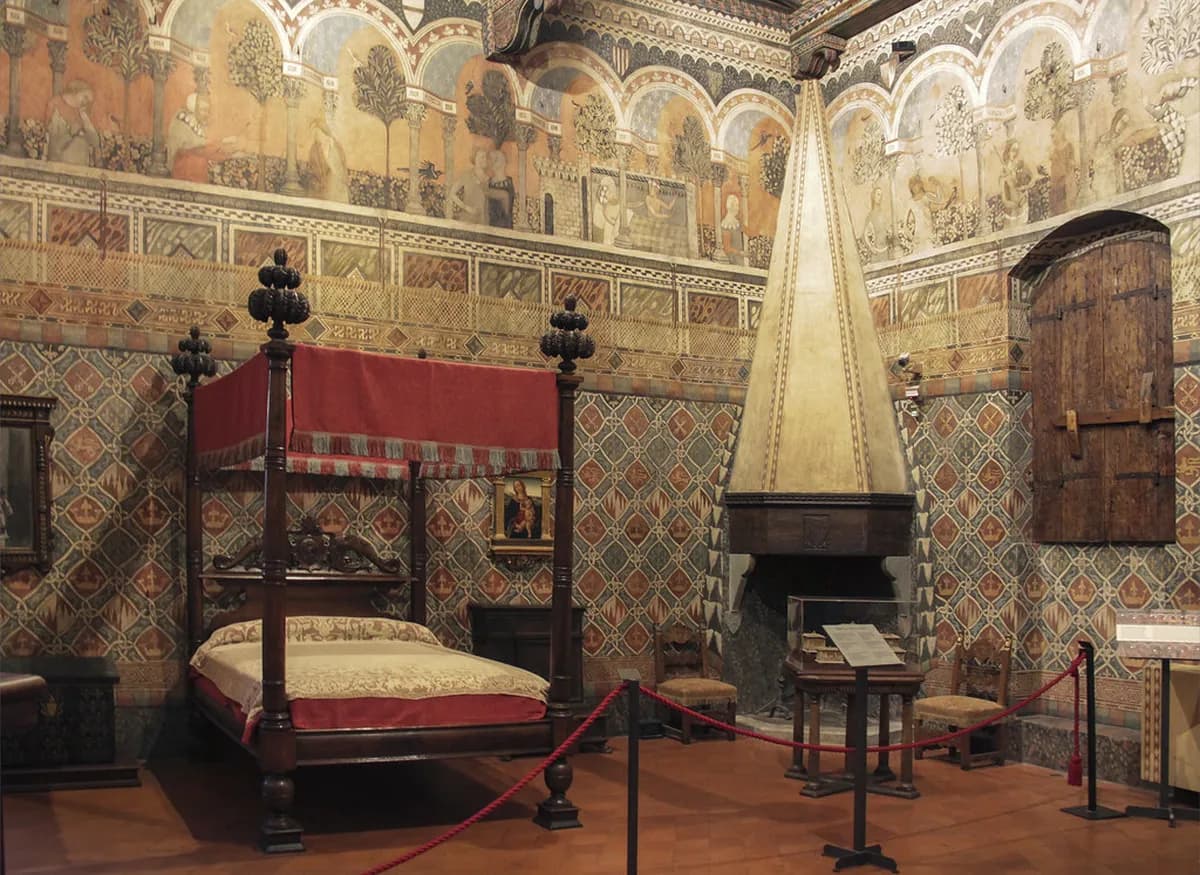
Alongside it hang portraits of the Medici and the Lorena, including some by named artists such as Bronzino and Tempesti, plus tapestries and refined decorations linked to the Medici, Lorena and Savoia. These are the rooms where the palace reads most clearly as a dynastic residence rather than a civic office.
The Ceci legacy adds a different register: a body of Flemish and Italian paintings from the sixteenth to eighteenth centuries, antique furniture and ceramics of Italian and English production. A rich collection of plaster casts and works by the sculptor Italo Griselli round out the museum's range, so the visit moves between arms, portraits, textiles, paintings and sculpture in a fairly compact sequence.
Temporary exhibitions also feature in the programme, but what is showing changes and the tourism listing does not keep a live schedule. Check the museum authority's site for what is on before you plan a visit around a specific display.
Practical Visiting Notes
Opening hours, closing days and last entry are not published in a stable, quotable form on the tourism pages, and they shift with the season and the museum's own calendar. Rather than rely on a guidebook figure, read the official Polo Museale della Toscana pages before travelling and check again on the day if your schedule is tight.
The same applies to tickets and booking. No verified price is available here, so do not build a budget around a guessed admission fee; confirm current ticket terms, any reductions and whether booking is required through the museum authority. The tourism listing gives a contact telephone number and email address for the museum, which is worth using if the official pages leave a question open.
Do not assume a combined ticket covers this museum alongside others in Pisa. The sources do not confirm a shared ticket, and each site runs its own arrangements, so price each one separately unless the museum authority states otherwise.
On duration, no official figure exists. A suggested allowance is somewhere around an hour for the principal rooms and collections, longer if temporary exhibitions are running or if you read the labels closely; treat that as a planning estimate rather than museum guidance.
Fitting It Into a Pisa Day
Because the museum sits on the Lungarno, it pairs naturally with a river walk rather than with the Campo dei Miracoli cluster. Pisa's Riverside: A Guide to the Arno Lungarnos sets out the route context, and the nearby Palazzo Blu Visitor Guide covers a separate exhibition-led stop a few minutes away. If you are comparing smaller church stops along the same bank, the Pisa Churches Guide is a useful companion for that half of the day.
If your day starts at the cathedral square, sequence the tower and the Camposanto Monumentale in Pisa first and walk down to the river afterwards; check the Camposanto Monumentale Visitor Guide: Frescoes, Cloister and Tickets for that half of the day. Allow for separate tickets at each stop.
Visitors who want a grandiose royal palace with a fixed scripted route may find this one modest and institutional. Those interested in how a city's civic rituals, dynastic portraiture and private bequests ended up in one building will get more from it, especially if they read the Gioco del Ponte material as a living tradition.
Before You Go
Treat the Museo Nazionale di Palazzo Reale as a two-part visit: a Medici-era palace with a river facade, and a national museum instituted in 1989 with arms, portraits, textiles and bequests inside. Knowing which story each room tells makes a short stop feel purposeful.
Confirm hours, tickets and the current exhibition programme with the museum authority before you travel, and keep the address to hand for navigation. If you are matching it with the city's headline monuments, the Climbing the Leaning Tower of Pisa guide covers that separate booking entirely, and Pisa's Riverside explains the walk between them.
Frequently Asked Questions
Where is the Museo Nazionale di Palazzo Reale in Pisa?
It is at Lungarno Antonio Pacinotti 46 in central Pisa, on the Arno riverfront. That puts it within walking distance of Piazza Carrara, the Church of Santa Maria della Spina and Palazzo Blu, so it slots easily into a riverside walk rather than a trip out of town.
What can you see inside the Palazzo Reale museum?
The displays include the historic armaments of the Gioco del Ponte, portraits of the Medici and Lorena families including works by artists such as Bronzino and Tempesti, tapestries and decorations from the Medici, Lorena and Savoia periods, the Ceci legacy of Flemish and Italian paintings, furniture and ceramics, a plaster cast collection and works by Italo Griselli. Temporary exhibitions also appear in the programme.
Who built the Palazzo Reale in Pisa and when?
The tourism office credits Francesco I de' Medici with the late-sixteenth-century project: he left the old palace near the Church of San Matteo and acquired land between Via Santa Maria, the Church of San Nicolò and the Arno, with work dated to 1583 to 1587. Later Lorena and post-war interventions shaped the building you see now.
Is the Palazzo Reale museum free to enter?
No verified admission information is published in the tourism listings, so this guide does not quote a price or a free-entry rule. Check the official museum authority pages, or use the contact details on the city tourism listing, before you plan your budget.
How long does a visit to Palazzo Reale take?
There is no official duration. As a suggestion rather than museum guidance, allow about an hour for the main rooms and collections, and more if you read the labels carefully or a temporary exhibition is running.
Can you visit Palazzo Reale and other Pisa museums on one ticket?
The available sources do not confirm any combined ticket linking this museum with other Pisa sites, so check each museum's own ticket terms rather than relying on a shared pass. Assume separate arrangements unless the museum authority says otherwise.
Is the Galileo story about the tower true?
The tourism office repeats a tradition that from the tower of the Vergadoro Galileo showed the heavens to the grand dukes with his telescope. It is best treated as a story attached to the building rather than a documented event, and it is presented that way here.
Sources
Continue exploring
More guides you'll find useful