Palazzo Blu Visitor Guide: Exhibitions and Events in Pisa
Plan a visit to Palazzo Blu in Pisa: Hopper, Macola and Ukrainian illustrator shows, the Pisan permanent collection, jazz talks and house rules to know.
On this page
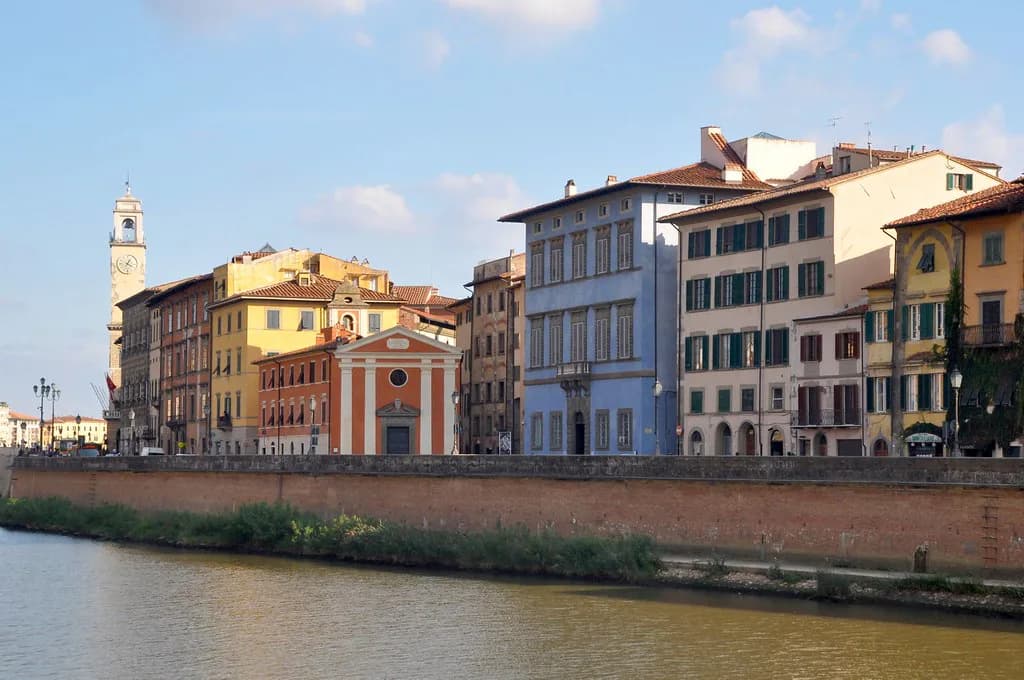
Palazzo Blu is Pisa's exhibition and cultural centre, run by the Fondazione Palazzo Blu and housed at Lungarno Gambacorti 9 on a stretch of the Arno that anchors the city's historic centre. It pairs large temporary art shows with a permanent collection built around Pisan art, plus an auditorium programme of talks and music. For a visitor, the useful question is which of those three layers fits the hours you have.
Late October 2026 is a genuinely strong moment to go: three temporary exhibitions overlap, including a big Edward Hopper survey and a Ukrainian illustrator show tied to the Pisa Book Festival. What follows separates what is actually on view from what still needs confirming, because the palace's own site publishes the programme but not the practical details you need on the day.
What Palazzo Blu Is and Where to Find It
Palazzo Blu sits at Lungarno Gambacorti 9 on the Arno, in the part of Pisa you will likely cross on foot between the river and the shopping streets of the centre. The building functions as a foundation-run cultural centre rather than a single-subject museum: temporary exhibitions occupy the main galleries, while the auditorium hosts lectures and concerts. Administrative offices are at a separate address, Via Pietro Toselli 29, so do not go there looking for the entrance.
The city's tourism portal lists Palazzo Blu among Pisa's art and culture venues alongside a dense calendar of events across the city, which is a good reminder to check what else is on before fixing your dates. If you want the full spread of sights, the Pisa Attractions hub sets out guides to the main monuments and museums, while the hidden gems in Pisa guide covers the quieter corners away from the crowds at Campo dei Miracoli.
Because the exhibitions rotate, Palazzo Blu works well as the flexible half of a Pisa day: pair a morning on the river with an afternoon show, or the reverse if rain pushes you indoors. The Arno frontage is short walkable territory, and the palace's neighbour along the same waterfront, Santa Maria della Spina, is an easy add-on before or after a timed exhibition slot.
The Three Temporary Exhibitions on View in Late 2026
The headline show is Edward Hopper: New York e oltre, scheduled from 14 October 2026 to 7 March 2027, with more than 150 works arranged in five sections that track the artist's life and career. That window means Hopper is the show to plan around from mid-October onward, and it continues well past the other two exhibitions. The palace describes the show as a major survey of one of the most important American artists of the twentieth century, with over 150 works across five sections. Treat the dates as the organiser's published scheduling and re-check them before travelling, since exhibition calendars can shift.
Piero Macola. Paesaggi di vita runs 25 April 2026 to 8 November 2026 and focuses on graphics, illustration and comics by Macola, curated by Giorgio Bacci. Its last weeks overlap neatly with both the Hopper opening and the Ukrainian show, so a late-October visit can cover all three without rushing. If you only care about the comics and illustration angle, go before the November closing date rather than assuming it stays up with Hopper.
Yellow&Blue presents sixteen illustrations by young artists from the Pictoric collective, organised with the Pisa Book Festival, which gives Ukraine the guest-country role in 2026. It is the shortest run of the three, scheduled 1 October to 1 November 2026, so it is the exhibition most likely to disappear between planning and arrival. The compact format also makes it a sensible pairing with a longer show rather than a standalone reason to visit.
The dates above come from Palazzo Blu's own listings and should be confirmed there, including around public holidays. The palace site publishes current and upcoming exhibitions as separate sections, so check the one matching your travel month rather than relying on a search result summary.
Why the Permanent Collection Is Different
Palazzo Blu's permanent collection was assembled around a single principle: works are tied to Pisa by their maker, their patron, their provenance or their subject. That makes it a local art history in miniature, running back to the fourteenth century, rather than a survey of Italian art with Pisa as a footnote. If you have already done the cathedral complex, this is the collection that explains the city's own visual culture.
The foundation also maintains an online catalogue of works divided into painting, sculpture, prints and coins and medals, plus a virtual tour, which is useful for deciding in advance whether the permanent rooms appeal. Seeing the collection this way costs nothing and helps you choose between it and a temporary show when your time is tight.
If you are choosing between layers, think about contrast: the temporary programme brings international names such as Hopper, while the permanent rooms give you Pisan context you cannot get elsewhere in the city. On a rainy day, the palace's indoor combination of galleries and auditorium makes it a natural anchor; the Pisa on a Rainy Day guide covers other covered options nearby.
A Practical Decision: Temporary Shows or the Permanent Collection
With a single short visit, pick one temporary exhibition and treat the rest as optional. Hopper is the largest in scope and the longest-running, so it absorbs time comfortably; the Macola and Yellow&Blue shows are smaller and can be layered around it if your schedule allows. Checking whether your dates fall inside each run takes two minutes on the official listings and prevents the classic mistake of arriving after a show has closed.
With a half day or more, the sensible sequence is the temporary show you came for, then a shorter pass through the permanent collection to anchor what you have seen in Pisa's own history. Allow for the bag deposit and ticket check on entry, which add friction at busy times. Guided tours and labs are offered for adults and children with specialist staff, so families may prefer to build the visit around a scheduled activity instead of a free-form walk-through.
Beyond Exhibitions: Jazz Lectures and the News Talk Cycle
Palazzo Blu's auditorium carries a substantial programme alongside the galleries. The 2026 Domeniche in Jazz series, titled 1926–2026. Storie e suoni di un secolo di jazz, uses the centenary of several jazz musicians' births as a starting point for five lecture-concerts led by Francesco Martinelli, with live musicians alongside the commentary. Sessions listed on the calendar run at 11:00 on selected Sundays, with individual entries naming performers and repertoire themes; confirm the specific date on the palace calendar before you build a Sunday around it.
A parallel strand covers religion, war and the media. Talks in the autumn and winter programme examine jihad and the ethics of war, Orthodox Christianity and patriotism, Protestant churches and violence, and the Catholic world amid a shifting global order. A later cycle titled Notizie / False notizie, running January to February 2027, turns to war reporting, the invention of press freedom, political lying and news in the internet age, with speakers from Italian universities and newsrooms.
These events are listed individually on the site with dates, times and speakers, and many are free-standing rather than tied to an exhibition ticket, so check each listing for what applies. If a lecture is the reason for your visit, note that the auditorium programme is separate from the gallery route and plan arrival accordingly rather than assuming one ticket covers everything.
Guided Tours and Family Options
Palazzo Blu runs guided tours and workshops for adults and children led by specialist staff, and keeps a separate programme and calendar for school groups. For families, the practical advantage is structure: a scheduled lab gives children a defined task in the galleries instead of an open-ended walk. Check the visits and workshops calendar for what is running during your dates, since activities change with the exhibition programme.
Teachers will find the didactic offer documented on the site, but the house rules put concrete limits on school visits: classes must be split into groups of no more than 25 pupils plus accompanying adults, and teachers remain responsible for keeping the group together and orderly. Groups of ten or more, guide included, are required to use whisper headsets so guides can keep their voices low.
Before You Go: Hours, Tickets and What the Site Does Not Say
Palazzo Blu's own rules page explicitly directs visitors to the official channels for the structure of the offer and opening hours, which is the honest answer here: hours vary with the exhibition programme and should be checked on the site's opening-hours page on the day you plan to go. The same applies to ticket types and any booking arrangement, which are not fixed in the information available. Budget accordingly by checking the tickets and hours section rather than relying on third-party summaries.
Contact details are published if you need to ask directly: the palazzo lists a telephone number and an email address in its site footer, and the foundation's offices are separate from the exhibition venue. For city-wide context on what else is open during your stay, the Pisa tourism portal maintains an events calendar covering museums, markets and performances across the city.
Avoid treating review sites as a source for schedules or admission details. Third-party listings can lag behind the palace's own announcements and sometimes describe earlier exhibition runs, so use them only for impressions of the visit, not for dates or rules.
House Rules That Shape Your Visit
The ticket allows a single entry and cannot be reused, and staff may ask to see it at any point along the route, so keep it accessible rather than stowed in a deposited bag. Bag storage is compulsory for medium and large bags, backpacks, shoppers, umbrellas and selfie sticks, with only small pouches and waist packs admitted at staff discretion depending on how busy the galleries are. Plan for a few minutes at the cloakroom before your timed entry. Further visitor details appear in Qualche regola da seguire - Palazzo Blu.
Photography is permitted for personal and study use without tripods or extra lighting, but the rules exclude works displayed in temporary exhibitions, so assume no photography inside the Hopper or Macola shows. Flash, selfie sticks, stands and professional equipment are banned outright, as are food, drink and electronic cigarettes. Pencils and digital note-taking are fine; paints, easels and bulky supports are not.
Group size is capped at 25 people, amplifiers and laser pointers are prohibited, and tourist guiding inside the palace is restricted to licensed professional guides. In periods of heavy attendance, staff may regulate visitor flow and temporarily close rooms, altering the route, so a partially closed gallery is a crowd-management measure rather than a fault. Leaving the visit flexible by an hour is the simplest hedge.
Palazzo Blu in Pisa's Cultural Landscape
The palace's position on the Arno places it within easy reach of the riverside churches and the city's central streets, and the walk along the water is a pleasure in itself rather than just a route to the door. The Pisa's Arno Lungarnos guide maps that stretch, including where the river bends toward the Santa Maria della Spina area.
For the monumental side of Pisa, the Camposanto Monumentale in Pisa guide covers the cemetery cloister beside the cathedral, where the fresco cycle offers a very different kind of art viewing from the palace's contemporary and nineteenth-century holdings. Visitors who enjoy the painting and print collections at Palazzo Blu often gravitate to the Camposanto for the medieval counterpoint.
One practical note about the city rather than the palace: Pisa's tourist calendar is dense, and the tourism portal is the best single place to check what overlaps your dates, including cultural events during museum openings. Coordinating the palace with those listings is how you avoid spending a day shuttling between closures.
Plan Your Visit
Palazzo Blu rewards a little planning: check the current exhibition listings for opening dates and overlaps, then confirm hours and ticket arrangements through the official channels, since nothing else is reliable for volatile details. If you are visiting from mid-October 2026, the Hopper, Macola and Ukrainian illustrator shows overlap, which makes it an unusually rich moment to go.
Build the visit around the rules rather than discovering them at the door: a single-entry ticket, compulsory bag deposit for anything larger than a small pouch, and no photography in the temporary exhibitions. Allow extra time for a cloakroom stop and check the auditorium calendar if a jazz lecture-concert appeals.
Frequently Asked Questions
What exhibitions can I see at Palazzo Blu in Pisa?
In late 2026 the palace lists three temporary shows: Edward Hopper: New York e oltre from 14 October 2026 to 7 March 2027, Piero Macola. Paesaggi di vita from 25 April to 8 November 2026, and Yellow&Blue, sixteen Ukrainian illustrations from the Pictoric collective, from 1 October to 1 November 2026. Confirm the runs on the official site before travelling, since exhibition calendars can change.
Is the Palazzo Blu permanent collection worth visiting?
Yes, if you want Pisa rather than a generic survey. The permanent collection was formed around works linked to the city by artist, patron, provenance or theme, and spans Pisan art from the fourteenth century onward. The foundation publishes an online catalogue and a virtual tour, so you can judge the collection's appeal before deciding between it and a temporary show.
Can I take photos at Palazzo Blu?
Photography for personal and study use is permitted without tripods or extra lighting, but the house rules exclude works on display in temporary exhibitions, so assume no photography inside the ticketed shows. Flash, selfie sticks, stands and professional equipment are prohibited. The rules also permit pencil sketching and digital note-taking, but not paints, easels or bulky supports.
What are the visitor rules at Palazzo Blu?
The ticket gives a single entry and is not reusable, and staff may ask to see it during the visit. Bag storage is compulsory for medium and large bags, backpacks, umbrellas and selfie sticks, while food, drink and smoking, including e-cigarettes, are banned in the galleries. Groups are capped at 25 and must use whisper headsets from ten people upward.
Are there guided tours or activities for children at Palazzo Blu?
The palace runs guided tours and labs for adults and children led by specialist staff, with a separate programme for schools. Activities follow the exhibition calendar, so check the visits and workshops calendar for what is scheduled during your dates. Teachers should note that school groups must be split into parties of no more than 25 pupils plus accompanying adults.
How do I find current opening hours and ticket details for Palazzo Blu?
Check the official Palazzo Blu site, which publishes the offer and directs visitors to its official channels for opening hours and ticket arrangements. Those details are not fixed in third-party sources, so use the palace's own pages rather than review sites or search snippets. The Pisa tourism portal is a useful companion for checking wider city events on your dates.
Sources
Continue exploring
More guides you'll find useful