Pisa with Kids: Family Activities and Practical Tips
Plan Pisa with children: which monuments suit families, playgrounds and picnic spots, short walks from the station, and timing tips for the Square of Miracles.
On this page
Pisa's big draw sits in a single square, which makes the city unusually easy to plan with children: you can see the Leaning Tower, let the kids run, eat something casual and be back on a train the same afternoon. The trade-off is that the area around the tower is busy for much of the year, so a little timing and a couple of backup plans make the day far calmer.
This guide treats Pisa as a short family stop between bigger destinations, which is how many families actually route it. One family travel account describes spending roughly five hours in the city around a train connection and finding that enough for the tower and the square, while a Tuscany-based writer suggests an afternoon or a full day if you want parks and museums too. Treat both as suggestions, not official advice, and decide based on your children's ages and patience.
Why Pisa Works as a Short Family Stop
The compact historic centre means you are not chaining bus rides together. The walk from the station to the tower passes shops, fountains and small piazzas that keep children occupied, and the monuments themselves sit close enough together that you can move between them on foot without a plan for every minute.
The strongest argument for a short visit is that the headline sight is free to walk around. The grassy lawn and the exterior of the Duomo, Baptistery and Camposanto cost nothing to see from outside, while entering the buildings and climbing the tower are separate paid experiences that you should check and book individually rather than assuming one combined ticket covers the whole square.
Beyond the square, Pisa has a handful of genuinely child-friendly extras: a botanical garden, a small military museum with vehicles outside, a mural that appeals to older kids, and several playgrounds. None of them are headline attractions, but they are what turns a two-hour photo stop into a comfortable half day.
Getting There and Getting Around
If you arrive by train, Pisa Centrale is a straightforward walk from the monuments, roughly twenty to twenty-five minutes at adult pace according to family accounts. That is comfortable with a stroller on the mostly flat, partly pedestrian route, but younger children may need a snack stop on the way.
Drivers usually head for the large car park northeast of the Campo dei Miracoli, about a ten-minute walk from the tower. One Tuscany-based writer notes that this particular lot is unattended and advises leaving nothing visible in the car, and suggests looking for attended garages if that matters to you.
Once you are in the centre, walking is the practical mode. The area around the tower and along the river is manageable with a stroller, and the pedestrian streets near the tower let children move a little more freely. For longer hops, the city tourism site publishes practical sections on hospitality, food, mobility, services and accessibility that are worth checking before you travel. Further visitor details appear in Home | Comune di Pisa - Turismo.
The Square of Miracles with Children
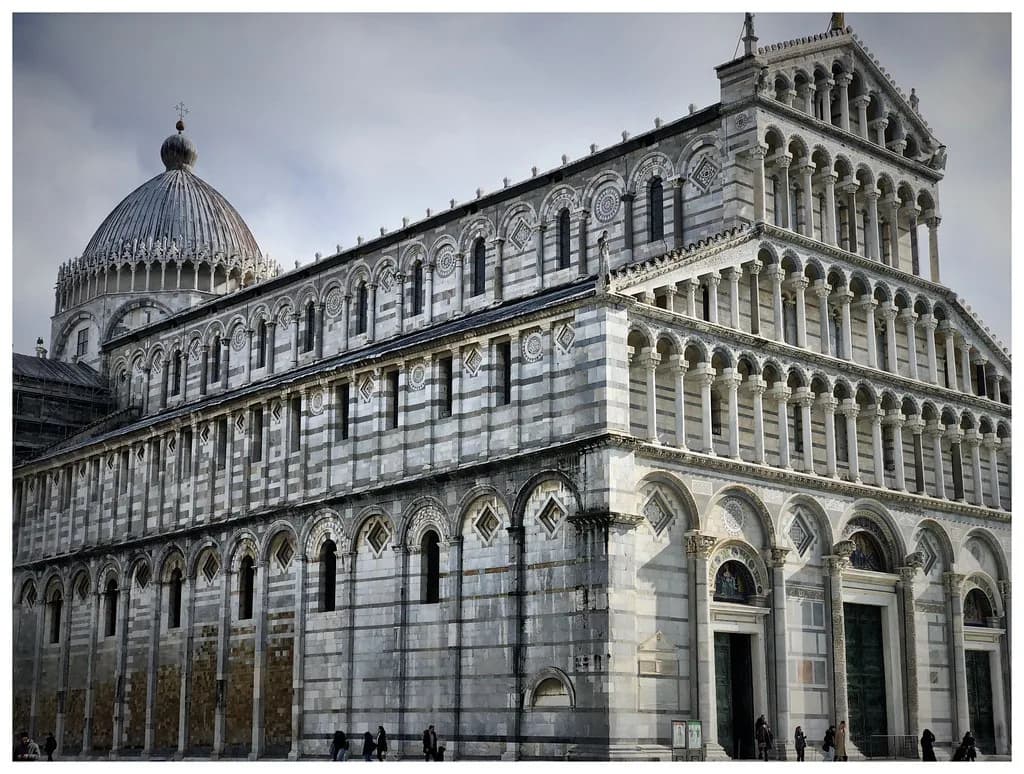
Start with the tower itself, because it is what the children came for and because photos are easier before the square fills up. Let them pose with the leaning building, then move on before the novelty fades. The wider complex is known as the Piazza dei Miracoli or Campo dei Miracoli, and its lawns are the natural place for a run-around between sights.
Inside the Baptistery, a staff member sings a few notes at intervals to demonstrate the acoustics, which lands well with children of almost any age. In the cathedral, set simple spotting challenges: the carved animals on the columns, the lion at the base of the altar, and Medici balls on buildings around the city.
The Camposanto, the walled cemetery beside the cathedral, suits older children more than toddlers: the frescoes are intense and the space rewards slow looking rather than running. If you have a mixed-age group, split up briefly so the older ones can read the carvings and inscriptions while the younger ones stay on the grass.
If you want a structured plan for the square, from which buildings are ticketed to how to sequence a visit, a dedicated guide is handy for deciding what to skip rather than trying to see everything. For wider planning, see Piazza dei Miracoli Guide.
Climbing the Leaning Tower with Kids
The most important thing to know before promising a climb is the age rule. Family travel sources report that children must be at least eight years old, with one writer specifying that the child must turn eight by the end of the calendar year. Rules can change, so confirm the current requirement with the official tower operator before booking.
If you do book, treat the timed slot seriously. One account reports that late arrivals are not admitted and are not refunded, and both family sources recommend arriving early at the luggage storage room near the tower, allowing up to half an hour in busy summer months. The stairs inside are worn and can be slippery when wet.
For younger siblings left below, the wait can be turned into a game: from the lawn you can look for family members at the top, and there is sculpture to spot nearby, including a she-wolf and a fallen angel on the grass in front of the tower. Strollers can be left outside or in the storage area rather than hauled up.
Beyond the Square: Museums and Indoors
The Italian Army Paratrooper Museum is a short walk from the main sights and is a strong option for primary-age children and older. Outside there are vehicles and a helicopter that children can sit in, plus a small playground, and one local writer reports spending about ninety minutes inside with elementary-age kids. Check current opening arrangements directly before making it the centrepiece of a day.
The Orto Botanico di Pisa is a compact green space with greenhouses, ponds and a museum on the grounds, and it works well as a shady break on a hot afternoon. One writer notes clean toilets but no changing tables, so pack a mat; the museum's facade is worth a look even if the children prefer to stay outside.
Keith Haring's Tuttomondo mural is outdoors and free to look at, which makes it a low-commitment stop for older children, and the city's museum listings cover other small collections if the weather turns. Pick one indoor backup rather than several, so the day does not become a sequence of tickets.
Playgrounds and Green Space
Parco Don Bosco, roughly twenty minutes on foot from the tower, combines a large playground with a bike path and an aqueduct running alongside it. If your children need a proper run after the crowds, this is the stop that pays off most.
Giardino Scotto, closer to the station, has a playground plus mature trees and open grass, making it a sensible picnic or end-of-day stop before catching a train. Smaller fenced playgrounds sit on the walk between the big car park and the tower, which is useful when a mid-walk break is all you need.
Parco dello Squalo offers climbing structures and swings for a range of ages, though it is further out and better suited to families with a car. If you are relying on foot and trains, choose one park and build the day around it instead of trying to reach several.
Picnics, Snacks and Practical Comforts
Casual food suits families better than a long sit-down lunch here: panini, focaccia sandwiches and takeaway chickpea flatbread called cecina are quick, local and easy to eat on a bench. One writer warns that the panini are large enough to share, which helps if you are feeding several children. For a deeper look at local eating, see the Pisa food guide.
For toilets, the reliable public option is behind the Duomo, with another near the large car park. Keep that in mind when planning the picnic, and carry water because the city can get very hot in summer despite scattered fountains.
For a longer day, day trips from Pisa can be built around the coast or inland towns once you have finished with the square, which suits families using Pisa as a link between Florence and Lucca.
Timing, Heat and Crowds
The square is busy most of the year but especially from April through October. In June, July and August, avoid the middle of the day: either arrive early or come in the late afternoon and stay into the evening, when the light is better and the lawns are less crowded.
Set expectations about souvenirs before you arrive. Small trinkets are sold throughout the tourist area, and a quick conversation or a small set budget avoids the usual negotiation at every shop door.
Practical Checklist and Where to Stay
Pack light and practical: strollers work in the centre, a portable changing mat covers you if facilities are missing, and water bottles can be refilled at fountains. If someone is climbing the tower, sort out who waits below and where the stroller goes before the timed slot.
If you stay overnight, central Pisa north of the River Arno keeps you within walking distance of the tower and the square, which is easier with tired children than a hotel on the outskirts. Families who prefer space often choose self-catering apartments for kitchens and laundry, while others prefer hotels with family room configurations.
For the wider picture of what else is worth a detour, including quieter corners of the city, the hidden gems guide covers options beyond the main square.
Plan Your Family Day in Pisa
Pisa works best for families as a focused half day or a relaxed full day: tower photos first, then the square's buildings at the pace your children allow, with a park and a snack as the release valve. Book and confirm any climb directly with the official operator, and treat the age rule and timing advice as things to verify rather than fixed facts.
Check the city's official tourism pages for current visitor information before you go, and layer your own plan around one paid interior, one outdoor sight and one playground rather than trying to cover everything.
Frequently Asked Questions
Is Pisa worth visiting with kids, or just a photo stop?
It can be both. The tower and square make a satisfying short visit, and the city adds playgrounds, a botanical garden and a small military museum if you stay longer. Families who treat it as an afternoon rather than a rushed detour tend to enjoy it more.
Can children climb the Leaning Tower of Pisa?
Family travel sources report a minimum age of eight, with one specifying the child must turn eight by the end of the calendar year. Ages and rules can change, so confirm the current requirement with the official tower operator before booking, and plan something for younger siblings to do below.
How many hours do you need in Pisa with children?
As a suggestion rather than official advice, around five hours covers the tower, the square and a snack, which is how one family spent a train connection. Add an afternoon if you want a playground or the botanical garden.
Where are the playgrounds and parks near the Leaning Tower?
Parco Don Bosco, about twenty minutes on foot, has a large playground and an aqueduct. Giardino Scotto near the station has a playground and shade, and small fenced playgrounds sit along the walk from the main car park to the tower.
Are there public toilets and picnic spots near the Square of Miracles?
There is a public toilet behind the Duomo and another near the large car park. The lawns around the monuments and the parks inland are the obvious picnic spots, and water fountains around town help with refills.
Where should families stay in Pisa?
Central Pisa north of the River Arno keeps the tower and square within walking distance, which is easier with children. Self-catering apartments suit families who want kitchens and laundry, while hotels work if you prefer a shorter stay.
Sources
Continue exploring
More guides you'll find useful