Cefalù Lungomare Beach Guide: Free Sand, Lidos and the Old-Town View
A slow guide to Cefalù's main Lungomare beach: free public sand versus paid lidos, the view back to the old town and La Rocca, shoulder seasons and nearby coves.
On this page
Cefalù's main beach is the rare strand where you can rinse off and be in front of a Norman cathedral within a few minutes' walk. The sand runs along the Lungomare, the seafront promenade, with the old town's rooftops and the bulk of La Rocca rising directly behind it. For a slow traveller, that proximity is the point: this is a town beach, not a resort you drive out to and leave again.
The one real decision is where to put your towel. Part of the seafront is free public sand; other stretches are lidos where you rent a sunbed and umbrella. Both are legitimate, and the trade-off is simply money against certainty. The rest of this guide covers the view from the sand, the season, quieter coves nearby and how to link the beach to the rest of town on foot.
Where the Beach Sits in Relation to the Old Town
The promenade is the easiest landmark to navigate by. The historic centre sits just inland, so you can step off the sand, cross the seafront road and be in the lanes around Corso Ruggero quickly. Guides consistently describe the main beach as lying right beside the old town rather than on the edge of it, which is why a beach day and a sightseeing day fold into one here.
Three anchors orient you: Piazza del Duomo and the cathedral at the heart of the centre, the Rocca cliff above the rooftops, and the small harbour beach toward the eastern side of the old town. Everything worth seeing clusters between them. If you want a fuller sightseeing list, the Cefalù Attractions hub maps the individual monuments worth your time.
Arriving by train, note that the station sits uphill from the beach, roughly a ten-minute walk, so the way into town is downhill and the return is a steady climb. That detail shapes how much you carry. If you plan to walk both ways with towels and a bag, pack light rather than dragging everything for a full day.
The View From the Sand
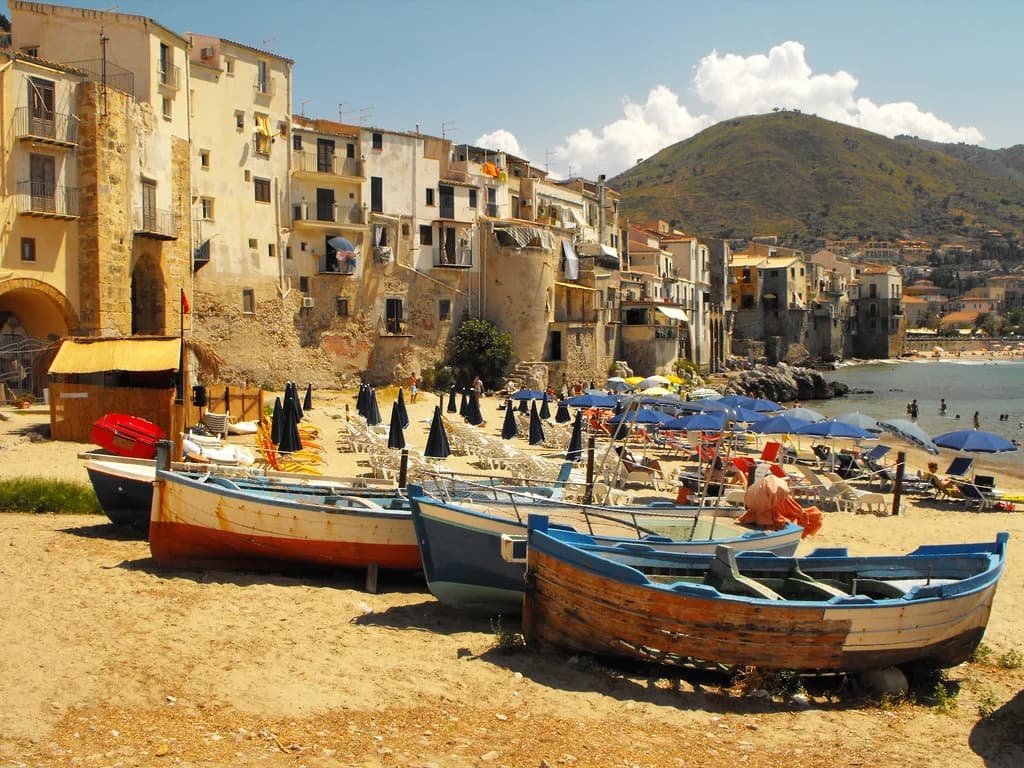
The composition is unusually layered: shallow water in front, then orange rooftops and pale facades, then the sheer rock of La Rocca above. Writers keep returning to that contrast, and it is why the seafront doubles as the town's evening promenade. The best of the view is behind you, so turn around rather than staring out to sea.
The classic photograph of the town framed by water is not taken from a lounger. It comes from the harbour side, following Via Bordonaro to the small cove near the old port, where you look back at the beach and the buildings stacked behind it; the seawall gives a slightly higher angle. Budget a separate short walk for that shot rather than expecting it from your towel.
At the eastern end, by the old harbour and the Spiaggia del Porto Vecchio, the crooked row of former fishermen's houses sits closest to the water and the atmosphere is most photogenic. It is a short stroll from the main sand rather than a separate trip, and late afternoon is when the platform and the water draw the most activity.
Free Sand or a Rented Lounger
The seafront mixes public stretches where you lay out your own towel at no cost with lido sections offering sunbeds and umbrellas for rent, and bars and cafes strung along the promenade behind both. In high season the free sand fills quickly, and you will want to arrive early if you are a group needing room to spread out. A rented lounger buys certainty; free sand asks you to show up sooner.
Lido prices are set by individual operators and move with the season, so any figure you read online should be treated as a starting point, not a quote. Ask at the kiosk what the current rate covers and how long the rental lasts. Walking the promenade first to compare a couple of sections costs nothing and tells you more than a stale listing.
Water along this main stretch is described as generally calm and wave-free, which is part of why families gravitate there. It is still a working town beach rather than a managed resort, so treat any facilities, showers or supervision as things to check on the day rather than assume.
Seasonality and Shoulder Months
In July and August Cefalù behaves like a busy Italian seaside town: the sand is full, the lidos are running and the waterfront is at its liveliest. Shoulder seasons are widely recommended as the sweet spot, with spring and early autumn offering milder weather and thinner crowds while shops and restaurants stay open. What you cannot assume outside summer is that every beach bar is operating. Further visitor details appear in Cefalu, Italy: A Complete Guide to the Sicilian Beach Town - An American in Rome.
Visitors who came in March found many things closed and the town quiet, which suits walkers but disappoints anyone expecting full beach service. That is the honest trade-off of the off-season: atmosphere and space in exchange for a shorter list of open businesses. Weigh which version of Cefalù you actually want before you book.
Sea temperature and conditions vary year to year, and no guide can promise a swimmable day. Build flexibility in so a cool or windy morning becomes a town morning instead. Our guide to the best time to visit Cefalù avoiding crowds digs into the month-by-month trade-offs if you are weighing dates.
Quieter Beaches Nearby
If the main seafront feels too full, several smaller spots sit a short drive west. Mazzaforno is a series of small sandy coves a few kilometres out, described as less crowded than the main beach, with some beach clubs and free areas plus limited parking. It rewards anyone with a car who wants a slower day by the water.
Kalura is a small pebbly cove reached by a staircase near the hotel of the same name, with clear water that makes it a favourite for snorkelling; its rocky entry rewards proper footwear and tolerance for steps. Salinelle, a longer sandy stretch further west, is the better pick for windsurfing, kitesurfing and families wanting room to spread out.
Beyond the water, the town rewards slow wandering, and our guide to the hidden gems in Cefalù covers corners most day-trippers skip. If you climb La Rocca di Cefalù for the view back over the beach, check access rules and opening times at the entrance rather than trusting old season dates.
Getting There and Parking Without Stress
The train is the simplest way in from Palermo, with regional services along the coast and tickets available through Trenitalia online or at the station; schedules shift by day, so check the current timetable rather than assuming a fixed frequency. From the station it is the short downhill walk into town described earlier, with a climb on the way back.
Drivers face the harder problem: limited-traffic zones make the historic centre difficult to enter, and parking there is not realistic. One reported approach is to park outside the centre along the Lungomare, where visitors found roadside parking and a larger lot, then walk in. Rates and rules change, so read the signs and pay at the machine rather than guessing.
Once in town, everything is on foot. Beach, promenade, Duomo and lanes all sit within a compact area, so a car becomes a liability during the day. The municipal website is the right place to check for local notices or roadworks that might affect access during your dates.
Pairing the Beach With the Town
A sensible pattern starts with an early swim while the sand is open and the light is soft, then shifts indoors as the heat builds. Walk up to the Duomo, whose interior holds the Christ Pantocrator mosaic and which is free to enter, though some areas and itineraries are ticketed separately. Check at the door exactly what any ticket includes before paying.
In the afternoon, the Cefalù medieval washhouse Lavatoio guide explains a cool, shaded stop carved into the rock below street level, reached by a wide staircase and best visited before the crowds arrive. It is a short walk from the main lanes and pairs well with a slow lunch, before you drift back to the water for the evening passeggiata.
On a rainy or flat day, the Museo Mandralisca Cefalù visitor guide covers a small private collection centred on Antonello da Messina's portrait, a worthwhile indoor swap; admission and hours change by season, so confirm before you go. The Osterio Magno Cefalù visitor guide is another short historical stop on Corso Ruggero, where the palace is linked to the cathedral's own ticket system.
Practical Checks Before You Go
Three things are worth confirming on arrival rather than trusting any guide: current lido prices and what the rental covers, whether the beach bars you want are open for your dates, and what the sea and weather are doing that week. A walk along the promenade or a word with your accommodation answers all three, and it matters most outside July and August.
Do not assume lifeguards, showers or step-free access along the whole seafront; facilities vary by section and operator. If accessibility matters, ask your hotel to recommend a specific stretch rather than discovering the problem at the sand, and check any parking charge on the spot.
Plan a Slow Cefalù Beach Day
Cefalù's beach works because it is not a separate excursion: sand, promenade, Duomo and Rocca sit within a few minutes of each other. Choose free public space if you are happy to arrive early, or a lido if you want certainty, and treat any published price as a prompt to check rather than a quote.
If crowds bother you, aim for a shoulder-season visit, keep a town morning in reserve for a cool day, and walk the harbour side for the photograph everyone recognises. Confirm the small practical details on arrival and the rest of the day takes care of itself.
Frequently Asked Questions
Is the main beach in Cefalù sandy and free to use?
The main beach along the Lungomare is sandy, and its public sections are free to use with your own towel. Lido sections charge for sunbeds and umbrellas, with prices set by each operator and varying by season, so confirm on site.
Do you have to pay for sunbeds on the Cefalù seafront?
Only if you choose a lido. The seafront mixes free public sand with paid beach clubs, and the paid option buys a guaranteed lounger and shade. Walk the promenade to compare sections and ask at the kiosk for the current rate and what it includes.
How do you reach the beach from Cefalù train station?
The station sits uphill from the seafront, roughly a ten-minute walk, so the route into town is downhill and the return is a climb. Regional trains serve Palermo, but check the current Trenitalia timetable for your date rather than assuming a fixed schedule.
Can you swim at Cefalù beach outside summer?
People do swim beyond the peak months, but water temperature and sea conditions vary year to year, and no guide can promise a swimmable day. Beach-facing services also wind down outside high season, so check locally whether the lidos and bars you want are open.
Which quieter beaches are near Cefalù if the main beach is crowded?
Mazzaforno, a few kilometres west, offers small sandy coves described as less crowded than the seafront. Kalura is a pebbly cove reached by a staircase and popular for snorkelling, while Salinelle suits windsurfing and families wanting more space.
Is a day trip from Palermo enough to include the beach?
It can be, because the beach, old town and Duomo are within a compact area reachable on foot from the station. Staying a night gives you the quieter evening promenade and an early swim before day-trippers arrive.
Sources
- Comune di Cefalù – Sito Ufficiale Istituzionale
- Cefalu, Italy: A Complete Guide to the Sicilian Beach Town - An American in Rome
- The most beautiful beaches in Cefalù | WTP Guide
- From Clifftop Views to Gelato Scoops: A Guide to CEFALÙ | bye:myself
- Lungomare Beach | Things to do in Cefalu
- 8 Best Things to do in Cefalu, Sicily (2026 Travel Guide)
- 11 Wonderful Things to do in Cefalú, Sicily — ALONG DUSTY ROADS
Continue exploring
More guides you'll find useful