Hidden Gems in Cefalù: Quieter Corners and Overlooked Sights
Discover Cefalù beyond the main beach: the La Rocca climb, medieval wash house, quiet bastion and small museum, with practical timing and footwear advice.
On this page
Cefalù compresses an unusual amount into a small pocket of coast: a Norman cathedral, a sandy crescent, a working harbour and a cliff that rises directly behind the rooftops. Most day-trippers rotate between the beach and the piazza, which leaves the town's steps, lanes and upper viewpoints noticeably calmer. This guide focuses on those corners, naming each spot plainly rather than pretending any of them is a secret.
Treat the places below as quieter or less-visited rather than undiscovered. Some, like La Rocca, are well known but rarely tackled in the heat of the afternoon; others, like the wash house and the bastion, sit a few minutes from the main drag yet catch far less foot traffic. Fees and hours change, so where a figure appears it belongs to the source that reported it, not to an official noticeboard. Confirm anything that matters to your budget at the entrance or on the operator's own page before you set out. For wider planning, see Cefalù Attractions: Visitor Guides to 7 Sights.
How the Quieter Sights Fit Together
Almost everything worth seeing sits within a fifteen-minute walk of Piazza del Duomo, with La Rocca looming above and the sea curling around the other three sides. A sensible shape for a slower day is a morning climb, a mid-morning wash house, a museum or cathedral interior in the heat of the afternoon, and the harbour or bastion towards sunset. That order spreads the uphill work into cooler air and keeps the indoor stops for when the sun is strongest. For wider planning, see A Self-Guided Walking Loop Through Cefalù's Old Town.
If you have only one day, you cannot do all of it well. Choose either the Rocca or the museum as your anchor and let the wash house, old harbour and side alleys fill the gaps. Two nights gives you a full day in town plus a relaxed evening, which is the minimum most visitors need to stop watching the clock.
Climb La Rocca: The Tempio di Diana and the Castle Ruins
The crag behind the town is the single best viewpoint in Cefalù, and the climb delivers more than a photo. On the way up you pass the ruins of the Tempio di Diana, a small megalithic structure that predates the town's medieval layout, and at the summit only fragments of the Norman castle remain. The payoff is the coastline stretching east and west, with the orange rooftops and the harbour laid out directly below.
Closed shoes are the rule that catches people out. A January 2026 guide from Along Dusty Roads reports that visitors are turned away at the gate without proper footwear, so trainers are the practical minimum even on a hot day. Take water, start early or go late, and keep your ticket handy for the return leg, since checks are reported on the way down.
Entry is charged, and both Salt in Our Hair and Along Dusty Roads report a fee of five euros per person, along with seasonal opening hours that differ by source. Treat those numbers as visitor reports rather than official current rules, because hours and prices are the kind of detail that shifts between seasons. Pay at the machine or gate and expect change-only or card options to vary.
The Medieval Wash House at Fiume Cefalino
Down a wide staircase off Via Vittorio Emanuele, the Lavatoio Medievale is a set of stone basins carved into volcanic rock and fed by a spring that once served the whole town. It stayed in use into the twentieth century before being restored in the early 1990s, and a plaque at the entrance carries an old verse praising the water's coldness and purity. It is a five-minute stop with a remarkably peaceful atmosphere, which is exactly why it deserves to be timed well.
Go first thing. Along Dusty Roads found the space almost empty in the morning and much busier on a later return, and Salt in Our Hair likewise suggests mornings to avoid the crush. Groups tend to arrive mid-morning and again after lunch, so before nine is the calmest window. The stairs are steep, so wear shoes with grip and take your time on the way back up.
Bastione di Capo Marchiafava and the Water's Edge
On the far side of the old town from the main beach, the seventeenth-century bastion gives you a viewing platform over the water plus a few swimming holes that stay surprisingly quiet even in high season. It is free to visit, and Destinationless Travel notes that buskers often play there in the evening, which makes it a good spot for the last hour of light. Bring a towel if you intend to swim rather than just look.
The nearby Bastione Innovazione Cibo Cultura adds an indoor option, with a digital museum covering the town's past and a restaurant focused on sustainable cooking, including plant-based dishes. That combination makes the area useful on a mixed-weather day, when a swim, a museum and a leisurely lunch can follow one another without crossing town.
The Old Harbour, Porto Pescara and the Molo
The working harbour is the town's most photographed corner, and it earns the attention in the late afternoon. Walk through the old Porto Pescara gateway and out along the concrete molo, where fishermen try their luck below and children use the platform as a diving board. The classic shot of the sea, the boats and the pale buildings is taken from the small harbour beach rather than from a boat, so you can reproduce it on foot.
Spiaggia del Porto Vecchio, the little beach by the harbour, is the liveliest patch in summer, with bars and sunbeds, but it is at its best as a sunset walk rather than a swimming stop. Arrive around an hour before the light drops to get a seat on the pier and watch the activity in the water.
Museo Mandralisca: A Small Museum for a Hot or Wet Afternoon
The Mandralisca collection is private, small and quietly excellent, built from the lifelong gatherings of Baron Mandralisca. Its single prize is Antonello da Messina's portrait of an unknown man, a Renaissance face with a famously enigmatic smile; the rest of the collection runs to ceramics and natural history. An hour covers it comfortably, which makes it an easy addition rather than a half-day commitment.
Opening hours are seasonal and the museum's own website is the place to check before walking over. Along Dusty Roads reports longer daily hours in July and August with reduced hours the rest of the year, plus an entry charge, but both should be verified rather than treated as fixed. The museum also suits a rainy day, when the beach and the Rocca are both off the table.
The Duomo: Free Entry Versus a Paid Interior Ticket
Cefalù's cathedral is the town's artistic centrepiece, with a Norman interior and a gold mosaic of Christ Pantocrator that outranks most of what Sicily has to offer. Entry to the building is reported free by several guides, so you can step inside, look up and absorb the space at no cost. The catch is proximity: the mosaics and the upper levels are best appreciated up close.
Paid itineraries exist for the towers, roof, museum and other spaces, and Along Dusty Roads breaks one version into tiers with prices, while noting the scheme is awkwardly explained. Their honest verdict is that the views from the top are lovely but the netting spoils photography, which matters if that is your reason for climbing. Decide based on whether you want the mosaic at close range or the rooftop view, not on the promise of a combined ticket.
Whatever you choose, keep the paid spaces separate from the free ones in your mind. Osterio Magno, the fortified palace on Corso Ruggero, is a separate site with its own ticketing and reported hours, and it is not included simply because you entered the church. Check at the door what the current sale covers before you hand over money.
Piazza Garibaldi and the Lanes off Corso Ruggero
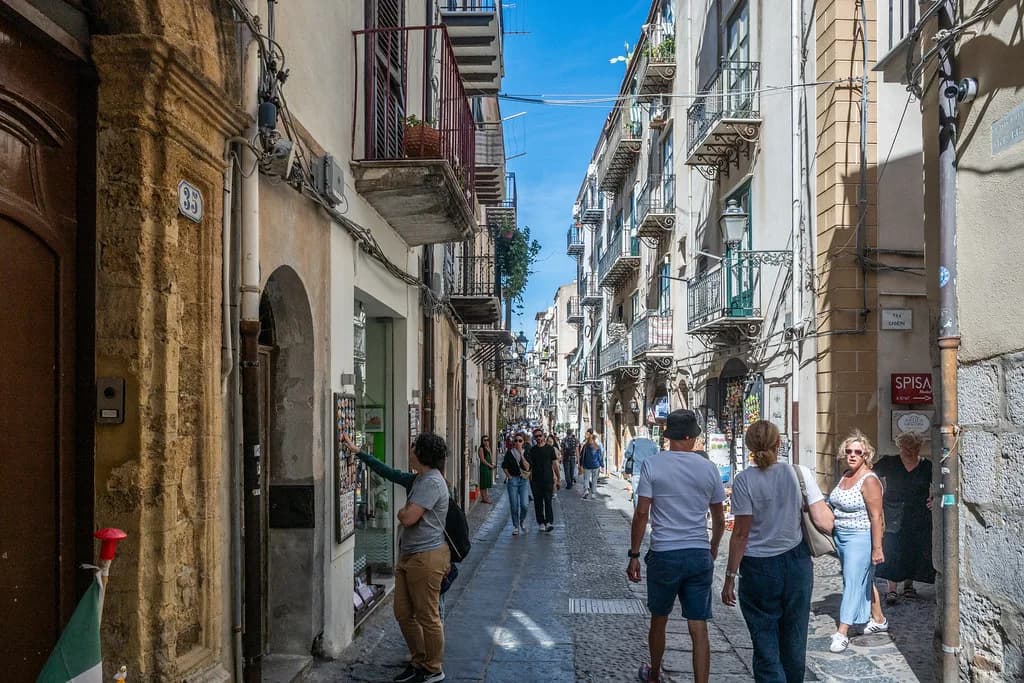
Corso Ruggero is the obvious spine of the old town, but the pleasure is in peeling away from it. Piazza Garibaldi sits far enough from the cathedral to thin the crowds, and it has a cluster of bars and a gelateria that make a natural rest stop before or after the Rocca. The square is also the quickest approach to the Rocca entrance, so it works as both a breather and a launch pad.
The alleys between Corso Ruggero and the sea hide archways and steps down to the water, and some of the best evening atmosphere comes from simply following them without a destination. Restaurants in the old town cluster along Via Carlo Ortolani di Bordonaro, and the food is a reason to slow down rather than hurry on. For a sense of what to order and when, start with what to eat in Cefalù local food and fish market.
Beyond Town: Punta Sant'Elia, the Madonie and Quieter Beaches
Punta Sant'Elia, on the road towards Palermo, is a rocky peninsula with clear water and a reputation for snorkelling, and it makes an easy picnic stop if you have a car. Inland, the Madonie park offers mountains, forest and hill villages, with Castelbuono a common excursion for its castle and wine. Both are day trips rather than detours you can squeeze into an afternoon in town.
If the main crescent is packed, two alternatives are worth knowing. Spiaggia Kalura is a pebbly cove reached by a steep stone staircase, where Along Dusty Roads recommends sea shoes; Spiaggia di Mazzaforno is a quieter sandy stretch a few kilometres west, reached by a long staircase. Both involve a walk and neither has the convenience of the town beach, but they reward the effort with space.
Practicalities: Arriving, Parking and Restaurant Timing
The train from Palermo is the simplest way in: An American in Rome describes a regional service running roughly hourly and taking under an hour, with the station uphill from the beach and a ten-minute walk down. Tickets can be bought online or at the station, and the coastal ride is a pleasure in itself. Driving brings ZTL restrictions in the centre, so plan to park outside the old town rather than circling.
Salt in Our Hair parked along the Lungomare promenade outside the centre and paid a reported daily rate, then walked in to the beach and old town; that remains a sensible approach when the centre is closed to cars. Treat the exact figure as a report from the time of writing rather than a current tariff.
Eating requires a little planning. Many restaurants do not open before around seven in the evening and close between lunch and dinner, and online opening times are unreliable enough that the safest move is to check in person or call ahead. A late breakfast, a proper lunch and an evening meal booked by phone will spare you a hungry afternoon.
How Long to Stay and Where to Base Yourself
At least two nights is the sensible minimum: one full day for the climb and the old town, and a relaxed evening for the harbour. Salt in Our Hair frames two nights as the point at which you stop rushing, while An American in Rome argues for staying rather than day-tripping from Palermo. In summer, add a day if you want beach time without sacrificing the town.
Staying in the old town means walking to everything but paying for the convenience, while the newer part of town is cheaper and about fifteen minutes from the historic centre on foot. Check the address carefully, because some hotels with pool photos sit several kilometres outside town. A studio or B&B off the water gives you the option of an early start at the wash house and a late evening at the bastion.
Plan Your Visit
Cefalù's quieter corners are not hard to find; they simply require a little timing and a willingness to walk uphill in proper shoes. Start early for the Rocca, keep the wash house and museum for the warmer hours, and save the harbour and bastion for the evening light. Fees, hours and ticket inclusions change, so verify anything that affects your budget at the entrance or on the operator's website.
If you are building a longer Sicilian route, pair these spots with a day in the Madonie or a coastal stop towards Palermo, and keep the pace slow enough to enjoy the town rather than tick it off. For a broader look at how Italian towns hide their best moments, the guide to hidden gems in Venice makes a useful comparison. For related planning, see Where to Stay in Cefalù: A Visitor's Guide to the Town's Areas.
More Cefalù guides
Frequently Asked Questions
What are the best hidden gems in Cefalù?
The strongest contenders are La Rocca with its Tempio di Diana ruins, the Lavatoio Medievale wash house, Bastione di Capo Marchiafava with its swimming holes, the old harbour and molo, and the small Museo Mandralisca. They are quieter or less-visited rather than secret, and each works best at a particular time of day.
Is the La Rocca climb in Cefalù worth it, and what should I wear?
The climb rewards you with the best views in town, a megalithic temple ruin and the remains of a Norman castle. Closed shoes are the practical requirement: visitor reports note that people without proper footwear are turned away at the gate. Go early or late to avoid the summer heat, carry water, and keep your ticket for the way down.
Can you visit Cefalù Cathedral for free?
Entry to the building is reported as free, so you can step inside and see the Norman interior and the gold mosaic. Some parts, such as the towers, roof and museum spaces, are covered by paid itineraries sold separately. Check at the door what the current ticket includes before buying.
Is the Museo Mandralisca worth visiting?
Yes, if you have an hour and either a hot or a wet afternoon. Its prize is Antonello da Messina's portrait of an unknown man, a small Renaissance masterpiece with an enigmatic smile, and the rest of the collection adds ceramics and natural history. Opening hours are seasonal, so check the museum's own website before you go.
How many days do you need in Cefalù?
Two nights covers the old town, the Rocca and an evening at the harbour without rushing. A single day works if you pick either the climb or the museum as your anchor. Add a day in summer if you also want beach time or a side trip into the Madonie.
How do you get to Cefalù from Palermo?
The regional train from Palermo takes under an hour and runs roughly hourly, with the station a ten-minute walk above the beach. Driving is also straightforward, but the centre has restricted traffic zones, so park on the promenade or outside town and walk in. Buy train tickets online or at the station.
Sources
Continue exploring
More guides you'll find useful