Lavatoio Medievale Cefalù: A Practical Guide to the Medieval Washhouse
Plan a short stop at Cefalù's Lavatoio Medievale: how to find the stone basins, what the washhouse was used for, and what to expect on the stairs down.
On this page
The Lavatoio Medievale is a medieval public washhouse in the historic centre of Cefalù, in the province of Palermo, Sicily. Rather than a museum display, it is a set of stone basins with washboards through which a natural watercourse runs, and it was used by the town's inhabitants for centuries. It sits low in the town, reached by descending a wide staircase, and most people treat it as a short pause between other sights rather than a destination in its own right.
It earns the stop because it is one of the few places in the old town where everyday domestic life, not church architecture or harbour scenery, is the point. Travel accounts describe the natural watercourse funnelled into several basins cut in the rock, with stone washboards. The scene is small, so arrive with modest expectations and you will get more from it.
Where the Washhouse Sits in Cefalù
The washhouse lies in the historic centre of Cefalù, close to the old fishing harbour and the lanes of the old town rather than out in the modern beach district. Travellers describe reaching it by following a wide staircase that drops down to the level of the water. Because the site sits below street level, it is easy to walk past the top of the steps without realising what is there, so look for the descent rather than a grand facade.
For orientation, use the old harbour and the nearby lanes of the centro storico as your landmarks; the washhouse is part of the same lower edge of town. Rather than trust a fixed set of directions, open a map on your phone when you are in the old town and walk to the steps down toward the water. The site fits naturally into the quieter end of a self-guided walk Cefalù old town loop.
What You Actually See at the Lavatoio
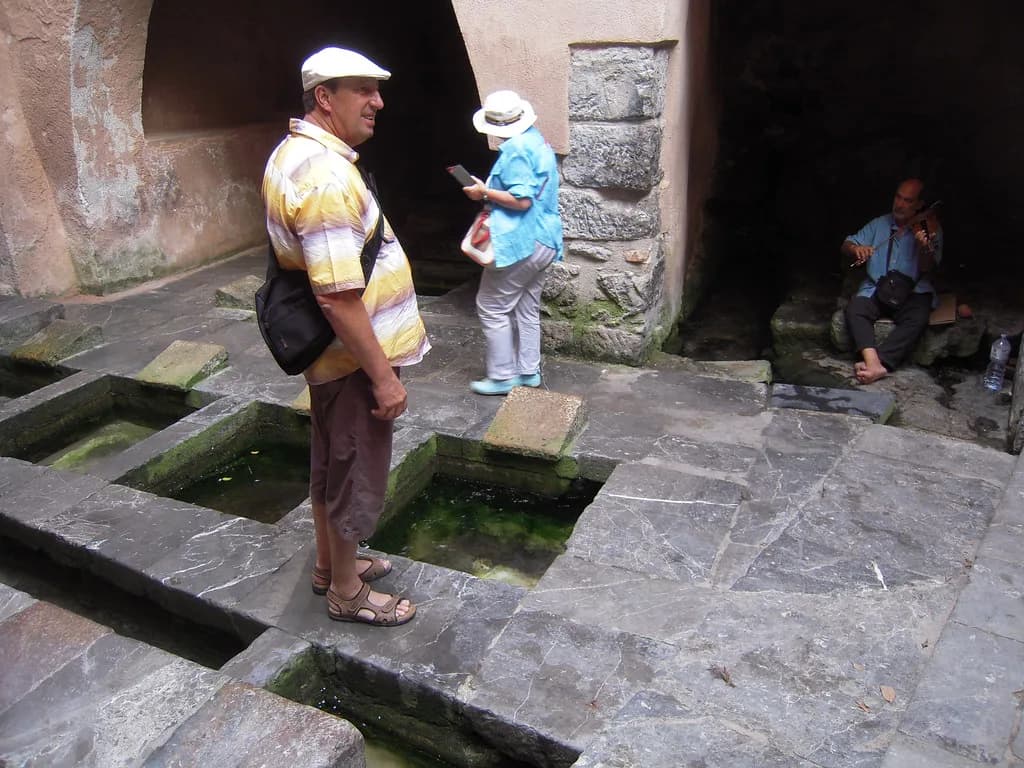
The core of the site is a series of basins cut directly into the rock, each with a sloped stone surface that served as a washboard. The watercourse flows through these basins, so you see water moving through the space rather than a dry archaeological display. Travellers report that the stream still runs through the stone basins today, giving the site an unusually atmospheric feel for something so small.
A local legend holds that the Cefalino spring was born from the tears of a nymph, a story attached to the water rather than the stonework. The site is small enough to take in at a glance, but the details reward a slower look: the worn edges of the basins, the shaded lower level, and the contrast with the bright streets above.
Travel accounts describe the site as an example of everyday life in the old town, which is a reminder that its value is context rather than spectacle. Some writers treat it as one of the town's overlooked corners; that framing is their view of the place rather than an official designation, so treat it as a prompt to slow down, not as a promise of emptiness.
A Short History of a Working Washhouse
The washhouse dates to medieval times, and one traveller account of its history places its origins as early as the Arab period. It was not a decorative monument but a public facility where the town's residents brought laundry and washed it in the running water. That makes it one of the most direct surviving links to the domestic routines of pre-modern Cefalù.
The basins stayed in use far longer than most medieval infrastructure. The same account notes that the townspeople continued to use the washhouse until about the middle of the 20th century, which explains the worn surfaces you see. That span of use is the reason the site still reads as a workplace rather than a ruin, and it is worth holding in mind as you look at the stone.
How to Visit It Well
Treat the Lavatoio as a suggested twenty- to thirty-minute stop rather than a half-day outing; that timing is editorial advice, not an official figure. On your way in, you will likely pass through the historic centre, where the Cathedral of Cefalù and Piazza Duomo are easy to combine with the washhouse in a single walk. Because the site is small, the quality of your visit depends more on timing and atmosphere than on how long you linger.
Traveller reports suggest that mornings tend to be quieter at the washhouse, and one account recommends visiting early to avoid the bigger crowds. The same writer returned later in the day and found it much busier. Crowd levels vary by season and time of day, so if relative quiet matters to you, arrive when the old town is still waking up.
To reach it from the rest of the old town, expect to walk down rather than up, and remember that you will need to climb back afterward. Wear shoes with decent grip rather than smooth soles, especially if it has rained recently. If you want to fill an afternoon afterwards, the Cefalù beach Lungomare and Spiaggia guide pairs naturally with an old-town morning.
Photography Notes: Light, Shade and Stone
The washhouse sits at the bottom of a staircase and is partly shaded, so the light there differs from the bright piazza above. Midday light is likely to be contrasty, with some basins in sun and others in deep shade, which makes balancing an exposure harder. Early morning light is generally more even and tends to suit the site's textures.
The stone and water are the main subjects. A low angle, close to the level of the basins, shows how the washboards were shaped and how the water moves between them. Rather than trying to cover every part of the washhouse in one frame, pick a single pool and compose around the stone edges.
Because the stone is damp much of the time and the approach is a staircase, keep one hand free for the steps rather than for a phone. If you carry a second lens or a tripod, set it up at the bottom, not on the stairs. A short visit is enough for a representative set of images.
Practical Cautions and What Is Not Confirmed
The main practical consideration here is the descent. The staircase drops down to a damp, shaded area, and wet stone can be slippery. Plan your footing accordingly, keep an eye on children, and do not assume a handrail will be where you need it. No step-free route is documented, so if you use a wheelchair, walker or stroller, check the situation on the ground before committing to the visit.
Official visitor information for the site, such as opening hours, ticket rules or closure days, is not clearly published. Rather than plan around a fixed schedule, check the Comune di Cefalù's official website or a tourist information point in town if the visit matters to you. Travellers have reported that the site has been free to visit, but that is not a current operator confirmation, so treat it as an indication rather than a guarantee.
There are no documented toilets, guided tours or facilities at the site. That is not a problem for a short stop, but it does mean you should plan the visit as part of a larger walk through the old town. Nearby cafés and squares give you somewhere to sit before or after.
Pairing the Washhouse with the Rest of Cefalù
The obvious companion to the washhouse is the Cathedral of Cefalù at Piazza Duomo, known for its Arab-Norman architecture and mosaic of Christ Pantocrator. One guide notes that entry to the Duomo itself is free, but that seeing the Christ Pantocrator up close requires buying a tour ticket at the door, so the church and the close-up experience are not the same proposition.
If you are interested in the older layers of the town, the Osterio Magno in Cefalù is a short walk from the cathedral and adds a built-up counterpoint to the rock-cut basins. For something indoors, the Museo Mandralisca in Cefalù houses a small but noteworthy collection. The hidden gems in Cefalù guide maps out further corners worth adding to the same walk.
For a bigger walk, La Rocca di Cefalù rises above the town and gives sweeping coastal views, but the climb is more of an outing than a detour. One account puts the ascent at roughly a 284-metre climb, with entry costing 5 EUR when that writer visited, though you should confirm the current arrangement on site. Pairing the washhouse and the Rocca in one day works if you begin early and keep the washhouse brief. The Cefalù Attractions hub lists the sites that fit together most sensibly.
Plan Your Visit to the Lavatoio
The Lavatoio Medievale is not a blockbuster sight, and it does not need to be. Its value is that it shows the working town, the one that washed clothes in cold running water long before Cefalù became a beach destination. Give it a short visit, bring shoes that grip, and come early if you want the basins to yourself.
Before you go, check the Comune di Cefalù's official pages for current visitor arrangements rather than relying on old guidebooks or third-party listings. Combine the washhouse with the cathedral square and the old harbour in a single walk, and you will cover the most useful bits of the historic centre on foot.
Frequently Asked Questions
Is the Lavatoio Medievale free to visit?
Travellers have reported that the site has been free to visit, but the Comune di Cefalù does not publish a clear current access policy for the washhouse. Treat that as an indication and check the town's official information or a local tourist office if paying or not matters to you.
How long does a visit to the medieval washhouse take?
As a suggestion rather than an official figure, plan for roughly twenty to thirty minutes. The site itself is small, and most of the time goes on the staircase down and a brief look at the basins and the flowing water. It is best treated as a short stop on an old-town walk rather than a standalone destination.
Where is the Lavatoio Medievale in Cefalù?
It sits in the historic centre of Cefalù, in the province of Palermo, Sicily, at the lower edge of the old town near the old fishing harbour. You reach it by a wide staircase that drops down from street level, so watch for the descent rather than a marked facade.
Why is the washhouse set below street level?
The washhouse sits at the level of the watercourse, which meant water could flow directly through the rock-cut basins without being pumped or carried. That low position is why it is reached by a staircase and why the site is partly shaded compared with the piazza above.
What is the legend of the Cefalino river?
One local legend says the Cefalino spring was formed from the tears of a nymph, which gives the water a poetic association. The legend is attached to the stream rather than to the stonework, and it is often mentioned alongside the washhouse in local descriptions.
Is the staircase down to the washhouse difficult?
The staircase is described as wide, but the descent leads to a damp and partly shaded area, and stone can be wet. Wear shoes with grip and expect a short climb back up. No step-free route is documented, so travellers with mobility needs should check on the ground first.
When is the best time of day to visit the Lavatoio Medievale?
Mornings tend to be quieter according to traveller reports, and one account recommends early visits to avoid bigger crowds; the same writer found it busier later in the day. If relative quiet matters to you, plan the visit early in your walk through the old town.
What else is nearby worth combining with the washhouse?
The Cathedral of Cefalù and Piazza Duomo are the obvious pair, followed by the old harbour and the lanes of the centro storico. La Rocca di Cefalù is a larger outing above the town, while the Museo Mandralisca and Osterio Magno add indoor options if the weather turns.
Sources
- Comune di Cefalù – Sito Ufficiale Istituzionale
- Medieval Washhouse of Cefalù – Hiking & Cycling Routes | Komoot
- Medieval Washhouse - Miramare
- Lavatoio Medievale - All You SHOULD Know Before Going ...
- 8 Best Things to do in Cefalu, Sicily (2026 Travel Guide)
- 11 Wonderful Things to do in Cefalú, Sicily — ALONG DUSTY ROADS
Continue exploring
More guides you'll find useful