Cefalù's Megalithic Walls and the La Rocca Climb
Megalithic blocks survive in Cefalù's old town by Porta Terra and up on La Rocca. See where they are and how to pair them with the climb.
On this page
Most travellers reach Cefalù for the cathedral and the crescent beach, then notice something older on the way through town: enormous irregular stone blocks fitted together without mortar. These are the fragments usually labelled mura megalitiche, and they survive in more than one place. A suggested half day is enough to see the old-town stones and climb to the summit remains, though that is an editorial plan, not an official timing.
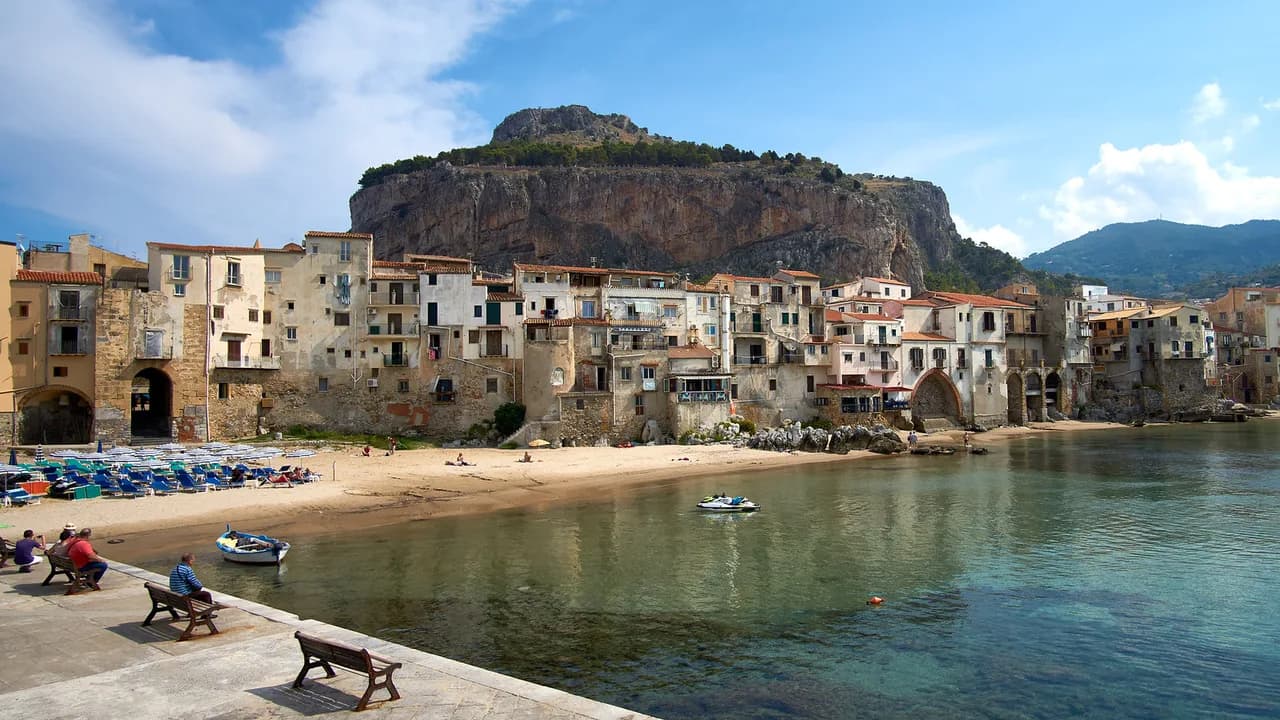
The town sits on Sicily's northern coast on the A20, and its historic quarter clusters below a promontory rising about 270 metres. Visit Sicily describes that rock as already known to the Phoenicians, with a megalithic Temple of Diana and a cistern from the 9th century BC on top. Down in the streets, the same prehistoric masonry turns up built into later structures rather than standing free.
One Name, Two Different Sights
Search for mura megalitiche in Cefalù and you will find references to ancient walls in the old town and to megalithic structures on the mountain above. They are related in style and age but not the same visit. The lower fragments are woven into Piazza Garibaldi and the surrounding lanes; the upper remains sit inside a hilltop park reached on foot.
Plan accordingly rather than hunting for a single ruin. The old-town stones are something you study for a few minutes on a walking loop, and they slot naturally into a self-guided walk Cefalù old town. La Rocca is a proper outing with rough ground and a climb. Treating them as two stops on one route gives you a coherent day instead of a frustrating search.
Start at Piazza Garibaldi and Porta Terra
Piazza Garibaldi is the natural starting point for the lower stones. Porta Terra, the old gate, survives in fragmentary form at the base of the clock tower, and sections of dry-stone megalithic walling are built into the facade of the nearby Church of the Catena. Wanderlog records the address as Piazza Garibaldi 2 and notes that only remnants remain, so set your expectations on close reading rather than a dramatic set piece.
The pleasure here is in noticing how the blocks were reused. Later builders incorporated the enormous prehistoric stones into churches, gates and house walls, which is why the masonry appears in short runs and corners rather than as a continuous rampart. Visit Sicily also points to surviving megalithic walls along the Giudecca cliffs near the Postierla and at the ancient Porta Terra, today's Piazza Garibaldi, which helps explain why the fragments are scattered through the medieval layout.
Café tables sometimes crowd the base of the gate and part of the walling, so approach from a few paces back and look up at the church facade as well as down at the street. Early morning is the easiest time to see the stones without dodging chairs and waiters. Afterwards, Corso Ruggero runs nearby and makes an obvious continuation of the walk towards the cathedral.
La Rocca: The Sacred Summit Above Town
The larger megalithic story is up on La Rocca, the rock that dominates the skyline. Visit Sicily describes the Temple of Diana as a megalithic building linked to the cult of water, with a cistern dating from the 9th century BC close by. A local guide to the town repeats the same detail, calling the temple a megalithic site tied to water cult practice and placing a 9th-century-BC cistern next to it on the cliff.
That pairing of temple and cistern is the reason the climb matters for anyone interested in the stones. On the summit you can see prehistoric masonry in its original setting, not recycled into a later church, and the position explains why the site was chosen: a defensible high point with a water supply. Ruins of a Norman castle also stand on top, so the hill layers prehistoric, medieval and later use in one view.
Do not expect a reconstructed temple. What you find are the remains of a megalithic structure, generally identified as the Temple of Diana, plus stretches of walling and traces of later fortification. Reading a little about the water cult before you go makes the stones far more legible than a quick photo stop.
What the Ascent Is Actually Like
The climb is short but not trivial. A third-party hiking route on Komoot describes the Rock of Cefalu walk as roughly 3.8 km with about 214 metres of elevation gain, taking around an hour and twenty minutes, starting on stone paths and steps before turning into a winding gravel footpath. That is route data from a walking app, not an official trail specification, so treat the figures as a planning guide rather than a promise.
The surface matters more than the distance. Stone steps and loose gravel ask for shoes with grip, and the exposed hillside gets hot quickly. Go Ask A Local advises avoiding peak hours in summer, applying sunscreen and carrying water, which is sensible on a climb with almost no shade once you leave the lanes.
A morning start solves several problems at once: cooler air, softer light over the rooftops and fewer people on the steps. If you only have one clear day in town, put the hill first and save the cathedral and the harbour for the afternoon. Anyone travelling with small children or short on time can use the shorter route below instead of forcing the summit.
Free Ground Versus Paid Interiors
Cost is where planning gets muddled, so keep the pieces separate. A Cefalù Cathedral visitor guide is the right place to check the church itself, and one detailed trip report notes that entering the Duomo is free while access to the towers, roof, museum, cloister and other spaces is sold through separate ticketed itineraries. That report is dated and its prices should not be relied on; check the cathedral's own channel before you commit.
The Lonely Planet entry for the Duomo confirms it as the town's headline monument, an Arab-Norman building with celebrated mosaics, but a listing page is not a ticket desk. Treat any figure you see in a blog as historical and confirm current options at the church or on its official site. Budget for the possibility that you will pay for the roof and museums while the nave costs nothing.
The same prudence applies to La Rocca. Sources describe an entry charge at the gate, but the amount, the payment method, the opening times and the last admission all vary by season and need checking on the day. Do not assume a single ticket covers the Temple of Diana and the cathedral; no source supports that, and the two sites are run separately.
Closing the Loop: Washhouse and Old Harbour
After descending, the medieval washhouse is a short walk away and makes a natural third stop. Cut into the rock below street level and reached by a lava-stone staircase, it still has the river Cefalino running through its basins, and Miramare notes the legend that the river sprang from a nymph's tears. That story echoes the water cult associated with the summit.
Visit Sicily adds that the washhouse was in daily use until not long ago, fed by water flowing from twenty-two cast-iron spouts, some shaped as lions' heads. It is a cool, shaded pause after the hill and takes only minutes to see. From there, the lanes lead down towards the old harbour, where the concrete pier is the classic spot for late-afternoon photographs.
If you have time for one more interior, the Mandralisca museum holds Antonello da Messina's Portrait of an Unknown Man, and the Osterio Magno on Corso Ruggero is a thirteenth-century palace with fine windows. Both sit comfortably on a route between Piazza Garibaldi and the waterfront. For more overlooked corners in town, see our picks of hidden gems in Cefalù.
A Short Version Without the Summit
Not everyone wants a hill in the heat. A pared-back loop can still cover the ancient stones: start at Piazza Garibaldi for the Porta Terra remnants and the blocks in the Church of the Catena facade, walk the Corso Ruggero, look into the Duomo, then drop to the washhouse and finish at the harbour. That route stays on paved streets and takes a leisurely half day.
This version works well in poor weather or with limited energy, and it still gives you a genuine encounter with prehistoric masonry. What it lacks is the context of the summit, where the temple and cistern show the stones in their original setting. If you skip the climb, read about the water cult first so the fragments downstairs make sense.
When to Go and How to Pace the Day
Cefalù stays calmer than Taormina even in high summer, according to a local guide, but the main square and beach still fill up. The stones themselves are not a crowd draw, and the gate and facade can be studied at almost any hour. The hill and the cathedral are the parts worth timing, so put them early or late.
Spring and autumn give the best balance for walking, with warm but not punishing conditions on the exposed rock. Summer demands an early start and plenty of water; winter visits are quieter but the light fades sooner. Check the day's forecast and the current opening arrangements for La Rocca before setting out, since neither is fixed year-round.
As a shape for the day, aim for the climb in the morning, a late lunch in the old town, the cathedral in the afternoon and the harbour at sunset. That sequence keeps the hardest walking in the coolest hours and leaves the Duomo for when you want to sit still. Adjust freely around heat, transport times or a sudden urge to swim.
What to Verify Before You Go
The megalithic stones of Cefalù reward a little preparation because they are not presented as a single site. Check the current opening arrangements and charges for La Rocca through official channels, and confirm the cathedral's ticketed itineraries at the church itself rather than trusting older blog figures. The old-town fragments need no planning at all, which is part of their appeal.
Go with shoes that grip, water in your bag and modest expectations about what survives of a prehistoric wall. What remains is fragmentary, reused and sometimes half-hidden behind café furniture, and that is precisely why it feels like a discovery rather than a monument. Walk slowly, look at the joins between the huge blocks and the later masonry, and the town's layers start to show.
Frequently Asked Questions
Are the mura megalitiche in Cefalù free to visit?
No source states that the megalithic remains are free. The fragments around Piazza Garibaldi sit in a public square and can be seen from the street, but that is not an official free-access statement. The structures on La Rocca lie inside a hilltop area where charges and access arrangements should be checked on arrival or with the town's tourist information before you climb.
Where do you see the megalithic walls in Cefalù's old town?
Head for Piazza Garibaldi. Remnants of the Porta Terra gate survive at the base of the clock tower, and sections of megalithic walling are built into the facade of the nearby Church of the Catena. Because the blocks were reused in later buildings, they appear as short runs and corners rather than a continuous wall, so look closely at the lower courses and the church front.
Is the Temple of Diana the same thing as the megalithic walls?
No. The Temple of Diana is a megalithic structure on the summit of La Rocca, associated with a cult of water and standing near a cistern dated to the 9th century BC. The old-town fragments near Porta Terra are separate stretches of prehistoric masonry that later builders incorporated into gates and churches, so seeing one does not mean you have seen the other.
How hard is the La Rocca climb?
It is short but uneven. Third-party route data describes roughly 3.8 km with about 214 metres of ascent over stone steps and gravel, taking around an hour and twenty minutes. That is a walking app's estimate, not an official figure. The exposed hillside gets hot, so an early start, grippy shoes and enough water matter more than fitness.
Can you visit the stones and the Duomo in one morning?
Yes, if you keep the hill early and the cathedral later. The old-town fragments take minutes, the climb takes a couple of hours at an unhurried pace, and the Duomo sits a short walk away. Entering the church is generally free while towers, roof and museum access are separately ticketed, so confirm current options at the cathedral before planning around a specific ticket.
Do you need a ticket for La Rocca?
Blog sources describe a charge at the entrance rather than free access, but amounts, payment methods, opening times and last admission vary and should be confirmed locally. No single ticket should be assumed to cover both La Rocca and the cathedral. Ask at the gate or a tourist office, and be prepared to pay on the spot.
What should you wear for the walk up?
Closed shoes with grip are the practical choice for stone steps, loose gravel and an exposed descent; one walking route notes that sturdy footwear helps on the steeper sections. Bring sun protection and more water than you think you need, especially between late morning and mid afternoon when the hillside offers little shade.
How does the Lavatoio fit into the walk?
It is a short detour from the old town after you come down. The medieval washhouse is cut into the rock, reached by a lava-stone staircase, and still has the river Cefalino running through its basins, with a legend tying the water to a nymph's tears. It takes minutes to see and pairs naturally with a finish at the old harbour.
Sources
- Cefalù | Visit Sicily official page
- A Local's Guide to Visiting Cefalù, Sicily — Go Ask A Local
- Rock of Cefalu | hike | Komoot
- Porta Terra e Mura Megalitiche, Cefalu, Italy - Reviews, Ratings, Tips and Why You Should Go – Wanderlog
- Duomo di Cefalù | Cefalù, Italy | Attractions - Lonely Planet
- Medieval Washhouse - Miramare
- 11 Wonderful Things to do in Cefalú, Sicily — ALONG DUSTY ROADS
Continue exploring
More guides you'll find useful