Cefalù Cathedral Visitor Guide: Nave, Mosaics and Tickets
Plan a visit to Cefalù Cathedral: free entry to the Norman church, optional paid itineraries for mosaics and roof, and what to see inside the nave.
On this page
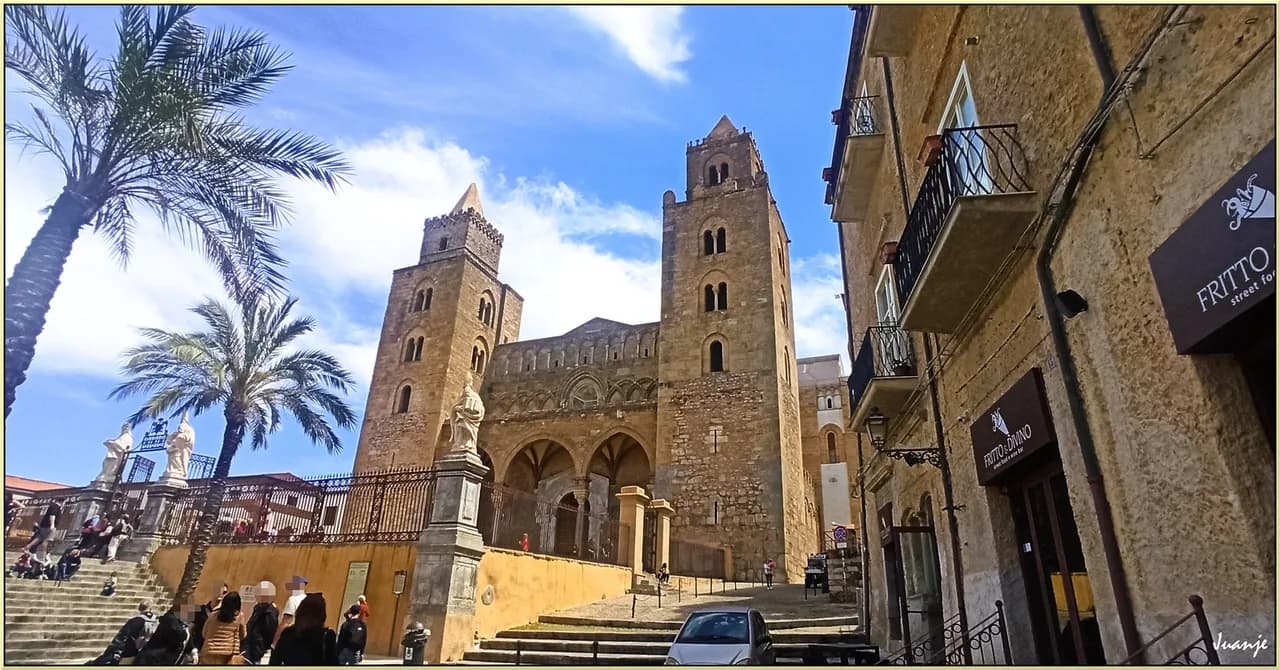
Cefalù Cathedral, the Duomo di Cefalù, is the building that gives this Sicilian seaside town its skyline: twin towers, a later portico and a fortress-like Norman profile above Piazza del Duomo. Construction began in 1131 under Roger II, and the church was consecrated in 1267, according to a Kiddle encyclopedia summary of its history. It forms part of the UNESCO listing Arab-Norman Palermo and the Cathedral Churches of Cefalù and Monreale, designated in 2015. Most visitors come for the gold apse mosaics, but the building rewards a slower look at the nave, the columns and the side chapels.
The practical point many travellers miss is that entry to the church and access to the ticketed itineraries are separate things. The church itself is generally free to enter, while optional paid routes cover extras such as the roof and towers, the museum and the cloister. Travel blogs quote prices for these add-ons, but they are not official tariffs and should be checked before you rely on them. Plan the free visit first, then decide whether the extras are worth the time and money for your trip.
Where the Cathedral Sits in the Old Town
The cathedral faces Piazza del Duomo, a square lined with cafes, osterias and gelaterie, and it works well as the starting point for a walk through the old town. From the piazza you can reach Corso Ruggero, the main street, and the lanes that lead down towards the beach and the harbour. The square is lively in the evening, when locals and visitors take their passeggiata, so an early-morning or late-afternoon visit usually feels calmer than midday in summer.
If you are arriving by train, the station sits uphill from the beach and about a ten-minute walk from the old town, according to An American in Rome. Trains from Palermo run roughly hourly and take about 50 minutes, though schedules vary by day, so check the operator's site before setting out. Once in the old town, most of the cathedral-area sights are within a few minutes' walk of each other.
Free Church Entry Versus the Ticketed Itineraries
Several travel blogs describe entry to the cathedral itself as free, with paid tickets only for the optional itineraries. Along Dusty Roads, writing in 2026, lists a Red Itinerary said to cover the towers and roof, the museum, the Episcopal Chapel and the Canons' Cloister, plus Blue and Green options covering smaller combinations. Those figures are third-party blog estimates rather than official tariffs, so treat them as a rough guide and confirm current prices at the ticket desk or on the official cathedral site before buying.
The Visit Cefalù tourism office published a notice saying the cathedral itineraries reopen from Saturday, March 1, with morning hours from 10:00 to 13:00 and afternoon hours from 15:30 to 18:30. The notice does not state a year in the extract, so treat those windows as a seasonal pattern to verify rather than a permanent schedule. If your trip depends on seeing the roof or the museum, check the official Duomo site or ask at the ticket desk on arrival.
One common misunderstanding is that all the mosaics require a paid ticket. The apse mosaics are inside the church, so the free entry covers a view of them from the nave; the paid itineraries add closer access and other spaces. If your main goal is to see Christ Pantokrator and the Virgin, you can do that without buying anything, though a guided or ticketed route may give you a better angle.
Inside the Nave and Transept
The interior follows a Latin cross plan with a nave and two aisles, separated by columns of pink granite and cipolin marble whose bases and capitals date from the 2nd century AD, according to the Kiddle summary. The nave roof was lowered at some point, which is visible from outside where the transept rises higher than the nave and aisles. Look for the mix of Romanesque mass and pointed Gothic arches, an early example of a style that would later spread across Europe.
The 15th-century portico at the front has three arches and shelters the Porta Regum, or Kings' Door, with a decorated marble entrance. Inside, side chapels and artworks include a 15th-century Madonna enthroned in the left transept, a painted wooden cross by Guglielmo da Pesaro dated 1468 and a 12th-century baptismal font carved from a single block with four small lions. Since 1985, 72 modern stained-glass windows by the Palermo artist Michele Canzoneri have added a contemporary layer to the medieval fabric.
The cathedral is an active parish church, so visitors should keep their voices low and avoid walking through areas set aside for prayer. There is no published dress code in the sources reviewed here, but covering shoulders and knees is a sensible default in Italian churches, and it is easy to carry a light scarf in summer. If a service is in progress, wait until it ends before moving through the nave.
The Apse Mosaics: Christ Pantokrator and the Virgin
The apse mosaic shows a bust of Christ Pantokrator in the half-dome, one hand raised in blessing and the other holding the Gospel of John, with inscriptions in Greek and Latin. Above him the Virgin Mary stands in prayer, flanked by four archangels, and rows of apostles and evangelists fill the space around the central window. The figures wear blue against a gold background, and the mosaic work is generally dated to before 1170, with craftsmen brought from Constantinople.
The lower parts and side walls of the presbytery were not finished until the 1600s, which is why the mosaic programme is concentrated in the upper apse rather than covering the whole church. The result is one of the best-preserved Byzantine mosaics in Italy and an important stop in Sicily's mosaic story, though Monreale and the Palatine Chapel in Palermo are the more famous comparisons. Photo conditions vary, so put the camera down for a few minutes and look at the faces and the drapery.
What the Optional Add-Ons Give You
The cloister is a peaceful courtyard with covered walkways and paired columns supporting pointed arches, entered from inside the church. Its capitals carry Norman and Romanesque designs, and the cloister is said to have influenced later Norman cloisters in Sicily, especially at Monreale. If the ticket includes the cloister, it is worth the extra time for the quiet and the detail in the stonework.
The roof and towers, where access is offered, give views over the old town and the sea, but blog reports mention netting that can make photography difficult. The museum and Episcopal Chapel add artworks and church history that the free nave visit does not cover. Because access and combinations change, ask at the ticket desk which spaces are open that day before paying.
Best Time to Visit and How Long to Allow
A suggested duration of about one hour is enough for the church and apse mosaics, with another 45 to 90 minutes if you add the cloister, museum or roof. Mornings are usually quieter, and the piazza is at its most pleasant before the lunch rush and again in the late afternoon. In July and August, the heat and the beach crowds make an early start more comfortable.
Cefalù's shoulder seasons of April, May, September and October are often recommended for fewer beach crowds while shops and restaurants stay open. If you are planning around crowds, our guide to the best time to visit Cefalù avoiding crowds covers the seasonal trade-offs in more detail. Pair the cathedral with a swim or a walk along the promenade so the day does not become a checklist of churches.
A Short Suggested Walk Around the Cathedral
Start at Piazza del Duomo with coffee and a pastry, then spend an hour in the cathedral looking at the nave, the baptismal font and the apse mosaics. Walk down Corso Ruggero to the Mandralisca Museum, home to Antonello da Messina's Portrait of an Unknown Man, and continue to the Lavatoio Medievale, a restored wash-house fed by the Cefalino stream. Finish with a walk through Porta Pescara to the old harbour for the classic view back towards the town.
For a longer day, climb La Rocca di Cefalù for coastal views, or head to the beach for the afternoon. If you are fitting Cefalù into a broader Sicily trip, a one day in Cefalù itinerary can help you sequence the cathedral, museum and waterfront without rushing. Our guide to hidden gems in Cefalù covers the quieter corners that most visitors walk past.
Nearby Sights Worth Combining
The Osterio Magno, on Via Amendola, is a Norman palace founded in the 12th century and enlarged in the Aragonese period; it now hosts temporary exhibitions and is free to enter during shows, with variable hours. The Mandralisca Museum, a few minutes away, has the Antonello portrait and a small but rich collection. Both are close enough to the cathedral to combine in a half-day.
The Lavatoio Medievale, on Via Vittorio Emanuele, is a striking stone wash-house built over a spring and restored in 1991 after centuries of use. Porta Pescara, a Norman-era gate, leads towards the old harbour and the small beach at Porto Vecchio. These are short stops, but together they fill an afternoon without leaving the old town.
Plan Your Cathedral Visit
Treat the cathedral as a free visit with optional paid layers, not a single all-in ticket. Check the official Duomo site or the ticket desk for current itinerary prices, hours and which spaces are open, especially if the roof or museum matters to you. Prioritise the apse mosaics, then let the rest of the old town fill the day.
For more on the city, see our Cefalù attractions hub, which links the cathedral to the beach, the museum and the hillside walks. If your schedule is tight, the one day in itinerary shows how to fit the cathedral, the harbour and a meal into a single day without overcommitting.
Frequently Asked Questions
Is entry to Cefalù Cathedral free?
Travel blogs describe entry to the church itself as free, with paid tickets only for optional extras. Because there is no official free-entry statement in the sources reviewed, check at the door or on the official cathedral site before you go.
Do I need a ticket to see the mosaics?
The apse mosaics are inside the church, so the free entry gives you a view from the nave. Paid itineraries may offer closer access or other spaces, but they are optional.
What do the cathedral visit itineraries include?
Blogs describe a combined route covering the roof, towers, museum, Episcopal Chapel and cloister, plus smaller combinations. Exactly what is open and how much it costs changes, so confirm at the ticket desk.
How long should I spend at Cefalù Cathedral?
A suggested duration is about one hour for the church and mosaics, plus 45 to 90 minutes if you add the cloister, museum or roof. This is a planning suggestion, not an official time.
What should I see inside the cathedral?
Look for the Christ Pantokrator mosaic, the Virgin and archangels, the 12th-century columns, the baptismal font with carved lions and the modern stained-glass windows.
When is the best time to visit Cefalù Cathedral?
Mornings and late afternoons are usually quieter and cooler. In summer, avoid midday heat, and in spring or autumn the piazza is more relaxed than in peak season.
Sources
- Cefalù Cathedral Facts for Kids
- 11 Wonderful Things to do in Cefalú, Sicily — ALONG DUSTY ROADS
- Cefalu, Italy: A Complete Guide to the Sicilian Beach Town - An American in Rome
- Osterio Magno Cefalù: Norman-Aragonese palace of Roger II
- Reopening of the itineraries of visit to the Cathedral of Cefalù - Visit Cefalù
Continue exploring
More guides you'll find useful