Where to Stay in Cefalù: A Visitor's Guide to the Town's Areas
Compare Cefalù's areas for your stay: the historic centre near the cathedral, the beach and Lungomare strip, and the outlying resorts that require a walk or car.
On this page
In Cefalù, your address matters more than a hotel's star rating. Many large hotels and resorts advertising themselves as being in Cefalù actually sit outside the centre, often around a twenty-minute walk away, so the first step is to treat every listing as a location question. The town is compact enough that you can walk from the historic quarter to the beach quickly, making the real choice one of atmosphere versus convenience. The Cefalù Attractions hub is a useful place to see how the sights are distributed.
This comparison looks at three practical options: the historic centre around Corso Ruggero and Piazza del Duomo; the seafront strip along the Lungomare and main beach; and the wider outskirts where many resorts sit. It doesn't rank hotels or quote rates, which change; instead, it explains what each area is like to wake up in and what to check before you commit.
How Cefalù is laid out
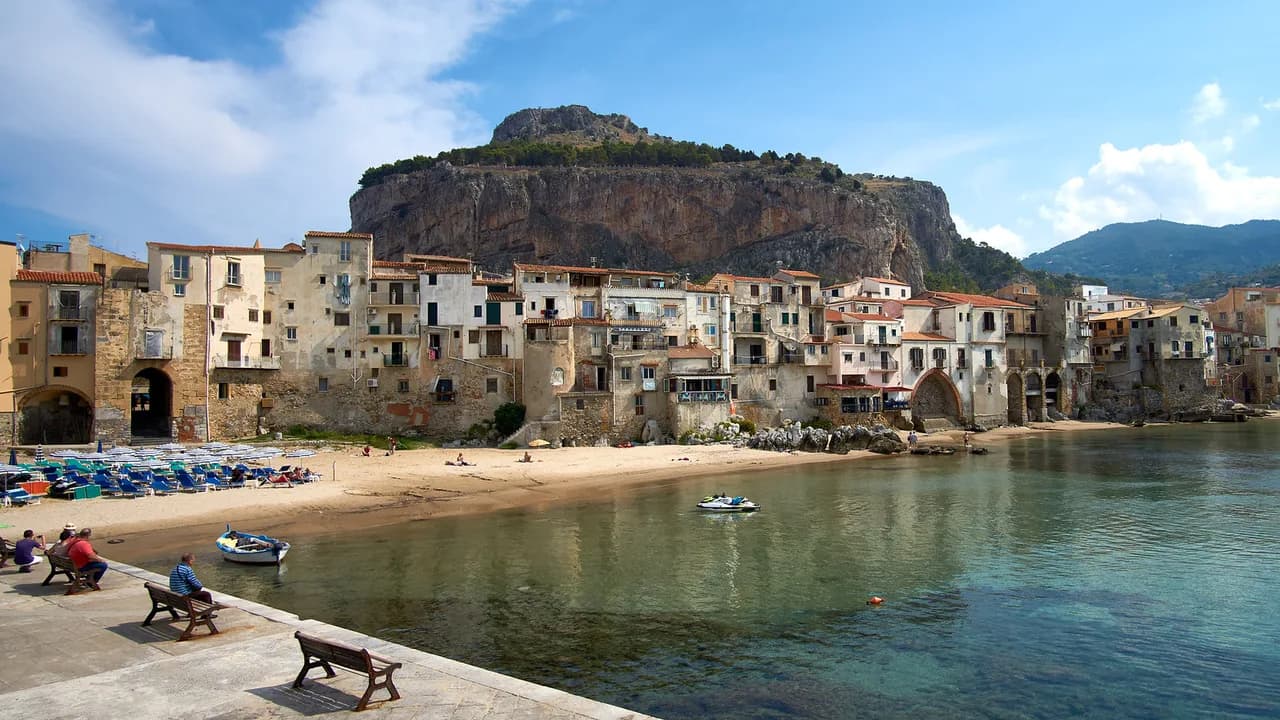
Cefalù sits on Sicily's northern coast, roughly forty miles east of Palermo. The historic centre is a warren of lanes around Corso Ruggero, the main street, and Piazza del Duomo, where the Norman cathedral dominates. One visitor source notes that the centre is about a five-minute walk from the seafront, which gives a sense of how tight the geography is.
The main beach, Spiaggia di Cefalù, forms a broad crescent backed by the town and the headland, and the Lungomare is the promenade where the evening passeggiata happens. Porta Pescara, the old gateway near the harbour, opens onto the smaller Spiaggia del Porto Vecchio. Outside this compact core, the town spreads into surrounding areas with larger hotels, villas and aparthotels. Some are set along the coast toward Mazzaforno, while others sit inland toward the Madonie foothills.
Trains from Palermo are reported by visitors to run roughly hourly and to take under an hour, but schedules vary by day, so check the Trenitalia website for current times. The station in Cefalù sits uphill from the beach, about a ten-minute walk, which matters if you arrive with luggage and book in the old town. For a room in the outskirts, it's best to arrange a taxi or confirm that your property offers a pickup.
The historic centre: lanes around Piazza del Duomo, Corso Ruggero and Porta Pescara
Staying in the historic centre means sleeping among narrow lanes, small osterias and the constant backdrop of the cathedral. The atmosphere is at its best early in the morning and after day-trippers leave, when the squares fill for the evening passeggiata. A self-guided walk through Cefalù's old town is easy on foot from any central B&B, which is the main argument for staying here: you are already inside the place you came to see. The hidden gems in Cefalù guide can help you plan quiet strolls.
Accommodation here tends to be small B&Bs, guesthouses and a handful of smaller hotels in historic buildings, rather than large resorts. Expect character and location over facilities such as pools or parking. Many properties are on upper floors without a lift, and rooms in older buildings can be compact, so ask about stairs, luggage storage and air conditioning before you book, especially for summer.
Drive into the centre with caution: visitors report that the old town has restricted traffic zones, or ZTL zones, making parking difficult. If you are arriving by car, plan to park outside the core and walk in. One source notes that you can park along the Lungomare, where a larger car park also serves the town, and that the walk to the beach and historic streets is short. Unless you have confirmed access as a guest, do not assume you can drive to the door of a property.
From these lanes, the main sights are within easy reach: the cathedral, the medieval washhouse known as Lavatoio Medievale, the Mandralisca Museum, the Norman-Aragonese palace of Osterio Magno, and Porta Pescara. Osterio Magno is used as an exhibition space, and one guide describes entry as free during temporary shows open to the public, with hours varying by show. You should confirm the current programme and access on the Comune di Cefalù website before planning a visit around it.
The seafront and main beach strip: Lungomare, lidos and the evening promenade
The seafront option puts the beach first. Along the Lungomare and the crescent of Spiaggia di Cefalù, you find a mix of beach clubs with sunbeds and parasols, stretches of free beach, and bars that come alive at sunset. In summer, the free sections fill early, so staying nearby lets you claim a spot before the crowds arrive. The Cefalù Beach Guide explains the different beach areas in more detail.
The trade-off is noise and activity: this is the liveliest part of town in high season. This suits people who want the beach and the evening passeggiata on their doorstep, but not those seeking silence. Accommodation along the strip ranges from seafront hotels to holiday apartments. Prices change with the season and demand, so compare current offers rather than relying on figures from older guides.
One note of caution: the beach club area is not all free. Visitors writing in 2026 reported being able to rent two loungers and an umbrella for a day, with prices reaching around thirty-five euros in high season, while other travellers paid less. Treat any figure you read as a rough guide and check the lido itself for current rates before you commit. The free public sections remain the budget option, but they are first-come, first-served.
This strip works well for beach-first visitors, families who want to walk to the sand, and anyone happy to trade quiet for convenience. It also suits travellers without a car, since the station and historic centre are both a short walk away. Just verify the exact address on a map, because some listings marketed as seafront sit beyond the main promenade.
Outside the centre: large hotels, resorts and aparthotels in the surrounding area
The third option is the surrounding outskirts, where many of Cefalù's larger hotels and aparthotels actually sit. Some lie a twenty-minute walk or more from the historic centre, while others are set further along the coast with pools, private beach access and parking. Travel writers warn that tempting resort photos often correspond to properties several miles outside town, so check the location carefully before booking.
What you gain is space and quiet: swimming pools, sea-view balconies, gardens and parking. What you lose is spontaneity, because most days start and end with a walk or drive into the centre. This can be a fine trade for families, for drivers on a Sicily road trip, and for anyone wanting to combine beach days with easy access to the Madonie mountains. It is less convenient for a short first visit built around the cathedral and old-town lanes.
Booking listings show how varied this category is: aparthotels such as Blue Bay, Horizon Suites and Hapimag Resort Cefalù appear alongside countryside properties such as Case Magliolo, and their listed distances from the old town vary widely. Cefalù aparthotel listings can help you see the range, but always cross-check the exact address and walking distance to the beach and to Corso Ruggero. If a listing says Cefalù, look at where it actually is on the map.
For the quietest corners, look at the coastal areas west of town toward Mazzaforno and Kalura, or the inland foothills toward the Madonie. If you have a car, a compact vehicle is easier on narrow roads and tight parking. If you do not, confirm that a taxi or shuttle can get you into town, especially in the evening when you may want to stay out late for dinner.
Practical booking checks before you reserve
Start with the map. Open the exact address from the property's own listing in a mapping app, then measure the walk to Piazza del Duomo, to your intended beach, and to the train station. Twenty minutes on foot is a pleasant stroll in the cool of the morning and a nuisance with luggage or after a late dinner. If a listing says Cefalù without a street address, ask the property for the location before you book.
Ask about the practical details that change the value of an aparthotel: air conditioning in summer, heating in winter, and whether the apartment is on a floor with a lift. If you are driving, confirm what parking is available and whether your property is inside a restricted traffic zone, because visitors report that the old town has ZTL zones. Drivers can park outside the centre along the seaside roads, but spaces fill in summer.
For stays outside the centre, confirm how you will get into town and back, especially at night. Some resorts offer shuttles and some are within walking distance along the coast road; others require a car. It is also worth checking if a property's pool or restaurant is open for your dates, since some seasonal facilities close outside high summer.
Matching the neighbourhood to your trip
For a first visit built around the cathedral, old town and short beach time, the historic centre suits best. A self-guided walk through Cefalù's old town takes in the squares, the medieval washhouse and the harbour, and you can always add a beach afternoon. Two nights here is enough to feel the town, though three gives time for a trip into the Madonie mountains.
For couples, the old town or the quieter ends of the seafront both work; the old town wins on atmosphere, and the seafront on views and easy swimming. For families, the outskirts with pools and parking are often more practical, if the walk or drive into town is acceptable. For beach-first visitors, the main beach strip is the obvious base.
Drivers should plan for parking and ZTL zones, and prefer a compact car on the narrow coastal roads. Travellers without a car can rely on the train for Palermo and on foot to explore the centre, but should check the station walk and train times for their days of travel. If your plans lean toward quiet corners, the hidden gems in Cefalù guide pairs well with an old-town base. For a different kind of day, consider our Cefalù rainy day indoor itinerary.
A sample two-night shape
A simple first visit could start in the old town for two nights. Use one morning for Piazza del Duomo, the cathedral and the lanes, an afternoon on the beach, and an evening on the Lungomare. Add the medieval washhouse and the Mandralisca Museum on a second day, and leave time for a sunset from the bastion at the north end of the old town.
If you have a third day, take a trip into the Madonie mountains or up the coast. Check ticket times and access directly with the sites you plan to visit, and plan the walk between them so you are not hurrying between the cathedral and the beach. For a focused plan, see our one day in Cefalù itinerary.
Choose the address that fits your mornings and evenings
In a town this small, the neighbourhood you choose shapes more of your trip than the hotel star rating. The historic centre gives you atmosphere and walkability, the seafront gives you the beach and the promenade, and the outskirts give you space, pools and parking at the cost of a walk or a drive. Decide which of these matters most to you, verify the actual address on a map, and confirm the practical details directly with the property before you book.
If you want a shortlist before you commit, start with the historic centre for a first visit, add the seafront if the beach is your main reason for coming, and choose the outskirts if you are bringing a car or travelling with a family. Then confirm current prices, access rules and any seasonal closures with the property or the relevant site. For related planning, see Cefalù Street Art and Artisan Workshops: A Craft Lover's Guide.
Frequently Asked Questions
Should I stay in Cefalù's old town or near the beach?
The old town puts you among the lanes around Piazza del Duomo, Corso Ruggero and Porta Pescara, with the main sights on foot. The seafront and Lungomare strip put you close to the beach and the evening promenade, but they are busier in high season. If you want atmosphere and easy sightseeing, choose the old town; if you want quick access to the sand to claim a spot early, choose the seafront. Either way, check the exact address on a map before booking.
Are the big hotels in Cefalù actually in the town centre?
Not always. Many of the larger hotels and resorts listed as Cefalù sit outside the centre, often around a twenty-minute walk away, and some are several miles from town. Rather than trusting the listing title, open the exact address on a map, measure the walk to Piazza del Duomo and to the beach, and ask the property directly if the location is unclear.
Do I need a car to stay in Cefalù?
Not for a stay concentrated on the old town and the main beach, which are easy to explore on foot. A car helps if you are staying in the outskirts, planning day trips into the Madonie mountains or arriving with a lot of luggage. If you drive, plan for parking outside the restricted traffic zones and a compact vehicle for narrow streets.
Where do you park if you drive to Cefalù?
Visitors report that parking in the historic centre is difficult and that the old town has restricted traffic zones. A practical approach is to park outside the centre, along the Lungomare and in larger car parks near the seafront, then walk in. Always check signs and any local rules, and confirm with your accommodation whether access or parking is available.
How do I avoid booking a Cefalù hotel that is far from town?
Before booking, copy the exact street address from the property's own listing into a map app and measure the walking distance to Piazza del Duomo, the beach and the station. If the address is vague, ask the property to confirm. Read the location description carefully, because some listings marketed as Cefalù are in surrounding coastal or countryside areas.
Sources
Continue exploring
More guides you'll find useful