Cefalù Rainy Day Itinerary: Indoor Plan for a Wet Day
Plan a wet day in Cefalù with a free cathedral visit, the Mandralisca museum and short covered stops, plus which outdoor sights to postpone until it clears.
On this page
Rain in Cefalù rarely cancels a trip, but it does rewrite the day. Instead of a beach morning and a harbour sunset, you string together short indoor stops around the old town and let the weather set the pace. This itinerary keeps the walking short and leaves room to wait out a shower over coffee rather than under an awning. A reasonable goal is three indoor stops and one long lunch, rather than a full checklist.
The plan below assumes you are staying in or near the historic centre and moving on foot. It separates what is free from what is ticketed, treats a couple of small sites as ten-minute pauses rather than destinations, and names the outdoor sights worth postponing. Where admission and hours vary by season, check directly with each venue the day before you go.
Why rain changes the rhythm of Cefalù
Cefalù is a compact town built around a Norman cathedral, a small historic grid and a seafront, so a wet day is less about finding one big indoor attraction than about arranging several short stops in a walkable line. The old town's core is the area around Piazza Duomo and Corso Ruggero, which is where you want to stay when the pavements are slick.
The trade-off is that you will not see the coast at its best. La Rocca's views, the beaches and the harbour pier all depend on clear weather, so accept early that those belong to another day and build a day that works under an umbrella. That decision alone removes most of the frustration from a rainy visit. A useful Yondli primer for the town's quieter corners is the hidden gems in Cefalù guide, though on a wet day most of those sites are better postponed than pursued.
Morning start: Duomo and Piazza Duomo
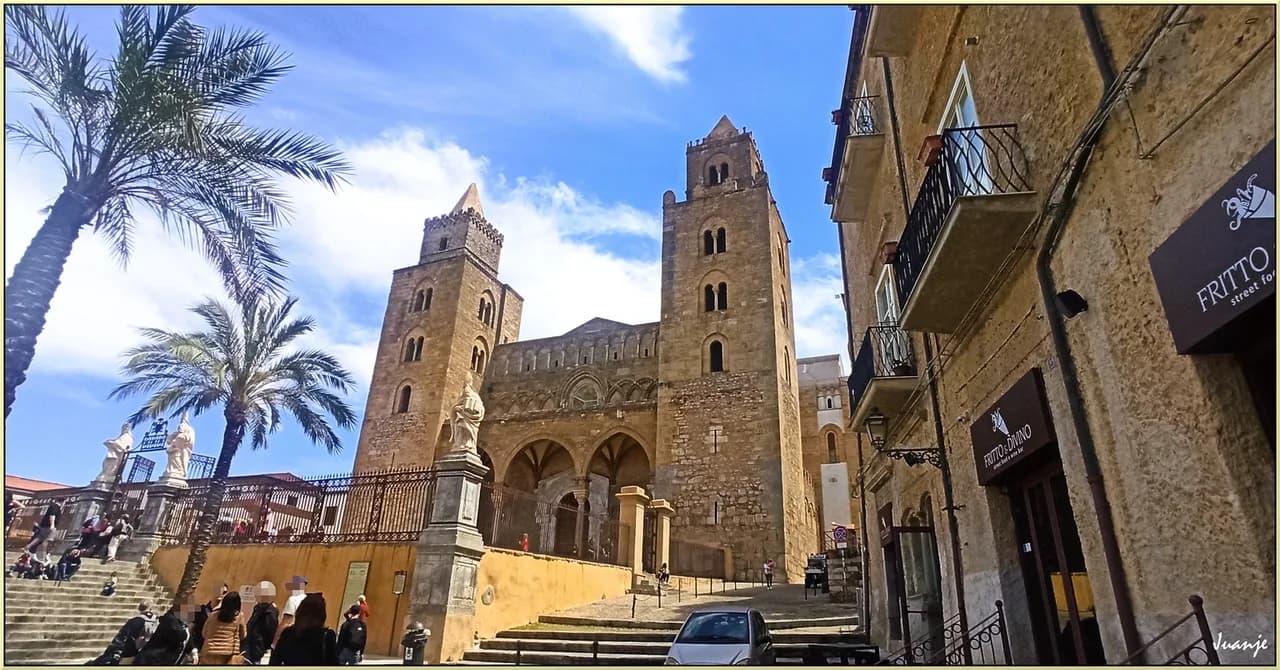
Begin at the cathedral on Piazza Duomo. Entering the church itself is free, while the mosaics of the Cristo Pantocratore are best appreciated from inside the nave rather than from the square, and the cathedral is the natural anchor for a wet morning because it is covered, central and does not require booking ahead. Travel writers describe the interior as free to enter, with separate paid itineraries for parts such as the towers and roof.
Be careful to separate the free interior from the paid visits. Several ticketed itineraries exist for the towers, the roof, the museum and the cloister, and the prices and combinations published by travel writers are not reliable as current rates. Ask at the ticket desk or check the cathedral's own information before paying, and skip the roof on a wet day when the view is the point.
Cefalù's cathedral square also works best early. Later in the day it fills with groups sheltering from the rain, so arriving close to opening gives you space to look at the mosaics without queuing.
Coffee in the piazza, and why timing matters
Piazza Duomo is lined with bars and small osterias, which makes it the obvious place to pause when a shower sets in. Sitting under the arcades or a covered terrace with a coffee is a legitimate part of the itinerary, not a delay, and it lets you watch the weather rather than fight it.
Keep the pause short in the morning so the museum still fits before lunch. A pastry and an espresso buys you twenty minutes, which is often exactly the length of a passing front.
Mid-morning: Museo Mandralisca and the Portrait of an Unknown Man
The Museo Mandralisca is the strongest indoor stop in town and the one reason a wet day in Cefalù can feel like a gift. Founded in the nineteenth century from the collections of Baron Enrico Pirajno di Mandralisca, it holds Antonello da Messina's small, arresting Portrait of an Unknown Man, painted around 1465, alongside Greek vases, coins, ceramics and a large shell collection.
Allow around an hour to see the whole collection rather than only the famous portrait; the archaeology and natural history rooms reward a slower pass and give you somewhere dry to be while a heavy shower moves through. The portrait itself is tiny, roughly 30 by 25 centimetres, so give it time rather than a glance. For a focused single-site guide, see the Museo Mandralisca Cefalù visitor guide.
Admission prices and opening hours change with the season, and published figures differ between sources, so confirm the current entry fee and daily hours on the museum's own site or by asking at the desk. In summer months the museum has historically stayed open into the evening, but do not plan around a remembered schedule.
Short covered stops: Lavatoio Medievale and Osterio Magno
Two smaller stops fit neatly around the museum without overfilling the day. The Lavatoio Medievale, a medieval wash house reached by a wide staircase and cut into the rock below street level, is a brief visit of perhaps fifteen minutes, best done in the morning when it is quieter and when a downpour matters less than it would on an exposed walk. For details on the site as part of a broader visit, the Lavatoio Medievale also appears in the hidden-gems guide.
Osterio Magno, a fortified palace on Corso Ruggero associated with King Roger II, is another short stop rather than a headline sight. Travel listings have quoted opening windows such as mid-morning to early afternoon and late afternoon to early evening, but these are third-party figures and can change, so verify before making a special trip.
Treat both as pauses between longer stops rather than as reasons to cross town in the rain. If either is closed, you lose very little and can move straight to lunch.
Lunch timing in the historic centre
Sicilian restaurant hours punish late planners. Travel writers note that many restaurants in Cefalù do not open before 7 PM in the evening, and lunchtime opening and closing hours are strict, with few options open after 2 PM or before 7:30 PM. A wet day is the wrong day to wander vaguely looking for food at four o'clock, so plan lunch for shortly after the museum and treat it as the day's anchor.
Reserving is worth the phone call or message in wet weather, when everyone in town is looking for an indoor table at the same time. Choose a restaurant with a proper dining room rather than a terrace, and ask about covered seating if the forecast is uncertain.
The town's food is not only a summer affair. Local cooking draws on both the Tyrrhenian catch and the Madonie mountains behind the town, so a colder, wetter day is a reasonable moment for stewed fish, Sicilian vegetable dishes and the cheeses of the interior. One local restaurant's own account describes winter seafood dishes such as baby octopus Luciana style and grilled bluefin tuna with Palermo-style caponata.
Afternoon options when the rain persists
If the rain settles in, spend the afternoon browsing the ceramic workshops and small shops that line the old town's alleys. Cefalù has a genuine tradition of painted ceramics, and a shop visit is a dry, low-commitment way to spend an hour while the weather decides what it is doing. Travel writers specifically mention the hand-painted pieces sold at Grafidea F.lli Saia srl as one of the town's artistic ceramics workshops.
Alternatively, treat the afternoon as a slow passeggiata under an umbrella, keeping to the narrow streets where buildings block the wind. This is a good moment for the self-guided walk through the old town, but shorten it freely if the rain turns heavy.
What to postpone: La Rocca, beaches, the harbour and the Bastione
La Rocca is the first thing to postpone. The climb to the castle ruins and the Tempio di Diana follows a rocky, exposed path, visitors are expected to wear closed shoes, and the reward is a view that cloud and rain will spoil. Save it for a clear morning rather than testing the rock in slippery conditions.
The beaches and the old harbour pier at Porta Pescara belong to dry weather too. The lungomare and the lidos are pleasant on a mild, overcast day only in the sense that they are quiet; in steady rain they offer no shelter and no view worth the soaking.
Likewise, move the Bastione di Capo Marchiafava sunset viewing to another evening. Travel writers note that it is free to visit and is a favoured spot for sunset and even wedding photos, which is exactly why it is wasted in drizzle.
A wet-day alternative in Messina, only if you are flexible
Some travellers use a rainy day to change city rather than change plans. Messina, across the strait, has its own indoor options, including the regional museum with works by Caravaggio and Antonello da Messina, and travel writers note that the city's museums and galleries make a sensible refuge on a wet day.
Only consider this if you already have a car or are comfortable rearranging train plans, because a city swap consumes the day. For most visitors based in Cefalù, the walkable indoor plan in town is the better use of a wet day.
Getting around, parking and where to stay
If you are staying in the historic centre, the whole itinerary above is walkable and you never need the car. Travel writers repeatedly flag restricted traffic zones and awkward parking in the centre, and that friction is far worse when you are wet, tired and circling for a space.
If you arrive by car, park outside the centre and walk in, accepting a short wet walk in exchange for not fighting the ZTL. If you arrive by train, the station sits uphill from the beach, which is a reminder to pack a jacket you can actually walk in.
Practical rain-day kit and checking ahead
Pack closed shoes with grip, a light waterproof layer and a small umbrella. La Rocca's gatekeepers are known to turn away visitors in flip-flops, and the town's polished stone streets are slippery, so footwear matters even if you never leave the centre.
Check opening hours the day before, not the morning of. Hours at the smaller sites and the museum vary by season and by year, and none of the schedules quoted in older travel writing should be trusted for a specific date. A phone call or a look at the official site is the only reliable check.
A Wet Day Done Well
A rainy day in Cefalù works when you stop treating it as a failed beach day. Anchor the morning on the cathedral and the Mandralisca museum, protect a proper lunch slot, and keep the afternoon flexible enough to trade a wet street for a coffee.
Confirm current hours and admission before you set out, postpone La Rocca and the coast without regret, and the town's small scale becomes an advantage rather than a limitation.
Frequently Asked Questions
Is the Cefalù cathedral free to enter?
The church interior is generally free to enter, while separate ticketed itineraries cover parts such as the towers, roof and museum areas. The prices and combinations change, so ask at the ticket desk or check the cathedral's own information rather than relying on figures in older articles.
How long does it take to visit Museo Mandralisca?
Allow about an hour for the full collection, which includes the Portrait of an Unknown Man along with archaeology, ceramics and natural history. If you only want to see the portrait, you can move faster, but the museum is the best shelter in town on a wet day, so there is little reason to rush.
What can you do in Cefalù when it rains?
Focus on the cathedral, the Mandralisca museum, brief stops at the Lavatoio Medievale and Osterio Magno, and browsing ceramic workshops in the old town. Plan lunch for early afternoon, since many kitchens close between lunch and dinner, and postpone the beach, the harbour and hilltop viewpoints.
Should you still hike La Rocca in the rain?
No. The path is exposed and rocky, closed shoes are required, and the reward is a view that rain and cloud will hide. Wait for a clear morning, start early in hot weather, and check opening hours and last admission times before setting out.
How do you get to Cefalù from Palermo on a wet day?
The train is the simplest option, since the station is within walking distance of the centre and you avoid parking and restricted traffic zones. Check current timetables with the rail operator on the day, and allow for a short uphill walk from the station into town.
Do the museums and churches close when it rains?
Rain alone does not normally close these sites, but seasonal hours and occasional closures do change. Verify hours and admission for each venue the day before your visit, either on its official website or by phone, rather than relying on schedules published in earlier years.
Sources
Continue exploring
More guides you'll find useful