Giugno Pisano Guide: Pisa's June Festival and Events
Giugno Pisano brings Pisa's patron-saint feasts, historical parades and regattas each June. Learn what the main events are and how to plan around them.
On this page
Pisa's June is not a single festival with one programme but a cluster of civic and religious traditions that unfold across the city, generally known as Giugno Pisano. Local tradition groups the core June celebrations around the feast of Saint Ranieri, and Pisa Online's folklore page names the main attractions outright: the Luminara di S. Ranieri, Il Gioco del Ponte, the Historical Regatta of Saint Ranieri and the Regatta of the Ancient Maritime Republics. Planning around these celebrations requires understanding what each event is before you commit to particular evenings.
The second useful starting point is the city's official tourism site, which publishes an events calendar alongside itineraries and practical visitor information, and keeps that calendar refreshed through the year. Those named events are the anchors of the month, but their format and timing vary, so treat any list of names as a starting point rather than a fixed schedule.
What Giugno Pisano Is, and Why June Matters in Pisa
Giugno Pisano is best understood as a season of civic identity rather than a ticketed festival. Pisa Online describes June as the month of patron-saint feasts, historical celebrations and pageantry, with traditions that have deep roots in the city. For visitors, that means the atmosphere changes: streets and riverbanks become stages, and some evenings are shaped by processions or regattas rather than by museum opening times.
Because the celebrations are linked to the feast of Saint Ranieri, the patron saint of Pisa, they sit within a religious calendar as well as a civic one. The same folklore listing notes that some of these celebrations are known well beyond the province, which helps explain why June draws Italian visitors as well as international ones. If you are choosing when to visit Pisa, read the Best Time to Visit Pisa: Seasons and Avoiding Crowds guide alongside the festival calendar so you can weigh atmosphere against quieter periods.
Treat the Calendar as a Moving Target, Not a Fixed List
The most important planning rule is simple: do not assume fixed dates for any Giugno Pisano event. The city tourism site carries an events section that is updated with dated listings through the year, and it is the sensible place to confirm what is actually scheduled. Folklore pages explain the traditions themselves but are not programme documents, and a page describing a past edition should never be read as confirmation of the current year.
As an editorial suggestion for 2026, sketch your trip roughly around the second half of June only after the tourism calendar shows what is scheduled, since the feast of Saint Ranieri and the historical events cluster around that period by tradition. Keep your itinerary loose: leave at least one evening unplanned so you can follow whatever is actually announced. If the calendar shows nothing confirmed for your dates, plan a normal Pisa visit and treat any festival activity as a bonus.
The Named Core Events and What They Are
Pisa Online lists four main attractions under Giugno Pisano. The Luminara di S. Ranieri is a candlelight celebration, traditionally an evening of lights and processions. Il Gioco del Ponte is a bridge contest, a historical competition between opposing sides of the city. The Historical Regatta of Saint Ranieri is a river regatta on the Arno, while the Regatta of the Ancient Maritime Republics is an inter-city rowing contest involving the historic maritime republics.
These are described as traditions rather than as a single event with one ticket. The folklore listing frames them as pageantry and popular participation, which is a useful signal: you are choosing among evenings and formats, not buying a seat at one show. For a slower look at the city between festival moments, the hidden gems in Pisa guide points to corners that stay calm on ordinary days.
Because the traditions are civic, their format can change from year to year, and the tourism site does not present a multi-year schedule. The events listing is the place to verify which events are scheduled in 2026 and whether they carry any visitor instructions. Do not build a trip around a regatta route or viewing point you have read about elsewhere, because routes and access can be adjusted.
What Each Tradition Actually Involves
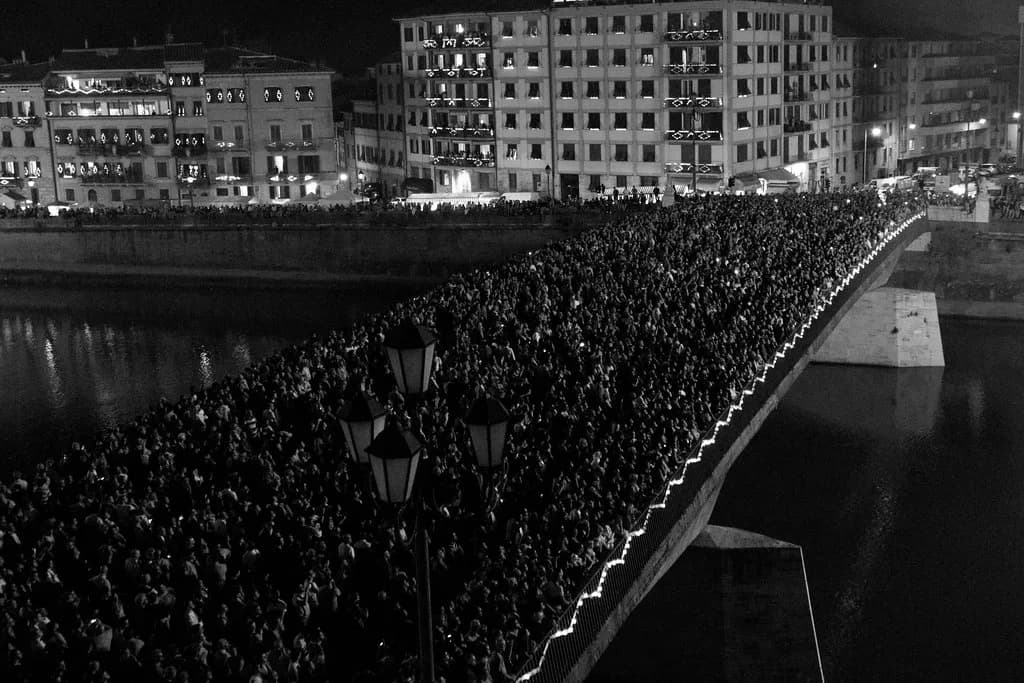
The Luminara is easiest to picture as a city lit by candles and lamps, with religious and civic significance attached to the feast of Pisa's patron saint. The Gioco del Ponte is a contest between two halves of the city, presented as a historical re-enactment with processions and teams. Both are evening or late-afternoon traditions in spirit, though the exact schedule is published closer to the time.
The two regattas are water events, tied to the Arno and to Pisa's maritime identity. The Historical Regatta of Saint Ranieri is associated with the June feast, while the Regatta of the Ancient Maritime Republics brings crews from the historic maritime cities together. For visitors, the practical takeaway is that riverbanks and bridges can become busy on regatta days, so plan a flexible afternoon rather than a tightly scheduled one.
Events That Are Not Confined to June
Not everything in Pisa's historical calendar belongs to Giugno Pisano. The Palio della Balestra, a crossbow competition, and the Trophy of the Sbandieratori, a flag-wavers' contest, are described as taking place in various parts of the city and are not limited to June. If either interests you, look for them separately from the June programme rather than assuming they are part of the main festival month.
This distinction matters for planning, because it widens the window in which you might see historical pageantry in Pisa. A visitor travelling outside June should not conclude that the city is quiet on the tradition front. Check the tourism calendar for the months you plan to visit, and treat June as the densest cluster rather than the only moment for these displays.
What Changes for Visitors During Festival Evenings
Festival evenings shift the centre of gravity of the city toward its historic streets and the Arno. The Pisa at Night: Evening Walks, Dining and Atmosphere guide is a useful companion for understanding how the city feels after dark, but during Giugno Pisano some of those routes will be shared with processions and spectators. Expect denser movement around the river and the historic centre, and accept that a quiet-centre evening may simply not be available on certain dates.
The practical response is to separate your plans into two layers: fixed bookings and flexible wandering. Keep the fixed layer light on festival evenings, and let the flexible layer follow what you find. If you want a calm day, use the morning for a guided visit to the Piazza dei Miracoli and the afternoon for a quieter neighbourhood or a day trip, then decide in the evening whether to join the crowds. A single attraction guide such as the Piazza dei Miracoli visitor guide keeps that morning focused on one place rather than a checklist.
Central or Outside the Centre? The Accommodation Trade-Off
Staying central puts you inside the atmosphere, often within walking distance of evening events, but it also means noise, fuller streets and less predictable movement. Staying outside the historic core, or in a quieter part of the city, gives you calm and easier returns at night, but you will need to plan how you get in and out on festival evenings. Neither choice is wrong; the trade-off is atmosphere versus rest.
If your priority is seeing the traditions, choose a central base and accept that some evenings will be lively. If your priority is a slow, restful visit, choose a quieter base and treat the festival as a series of evening outings. Either way, avoid treating a festival night as a normal night for a long, quiet dinner in the historic centre, because restaurant rhythms and street traffic can shift.
How to Verify the Programme Without Invented Dates
The city tourism site is the first place to check, because its events section carries dated listings published by the municipality. Read the listings carefully and note whether an event is described as confirmed, recurring or cancelled. If an entry is missing or vague, do not fill the gap with dates from a blog or a past edition; instead, contact the tourism office or check again closer to your travel date.
Folklore pages are valuable for understanding what an event is, but they are not a live programme. Use them to decide which traditions appeal to you, then match your interests to the official calendar. For general orientation, the Pisa Attractions hub covers the city's main sights, which can fill the daytime hours around festival evenings.
Slow Travel: Use Festival Evenings for Spectacle, Daytime for Quiet
The most rewarding way to experience Giugno Pisano is to let it structure your evenings while keeping your days slow. Festival events are concentrated in the evening and around the historic centre, so mornings are a good time for the Piazza dei Miracoli and for the quieter corners covered in the hidden-gems guide. This rhythm keeps you from spending the whole day in crowds and gives you space to appreciate both the spectacle and the ordinary city.
If you have several days, consider using one of them for a day trip so that your festival evenings stay fresh. Lucca and the coast are within reach, and the Pisa day trips guide can help you choose a destination that fits the season. Just keep the return flexible on festival nights, because streets around events can be busier than usual.
Pairing the Festival With a Normal Pisa Visit
Many visitors come to Pisa for the Piazza dei Miracoli and leave without exploring the rest of the city. Giugno Pisano is an opportunity to see a different side of Pisa, but it works best when combined with the usual sights rather than replacing them. Reserve the morning or early afternoon for any ticketed interiors, and keep evenings open for whatever the festival brings.
Use the tourism site to check whether any festival activity affects access to specific areas, and plan your sightseeing accordingly. If you are arriving by train, the Getting Around Pisa: Arriving, Transport and Walking guide can help you connect the station with the centre while keeping your plans flexible. Avoid over-scheduling on days when a major evening event is likely, since the afternoon may be affected by preparations.
Mistakes to Avoid
The most common mistake is assuming that Giugno Pisano is a single ticketed spectacle with one published schedule. In reality it is a collection of traditions, some civic and some religious, each with its own format. Another mistake is trusting dates published for a previous year; always check the current tourism calendar before booking travel around a specific event.
A third mistake is over-scheduling on peak evenings. If you plan a long dinner, a museum visit and a regatta in one evening, you will likely have to abandon something. Leave slack, carry water, and decide on the day which tradition to follow. Finally, do not assume that the Palio della Balestra or the flag-wavers' trophy are part of the June programme; they take place in various parts of the city and are not limited to June.
Plan Your Visit
Giugno Pisano is best treated as a civic tradition rather than a single show, so plan loosely and verify the programme with the city tourism office before you commit. Build your daytime plans around the city's main sights and quieter corners, then leave evenings free to follow the lights, the processions or the regattas if they happen during your stay.
Whether you stay central for atmosphere or outside the centre for calm, the guiding principle is the same: fewer fixed plans and more room to adapt. If the calendar does not confirm an event for your dates, a normal Pisa visit is still worthwhile, and you may find that the city's quieter moments are just as memorable.
Frequently Asked Questions
What is Giugno Pisano?
Giugno Pisano is the general name for Pisa's cluster of June traditions, including the feast of Saint Ranieri and related historical events. It is not a single festival with one ticket or one venue, but a season of civic and religious celebrations.
Which events make up Giugno Pisano?
The named core events are the Luminara di S. Ranieri, Il Gioco del Ponte, the Historical Regatta of Saint Ranieri and the Regatta of the Ancient Maritime Republics. The Palio della Balestra and the flag-wavers' trophy take place in various parts of the city and are not limited to June.
When is Giugno Pisano?
The traditions are concentrated in June and clustered around the feast of Saint Ranieri. Exact dates vary, and the city tourism site publishes the current programme. Do not rely on previous years' dates when planning travel.
Is Giugno Pisano free to watch?
Published folklore descriptions present these as civic traditions with popular participation, but they do not set out ticket prices or booking requirements. Check the tourism office's current listings or contact the office directly for any visitor arrangements.
Should you avoid Pisa in June because of the festival?
Not necessarily. June brings atmosphere and evening activity, but it can also mean busier streets around events. If you prefer quiet, plan mornings for the main sights and keep your evenings flexible, or consider staying outside the historic centre.
How do you check the current year's programme?
Start with the Comune di Pisa tourism site, which publishes dated event listings. Read each entry for confirmation status, and re-check closer to your travel date. Folklore pages explain the traditions but are not a live schedule.
Sources
Continue exploring
More guides you'll find useful