Hidden Gems in Palermo: Lesser-Known Places Worth Seeking Out
Go beyond Palermo's headline sights with lesser-known oratories, roofless ruins, quiet gardens and neighbourhood markets, plus honest advice on what to skip.
On this page
Most first-time visitors to Palermo compress the city into the Duomo, the Teatro Massimo and a plate of street food, then leave. That plan is fine, but it misses the texture that makes Palermo worth a slower day: small oratories covered in white stucco, a church with no roof, a botanical garden with benches, and markets whose characters differ sharply from one another.
Treat "hidden gem" honestly here. None of these places is secret, and residents use them constantly; they are simply less visited, less crowded or less covered in mainstream itineraries than the headline sights. A few are free to approach from the street while interiors or collections may be separately ticketed, so budget your time rather than assuming one pass covers everything.
Oratorio del SS Rosario in Santa Cita: Serpotta's White Stucco
If you see one lesser-known interior in Palermo, make it this oratory, where Giacomo Serpotta carved the walls into a swirl of angels, cherubs and condemned souls in white stucco. Adventurous Kate notes that the oratory rarely appears in Palermo travel guides despite its quality, which suits travellers who want a short, intense stop rather than another vast nave. Expect a compact space rather than a museum circuit, and give yourself time to read the walls, which are divided into the Joyful, Sorrowful and Glorious Mysteries.
The oratory sits near the church of San Domenico, where a second stucco oratory of the same name stands behind the church, making a natural pairing on foot. Check locally whether the interior is open when you arrive, since small religious spaces can close for services or restoration; a door-to-door walk costs nothing even if the interior is shut.
Kalsa District: A Calmer Way Into Palermo
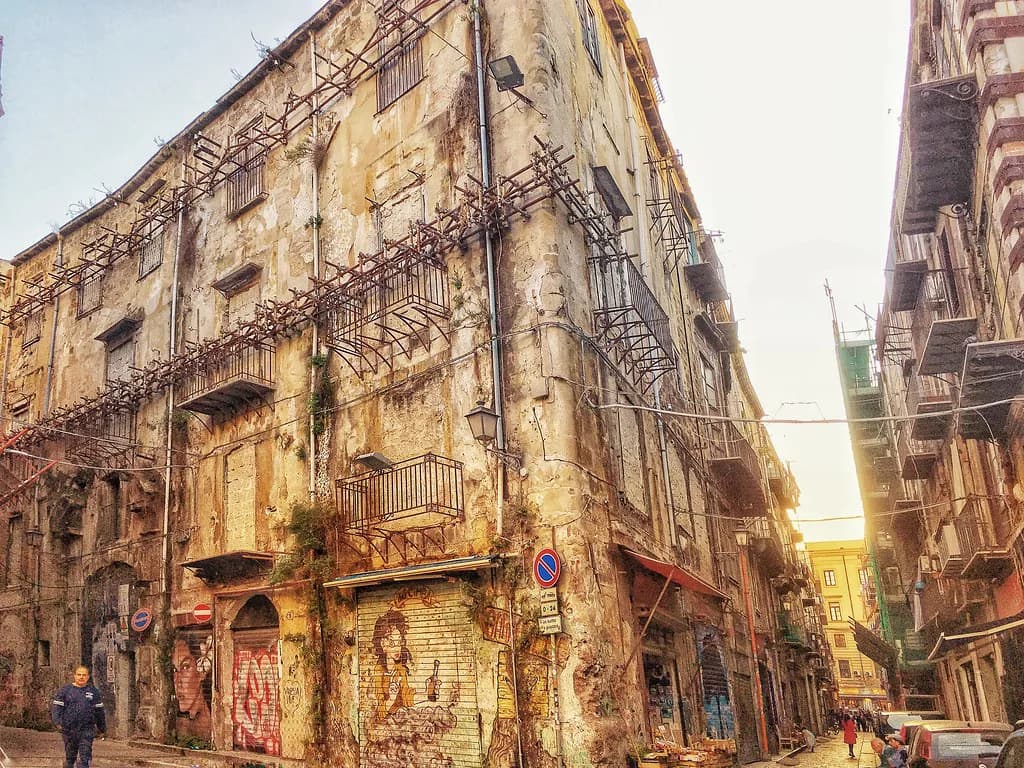
South-east of the central axis, Kalsa is one of Palermo's oldest quarters and reads as noticeably less crowded than the Quattro Canti area, according to The Good Life Abroad. That calm is the draw: narrow lanes, small churches, corner shops and courtyards reward aimless walking more than a checklist, and a writer who stayed in the neighbourhood describes mornings and evenings unfolding on the street rather than in museums.
Use Kalsa as a slow half-day rather than a sightseeing sprint. Pair its lanes with the waterfront edge of the old town, keep an eye on uneven paving and passing scooters, and leave room for an unplanned coffee stop. If you want structure first, a self-guided historic centre walk can orient you before you wander off the marked route.
Santa Maria dello Spasimo: A Roofless Church as a Venue
Santa Maria dello Spasimo is a former church whose nave lost its roof, and it now serves as an open-air cultural space for concerts, exhibitions and events, as described by The Good Life Abroad. Go for atmosphere rather than a conventional sightseeing checklist: the value is standing inside a skeletal historic shell that still hosts contemporary life. Because programming changes, check what is on before making it the anchor of your day; the space itself can be appreciated in a short visit.
Orto Botanico and Palazzo Abatellis: Two Quieter Stops
The Orto Botanico di Palermo offers a different tempo entirely: a garden to walk slowly, with benches for resting between beds of exotic and Mediterranean planting, and it is described as a tranquil oasis with plenty of seating. It suits anyone who needs a break from church interiors and market noise, and it is easy to combine with the Kalsa area on foot. Treat it as a pause rather than a highlight reel, and bring water in warm months.
A short walk away, Palazzo Abatellis houses the regional gallery of Sicily with medieval and Renaissance works, and it is often overlooked by visitors heading straight for the cathedral, according to the same guide. Slot it into an afternoon when you want air-conditioned calm and a collection you can see without queueing behind tour groups. Separate ticketing applies to the gallery, so do not assume it is included with any church visit.
Three Markets, Three Personalities
Ballaro is the largest and most full-on of Palermo's outdoor markets, sprawling across streets in a diverse central neighbourhood with vendors calling out prices and food fried on the spot. Along Dusty Roads describes it as the largest, oldest and most famous of the three, and it is the one to choose if you only have time for a single market. It is best visited in the morning when the stalls are stocked and the atmosphere is at full volume. Bring small change and do not wear your best shoes.
Mercato del Capo, tucked behind the Teatro Massimo, is smaller, more contained and especially strong on seafood and produce; morning is when it makes most sense, per Along Dusty Roads. La Vucciria has changed character: Adventurous Kate notes fewer day stalls and a stronger evening identity built around drinks and fried snacks in the lanes around Piazza San Domenico and Piazza Caracciolo. If you want the market-day version of Vucciria you may be disappointed; if you want an aperitivo start to the night, it works.
Street food quality varies from cart to cart, so note the stall when you find a good sfincione or panelle and buy another before moving on. Market trading patterns shift by day and season, so confirm current timings locally rather than relying on any fixed schedule you read online.
Lesser-Known Church Stops Around the Centre
Two small churches side by side in the centre, San Cataldo and La Martorana, pack in more visual variety than many larger sites: red Arab-influenced domes at San Cataldo, Byzantine mosaics and a Baroque marble altar at La Martorana, as Adventurous Kate describes. Nearby, San Giovanni degli Eremiti pairs more red domes with a green courtyard that the same writer calls a kind of walled garden in the middle of the city. Treat each as its own visit; do not assume a single ticket covers the group.
Viewpoints and Pauses Without a Queue
Quattro Canti, the four-cornered Baroque intersection at Corso Vittorio Emanuele and Via Maqueda, is free to stand in and rewards a few minutes of looking up at the statues and fountains rather than a guided stop. Porta Nuova, the old city gate near the Royal Palace, is similarly a photograph-and-move-on moment, not a ticketed attraction. Between them, a rooftop pause above Piazza San Domenico gives you a view over the market quarter without committing to a full meal.
Beyond the Centre: Catacombs, Monte Pellegrino and Mondello
The Capuchin Catacombs hold thousands of preserved bodies and are not for everyone, but they offer a genuinely different half-day from churches and markets, as Adventurous Kate notes in her round-up. Combine the visit with Monte Pellegrino above the city if you want a change of air and a view back over the bay. Check current visiting arrangements before you go, since catacomb access is controlled and can change.
Mondello Beach is within the city limits and easy to reach, but Adventurous Kate warns it is busiest in high summer, while winter leaves it to walkers and kitesurfers. For a calmer beach visit, aim for the shoulder months rather than August. Do not assume facilities, lifeguards or rentals are operating; confirm locally before setting out.
Practical Decisions for a Slower Visit
Palermo is best covered on foot, and the historic centre stacks several of these stops within a walkable loop, but cobblestones and narrow lanes make comfortable shoes non-negotiable. Buses and taxis fill gaps for longer hops, and planning rest breaks matters more than squeezing in one more church. Build in slack for the heat in summer and for the afternoon lull when smaller interiors may close.
Book only what genuinely needs booking. Small oratories and gardens usually work on a turn-up basis, while major sites with timed entry are better reserved ahead in high season. For a structured comparison of the headline sights, the Palermo attractions hub gathers individual visitor guides so you can decide what deserves your paid time and what you can save for a return trip. For wider planning, see Palermo Attractions: Visitor Guides to 15 Sights.
What to Skip When Time Is Short
With a single day, resist the urge to see everything. Choose one market in the morning, one strong interior such as the Santa Cita oratory or the Palatine Chapel, and one pause such as the Orto Botanico or a waterfront walk. A Palermo in one day itinerary can sequence those pieces without turning the day into a forced march.
With two days, add Kalsa and Santa Maria dello Spasimo, and keep the markets as experiences rather than shopping errands. A Palermo in two days itinerary can absorb the slower stops without dropping the essential sights.
Judge quietness on the ground rather than by reputation: a courtyard with benches is genuinely restful, while a famous small church can still be busy at midday. Check whether an interior is open when you arrive, and accept that some of the best moments in Palermo are unbooked pauses rather than ticketed visits.
A Slow Half-Day Linking the Quiet Stops
A practical sequence for a slow morning runs from the centre's stucco oratory to the Kalsa lanes, then into the Orto Botanico and Palazzo Abatellis before an early market lunch. Keep the route flexible, check interior opening times on the day, and let a coffee stop or an unexpected courtyard extend the walk.
The point of seeking out Palermo's lesser-known places is not to collect obscurity but to vary the rhythm of the trip: a dark catacomb, a bright white oratory, a roofless nave and a noisy market all belong to the same city. Wander first, then use the city guides to fill in the detail.
More Palermo guides
- A Self-Guided Walk Through Palermo's Historic Centre
- Albergheria Neighbourhood Guide
- Best Time to Visit Palermo
- Day Trips from Palermo
- Free Things to Do in Palermo
- Getting Around Palermo and Arriving from the Airport
- Kalsa District Guide
- Palermo in One Day
- Palermo in Three Days
- Palermo in Two Days
- Politeama and the Liberty Quarter
- Sicilian Food in Palermo
- Where to Stay in Palermo
- Catacombs of Porta d'Ossuna
- La Zisa Visitor Guide
- Martorana Church Visitor Guide
- Museo Archeologico Regionale Antonio Salinas
- Norman Palace and Palatine Chapel in Palermo
- Oratory of San Lorenzo Visitor Guide
- Palazzo Abatellis Visitor Guide
- Palazzo Chiaramonte-Steri
- Palermo Cathedral Visitor Guide
- San Giovanni degli Eremiti
- Teatro Massimo Visitor Guide
- Vucciria Market in Palermo
Frequently Asked Questions
What are the best lesser-known places to visit in Palermo?
Consider the Oratorio del SS Rosario in Santa Cita for its white stucco, Santa Maria dello Spasimo for its roofless nave and cultural events, the Orto Botanico for a quiet garden walk, and Palazzo Abatellis for the regional art collection. Kalsa is the neighbourhood to wander when you want fewer crowds than the central axis. All are established places rather than secrets, so expect other visitors at peak times.
Is Palermo's Kalsa district worth exploring?
Yes, if you want a calmer counterpoint to the Quattro Canti and cathedral area. Kalsa is one of the oldest quarters, and its narrow streets, small churches and courtyards reward unhurried walking rather than a checklist. Wear comfortable shoes for uneven paving and keep an eye out for scooters in the lanes.
Are Palermo's markets touristy or authentic?
They are working markets that tourists also visit, and each has a different feel. Ballaro is the largest and loudest, Capo is smaller and strong on seafood and produce, and Vucciria has shifted toward evening drinks and snacks with fewer daytime stalls. Go early for the market atmosphere, bring small change, and confirm current trading patterns locally.
What is there to see at Santa Maria dello Spasimo?
The main draw is the roofless former church itself, a historic shell now used for concerts, exhibitions and other cultural events. Visit for the atmosphere rather than a conventional museum circuit, and check the current programme before planning your day around it.
Is the Orto Botanico in Palermo worth a visit?
It is worth it if you want a slower, greener pause between churches and markets. The garden offers space to walk and benches to rest, and it combines easily with the Kalsa area and Palazzo Abatellis. Bring water in warm weather and treat it as a breather rather than a headline sight.
Which Palermo sights can you skip if you only have a day?
With one day, skip the outlying catacombs and beach and concentrate on the centre. Pick one market in the morning, one strong interior, and one pause such as a garden or waterfront walk. Leave secondary churches and the regional gallery for a longer stay rather than rushing them.
What unusual things can you do in Palermo beyond churches?
Look for a puppet performance, which is a long-standing Sicilian tradition, or spend an evening in the Vucciria lanes where drinks and fried snacks take over from daytime stalls. The Capuchin Catacombs offer a very different kind of visit, and the botanical garden gives you a quiet hour outdoors. Confirm current programming and access before you go.
Sources
Continue exploring
More guides you'll find useful