Palermo in 3 Days: A Practical Itinerary With One Day Trip
Plan three days in Palermo with markets, Via Vittorio Emanuele, Kalsa evenings and one day trip. Practical choices, trade-offs and what to skip when time is short.
On this page
Palermo rewards patience more than speed. A three-day plan works best when it treats the city as a sequence of moods rather than a checklist: a loud market in the morning, a long shaded walk in the afternoon, a neighbourhood table in the evening. The structure below is a suggestion, built around one ticketed interior per day and one escape from the city at the end.
Before booking anything, make the main structural decision: whether Day 3 is a day trip or a slower city day. Everything else in this itinerary tightens or loosens around that choice, and deciding it early stops you from stacking too much into the two city days. For the wider menu of escapes, see the guides to day trips from Palermo.
Before You Go: Base, Pace and the Day-Trip Decision
Stay in or near the historic centre, close to the Via Vittorio Emanuele axis and within walking distance of the Kalsa. That placement puts the markets, the cathedral and the seafront in one continuous zone, so you can drop back to your room between a morning market and an afternoon walk instead of crossing the city repeatedly.
Three days is a city-break length, not a full exploration of the island's west. If you want the itinerary to be shorter, the two days itinerary strips out the day trip and concentrates on the centre; adding a fourth day is mainly useful if you want both a full-day escape and a relaxed neighbourhood afternoon.
Treat the Day 3 escape as a yes-or-no question settled in advance. Mondello is the lightest option because it stays within the city's own coastline; Monreale, Cefalù and Segesta each consume a large share of the day, so pick one and do not plan a second paid attraction for that same evening. Check current transport options on the official tourism site rather than relying on outdated blog advice.
For arrival logistics and the practical business of moving around once you are here, sort out your airport transfer and walking assumptions before Day 1 begins, so the first morning is not spent on admin.
Day 1 Morning: Choose Markets by Appetite, Not by Ticking All Three
Palermo's three historic markets each serve a different purpose, and trying to cover all of them properly in one morning is a mistake. Ballarò is the largest and oldest, rowdy and still primarily a working market with stallholders calling their pitches; Il Capo, tucked behind Teatro Massimo, is compact, seafood-heavy and easy to combine with a later walk; Vucciria is photogenic but functions more as a nightlife zone than a daytime food market.
Go early, before both the heat and the crowds peak. Markets are generally described as Monday-to-Saturday affairs, but hours can shift by stall and season, so confirm on the day rather than building your morning around a fixed closing time. Carry small change for spontaneous snacks, and treat a good sfincione or arancini stop as breakfast rather than an add-on.
If you only visit one market, pick Ballarò for atmosphere and Il Capo for a calmer, more food-focused browse. Save Vucciria for an evening drink, when the piazzas around it come alive; visiting at midday often disappoints first-time visitors expecting a full market.
Day 1 Afternoon: Walk Via Vittorio Emanuele From Sea to Cathedral
The old main street, locally called Càssaro, runs almost in a straight line from the waterfront toward Porta Nuova and holds a remarkable share of the city's landmarks. Start near the Via Roma junction and walk toward the Baroque Fontana Pretoria, known locally as the Square of Shame for its nude statues, then continue through Quattro Canti, the four-sided square whose facades are designed to catch the sun at any hour.
Near the fountain you can detour into La Martorana, with its gold Byzantine mosaics, San Cataldo with its three red domes, and Santa Caterina d'Alessandria, whose ornate interior and roof terrace reward a stop. Church entry and the separately ticketed interiors, roofs and terraces are not one combined ticket, so decide at each door whether you are going in or just admiring the facade.
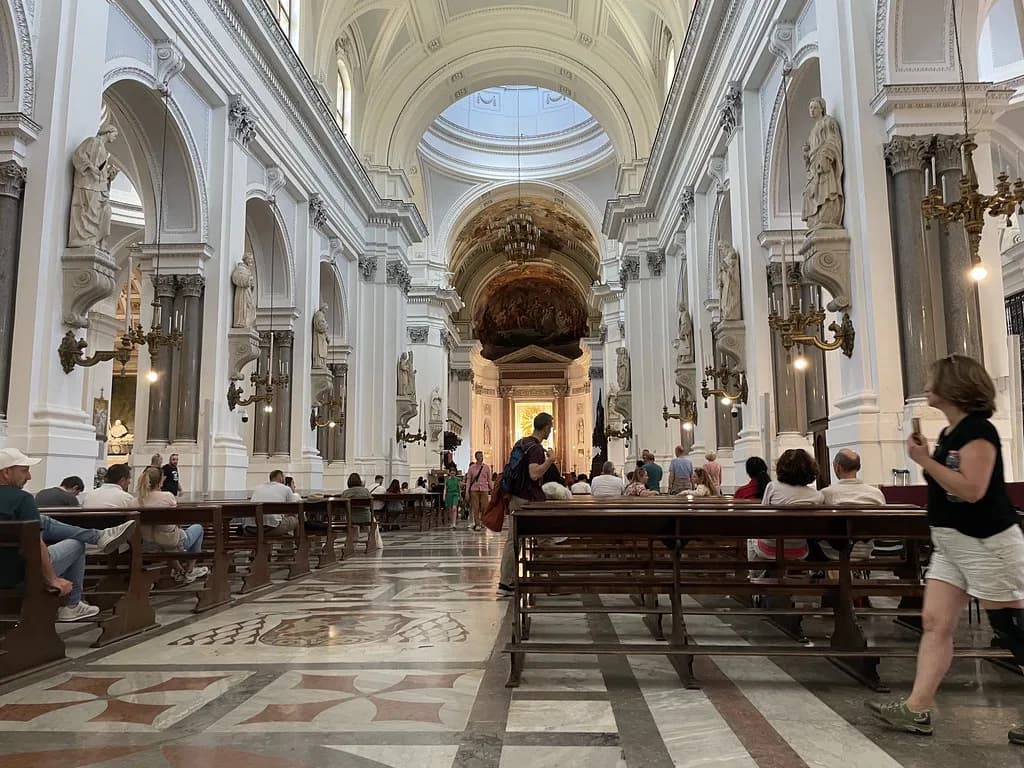
Carry on to the cathedral, completed in the twelfth century on the site of a former mosque, where the church, royal tombs, treasury, crypts and terrace are separate visiting choices. If you would rather follow a fixed route through the centre with fewer decisions, a self-guided historic centre walk can structure the same spine of streets.
In summer, shift this walk to late afternoon. The midday sun in Palermo is genuinely stifling, and the light through the side streets near golden hour makes the same route far more pleasant. That reordering also frees the middle of the day for a long lunch or a siesta.
Day 1 Evening: Kalsa at Golden Hour
The Kalsa neighbourhood is the natural first evening. Take a golden-hour stroll along the seafront promenade, then eat in the backstreets where simple restaurants serve the day's fish. It is a residential quarter that turns lively after dark, so expect noise and crowds rather than a quiet romantic corner.
For a quieter counterpoint on another evening, the city holds smaller artistic treasures that rarely appear on first-visit lists, including the stucco cycles of the Oratorio del SS Rosario in Santa Cita. A guide to the hidden gems in Palermo is useful for filling odd hours rather than whole afternoons.
Day 2 Morning: Palace and Chapel, or Churches — Not Both at Full Depth
Day 2 morning is a choice between two kinds of intensity. The first is the Palazzo dei Normanni and its Cappella Palatina, where twelfth-century gold mosaics made by Christian, Byzantine and Arab craftsmen sit inside the seat of the Sicilian parliament. The chapel is the city's most visited monument and part of a UNESCO listing, and combined tickets cover the chapel, royal apartments and gardens rather than the chapel alone.
The second option is a church morning: La Martorana, San Cataldo and Santa Caterina d'Alessandria sit close enough to cover on foot without rushing. Choose this if you skipped those interiors on Day 1, and accept that you will see fewer gold mosaics but more variety of architecture and rooftop views.
Whichever you pick, resist doing both at full depth. Two hours inside a palace and then a church crawl produces museum fatigue by lunchtime, and Palermo's streets are the actual attraction.
Check the palace's own published visiting arrangements before you go, since parliamentary business can affect access and the chapel may close for services.
The Orto Botanico, laid out in the late eighteenth century by a French architect, makes a good heat escape if the morning turns too hot, with thousands of plant species and a pop-up bar in summer.
Day 2 Afternoon: One Ticketed Interior Per Day
Limit yourself to one paid interior per day. The Capuchin Catacombs, with roughly eight thousand dressed and preserved bodies, is the eeriest option and worth the trip for anyone comfortable with the subject; the Teatro Massimo offers a guided tour covering auditorium, backstage and rooftop instead of a performance; the archaeological museum and the modern art galleries suit a cooler, slower afternoon.
Prices and opening times for all of these change and should be checked on each site's own page rather than taken from a guidebook. Do not assume one ticket covers a whole complex: at several Palermo sites the church is free while the crypt, treasury, roof or royal apartments are separately ticketed.
If you would rather spend the afternoon outside, climb one of the bell towers for a view over the domes and rooftops. Santa Caterina's roof looks across Piazza Pretoria and La Martorana, while the bell tower of San Giuseppe Cafasso frames San Giovanni degli Eremiti and the Norman Palace.
Day 2 Evening: Teatro Massimo, Aperitivo or Puppets
Spend the evening around the Teatro Massimo, Italy's largest opera house, where an aperitivo in the surrounding streets is an easy way to end the day. Attending a performance is the fuller experience, with English subtitles at the opera, but check the theatre's own programme and current ticketing rather than assuming a schedule.
If the timing works, the Opera dei Pupi performed by the Cuticchio family is a distinctly Palermitan evening. The tradition is recognised by UNESCO as intangible cultural heritage, and performances are usually staged a couple of times a week rather than nightly, so confirm directly with the company before planning around it.
For a livelier finish, return to Vucciria after dark, when the piazzas fill with makeshift bars and street food stalls and the market's daytime emptiness is forgotten.
Day 3: The Day-Trip Decision
Day 3 is where a three-day itinerary either relaxes or accelerates. Mondello, the city's own beach, is the softest option: a half-day of sea and sand that leaves the evening free in Palermo. It suits travellers who want one unplanned afternoon and do not want to move luggage or navigate an unfamiliar town.
Monreale, Cefalù and Segesta each take most of a day once transport is counted. Monreale is a cultural half-day built around its cathedral and mosaics; Cefalù is a coastal town with a beach and a historic centre; Segesta is an archaeological site in open country that rewards an early start. Pick by appetite — mosaics, sea or ruins — and check current transport arrangements rather than assuming a convenient connection.
If you take the day trip, keep the evening light: a simple dinner near your base and no second ticketed attraction. Trying to fit the Capuchin Catacombs or the palace into a day-trip evening is the most common way this itinerary fails. The Visit Sicily events calendar is worth a glance if you want to know what else is on while you are in the city, without letting it dictate your route.
Alternative Day 3: A Slower Palermo Without a Day Trip
Skip the escape and Day 3 becomes the best day. Start with the Orto Botanico in the morning, climb a bell tower before lunch, and spend the afternoon in Kalsa with no fixed plan. Add the puppet museum or a single small church interior that caught your eye on Day 1 and you have a full, unhurried day.
Use the leftover hours for the city's overlooked corners: small oratories, quieter side streets and minor collections that first-time visitors rarely reach. A curated list of hidden gems is the right tool for this day rather than a tick-list of major sights.
This version suits travellers who already suspect they will return, or who prefer one city understood slowly to three cities skimmed by coach. It also copes better with summer heat, because the day can be broken in two.
Practical Notes: Heat, Tickets and Timing
Markets are busiest in the morning and quiet by late afternoon; Vucciria is the exception, better after dark. Several churches are free to enter while interiors, crypts, roofs and terraces are separately ticketed, and combined tickets apply only where the site's own page says so. Confirm current details at the door or on official pages rather than relying on this itinerary.
Summer heat reshapes any midday plan. Between late morning and mid-afternoon, move indoors or underground, or take a long lunch, and shift outdoor walking to the evening. Carry water and small change for snacks; street food varies wildly from stall to stall, so note where you find a good one.
For general regional context, including how to reach Sicily and what else is on during your dates, the official tourism site is the sensible first stop before you commit to a fixed schedule.
Where to Stay and How Long to Spend
Three days is the right length for a city break focused on the centre, with one escape. Choose accommodation in or near the historic centre; the value of walking to the markets in the morning and to Kalsa in the evening outweighs a cheaper room on the outskirts.
If you only have one or two days, cut the day trip first, then the second ticketed interior, and keep the market-morning and Via Vittorio Emanuele pattern intact. That combination delivers a recognisable Palermo in less than half the time.
If you have four or more, add a second day trip or a beach day and slow the city days down further. The city rewards returning to the same streets at a different hour, which is exactly what a tight three-day plan cannot do.
Plan Your Visit
Treat this three-day Palermo itinerary as a set of decisions rather than a schedule. Fix the day-trip question before you book, keep one ticketed interior per day, and let the markets set the rhythm of your mornings.
Everything volatile — opening times, ticket prices, performance schedules and transport — should be checked on the operator's own page close to your dates, since published information changes and this guide deliberately avoids quoting figures that may already be out of date.
With that flexibility, Palermo's chaotic streets, honey-coloured palaces and loud markets do the rest. Three days is enough to fall for the city; the planning is mostly about leaving room to notice it.
Frequently Asked Questions
Is three days enough for Palermo?
Three days is a reasonable city-break length for Palermo's historic centre. You can cover the main markets, the Via Vittorio Emanuele walk, the Norman Palace and chapel, and one neighbourhood evening without rushing, provided you choose one ticketed interior per day and make the day-trip decision in advance.
Should you choose Palermo or Catania as a base?
Palermo suits travellers interested in markets, layered architecture, palaces, street food and western Sicily, including day trips toward Monreale and Segesta. Catania is a better base for the east, including Mount Etna and Taormina. Pick the base that matches the half of the island you actually want to explore, and do not try to cover both in three days.
What should you do in Palermo with three days if you skip the day trip?
Spend the third day slowly: the Orto Botanico in the morning, a bell tower before lunch, then Kalsa in the afternoon and evening with no fixed plan. Add one small church interior or the puppet museum. This version copes better with summer heat because the day can be split into two cooler halves.
Do you need to book Palermo attractions in advance?
Some sites, including the Cappella Palatina and the Teatro Massimo tour, can get busy, and the theatre and puppet companies publish their own programmes and ticketing. Check each site's official page before you travel; this guide does not claim that advance booking is required for any specific attraction.
Which Palermo markets are worth visiting and when?
Ballarò for scale and atmosphere, Il Capo for a calmer, seafood-focused browse, and Vucciria for an evening drink when its piazzas fill up. Go to the first two in the morning and save Vucciria for after dark, since it is more nightlife zone than daytime market.
Where should you stay in Palermo for a three-day trip?
In or near the historic centre, close to Via Vittorio Emanuele and within walking distance of both the markets and Kalsa. That location lets you return to your room between a morning market and an afternoon walk instead of crossing the city repeatedly, which matters most in summer heat.
Sources
Continue exploring
More guides you'll find useful