Sicilian Food in Palermo: What to Eat and How to Order
A practical guide to eating Sicilian food in Palermo, from street snacks and Ballarò market to seafood pasta, trattoria pacing and modern dining, with ordering tips.
On this page
Palermo is a city where the eating day has more than one peak. A morning pastry, a mid-morning fry, an aperitivo that arrives with food, and a dinner that often starts later than many northern European kitchens all belong to the same rhythm. Planning only one big meal a day leaves much of the city's food culture untouched.
This guide is organised around that rhythm rather than a ranked restaurant list. It covers what to prioritise at street stalls and markets, how a traditional trattoria sequences courses, and when a modern kitchen with a view suits the mood. Where a detail such as current hours or booking policy matters, check it directly with the venue, because those change.
The Palermo Eating Rhythm
Start by treating breakfast, snacks, aperitivo and dinner as four separate decisions rather than one. Sicilian breakfast can lean sweet, with pastries and granita; savoury eaters may need to look deliberately for something plainer. A food diary from a May trip describes exactly that, with pistachio-filled pastries and glazed orange twists proving delicious but heavy across consecutive mornings.
The same account notes that dinner in Palermo often starts around 9pm for Sicilians, while visitors from northern Europe or North America tend to take earlier tables. Treat that as one traveller's observation rather than a rule for every restaurant. If you want an early dinner, a table at opening time is usually the safest approach, and off-season gives more slack.
Build in walking time between stops. The historic centre is compact, and a route that moves between snack counters, a market and a longer sit-down meal works better than clustering everything within a few blocks. If you want a structured route, a self-guided walk can slot between eating stops without turning the day into a restaurant crawl. For wider planning, see A Self-Guided Walk Through Palermo's Historic Centre.
Street Snacks Worth Prioritising
Chickpea fritters, called panelle, are a good benchmark for a fryer. A good version is hot, faintly crisp outside and creamy within, made from chickpea flour cooked down like polenta, chilled, sliced and fried. Ask for lemon or a little salt rather than burying them in sauce, and avoid ones that have been sitting under a lamp long enough to go limp.
Arancini are the other essential snack, and the difference between a good and forgettable one is mostly in the crust. A tender shell and a delicate, well-seasoned middle matter more than novelty fillings. In one visitor's account, small arancini with a classic ham-and-mozzarella filling beat the larger versions sampled.
For a fuller snack plate, look for pizza by the slice, which in Palermo often has a thicker, focaccia-like base and is served at room temperature. Pair it with a spritz or a local white and you have a light lunch that leaves room for dinner. This is also where aperitivo logic overlaps with street food: drinks generally arrive with something to nibble.
The Spleen Sandwich, Honestly
Pane con milza is Palermo's most talked-about street food, and it deserves a straight description rather than a dare. Cow spleen, lung and trachea are boiled, compressed, sliced, fried in pork fat and loaded into a bun with lemon, grated cheese or ricotta. The flavour reads like an earthier, chewier liver.
It is rich, and even enthusiasts describe it as an occasional treat rather than a daily habit. One visitor who ordered a mini version regretted not taking a full one, but also noted the pork grease left its mark on clothing. If you are unsure, start small and order other snacks alongside it.
Established counters exist, including Antica Focacceria S Francesco, described as selling Sicilian street food since 1834. Treat that as historical context rather than a current review; service style, queues and menu details shift, so check the venue's own information before building a day around it.
Granita Instead of Gelato
Sicilian granita is not the flaky, fork-scraped ice that goes by that name elsewhere. It is slow-churned until smooth and slushy, closer to a dense sorbet than crushed ice. That texture is the reason to order it, and one traveller's account describes it as a breakfast food.
Order simply at first: lemon is a reliable test of balance, since a good granita should be tangy and refreshing rather than sweet and flat. Once you know the texture you like, move on to fruit or almond flavours. If you prefer a spoonable, creamier dessert, gelato remains the better choice, so the two are not competitors.
Carry the same curiosity into pastries. Sicilian croissants are softer and more brioche-like than the French version, and pistachio fillings appear everywhere. One traveller found a pistachio-stuffed croissant delicious on day one but admitted that several sweet breakfasts in a row became too much; alternating with a savoury stop fixes that.
Seafood, Pasta and the Catch of the Day
Palermo's seafood cooking rewards a traditional trattoria where the fish is shown before cooking. In one account, a whole bream was wheeled round on ice, chosen by the diner and then baked with tomatoes and olives before being taken off the bone and portioned at the table. Ask whether the catch is displayed this way; if it is, choose a cooking method rather than a named dish.
Pasta with prawns, clams and fried courgette is a good test of a kitchen's balance: briny, light and not overloaded with cream. For a modern take, a fava bean and wild fennel sauce topped with a tartare of Mediterranean red prawns shows how contemporary Sicilian cooking layers local flavours. Ask what is in season before ordering either.
Sicilian food in Palermo is not only seafood, and the island's best-known dishes vary by season and kitchen. Rather than assuming a specific dish is available at a named restaurant, ask what is being cooked that day; that conversation usually gets you a better plate. The island's tourism board frames street food, flavours and markets as core draws across Sicily, which is a useful orientation rather than a menu.
Antipasti, Bruschetta and Sicilian Toppings
Order bruschetta in Sicily and you should not expect the fully tomato-loaded version common elsewhere. It often arrives with caponata, ricotta, sun-dried tomatoes or pistachio pesto, sometimes with no tomato at all. One visitor was served one with tomato and pistachio pesto, and another with mortadella and pistachio pesto, both generous enough to share.
These small plates are also the best way to sample Sicilian antipasti without committing to a full course. A shared mixed seafood starter with fried fish, prawns and chickpea fritters works as a first course before pasta. Keep portions in mind: a plate of bruschetta plus a pinsa or a slice of pizza is already a light meal for two.
How to Order at a Traditional Trattoria
A traditional Italian meal runs through antipasto, pasta, a main course and dessert, and some trattorias enforce that sequence strictly. One traveller found that at Lo Scudiero dishes arrived at the proper moment regardless of what the rest of the table was eating, so plan your order as a group rather than treating courses as shareable plates.
If you want a lighter meal, order only a pasta and a dessert rather than an antipasto and a main as well. At stricter restaurants, expect the courses to arrive in order anyway, which is why deciding up front matters. At more flexible places, sharing everything works fine, so read the room before ordering.
Timing counts too. Many visitors eat earlier than Sicilians, and off-season tables are generally easier to secure. For a traditional room with a fixed rhythm, contacting the venue ahead is sensible; current booking practice should be confirmed with the restaurant itself, not assumed.
Modern Sicilian Cooking With a View
Rooftop dining trades rusticity for technique and a view. At a modern room such as Seven Restaurant, one visitor described an octopus dish with lentil puree, pickled shallot and candied mandarin, and a jasmine panna cotta with chocolate and raspberry. That cooking is worth choosing when you want a composed, contemporary menu rather than a market-style meal.
The trade-off is atmosphere. Rooftop rooms tend to attract a wider international crowd and are busy around sunset, so earlier tables may be harder to get. If you care more about a long, unhurried lunch than a skyline, a traditional trattoria is the better fit. Neither is objectively superior; they answer different questions.
Build the rest of the day around whichever you choose. A rooftop dinner suits a light lunch, while a big market breakfast and afternoon snacks leave room for an early evening reservation. For more on when the city is busiest, see our guide to the best time to visit Palermo and avoiding crowds.
Reading Mercato Ballarò
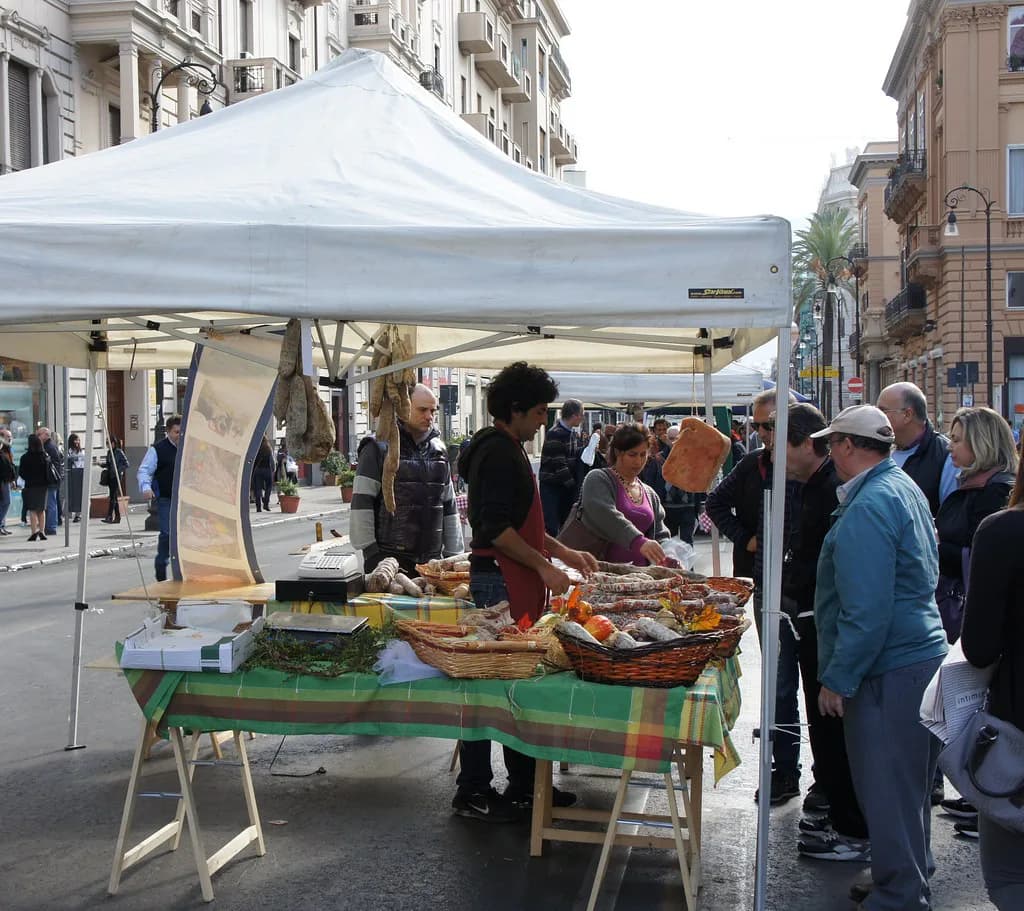
Ballarò remains a working market even as it serves visitors. Fruit and vegetable stalls, family bakeries and fishmongers sit in the same narrow streets as snack counters and takeaway pasta. Look for produce specific to the island, such as the long cucuzza squash and its leaves, tenerumi, alongside the usual boxes of herbs and lettuce.
Its atmosphere has shifted with demand. One visitor's guide explained that the character of the market changed after Palermo was ranked fifth in the world and first in Europe for street food in a 2012 Forbes list, as more tourists came specifically to eat. That is a historical reference point, not a statement about current standing.
Go hungry but not starving, and take a few coins for small purchases. Roaming food and takeaway portions of baked pasta make a market lunch easy, and weekend lunchtimes can be livelier. Treat that as a general impression rather than a schedule to rely on.
The market sits in the Albergheria area, which is worth a short wander after eating. Our Albergheria neighbourhood guide sets out what else is nearby, and the Palermo neighbourhoods guide: where to stay is a useful companion if you are deciding where to base yourself. For wider planning, see Where to Stay in Palermo. For wider planning, see Hidden Gems in Palermo.
Aperitivo, Sharing and Portion Planning
In Palermo, a drink usually arrives with food, from a small bowl of nuts and crisps to something more substantial. On one boat trip, the spread included sun-dried tomatoes, olives, crispy breads and bruschetta with caponata. That culture makes aperitivo the ideal bridge between an afternoon snack and a late dinner, rather than an extra meal.
Because portions are generous, sharing is usually sensible. Order one or two items per person, eat slowly and add more as you go. Ask whether a serve is enough to split; many small plates are, and taking too much early leaves no room for the pasta course that matters most.
For contemporary Sicilian pub food, including horse and donkey burgers, Katie Parla's city guide points to FUD as the place for that style of eating, with a strong wine and beer list. That fits a late, informal meal rather than a traditional four-course dinner.
A Suggested One-Day Eating Plan
This plan is a suggestion, not official guidance, and should flex around what is open and what you find. Start small with granita or a pastry, then walk the centre to build an appetite. Keep the first real meal light: a few panelle, an arancino or a slice of pizza will carry you to the afternoon.
Spend the middle of the day at Ballarò, grazing on what looks good rather than committing to a sit-down lunch. A stuffed sardine, fried calamari or a portion of baked pasta makes a filling market meal. Then rest, and use an aperitivo with a spritz as the transition to dinner.
For dinner, choose between a traditional trattoria with fish displayed on ice and a modern rooftop menu. If you eat early, a trattoria opening table works well; if you eat late, a rooftop at sunset suits the mood. Check current opening days and booking policies with the venue on the day.
Pair a food day with a non-eating detour so the day stays balanced. Our guide to hidden gems in Palermo suggests quieter corners for a slow hour between courses.
Plan Your Visit
Palermo works best when you eat by appetite and by hour rather than by checklist. Keep snacks small, save room for a pasta or fish course, and let aperitivo do its job. Where a venue's current hours, closure days or booking policy matter, confirm them directly with the restaurant or market stall before you set out.
Use the Palermo Attractions hub for sightseeing around your meals, and the neighbourhoods guide to position yourself near the streets you want to browse. With a loose plan and an open appetite, the city's food is easy to enjoy without chasing a fixed list.
Frequently Asked Questions
What food is Palermo known for?
Palermo is known for street food: chickpea fritters, arancini, pizza by the slice and the spleen sandwich, pane con milza. Seafood pasta, bruschetta with pistachio or ricotta toppings, granita and pastries also define eating in the city. Markets like Ballarò bring these together in one walk.
What time do Sicilians eat dinner in Palermo?
One visitor's account notes that Sicilians often arrive for dinner around 9pm, while visitors from northern Europe or North America tend to take earlier tables. Treat that as a general impression rather than a rule. If you want to eat early, arriving at opening time is the safer approach, and off-season tables are generally easier.
Is the spleen sandwich in Palermo worth trying?
It is worth trying if you enjoy offal and rich flavours. Pane con milza is boiled spleen, lung and trachea, compressed, sliced, fried in pork fat and served in a bun with lemon, cheese or ricotta. Even fans describe it as an occasional treat, so order a small one first rather than making it your whole meal.
What is the difference between Sicilian granita and gelato?
Sicilian granita is slow-churned until smooth and slushy, closer to a dense sorbet than flaky crushed ice. Gelato is creamier and richer. One traveller's account describes granita as a breakfast item, often with a pastry, while gelato is generally a later dessert.
How many courses should you order at a traditional Palermo trattoria?
A traditional meal runs through antipasto, pasta, a main course and dessert. Some trattorias enforce that order strictly, so decide as a table before ordering. For a lighter meal, order just a pasta and dessert; the courses will still typically arrive in sequence.
What should I eat at Mercato Ballarò?
Look for fried snacks, stuffed sardines, fried calamari, chickpea fritters and takeaway portions of baked pasta, alongside produce such as cucuzza squash and tenerumi leaves. Go with a moderate appetite and buy small portions as you walk. The market has changed with visitor demand, so browse before committing to a counter.
When should I confirm opening hours or booking for Palermo restaurants?
Check directly with each venue close to your visit, since hours, closure days and booking policies change and are not fixed in a guide. If a restaurant is central to your plan, confirm by phone or its own website before travelling. For market stalls, simply turn up and see what is trading.
Sources
Continue exploring
More guides you'll find useful