Where to Stay in Palermo: Neighbourhood Guide 2026
Compare Palermo's neighbourhoods by vibe, walkability and budget character, from the four historic quarters to Politeama and the Mondello beach base.
On this page
In Palermo the address matters more than the pillow. The historic centre is not one uniform old town but four quarters, and the difference between a quiet piazza in Kalsa and a market lane in Albergheria changes how your mornings, evenings and walking routes feel. Choosing a base is really choosing a daily rhythm.
This comparison works in relative terms rather than invented prices. Areas are described as upscale, boutique-feeling or affordable-feeling because room rates move with season and demand, and no honest guide can pin them down in advance. What stays stable is layout: which streets you can cross on foot, where the markets sit, and how far you are from the sea.
A useful first fact: the four quarters of the Centro Storico fan out from Piazza Vigliena, the four-sided crossroads better known as Quattro Canti, where Via Maqueda meets the Corso Vittorio. If you cannot decide between them, staying near that crossroads puts you almost dead centre of all four.
Quick Orientation: The Centro Storico and Its Four Quarters
The Centro Storico comprises Kalsa, Il Capo, Castellammare and Albergheria, and each is a genuinely different place to wake up in. They sit close enough that you can wander between them on foot, which means the quarter you book rarely traps you. The practical question is which atmosphere you want at the start and end of each day.
Palermo is the Sicilian capital, and its historic core is widely described as one of the largest in Europe, so distances inside it add up. Treat any rough figure you read about walking times as an estimate rather than an official number. The reliable rule is that the central quarters connect through a dense grid of lanes rather than fast arterial roads.
The city authority publishes its own events, transport and civic notices, which is the sensible place to check for anything that might close a street or shift a bus route during your stay. It does not function as an accommodation guide, so use it for logistics rather than hotel advice.
Kalsa: Photogenic Palazzi and the Liveliest Evenings
Kalsa is the largest of the central quarters and the easiest to describe in pictures: historic palazzi and piazzas at nearly every turn, with galleries, boutiques and cafes filling the ground floors. It has a romantic, boutique feel that suits couples and anyone who wants atmosphere within a few steps of the door. Our Kalsa district guide goes deeper on specific corners worth seeking out.
Evening is where this quarter separates itself. It carries the reputation as the most animated nightlife area in the centre, which is a pleasure if you want bars and conversation outside your window and a nuisance if you want silence by ten. Ask about room position within the building, not just the street, because internal courtyards can mute the noise considerably.
Relative to Politeama and the Liberty quarter, Kalsa feels more affordable for what you get, though renovated boutique rooms can push well above the area's character. Budget character here is uneven rather than uniformly cheap. Check a few properties on the same lane before assuming one price band applies to the whole quarter.
Albergheria and Il Capo: Markets, the Royal Palace and Narrow Lanes
Albergheria holds Ballarò, the street market most associated with the city, along with the Royal Palace and the Palatine Chapel. It is also the oldest of the quarters, and the lanes show it. This is the base for travellers who want market mornings, low-key food shopping and a genuinely lived-in street scene rather than polished facades. Our Albergheria neighbourhood guide maps the corners worth a slow detour.
Il Capo is the maze of the group: winding narrow streets where markets appear around corners and faded grandeur sits beside careful renovation. Navigation is slower and more rewarding, and it rewards people who do not mind getting turned around. If you need straight lines and clear sightlines, choose elsewhere.
Ballarò is loud and busy, which is part of its appeal and also the main practical caveat. Keep bags zipped in the crowd and treat the market as a sensory experience rather than a calm one. For a market-led stay on a modest budget, this quarter is the natural pick, provided you accept bustle as the price of character.
Castellammare and Vucciria: Sea Air, Markets and Late Nights
Castellammare, known locally as Vucciria, sits closest to the water and the port, which gives it a different texture from the inland quarters. Markets run by day and the square turns into the city's liveliest late-night gathering spot after dark. It is also the quarter with the most pedestrianised lanes, so you can leave the car behind entirely.
For food-focused travellers the combination is hard to beat: market produce, street food and a short walk to the waterfront near Cala for an evening stroll when the square gets too loud. The trade-off is noise again, and this time it is concentrated in one central square rather than spread out. A room a street or two back changes the experience.
The Teatro Massimo and the archaeological museum sit at the northeast edge of this area, so a cultural day and a convivial night can share the same base without a taxi. If your priority is a coastal feel with city energy attached, this is the compromise quarter.
Piazza Vigliena: The Most Central Option With the Smallest Supply
Quattro Canti, properly Piazza Vigliena, is the crossroads where the two main historic axes meet and the true centre of the old city. Staying here means every other quarter is a walk away and the cathedral is a short stroll up the street. It is the most convenient single point in Palermo for sightseeing on foot.
The catch is supply. The piazza itself is a small neighbourhood with limited accommodation, so treating it as a search zone rather than a must-have address is more realistic. Book the crossroads if a room appears that suits you; otherwise the surrounding quarters deliver nearly the same convenience.
For short stays of two or three nights, this position saves real time because you stop planning routes and simply walk out. For longer stays the advantage flattens, and a stronger neighbourhood atmosphere may matter more than a central pin on the map.
Politeama and Via Libertà: Modern Comfort and Wider Pavements
Politeama and Via Libertà sit outside the historic core but still within walking distance of it, and the streets are noticeably wider and calmer. Expect contemporary hotel stock, pavement cafes and the city's most upscale shopping street, with the Teatro Massimo and Piazza Verdi marking the boundary with old Palermo. The Politeama and Liberty Quarter is the area to consider if you want modern amenities over ancient lanes.
You do not need a room here, but you do need it on your radar if you are travelling with a car. Wider streets and better-maintained roads make parking far less painful than in the historic lanes, and this is the area most often recommended for drivers. Airport access is also easier from this side of town.
The costs of this comfort are higher relative prices and a slightly off-centre position. Families and travellers who value quiet, space and predictable logistics tend to accept that trade happily. Solo travellers who want company and evening atmosphere usually prefer the centre instead.
Mondello: The Beach Base and What It Costs You
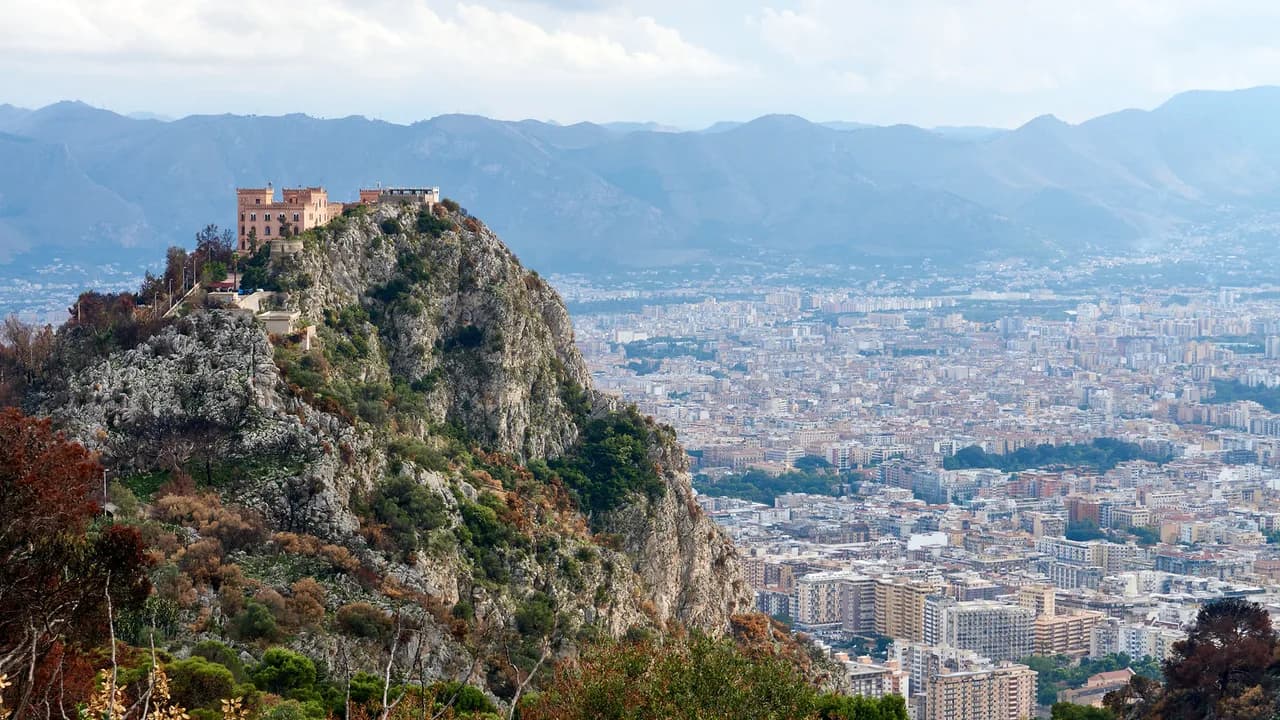
Mondello is Palermo's beach resort, a former fishing village with white sand, clear water and a dramatic backdrop of hills between Monte Pellegrino and Monte Gallo. Art Nouveau villas, some now converted into places to stay, hint at its history as a summer retreat for wealthier residents. It is the obvious choice if the sea is the point of your trip.
The trade-off is distance. Mondello sits several kilometres from the centre, commonly described as roughly a fifteen-minute drive depending on traffic, so plan to commute on days when you want the city. Parking in the resort is limited, and the beach is at its busiest in high summer, when lidos offer paid space.
Mondello also suits walkers who never leave it: the beach itself takes roughly twenty minutes to stroll end to end, and the Capo Gallo nature reserve and Monte Pellegrino offer trails nearby. That makes it a legitimate slow-travel base rather than merely a dormitory for the city. Just be honest about how many days you will actually spend in town.
Matching the Area to the Traveller
First-timers do best near Piazza Vigliena or in Kalsa, where the headline sights and the evening scene are both within walking range. Romantics gravitate to Kalsa for palazzi and boutiques, while foodies split between Albergheria's Ballarò and Castellammare's markets and waterfront. Nightlife seekers should look at Castellammare and Kalsa and accept the noise as part of the deal.
Families and car travellers are the clearest case for Politeama and Via Libertà, where pavements are wider, parking is feasible and the atmosphere is less frenetic. Beach-first visitors should choose Mondello outright rather than pretending they will commute every day. Couples on a short break can pick almost anywhere central and still reach everything on foot.
If your trip is built around quieter corners and lesser-known interiors, base yourself centrally and travel outward rather than hopping hotels. Plan a single day around the hidden gems in Palermo and keep the rest flexible. One well-placed base beats three rushed ones.
Walkability Realities Across the Quarters
Inside the historic centre, walking is genuinely the main mode of transport, and the quarters connect through the dense grid that meets at Quattro Canti. Streets are often pedestrianised in Castellammare, and the rest are slow with traffic. Comfortable shoes matter more than any transport plan for central stays.
Politeama and Via Libertà are reachable from the historic core on foot but feel longer than the map suggests because of traffic and crossings on the wider roads. Many travellers walk in during the day and take a taxi back in the evening. Mondello is the exception that genuinely requires a vehicle or a planned transfer.
Anyone with limited mobility should treat the historic lanes cautiously: uneven paving, steps and narrow passages are common, and individual properties vary enormously. Ask the property directly about lift access and entrance steps before booking rather than relying on area descriptions. For a route that avoids the worst of it, our self-guided historic centre walk can be adapted to your pace.
Budget Character Without Invented Prices
Politeama and Via Libertà carry the most upscale character, with high-end shops and larger contemporary hotels setting the tone. Mondello sits high too, especially in summer, when demand from beachgoers pushes rates. Neither is automatically expensive, but both skew upward compared with the lanes.
Kalsa, Il Capo and Albergheria feel more affordable in character, though boutique conversions in Kalsa can match upscale rates. The honest approach is to compare specific rooms in the same street rather than trusting area reputations. Prices vary by season, so check live rates for your dates rather than relying on any figure quoted in an article.
Peak-season pressure in the upscale zones is a general observation made by travel writers, not a rule with a booking deadline attached. Book early if your dates coincide with summer or major city events, and use the municipal events listings to spot anything that will fill the city.
Common Mistakes When Choosing a Palermo Base
The most frequent error is booking Mondello for a short city break and then spending the trip in traffic. The beach is excellent, but it is a separate trip from sightseeing, and mixing the two into three days satisfies nobody. Decide which one your trip is actually about.
The second is hunting for a single safest area. Every central quarter has busy and quiet streets, and safety varies by time and situation rather than by postcode. Think instead about noise, crowds and market bustle, and choose a room set back from the square.
The third is treating the old town as one place. Kalsa, Albergheria, Il Capo and Castellammare deliver different mornings, and travellers who research the quarter rather than the hotel tend to be happier with the result. If you are still narrowing options, the Palermo Attractions hub is a useful companion for matching a base to the sights you actually care about.
Beach Versus Centre: A Short Trade-Off Summary
Choose the centre if your days are built around churches, palaces, markets and evening wandering, and you want to walk everywhere. Choose Mondello if the sea, the sand and the nature reserve are the reason for the trip, and you are content to travel in for city days. The two are close enough to visit each other, but not close enough to share a base comfortably.
A workable compromise for longer stays is to split the trip: a few nights central for sightseeing, then a few nights at the beach. Shifting once costs less time than commuting daily, and it turns the transfer into part of the holiday. For shorter trips, pick one and commit.
A Simple Rule for Choosing
If you want atmosphere and walking, stay in the historic centre and pick your quarter by temperament: Kalsa for palazzi and evenings, Albergheria or Il Capo for markets, Castellammare for sea air and late nights. If you want space, modern comfort and easy parking, choose Politeama or Via Libertà. If the beach is the point, Mondello earns its distance.
Once the base is settled, build days outward rather than crisscrossing the city. A single route through the centre, with a detour for an overlooked interior and a market stop, will show you more than a checklist spread across every quarter.
Frequently Asked Questions
What is the best neighbourhood in Palermo for first-time visitors?
Stay around Piazza Vigliena or in Kalsa. Quattro Canti is the crossroads of the four historic quarters, so most sights and evening streets sit within a short walk, while Kalsa adds palazzi, boutiques and the liveliest atmosphere. Both let you skip daily transport planning on a short trip.
Which neighbourhood is best for nightlife?
Castellammare, known as Vucciria, and Kalsa are the two areas most associated with evening activity. Vucciria's central square becomes the city's liveliest late-night gathering place, while Kalsa keeps bars and conversation close to your door. If you sleep early, ask for a room set back from the square.
Should I stay in the historic centre or in Politeama and Via Libertà?
The centre wins on atmosphere, walkability and access to markets, churches and palaces. Politeama and Via Libertà win on wider pavements, contemporary hotels, easier parking and simpler airport access, at the cost of being slightly off-centre and generally pricier. Travellers with a car are usually better off outside the lanes.
Is Mondello a good base for a city break?
Only if the beach is your priority. Mondello offers sand, clear water and the Capo Gallo nature reserve, but it sits several kilometres from the centre and involves a commute on sightseeing days. For a short break built around the historic quarters, stay central and visit Mondello as a day out.
Which areas are best for foodies and markets?
Albergheria holds Ballarò, the market most associated with the city, and sits next to the Royal Palace and Palatine Chapel. Castellammare adds the Vucciria market and a short walk to the waterfront. Il Capo offers a maze of lanes where markets appear around corners.
Where should I stay if I have a car?
Politeama and Via Libertà are the most practical choice, with wider, better-maintained roads and far simpler parking than the historic lanes. Mondello is workable too, though parking in the resort is scarce in season. If you stay central, plan to leave the car and walk.
How walkable are Palermo's central neighbourhoods?
Very walkable. Kalsa, Il Capo, Castellammare and Albergheria all fan out from Piazza Vigliena and connect through a dense grid of lanes, with several pedestrianised streets in Castellammare. Uneven paving and steps are common, so ask individual properties about lift access before booking.
Why are there no prices in this guide?
Rates shift with season and demand, so any figure printed here would mislead within weeks. Check live prices for your dates and compare several rooms on the same street, since boutique conversions in affordable-feeling areas can charge upscale rates.
Sources
Continue exploring
More guides you'll find useful