San Giovanni degli Eremiti in Palermo: Visitor Guide
Plan a visit to San Giovanni degli Eremiti in Palermo: its five red Arab-Norman domes, citrus cloister garden, mosque-to-church history and UNESCO context.
On this page
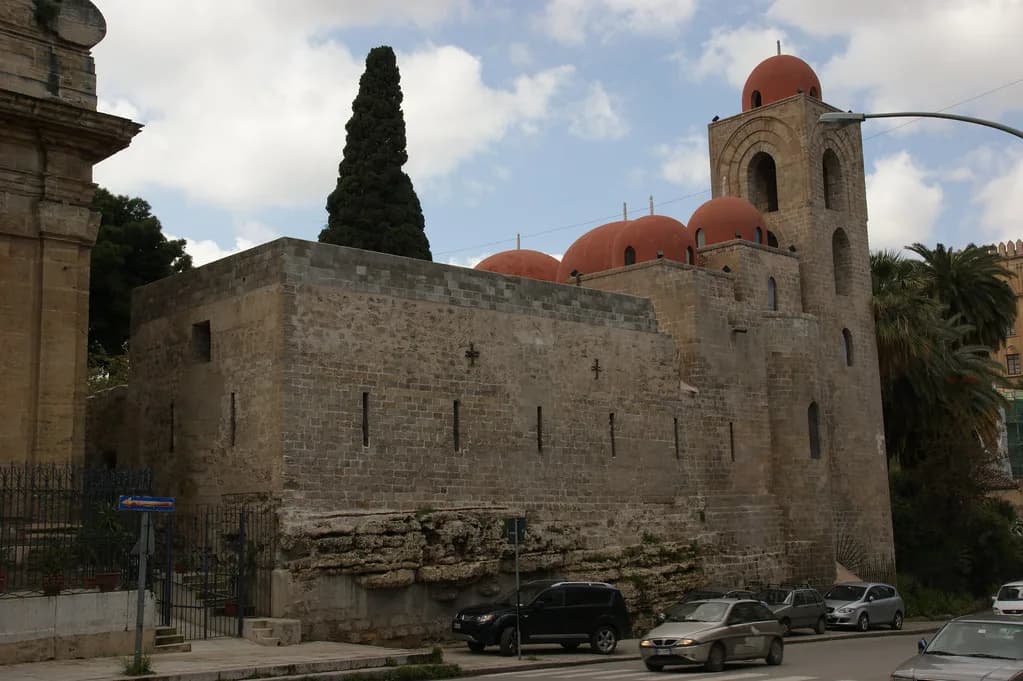
San Giovanni degli Eremiti is one of Palermo's most photographed small monuments: a compact Norman church crowned by five red domes, standing inside a walled garden on the western edge of the Albergheria district. It is deconsecrated, part of the UNESCO Arab-Norman listing, and rewarding precisely because it is small enough to absorb in a single slow look. Allow roughly 45 minutes to an hour for the church, cloister and garden combined, and treat that as our suggested pace rather than an official minimum.
This guide sticks to what the sources actually describe and flags the details worth confirming before you set out, notably opening hours and what a ticket covers. It is a companion page within the wider set of Palermo Attractions, where you can compare the city's major sights before deciding what deserves your morning.
Where San Giovanni degli Eremiti Sits in Palermo
The church stands at the western edge of the Albergheria, the old quarter that also holds the Royal Palace and the Ballarò market. That position makes it an easy add-on to a morning built around the Norman Palace, rather than a separate excursion across town. If you are pairing the two, the Norman Palace and Palatine Chapel visitor guide covers the adjoining complex in detail.
Italy Review likewise places the building in the city centre close to the Royal Palace and the Ballarò market, which is a useful reminder that the approach runs through a busy, lived-in neighbourhood rather than a museum district. Build in some slack for wandering, and treat the market lanes as part of the visit rather than an obstacle.
The Five Red Domes
The five bulbous red domes are the image most people carry away, and Visit Sicily calls them a characteristic element of several Arab-Norman buildings in the city. Seeing them as part of a family of structures, rather than a one-off curiosity, changes how you read Palermo's skyline: the same visual language returns elsewhere in the historic centre.
Sacred Destinations singles out the domes along with corner arches and filigreed windows, and also compares them with those of La Cataldo nearby. Gathered around the exterior rather than rushing in is the better order of business, since the garden setting lets you see the roofline from several angles.
A Mosque Site, a Norman Foundation, and a Disputed Date
The building was founded under Norman rule on the site of a mosque, and Islamic building traditions show in its architecture. Visit Sicily attributes the foundation to Roger II, while Sacred Destinations places it on the grounds of a mosque built in the Norman period; both agree on the mosque inheritance as the key to the design.
The exact founding year is genuinely contested in the popular sources: Visit Sicily gives 1142 under Roger II, while Sacred Destinations and Italy Review both give 1132. Rather than pick a side, read the date as twelfth-century and treat the specific year as an academic detail you can check on site signage.
Visit Sicily notes the church is now deconsecrated, so plan for a monument rather than a working parish with mass times. The adjoining monastery, in its Norman heyday, was described as the wealthiest Sicilian convent, which helps explain why such a small church carries such a layered site around it.
What to Look For Inside
Visit Sicily is refreshingly candid that the interior is very small and holds no elements of particular importance beyond traces of tiles, mosaics and frescoes and the stalactite ceiling inherited from the mosque beneath. Go in with that expectation and the details reward close looking: the muqarnas ceiling is the reason to slow down, not the furnishings.
Practically, this is a ten-minute interior for many visitors, which is why the garden and cloister carry the visit. Check on arrival whether photography rules or roped-off areas apply inside, since these are managed locally and are not consistent across Palermo's monuments.
The Cloister and the Garden
The late Norman cloister belonged to the Benedictine monastery that once stood here, and Sacred Destinations describes it centring on a Moorish cistern surrounded by cooling gardens of citrus blossoms and flowers. That combination of white columns, water and planting is the part most visitors underestimate.
Visit Sicily paints the garden in more detail: citrus trees, agaves, bougainvilleas, roses and pomegranates, with plants climbing the walls and taking over the small cloister's white columns. Visit in spring or early summer for the fullest flowering, though the greenery and the domes above it hold their appeal year-round.
Because the church, cloister and garden are physically distinct spaces, do not assume one ticket automatically covers all three or that a single price applies; the sources describe the site without clarifying ticket scope. Ask at the entrance what your ticket includes before you pay.
UNESCO Context: The Arab-Norman Route
San Giovanni degli Eremiti belongs to the UNESCO listing for Arab-Norman Palermo and the Cathedral Churches of Cefalù and Monreale. Visit Sicily frames it within that route, and Italy Review notes the inscription dates from 2015 alongside nine other monuments in Palermo and its surroundings.
That shared listing is a practical itinerary tool: the same World Heritage status links a small urban church with two cathedral towns well outside Palermo. If you plan to see Monreale or Cefalù as well, the Palermo Cathedral visitor guide is a sensible next stop for understanding the city's ecclesiastical layer before you leave town.
Practical Planning: What to Confirm Before You Go
None of the sources used here give reliable current opening hours, closing days, or ticket prices for the church, cloister and garden, so treat any figure you find online with caution. The official Visit Sicily listing for the church is the page to check for current visitor information, and a phone call or a stop at the ticket desk on the day resolves the rest.
Three things are worth confirming: whether the site is open on your chosen day, whether the ticket covers church, cloister and garden together, and whether any restoration work restricts access. Sicily's monument openings shift seasonally, so a same-week check beats a plan made months ahead.
If you want a single-source confirmation rather than several, ask your accommodation to call ahead; locally arranged checks are more reliable than aggregator listings that may have gone stale.
Pairing It With Nearby Sights
The obvious pairing is the Royal Palace complex and its Palatine Chapel, a short distance away in the same quarter. Build the morning around the palace and finish at San Giovanni, where the garden offers a calmer close to a densely decorated visit.
From there, Ballarò market is the natural next stop for food, and the Cattedrale di Palermo sits a reasonable walk north along the old centre's spine. If your tastes run to the macabre, the Catacombs of Porta d'Ossuna visitor guide covers a different side of the city entirely.
Beyond the headline sights, the hidden gems in Palermo are worth a day of their own, particularly the Oratorio del SS Rosario in Santa Cita, whose stucco work rewards the same close attention you give the stalactite ceiling here.
A broader Arab-Norman circuit also takes in La Zisa, the Norman pleasure palace on the city's western edge, which shares the same cultural layering in a very different architectural key. The La Zisa visitor guide explains what to expect from that site.
An Optional Tour That Includes the Church
San Giovanni degli Eremiti sometimes appears as one stop on a half-day Palermo excursion: one operator, TINA IN TOUR, bundles it with Monreale Cathedral, its cloister and the Capuchin Catacombs. The listing on Expedia describes a tour of roughly five and a half hours with hotel or port pickup and a multilingual driver.
Treat this as one option rather than a recommendation, and note that such tours change frequently: routes, availability and inclusions vary by season and operator. Confirm what is included and whether the church visit is interior or exterior-only before booking.
A Small Church With an Outsized Story
San Giovanni degli Eremiti suits travellers who prefer one building examined closely to five seen in a blur. The red domes, the mosque-inherited ceiling and the citrus cloister each tell a different part of Palermo's layered past, and none of them takes long to appreciate.
Check the current listing before you travel, confirm ticket scope at the desk, and let the garden set the pace. Then compare the visit with the Norman Palace and Palermo Cathedral to see how the same city absorbed Norman, Arab and later influences into a single skyline.
Frequently Asked Questions
Why does San Giovanni degli Eremiti have red domes?
The five red domes are a feature of Arab-Norman architecture in Palermo, and Visit Sicily notes they are a characteristic element of several buildings from that period. They reflect the blending of Islamic and Norman building traditions in twelfth-century Sicily rather than any later decorative addition.
Was San Giovanni degli Eremiti built on a mosque?
Yes. Sacred Destinations describes the church as standing on the grounds of a mosque, and Islamic building traditions show in its architecture, including the stalactite ceiling. Visit Sicily also notes the stalactite ceiling of the mosque on which the church was built.
When was San Giovanni degli Eremiti founded, in 1132 or 1142?
Sources disagree. Visit Sicily attributes the foundation to Roger II in 1142, while Sacred Destinations and Italy Review both give 1132. The safest framing is that the church is a twelfth-century Norman foundation whose exact year is disputed; on-site signage may settle it for you.
Is the church still active?
No. Visit Sicily states that the church is now deconsecrated, so it operates as a monument rather than a working parish church. You should not plan around mass times.
What is there to see in the cloister and garden?
The late Norman cloister centres on a Moorish cistern and is surrounded by citrus blossoms and flowers, with plants climbing the columns. Expect white colonnades, greenery and the red domes rising above the planting.
Is San Giovanni degli Eremiti part of the UNESCO Arab-Norman site?
Yes. It falls within the UNESCO listing for Arab-Norman Palermo and the Cathedral Churches of Cefalù and Monreale. Italy Review notes the inscription, dated 2015, covers ten monuments in Palermo and the surrounding area.
What should I check before visiting regarding hours and tickets?
Current opening hours, closing days and what a single ticket covers are not reliably stated in the sources here. Check the official Visit Sicily listing or ask at the ticket desk on the day, and confirm whether the church, cloister and garden share one entry.
Is it easily combined with the Royal Palace or Ballarò market?
Yes. The church sits in the Albergheria, close to the Royal Palace and the Ballarò market. Many visitors pair it with the palace complex and finish with a walk through the market lanes.
Sources
Continue exploring
More guides you'll find useful