Palermo Cathedral Guide: Free Floor vs Ticketed Roof
Plan a Palermo Cathedral visit: free three-nave church, paid treasury, crypt and roof, posted opening hours, and how long to allow for each route.
On this page
Palermo Cathedral is not a single ticket gate. The three-nave assembly area of the church is open freely, while the treasury, the crypt and the roofs form a separate monumental itinerary that requires a ticket, as the cathedral's own visitor pages explain.
That split matters for planning. You can step in for a short pause between other stops in the historic centre, or set aside a longer block for the paid route and its city views. The first decision is simply which of those two visits you want.
One practical warning up front: the cathedral posts service information and one-off access notices on its homepage, including roof closures for filming. Check that page before you build a day around the rooftop.
Where the Cathedral Sits in the Historic Centre
The cathedral stands on Corso Vittorio Emanuele, the old Cassaro, in the heart of Palermo's historic centre. The parish it serves, Maria SS. Assunta, covers the Cassaro Alto and Via Maqueda as far as the church of S. Ninfa, so the building is woven into the everyday life of the quarter rather than isolated behind a gate.
It is also part of the UNESCO Arab-Norman itinerary inscribed in 2015, alongside the Duomos of Monreale and Cefalù and, within Palermo, the Cappella Palatina, the Palazzo Reale, San Giovanni degli Eremiti, the Martorana, San Cataldo and the Ponte Ammiraglio. That listing is a useful map: several of those sites sit within walking distance of the cathedral.
Because the cathedral sits mid-way along the old Cassaro, it works well as an anchor for a slow walk rather than a single destination. You can approach from the Quattro Canti end, pause inside, then continue toward the Norman Palace.
First Decision: Free Church Floor or Ticketed Monumental Area
The cathedral describes its visit in two areas. The assembly area of the faithful, formed by the three naves, is freely accessible; the monumental area follows the Arab-Norman itinerary and requires a ticket.
The paid route is not one undifferentiated rooftop ticket. It comprises the Tesoro or treasury, which holds Norman goldsmith work including the crown of Costanza d'Aragona; the crypt with the tombs of Palermo's archbishops; and the roofs.
The cathedral has not published admission fees on its visitor pages, so treat any price you see elsewhere as unconfirmed. Check the ticket section of the official site, or ask at the cathedral itself, before you budget.
The cathedral also mentions the possibility of a single ticket linking the monumental area with the nearby Diocesan Museum. Do not assume the museum is included by default: the two are described as combinable, not as one shared admission.
What You Can See Without a Ticket
Walking in free gives you the nave and its side chapels, which is where many visitors spend their time. A travel account of the cathedral describes a lofty, column-lined interior with several side chapels, and notes that entry to the church and its courtyard was free while the rooftop required a ticket bought inside.
Two chapels carry particular weight for local visitors. The relics of Santa Rosalia, the city's patron, are kept in a silver reliquary urn in the chapel dedicated to her, and the body of Blessed Padre Pino Puglisi rests in the chapel of the Immacolata Concezione in the left side nave.
The cathedral lists pilgrimage and veneration at Padre Puglisi's altar from 08:00 to 13:00 and 16:00 to 19:00. If that stop matters to you, time it inside those windows rather than treating the church as an all-day open floor.
The Monumental Area: Treasury, Crypt and Roofs
The treasury is the part to prioritise if you care about objects rather than views. It holds pieces of Norman goldsmithing, and the cathedral's research pages single out the crown, plaque and rings found in the tomb of Costanza d'Aragona, along with reliquaries and chalices.
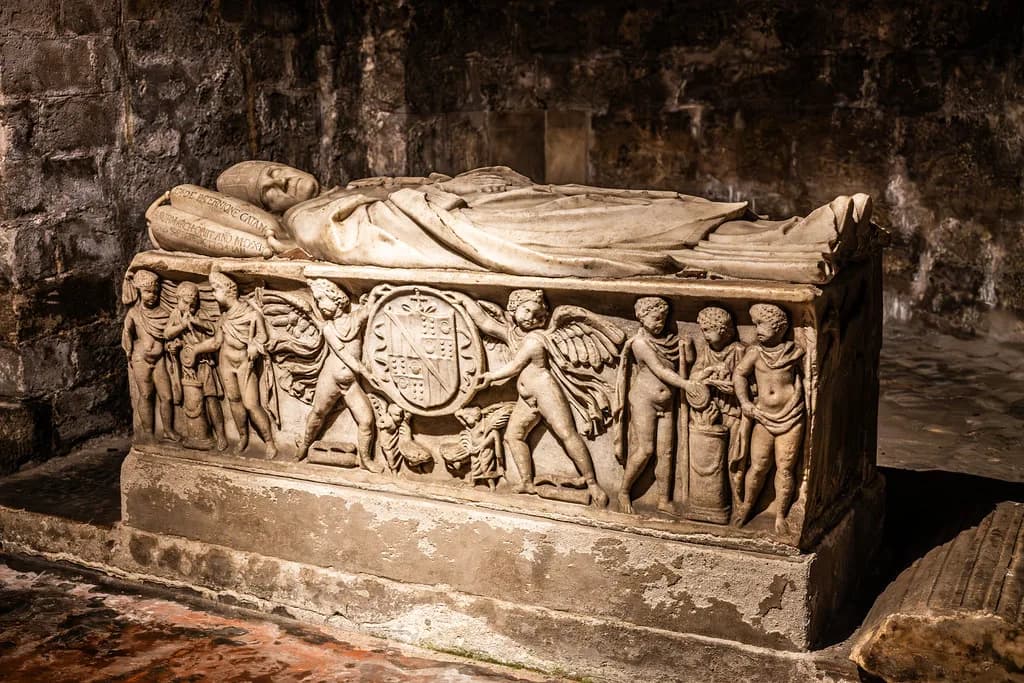
The crypt below holds the tombs of successive archbishops of Palermo, cut into valuable sarcophagi, some of them Roman. It is a compact, atmospheric space rather than a long gallery, so it fits easily into the same block as the treasury.
The roofs are the third component and the reason many people pay at all. Reviewer accounts describe a walk across the cathedral roof with broad views over the city, which is a different experience from the interior rather than an extension of it.
Because the components are ticketed together but experienced separately, decide in advance whether you want objects, the crypt or the view. On a tight schedule, pick one or two rather than rushing all three.
Combining the Cathedral with the Diocesan Museum and the Circuito del Sacro
The cathedral belongs to the Circuito del Sacro, a network of sacred sites in Palermo that offers visitors reductions on ticket costs at participating monuments. The list includes the Diocesan Museum, the Martorana, San Cataldo, Santa Caterina d'Alessandria and several oratories.
If you plan to see more than one of those sites, ask at the first ticket desk whether the circuit reduction applies to your route. The cathedral publishes the scheme but not current rates, so confirm on the spot rather than assuming a discount.
The oratories are where this pays off for slow travellers. Several small chapels in the circuit, such as the Oratorio del SS Rosario in Santa Cita, are easy to overlook on a first visit and reward a quieter hour.
Opening Hours and Mass Schedule Caveats
The cathedral posts general opening hours of 07:00 to 19:00 Monday to Saturday and 08:00 to 19:00 on Sundays. These are the church's hours, not separate published times for the roof, crypt or treasury, so do not read them as a guarantee that every component is open at either end of the day.
Mass times shape the visit. The posted schedule is 07:30 and 18:00 Monday to Saturday, and 08:45, 09:45, 11:00 and 18:00 on Sundays and feast days; in August a summer timetable applies with reduced morning slots.
The homepage also carries one-off notices, such as maintenance closures and days when the roofs are unavailable for filming while the rest of the monumental area stays open. Read it the day before you go, since these notices change.
How Long to Allow
Our suggestion, not official guidance: allow about 20 to 30 minutes for the free floor if you want to see the nave, the Rosalia chapel and the Puglisi altar without hurrying. Add time if a service is under way and you are waiting for it to finish.
For the full monumental route, our suggestion is a half day of roughly two to three hours, including the treasury, the crypt and the roofs, with a buffer for queues at the ticket desk. The rooftop walk itself takes time because you move across the roof rather than stand in one spot.
If you are pairing the cathedral with the Diocesan Museum, plan the two as one longer outing rather than squeezing the museum into the same slot as the roof. Ask at the desk how the combined option works before you commit.
Rooftop Views and Filming Closures
The roof is the component most easily disrupted. The cathedral has posted a notice that the roofs would be closed on a specific day for film shooting while the monumental area remained visitable, which is exactly the kind of trap to check for.
Views from the roof take in the domes and rooftops of the historic centre toward the sea. Travel accounts recommend sunrise and sunset for photographing the cathedral exterior from street level, which is a different and free pleasure from the paid roof.
Do not rely on late-night rooftop access. That detail appears in a personal account, not in the cathedral's published information, so treat evening roof visits as something to confirm at the ticket desk.
Etiquette: This Is an Active Parish
The cathedral is the seat of the parish of Maria SS. Assunta and hosts ordinations, feast-day liturgies and the religious programme of the Festino di Santa Rosalia. Visitors are guests in a working church, so keep voices low and stay clear of pews during services.
If you arrive during a Mass, wait at the back or return later rather than walking the aisles with a camera. The posted Mass times above let you slot a visit between services instead of guessing.
Santa Rosalia's feast falls on 14 July according to a Palermo guide, and the city marks it with processions and ceremonies. Expect a different atmosphere around that period; the cathedral publishes its own religious programme separately.
Language Support and the Cathedral Audio Guide
The cathedral offers its own audio guide app, Visit Cattedrale di Palermo, with more than 60 points of interest in Italian, English, Spanish and Chinese. It supports separate routes for the cathedral and the panoramic roofs, which suits visitors who want context without a guided group.
The app also includes images, audio, video and content in sign language, which is the only accessibility detail the cathedral itself highlights. For step-free routes or other specific needs, contact the cathedral directly rather than relying on third-party descriptions.
Getting There and Building a Slow Walk
The historic centre is compact and best covered on foot. A Palermo guide notes that driving in the city is intense, parking is extremely limited and signage is poor, so leave the car behind if you are staying centrally.
A good slow route runs from the Quattro Canti along the Cassaro to the cathedral, then on toward the Norman Palace. That sequence lets you use the cathedral as a rest stop with a free floor and a paid option, rather than a standalone excursion.
Other Churches and Viewpoints to Pair with the Cathedral
San Giovanni degli Eremiti, with its red domes and garden, is one of the Arab-Norman sites closest in spirit to the cathedral and a natural next stop. It is a smaller, calmer space that balances the scale of the cathedral.
For a contrasting interior, the Cappella Palatina inside the Norman Palace is covered in Byzantine mosaics and sits across the old centre. A guide recommends arriving early or pre-purchasing tickets because tour groups build up quickly. For wider planning, see Norman Palace and Palatine Chapel in Palermo.
If you want a market stop between churches, the Ballarò and Vucciria areas sit within the same walking radius and are best visited in the morning while stalls are active.
For quieter corners away from the main Cassaro, the hidden gems in Palermo guide covers small chapels and oratories that see fewer visitors than the cathedral.
Plan Your Visit
Decide first whether you want the free floor or the full monumental route, then check the cathedral's homepage for current opening hours, Mass times and any notice about the roofs. That page is the reliable source; prices and component timings are best confirmed at the ticket desk.
Build the visit into a walk along the Cassaro rather than a dash between sights, and leave room to return if a service or a closure interrupts you. The cathedral rewards a second short stop more than a rushed single one. For related planning, see Palermo Viewpoints Guide: Rooftops, Hills and Sea Views.
Frequently Asked Questions
Is Palermo Cathedral free to enter?
Yes, for the church floor. The three-nave assembly area is freely accessible, while the treasury, crypt and roofs form a separate monumental itinerary that requires a ticket. Admission charges are not listed in the cathedral's published visitor information, so confirm the current options at the ticket desk or on the official site.
Do you need a ticket to visit the Palermo Cathedral roof?
Yes. The roofs belong to the paid monumental area, alongside the treasury and crypt. Note that the cathedral occasionally closes the roofs for filming while keeping the rest of the monumental area open, so check its homepage notices before planning the roof as the centrepiece of your visit.
How long should you allow for a Palermo Cathedral visit?
As our suggestion rather than official guidance, allow about 20 to 30 minutes for the free floor, or roughly two to three hours for the treasury, crypt and roofs together. Add a buffer for ticket queues and for waiting if a Mass is under way when you arrive.
What is included in the Palermo Cathedral monumental area?
The paid route covers the treasury, with Norman goldsmith work including the crown of Costanza d'Aragona, the crypt holding the archbishops' tombs, and the roofs. These are distinct components of one itinerary rather than a single rooftop ticket, so decide which parts matter most to you.
Can you combine the cathedral with the Diocesan Museum?
The cathedral mentions the possibility of a combined ticket with the nearby Diocesan Museum, and it belongs to the Circuito del Sacro, which offers reductions at participating sacred sites. Do not assume the museum is included by default; ask at the desk how the combined option works.
Sources
Continue exploring
More guides you'll find useful