Martorana Church Visitor Guide: Byzantine Mosaics in Palermo
Plan a visit to Palermo's Martorana church, Santa Maria dell'Ammiraglio: its 1143 Norman-Byzantine mosaics, Baroque facade and neighbour San Cataldo.
On this page
La Martorana is the church most travellers picture when they think of Palermo's gold-ground mosaics, yet its formal name is Santa Maria dell'Ammiraglio. It was founded in 1143 by George of Antioch, admiral to King Roger II, and it stands close to the church of San Cataldo, so a single walk can put two very different Norman-era interiors side by side. The name La Martorana comes later: in 1194 the noblewoman Eloisa Martorana established a Benedictine convent, and in 1433 the church was entrusted to that community.
This guide sticks to what is documented about the building's history, its mosaics and its architecture, and it deliberately does not quote admission prices or opening hours. Those details change by season and by site, and the only reliable check is the operator's own listing shortly before you go.
Treat the visit as a history stop rather than a quick photo opportunity: the interior rewards a slow circuit of the walls and the dome, and the exterior asks you to separate the medieval fabric from the Baroque additions. Allow roughly forty-five minutes to an hour by our own editorial estimate, longer if you plan to sit with the mosaics.
Why La Martorana Belongs on an Arab-Norman Day
The church is one of the outstanding religious buildings of Palermo's old centre, and the Sicily Tourist description of the city's Norman churches pairs it directly with San Cataldo, which dates to 1160.
That pairing is a matter of geography rather than a shared ticket: the two churches sit close together, but nothing in the published descriptions confirms a combined admission arrangement, so budget and plan for each separately. If you want the wider context of the city's Arab-Norman monuments, browse the Palermo Attractions guides rather than assuming one entry covers them.
Because the interior is comparatively small, the visit works best as an anchor for a walking day that also takes in the Norman Palace and the Palatine Chapel, where the mosaic programme is on a far grander scale. Seeing both on the same day makes the differences in date, patronage and surviving decoration easier to read; our Norman Palace and Palatine Chapel visitor guide sets out what to expect there.
The Name Decoder: Admiral, Admiral's Church, Martorana
Santa Maria dell'Ammiraglio means Saint Mary of the Admiral. The church was founded in 1143 by George of Antioch, admiral to King Roger II, which is exactly why the formal name reads as a job title as much as a dedication. The same foundation date and patron are recorded in the Sicily Tourist account of the building.
The familiar nickname came from a different direction. In 1194 Eloisa Martorana established a Benedictine convent, and in 1433 the church was entrusted to that community, which is how the name La Martorana attached itself to the building. In 1221 it had been entrusted to the Greek clergy, which shows that rite and ownership changed more than once in the medieval period.
Knowing this helps explain why a Norman royal foundation ended up bearing the name of a much later Benedictine patron, and why the interior you see is a composite rather than a single moment in the building's life.
What Survives from the Twelfth Century
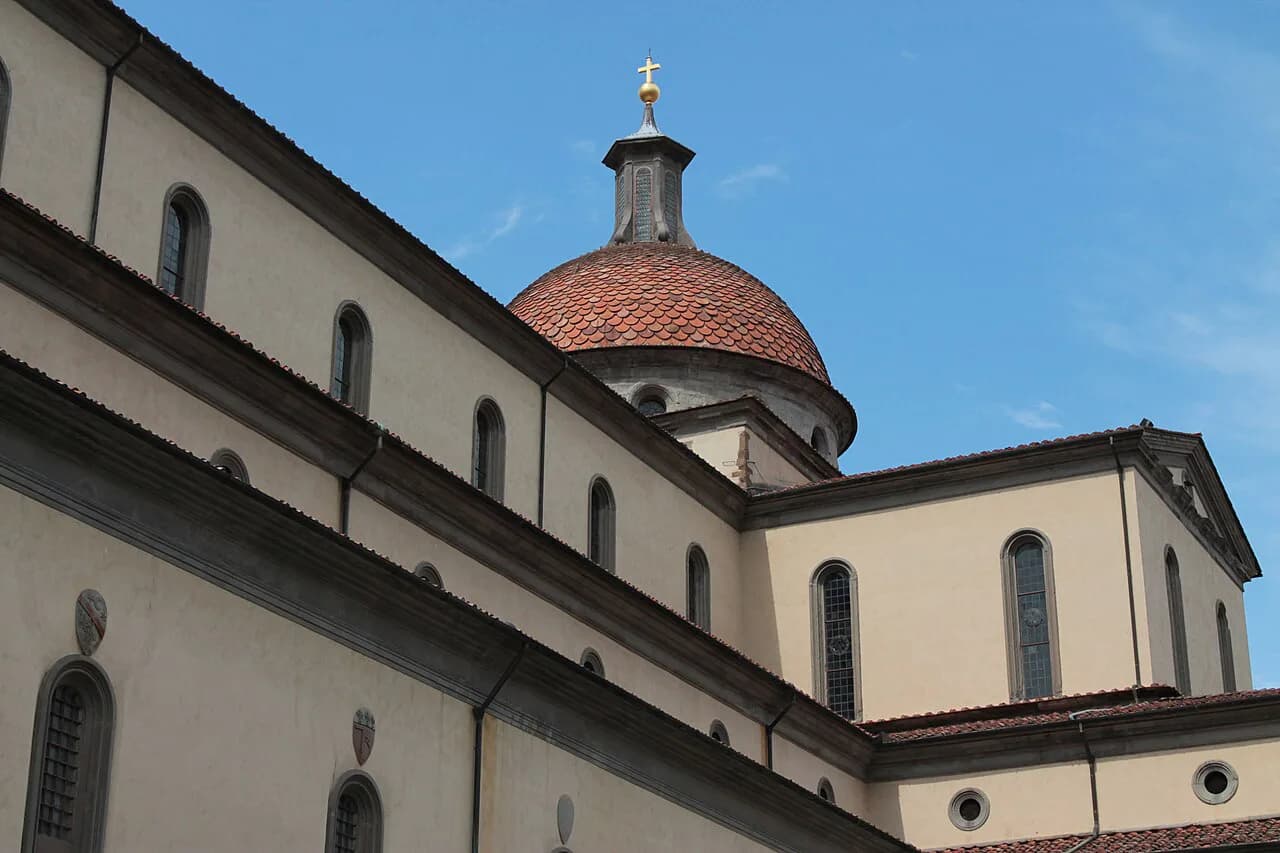
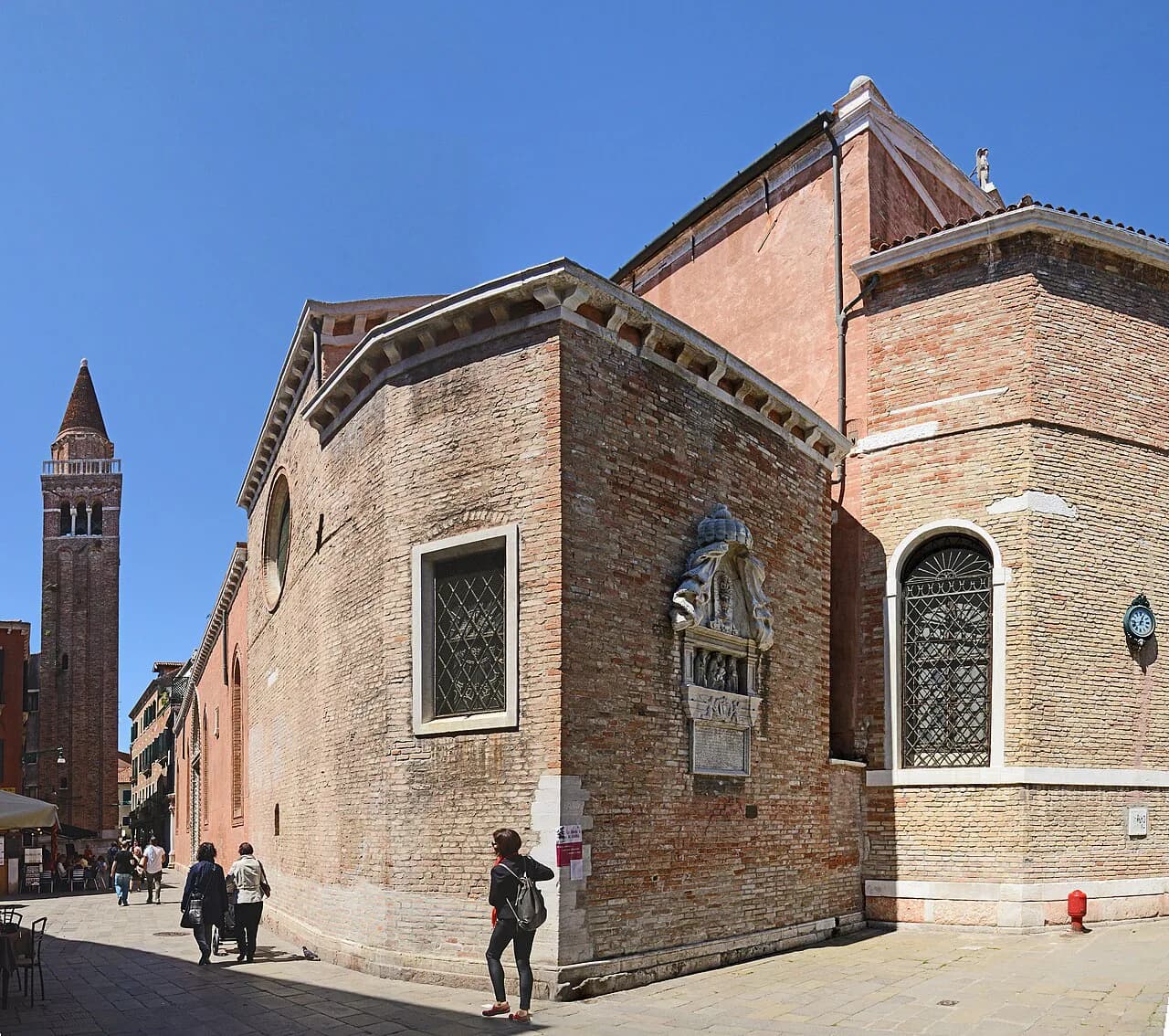
Despite centuries of rebuilding, the Romanesque core survives in identifiable pieces. Sicily Tourist lists the bell tower, the domed roof and the exterior walls with blind arcading around the windows as the remaining Norman elements, which is a useful checklist for walking around the outside before you go in.
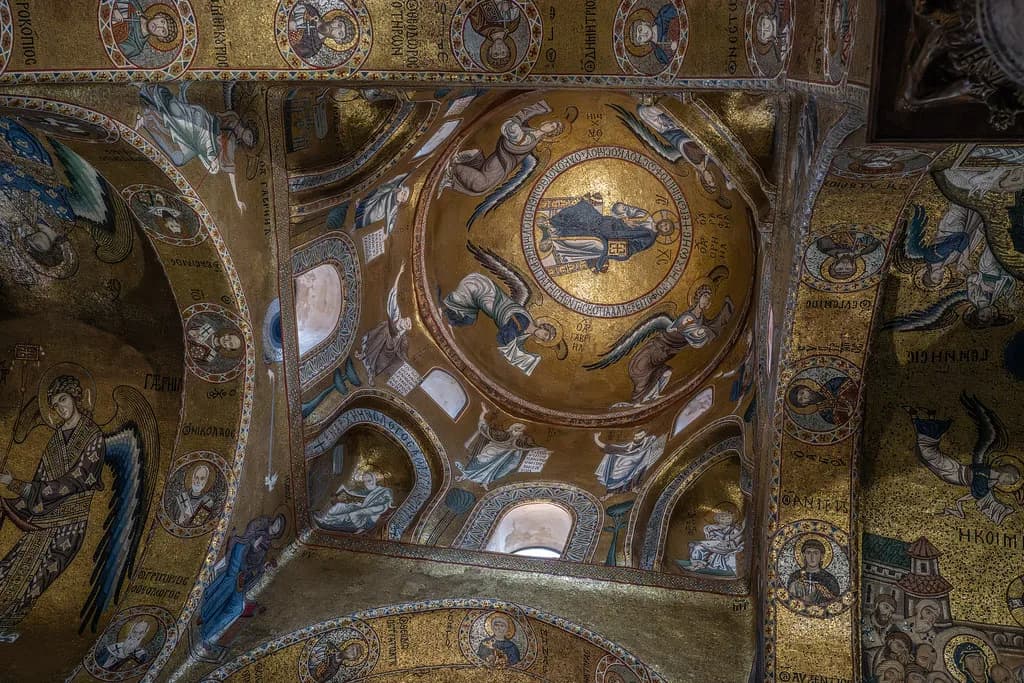
The interior mosaics are the reason most people come. The published descriptions single out two scenes in particular: King Roger crowned by Jesus, and the Nativity, both set in gold against the church's walls. Look for them deliberately rather than sweeping the room once and leaving.
Understanding the iconography matters here, because a Norman king shown being crowned directly by Christ is a political statement as much as a devotional image. Photography rights, lighting and any barriers inside are set by the church itself, so follow the notices on site rather than assuming you can photograph everything.
Reading the Building as a Palimpsest
The facade you meet first is not the Norman one. Sicily Tourist records a Baroque facade erected in the sixteenth century, part of a long run of demolitions and alterations that reshaped the original structure.
That layering is the intellectual pleasure of the site: stand back and you see a Baroque skin wrapped around a domed Norman plan and a medieval bell tower. The comparison with San Giovanni degli Eremiti, which keeps its five red domes and a cloister garden, shows how differently Palermo's Norman churches have fared over the same centuries; our San Giovanni degli Eremiti visitor guide covers that church in detail.
For the same reason, do not expect a pristine medieval interior. The value is in noticing what the building has absorbed, from Byzantine mosaicists to Benedictine nuns to Baroque masons, and in checking any published restoration news with the regional heritage authorities before you travel.
The UNESCO Context and the Wider City
The Martorana belongs to the Arab-Norman Palermo and the Cathedrals of Cefalù and Monreale UNESCO World Heritage listing, the same serial site invoked for San Giovanni degli Eremiti by Visit Sicily.
Thinking in terms of a serial site rather than a single monument changes how you plan. Instead of ticking off one church, you can trace a single architectural language across palaces, cathedrals and small domed churches.
If you only have one day, pick two or three of these monuments and give them time. A rushed circuit of five sites teaches you less than a slow hour at the Martorana and a second at the Norman Palace.
Pairing the Martorana with San Cataldo
San Cataldo is the natural companion, sitting beside the Martorana in the old centre. The contrast is instructive: San Cataldo is recognisable from outside by its red domes, and its interior is plainer, while the Martorana keeps the denser mosaic programme.
Plan the two as consecutive stops rather than a single visit, since each is entered and managed separately. Confirm current access arrangements for each on the day, and do not assume that one ticket, one opening time or one closure applies to both.
From there, a short walk brings you to the Norman Palace and the Palatine Chapel, or in the other direction to the market streets and the oratories that make up the city's quieter religious corners. The oratories gathered in the hidden gems in Palermo guide, with their white stucco figures, are a good counterpoint to all that gold mosaic.
Practical Planning: What to Confirm Before You Go
The sources that describe this church in detail cover its history and mosaics, not its current timetable. Neither opening hours, closing days, admission charges nor any combined ticket with San Cataldo can be confirmed from them, so do not build a day around an assumed schedule. The Visit Sicily listing for the church is the natural place to check for a current, operator-published statement.
Check that listing and the regional tourism pages close to your travel date, ideally the day before, and treat third-party resale listings with caution since their information is often out of date. If the church is closed for a service or a restoration, the neighbouring sites are close enough that the trip is not wasted.
Dress for a working place of worship, keep your voice low, and carry small change for nearby cafes rather than relying on card payments at every counter. The old centre is compact enough to walk, but the paving is uneven, so comfortable shoes matter more than a tight itinerary.
Who Will Love It, and Who Might Skip It
Anyone interested in Byzantine mosaic, Norman kingship or the meeting of Latin, Greek and Arab cultures in twelfth-century Sicily will find the Martorana essential. It is also a good introduction for travellers who find the Palatine Chapel overwhelming, because the scale is intimate and the key scenes are easy to locate.
Travellers with very limited time, or those who have already seen several mosaic-heavy interiors, might prefer to spend the hours elsewhere and see the exterior and the bell tower in passing. There is no shame in that trade-off, provided you are honest about what you want from the day.
Families with small children may find the interior hard going, since it rewards quiet looking rather than interactive displays. Pair it with a market visit or a puppet show later in the day to break up the church-going.
Plan Your Visit
La Martorana rewards a little preparation: know that Santa Maria dell'Ammiraglio and La Martorana are the same church, look for the crowning of Roger and the Nativity, and separate the Norman survivals from the later facade. Then confirm hours and entry conditions at the source before you set out.
Build the rest of the day around walking distance rather than transport: San Cataldo next door, the Norman Palace beyond it, and the market streets in the other direction. That way a single change of plan, such as a closed door or a service in progress, costs you minutes rather than the whole afternoon.
Frequently Asked Questions
Why is the Church of Santa Maria dell'Ammiraglio called La Martorana?
The nickname comes from Eloisa Martorana, who founded a Benedictine convent in 1194; in 1433 the church was entrusted to that community, and the popular name stuck. The formal dedication refers to the Admiral George of Antioch, who founded the church in 1143 under King Roger II.
What mosaics can you see inside the Martorana in Palermo?
The interior is known for its gold-ground mosaic decoration. Descriptions of the church single out two scenes in particular: King Roger crowned by Christ, and the Nativity. Look for them on the walls rather than rushing through, and follow any on-site notices about photography.
Is the Martorana church free to enter?
Admission arrangements are not confirmed in the published descriptions of the church, so it would be wrong to say either way. Check the Visit Sicily listing and the regional tourism pages shortly before your visit, and ask at the door if nothing is published.
Can you visit the Martorana and San Cataldo together?
You can visit both because they stand beside each other in the old centre, but there is no confirmed joint ticket. Plan them as two consecutive stops and check each one's current access separately, since opening arrangements may differ.
What is left of the original Norman building at the Martorana?
The bell tower, the domed roof and the exterior walls with blind arcading around the windows are the documented Norman survivals. The facade is a later Baroque addition from the sixteenth century, part of a long history of alteration and demolition.
Is the Martorana part of a UNESCO World Heritage site?
Yes. It belongs to the Arab-Norman Palermo and the Cathedrals of Cefalù and Monreale UNESCO listing, a serial site that also includes monuments such as San Giovanni degli Eremiti elsewhere in the city.
How long should I allow for a visit?
As an editorial suggestion rather than an official figure, allow about forty-five minutes to an hour for the interior and a short walk around the exterior. Add time if you plan to continue to San Cataldo or the Norman Palace nearby.
Sources
Continue exploring
More guides you'll find useful