Oratory of San Lorenzo Visitor Guide: Stucco and the Stolen Caravaggio
Plan a short visit to Palermo's Oratory of San Lorenzo: Serpotta's stucco interior, the replica of Caravaggio's stolen Nativity, location and what to expect.

On this page
The Oratory of San Lorenzo is a small, single-room chapel in Palermo's Kalsa district, and it is best approached as a concentrated stop rather than a museum morning. Its draw is twofold: an interior wrapped in Giacomo Serpotta's stucco work, and the story of a Caravaggio painting that has not been seen since 1969.
The practical catch is that published visitor details are thin and inconsistent. One review page reports a 10 am to 6 pm schedule and a 3 EUR admission, but that is a visitor report rather than an operator statement, so treat any time or price you read as something to confirm before you set out. This guide separates what is documented about the interior from what still needs checking locally. For wider planning, see Palazzo Chiaramonte-Steri.
Where the Oratory Sits in the Kalsa
The oratory stands on Via Immacolatella in the Kalsa, the old quarter that runs south of Palermo's historic centre toward the sea. That address places it within a walkable cluster that includes the Palazzo Chiaramonte-Steri, the Vucciria market and the waterfront, so it works best as a short insertion into a longer route rather than a destination in its own right.
Because the oratory is a single room, arriving on foot is straightforward and there is no complex to navigate. Check the address against a map rather than relying on signage alone, and pair it with the Steri a short distance away if you want one coherent block of sightseeing in this part of the quarter.
The Serpotta Stucco Interior
Serpotta's stucco decoration is the defining feature of the interior, described as created between 1699 and 1706 and worked with marble dust to give the figures a dense, sculptural finish. Because the room is compact, the decoration sits close to you: look up at the relief panels and the allegorical figures rather than scanning the space from the doorway.
If you have already seen other Serpotta interiors in Palermo, this one is worth comparing for how the stucco is packed into a small chapel. Travelers building a stucco-focused thread through the city can find more overlooked chapels and courtyards in wider guides to hidden gems in Palermo, but the oratory deserves its own unhurried quarter of an hour.
The Stolen Nativity and What Is on the Altar
The original Caravaggio Nativity was stolen from the oratory in 1969, and a reproduction now occupies the altar where the painting once hung. That distinction matters: visitors expecting an original canvas will be disappointed, while anyone interested in the theft and its aftermath will find the substitute itself part of the story.
The high altar was designed by the architect Giacomo Amato and features a marble table with gilded bronze elements. Read the reproduction, the altar and the surrounding stucco as three separate things rather than one blur, and you will get considerably more from a short stop.
The Entrance Courtyard
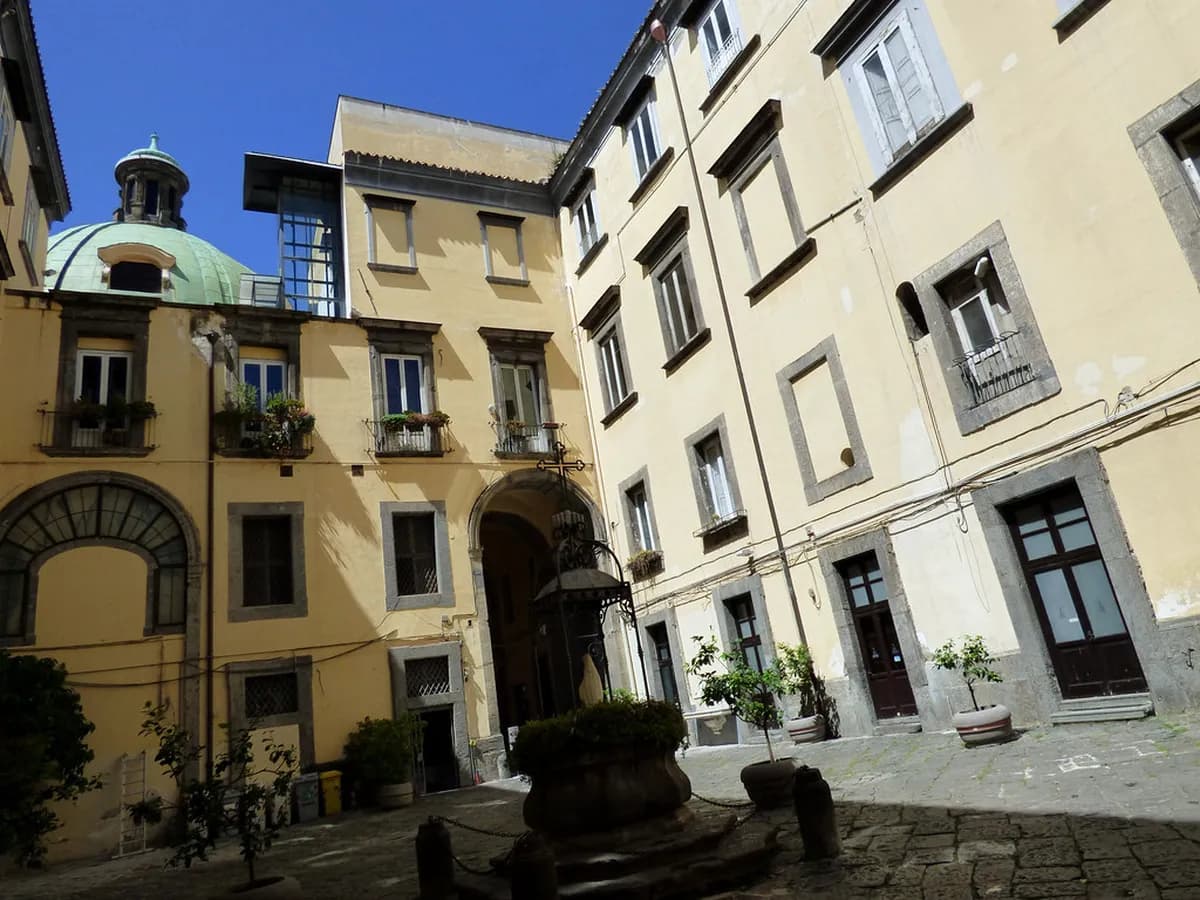
Arrival runs through a courtyard planted with papyrus and orange trees, a small green buffer before the chapel interior. It is easy to hurry past on the way to the door, but slowing here for a minute sets up the contrast between the shaded garden and the dense white stucco inside.
The courtyard is part of the same visit rather than a separate attraction, so build it into your time in the Kalsa rather than treating it as a photo stop. If the door is closed, the courtyard is still a useful orientation point on Via Immacolatella.
Practical Visiting Notes: Hours, Admission and Booking
Third-party pages report an all-week schedule of roughly 10:00 to 18:00 and an admission figure of a few euros, but these come from guide and review pages rather than the operator, and details of this kind change without notice. A recent visitor review states a 10 am to 6 pm opening and a 3 EUR charge; confirm current hours and ticket scope on arrival, by phone or through the official Sicilian tourism listing before you build your day around them.
Nothing in the published material confirms online booking, accessibility provisions, photography rules or whether the oratory ever closes for restoration. The official listing is the place to look for any operator update, and a short phone call or a check at the door is more reliable than a cached review.
Neighbouring sites in the historic centre are separate attractions with their own arrangements, and it would be wrong to assume a combined ticket covers the oratory. Budget for each stop individually and check each one's own admission details as you go.
How to Structure a Short Visit
Plan on a focused stop of fifteen to thirty minutes for the chapel and courtyard; that duration is a suggestion, not an official figure. The room rewards looking rather than lingering, so read up on the theft and the stucco beforehand and spend your time on the details in front of you.
A Palermo self-guided historic centre walk can carry you from the cathedral and the Quattro Canti south through the Kalsa, with the oratory as one short pause among several. Keep the oratory early or mid-route rather than at the end of a long day, when small interiors tend to blur together.
Nearby, the Vucciria market and the Steri give the surrounding streets their character, and both fit naturally either side of an oratory visit. A Vucciria market visitor guide is useful if you want to time the oratory around the market's busiest stretches rather than the reverse.
Optional Audio Guide: What It Adds
A third-party app sells downloadable audio guides to Palermo, including a narrated walk-through of the Oratory of San Lorenzo, under a single one-time payment that unlocks the city's full set of guides for up to six people. That purchase is separate from the oratory's own admission and does not replace a ticket to enter.
The commentary covers the Serpotta decoration, the replica Nativity, the Amato altar and the courtyard, which is a sensible structure if you want context without reading panels. It is optional: the room is small enough to appreciate with a short written introduction, so buy it only if you prefer an audio format.
Plan Your Visit
Treat the Oratory of San Lorenzo as a compact, story-rich pause in the Kalsa rather than a headline sight: the Serpotta stucco, the Amato altar, the courtyard planting and the missing Caravaggio together justify a careful half hour.
Before you go, verify the current hours and admission with the official listing or at the door, and keep your plans flexible for the rest of the historic centre, where nearby sites keep separate tickets and schedules.
Frequently Asked Questions
Do you see the original Caravaggio Nativity at the Oratory of San Lorenzo?
No. Caravaggio's Nativity was stolen from the oratory in 1969, and a reproduction now stands on the altar in its place. Visit with the theft and the reproduction in mind, and you will not be disappointed by the absence of the original canvas.
What is there to see inside the Oratory of San Lorenzo besides the painting?
The interior is defined by Giacomo Serpotta's stucco decoration, described as made between 1699 and 1706 with marble dust worked into the surface. There is also a high altar designed by Giacomo Amato with a marble table and gilded bronze elements, plus an entrance courtyard with papyrus and orange trees.
Where is the Oratory of San Lorenzo in Palermo?
It is on Via Immacolatella in the Kalsa district, within walking distance of the Palazzo Chiaramonte-Steri and the Vucciria market. The historic centre lies just to the north, so it fits naturally into a walk that moves south from the cathedral area toward the waterfront.
How long does a visit to the Oratory of San Lorenzo take?
Allow roughly fifteen to thirty minutes for the chapel and courtyard; this is a suggested duration rather than an official one. The oratory is essentially a single decorated room, so the visit is short unless you linger over the stucco details or use an audio guide.
Is an audio guide needed for the Oratory of San Lorenzo?
No. A third-party app offers a narrated guide covering the Serpotta stucco, the replica Nativity, the Amato altar and the courtyard, sold as a one-time purchase unlocking its Palermo guides. That cost is separate from admission, and a short written introduction works just as well for such a small space.
Should I check hours and admission before going?
Yes. The schedule and admission figures that circulate come from third-party guide and review pages rather than the operator, and the official tourism listing carries no detailed text. Confirm the current arrangements on arrival, by phone or through that official listing before planning your day around them.
Sources
Continue exploring
More guides you'll find useful