7 Hidden Gems in Bologna: Secrets & Local Spots Beyond the Crowds
See 7 hidden gems in Bologna: secret windows, whispering courtyards, and local neighborhoods away from Piazza Maggiore, with 2026 timing tips.
On this page
7 Hidden Gems in Bologna: Secrets, Stories, and Local Spots
Last updated July 2026, this guide to hidden gems in Bologna moves past the Due Torri and Piazza Maggiore to the courtyards and porticoes where locals spend their afternoons. Bologna carries three old nicknames: La Grassa, La Rossa, La Dotta, pointing to its food, its brick-red rooftops, and its university. This seven-item secret trail, plus the neighborhoods and trattorias around it, gives a concrete route for a day or two off the standard circuit.
Beyond the Red City: Why Bologna's Hidden Gems Feel Different
Locals call Bologna La Grassa, La Rossa, La Dotta: the fat, the red, the learned. Each nickname points to a real layer of the city: its food culture, its terracotta rooftops, and its university. That university is widely cited as the oldest in the Western world, and its student population still shapes daily life in the center today. Many travelers now treat Bologna as an off-the-beaten-path alternative to Florence or Milan, since both of those cities pack their main sights with tour groups by mid-morning. Day-trippers fill Piazza Maggiore and the Due Torri at midday, but the rest of the city stays workable all day, including the evening hours when the secret trail below is easiest to walk without a crowd. Its off-the-beaten-path guide maps routes that skip that piazza entirely, favoring quieter parallel streets instead. A separate secret spots guide catalogs smaller finds not covered in the seven-item trail below, useful once the main list is done.
7 Hidden Gems in Bologna's Secret Trail
Bologna's own tourism office keeps a running list of seven secrets, small details easy to miss without directions. Each one below includes the exact street or landmark to stand at, plus a timing note where crowding has become an issue in recent years. Most of the seven cost nothing to find, which makes the whole trail a good fit for a slow morning or a rainy afternoon under the porticoes.
- The Finestrella di Via Piella
- A small door at via Piella 16/a-18/a opens onto the Moline Canal, one of the last visible stretches of Bologna's old underground canal network.
- Check that water is actually flowing before a special trip, and visit early morning or early evening, since midday queues have grown at this single spot.
- That dedicated Finestrella di Via Piella guide covers current best-times and nearby detour options along the rest of the old canal route.
- Neptune's Finger
- Stand near the entrance to the Salaborsa library on Piazza del Nettuno and look back at the Neptune Fountain's raised hand.
- From that exact angle, sculptor Giambologna's finger lines up into a different shape, a perspective trick some accounts tie to his protest against the fountain's censors.
- Move a few steps in either direction and the illusion disappears, which is part of why first-time visitors often walk right past it.
- The Three Arrows of Corte Isolani
- Look up into the wooden portico at Strada Maggiore 19 and three medieval arrows are still lodged in the beams.
- Local legend ties them to a failed attack on a Bolognese nobleman, foiled when a woman appeared at a window and distracted the attackers.
- They sit at eye level for anyone looking up rather than straight ahead, so most people need a local tip to notice them at all.
- The Voltone del Podestà
- Beneath the vaulted passage of Palazzo del Podestà on Piazza Maggiore, two people standing at diagonally opposite corners can whisper toward the wall and hear each other clearly.
- Sound travels along the curved stone rather than across the open center, a trick some local stories connect to confessions once taken from lepers kept at a distance.
- Try it in both directions, since the effect only works when both people stand at the matching corners of the vault.
- Canabis Protectio
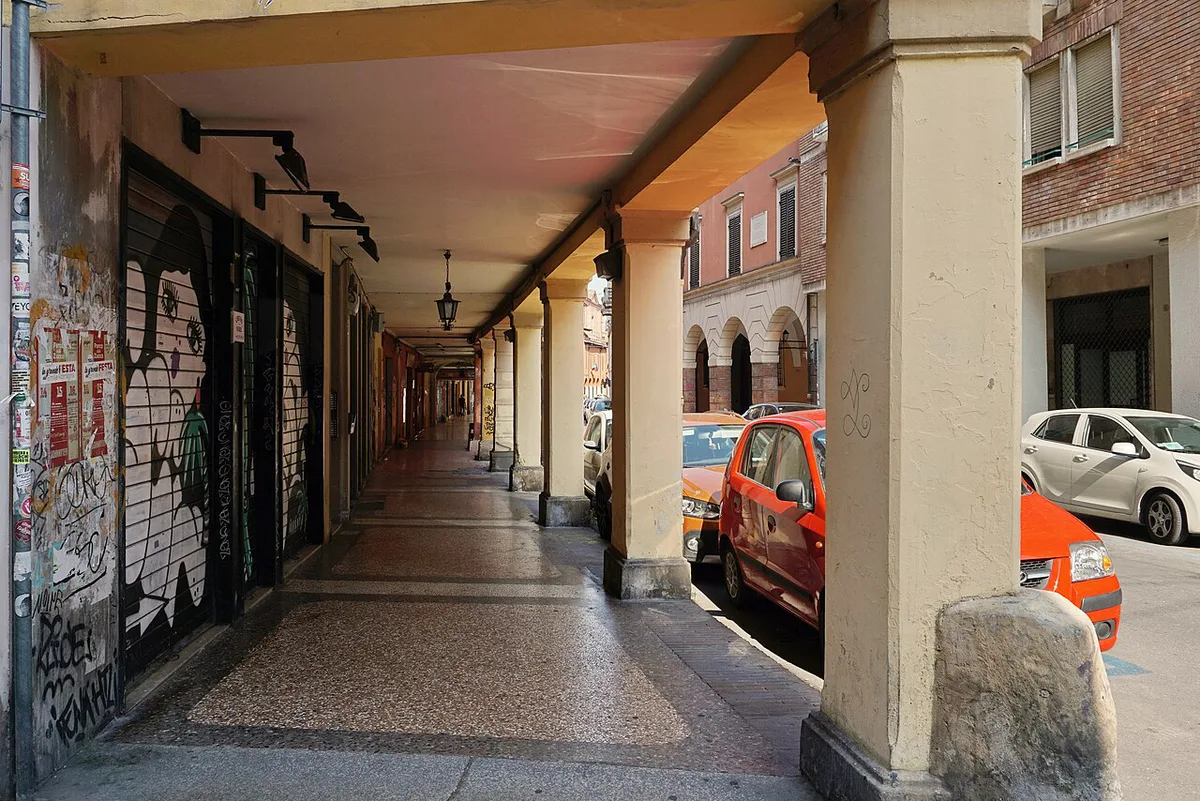
- A Latin inscription on the portico ceiling at via dell'Indipendenza 3 reads Panis Vita, Canabis Protectio, Vinum Laetitia: bread is life, hemp is protection, wine is joy.
- It marks hemp fiber, not the modern recreational plant, as a serious medieval Bolognese export used for rope and cloth.
- Most visitors walk beneath it without noticing, since the lettering blends into the surrounding portico ceiling.
- Panum Resis at Palazzo Poggi
- Inside Palazzo Poggi on via Zamboni 33, the historic seat of the University of Bologna, a desk is said to carry the inscription Panum Resis, knowledge lies at the foundation.
- This building sits inside the University Quarter, alongside the world's oldest anatomy theater.
- Access depends on which university rooms are open to visitors on a given day, so confirm current opening hours before making a special trip.
- The Broken Vase Atop Torre degli Asinelli
- Legend places a broken vase at the top of Torre degli Asinelli, symbolizing a resolved dispute, though no visitor has ever confirmed finding it.
- A separate superstition warns students against climbing the tower before graduating, for fear of never finishing the degree.
- Torre degli Asinelli has had restricted access for restoration in recent years, so confirm current opening status with the official tourism office before planning a climb.
Neighborhoods Where Bologna's Local Life Happens
Away from the porticoed core, three districts show a different side of the city, each with its own pace and crowd. Comparing them side by side helps decide which one fits a free afternoon. University Quarter hours follow the student calendar, Pratello peaks in the evening, and Bolognina keeps a regular residential schedule all day. A fuller side-by-side comparison lives in the Bologna neighborhoods guide, which maps all three, plus the historic center, together.
Bolognina's mixed character—newer art spaces alongside older residential blocks—includes the Museo per la Memoria di Ustica, where Christian Boltanski's installation honors the 81 victims of the 1980 Itavia Flight 870 disaster, adding cultural depth beyond markets and daily life.
| Neighborhood | Location | Character | Best Timing |
|---|---|---|---|
| Pratello | West of center | Alternative nightlife: small bars, vintage shops, street art | Evenings peak with crowds; early stops better for browsing shops |
| Bolognina | Behind main train station | Multicultural: markets, food stalls, art spaces and residential blocks | Regular residential schedule all day |
| University Quarter | Via Zamboni area | University of Bologna, anatomy theater, bookshops, budget bars and trattorias | Hours follow student calendar |
- Pratello
- Via del Pratello, west of the center, is Bologna's alternative nightlife strip: small bars, vintage shops, and street art that feel far from Piazza Maggiore.
- Evenings bring the biggest crowds here, so an early stop works better for browsing shops without the bar noise.
- Its dedicated Pratello guide lists specific bars and the evenings when the street gets busiest.
- Bolognina
- Bolognina sits behind the main train station and holds one of Bologna's most multicultural communities, with markets and food stalls that lean local rather than touristy.
- Newer art spaces have opened here alongside older residential blocks, giving the district a mixed, still-developing feel compared with the historic core.
- A dedicated Bolognina neighborhood guide covers its art spaces and weekday market schedule.
- University Quarter
- Via Zamboni and the streets around it hold the University of Bologna and the Archiginnasio's anatomy theater, and student prices keep the area different from the historic core.
- Bookshops, budget trattorias, and late-opening bars cluster here because of the student population, changing the feel block by block.
- That University Quarter guide has current opening hours for the Archiginnasio and nearby libraries.
Architecture and Views Beyond the Two Towers
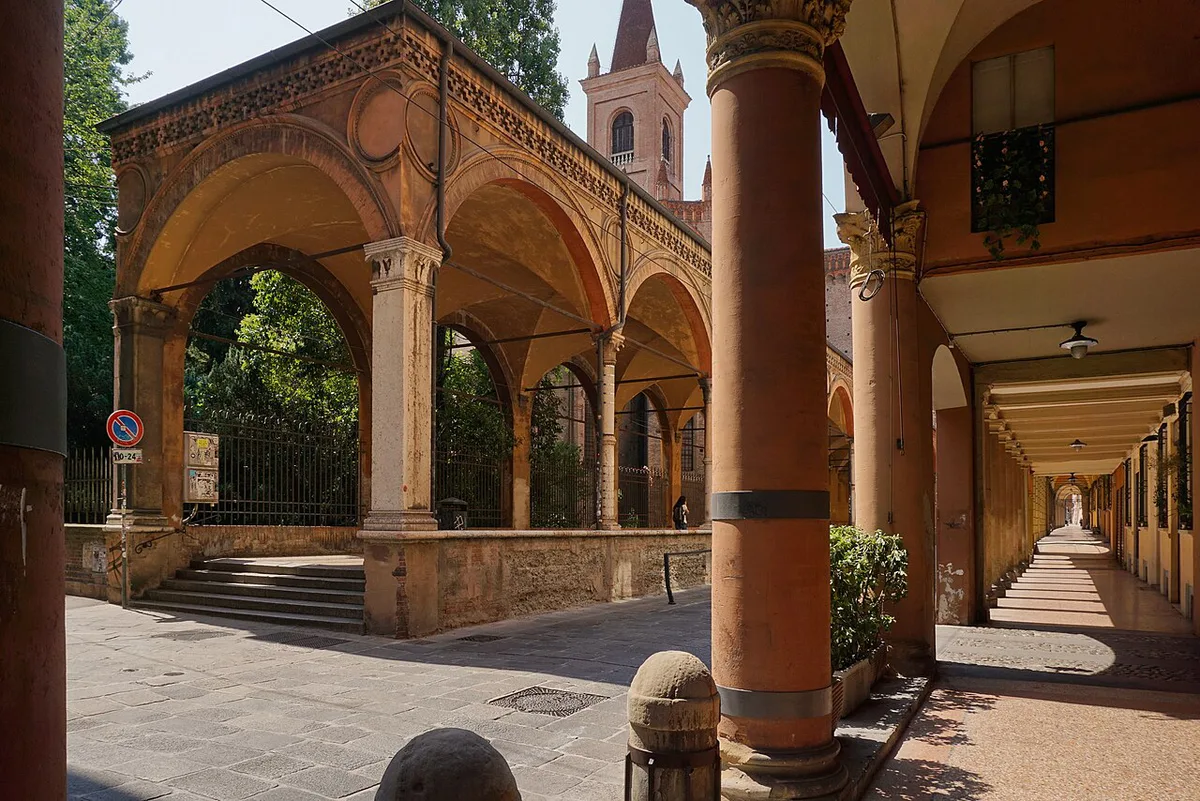
Bologna's brick-and-terracotta skyline holds more than the Asinelli and Garisenda towers. These five stops cover porticoes, sculpture, and a raised view locals climb to on weekends. Two of them tie directly into the porticoes network that shelters most of the city center from rain and summer sun.
- The UNESCO Porticoes
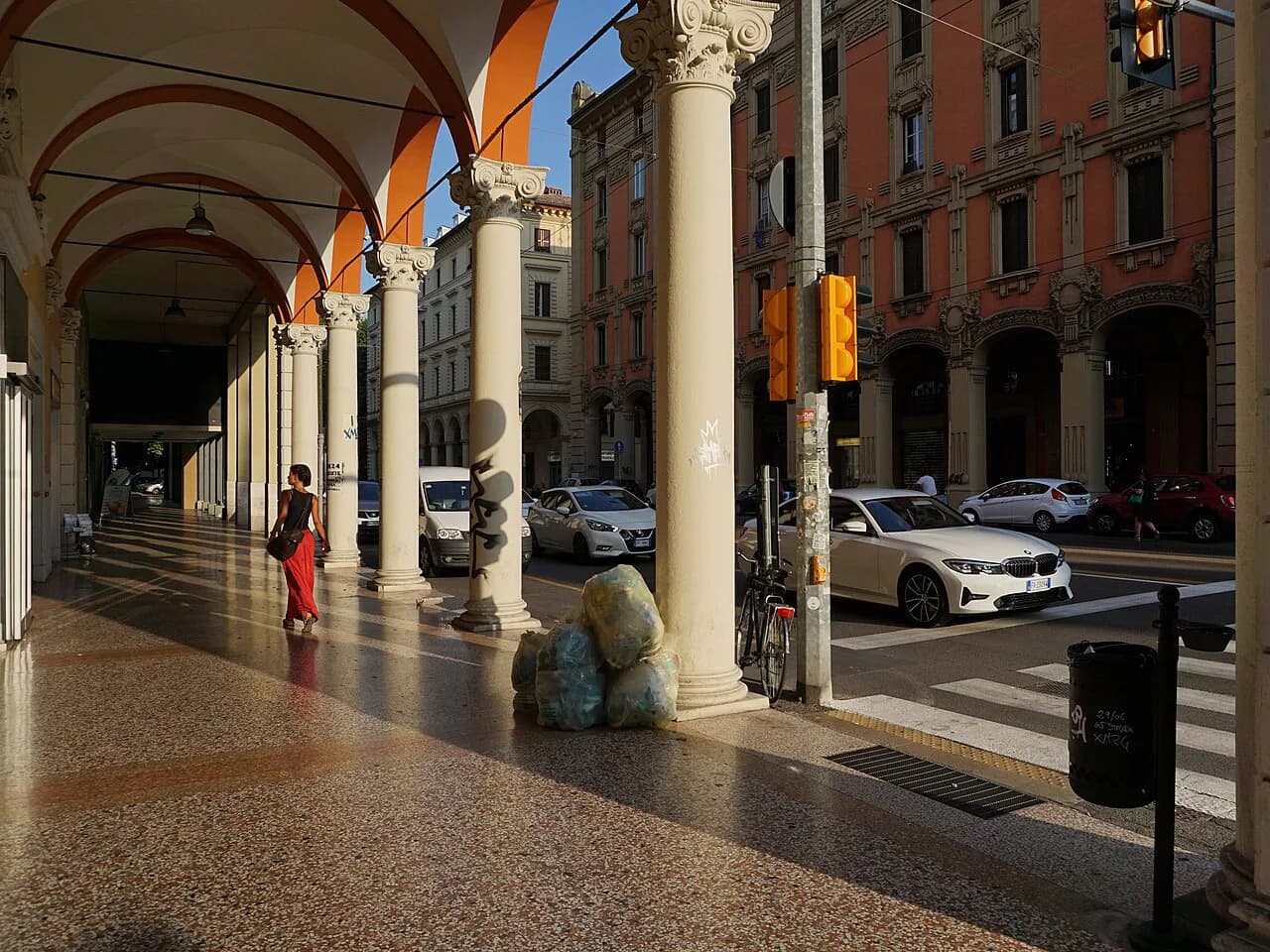
- Bologna's covered porticoes run across most of the city center and were inscribed as a UNESCO World Heritage Site.
- They connect the historic core to outlying churches and the train station, so a full loop can be walked almost entirely under cover.
- Its dedicated porticoes of Bologna guide breaks down the UNESCO-listed stretches and where to find the tallest arcades.
- Portico di San Luca and the Sanctuary
- Portico di San Luca is widely cited as the world's longest, running from the city gate uphill to the sanctuary.
- This walk is long and steep, so travelers with limited mobility can take the San Luca Express train instead, priced at official tourism office rates.
- That San Luca Sanctuary guide lays out both the walking route and the train alternative in detail.
- Santa Maria della Vita
- Inside this church sits a life-size terracotta group known as the Lamentation over the Dead Christ, prized for the raw expressions on each figure.
- It draws far fewer visitors than Bologna's most-photographed landmarks in the same historic core.
- San Michele in Bosco
- This elevated complex looks down over Bologna's rooftops with what locals call a telescope effect, framing the two towers in a single narrow sightline.
- Reaching it adds real elevation gain, so plan for it separately from a flat city stroll.
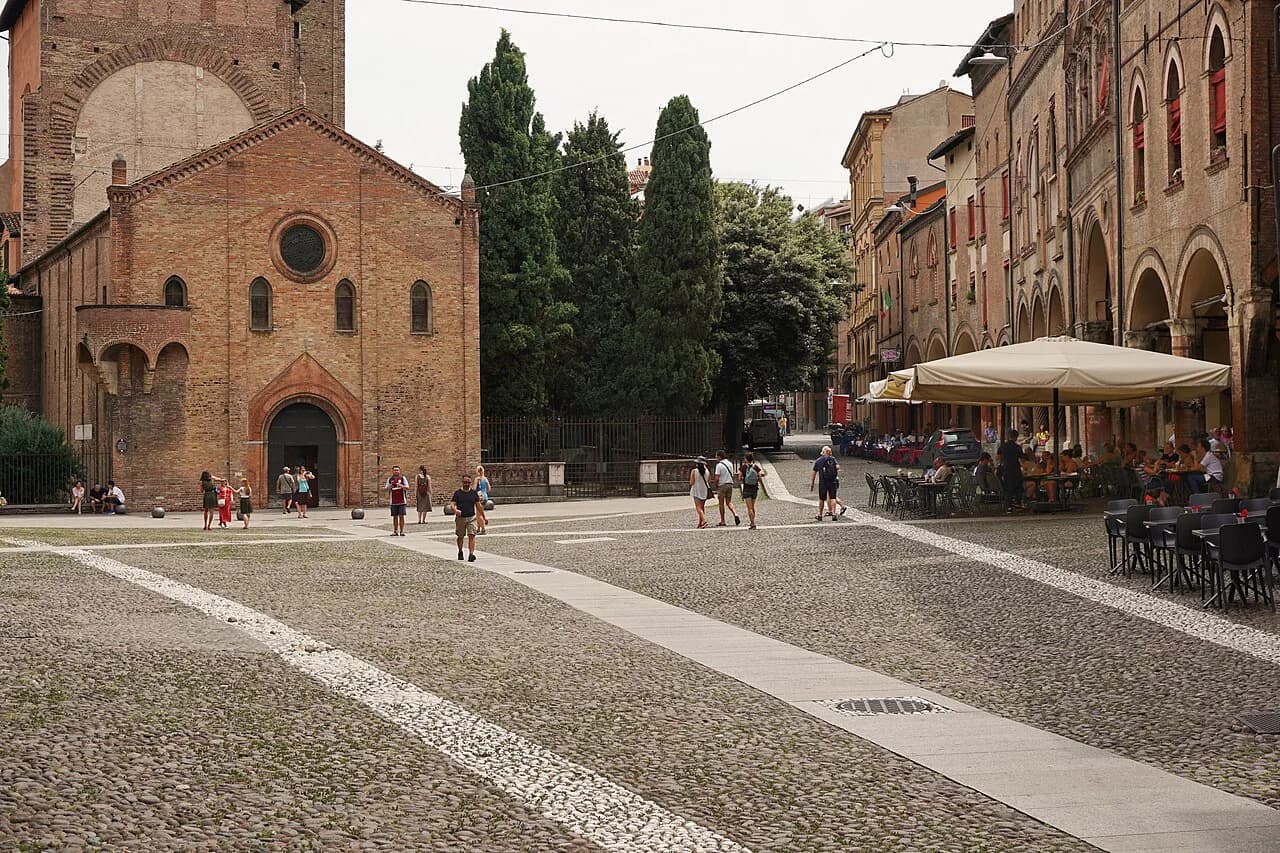
- Santo Stefano Complex
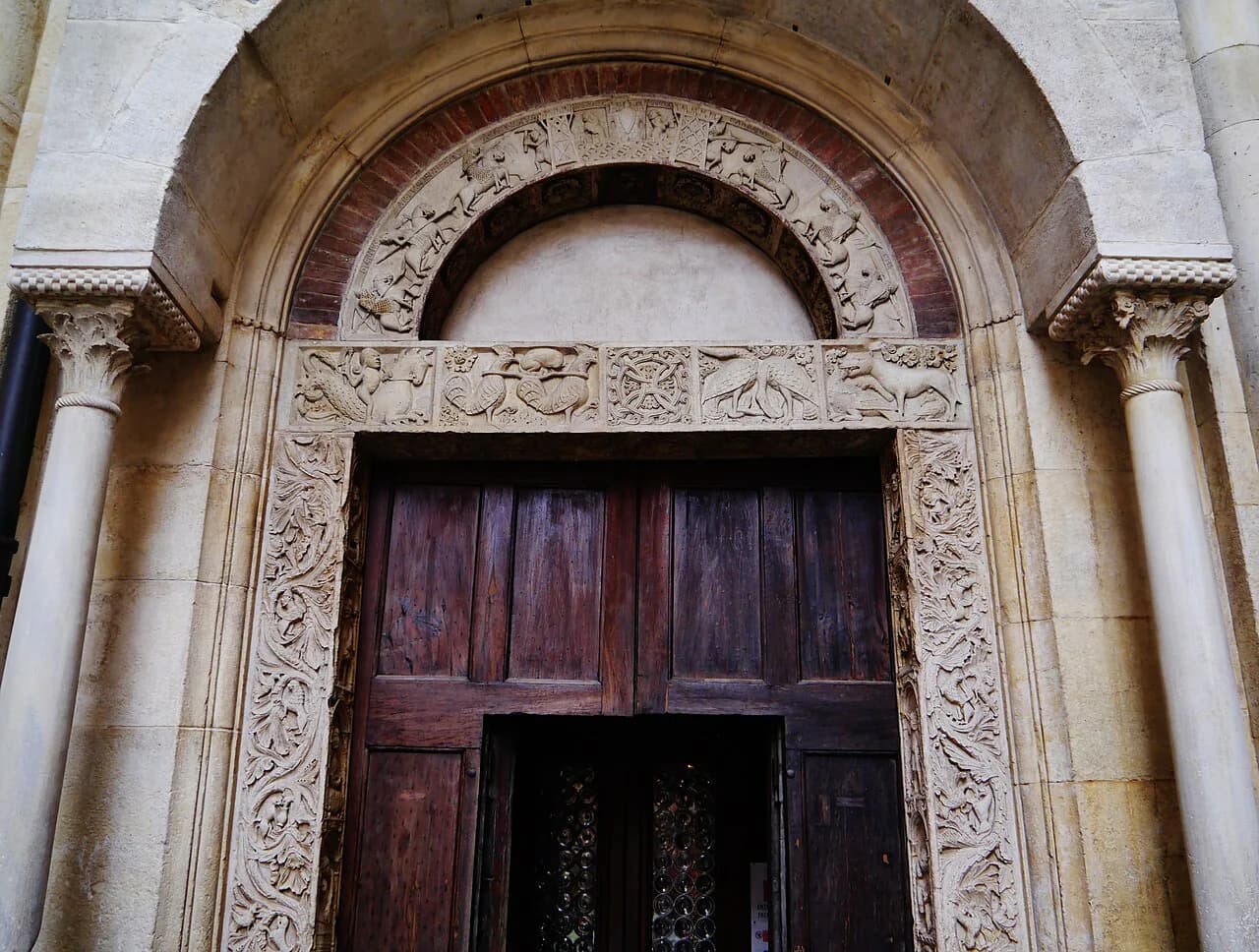
- This cluster of connected churches forms one of the city's older religious sites, with a quiet cloister that stays calmer than Piazza Maggiore.
- Its dedicated Santo Stefano guide covers each individual church and its opening hours.
Where Locals Actually Eat: Markets and Trattorias
Food is central to why hidden gems in Bologna matter as much as the sights. These market and trattoria choices are where residents actually shop and eat, not just where tour buses stop. Prices and pace both shift once a visit moves even one street back from Piazza Maggiore.
- Quadrilatero at Dawn vs. Mercato delle Erbe at Lunch
- Quadrilatero market streets are calmest at dawn, before delivery trucks and tour groups fill the narrow lanes.
- By midday, locals shift to Mercato delle Erbe for a faster, less crowded lunch than the Quadrilatero stalls tend to offer.
- A dedicated Quadrilatero guide has stall-by-stall opening times for an early visit.
- Finding Authentic Ragù
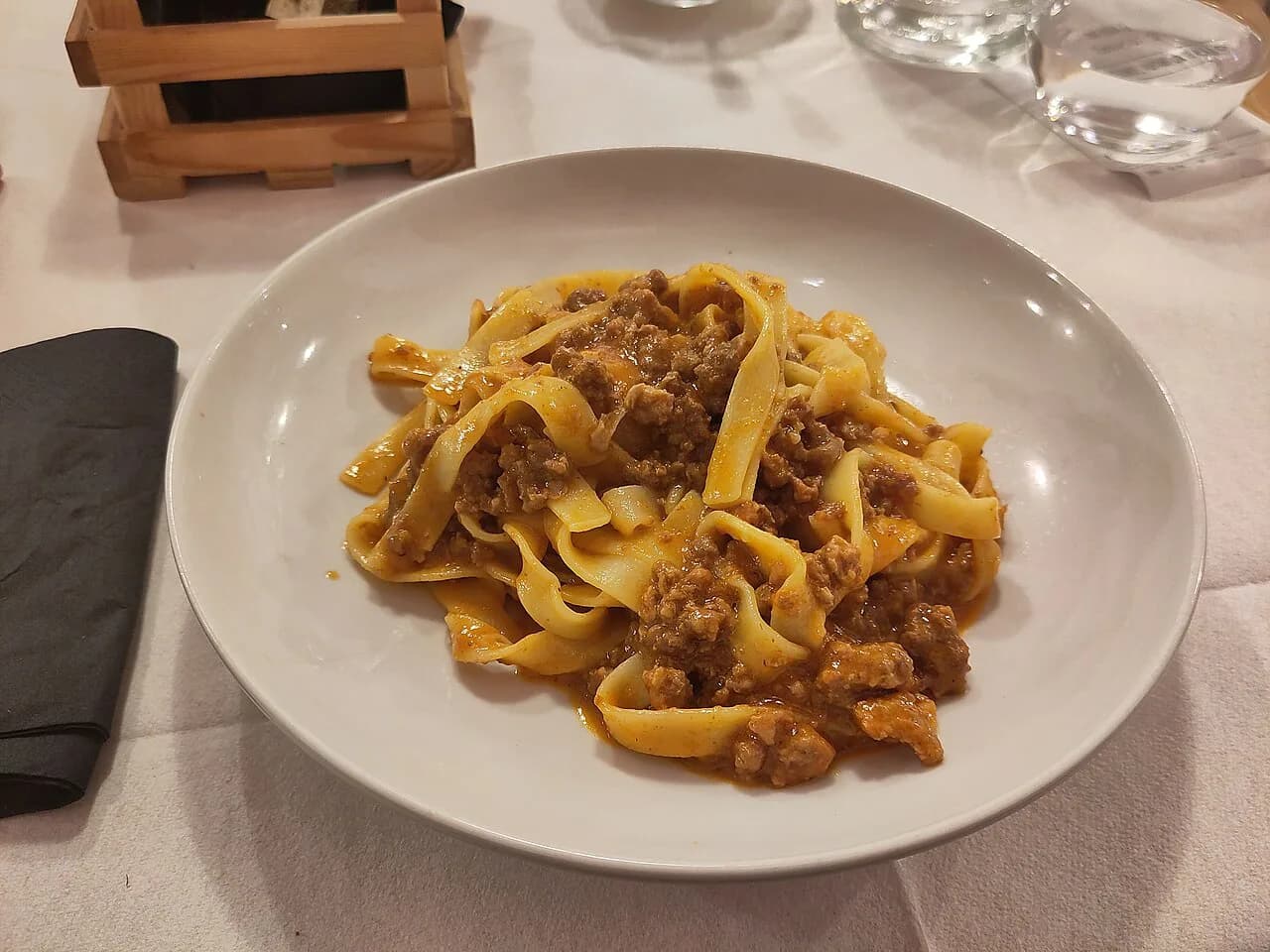
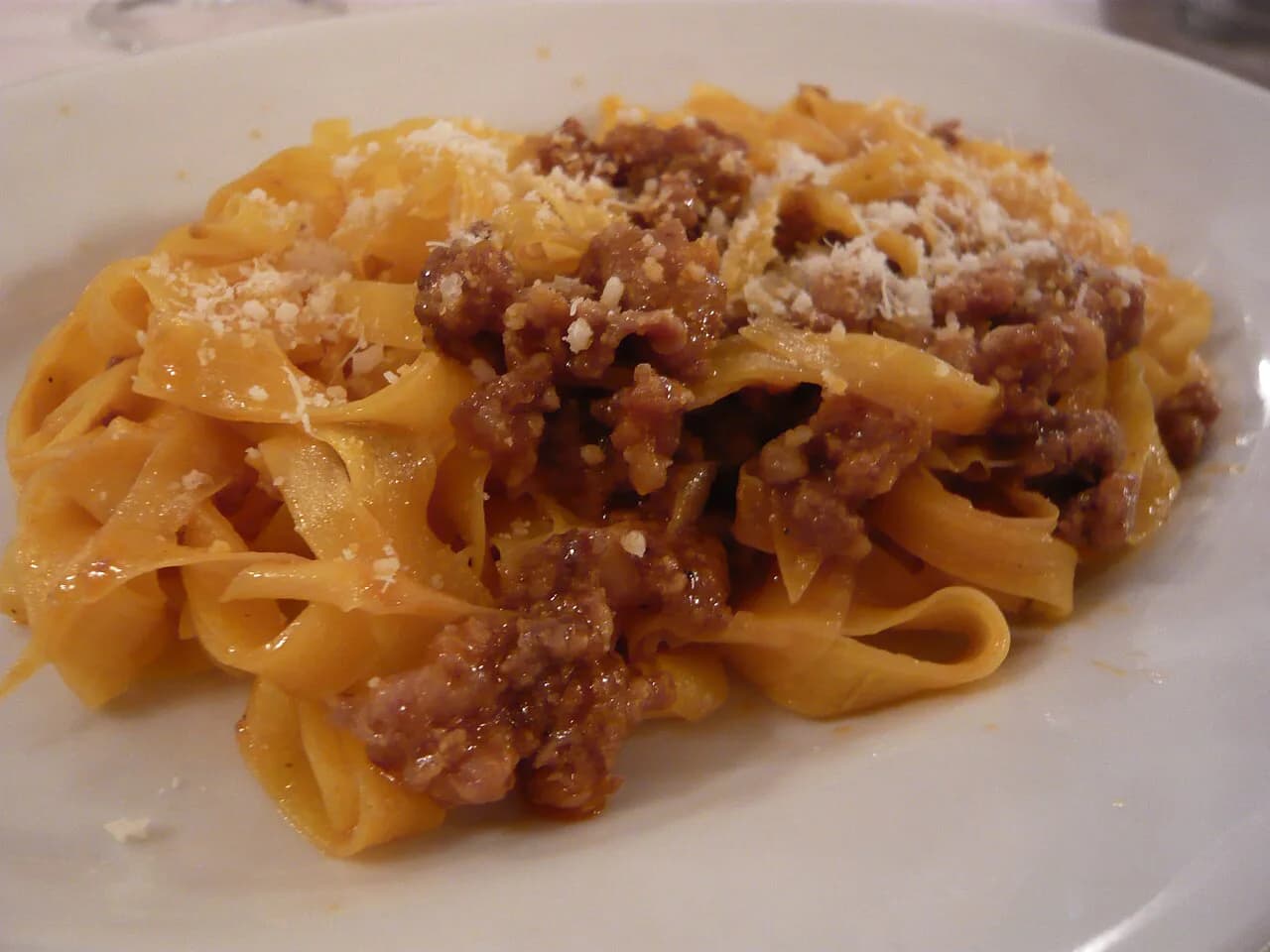
- Look for a short, seasonal menu and a kitchen that lists tagliatelle al ragù rather than the flatter, tomato-heavy spaghetti bolognese aimed at tourists.
- Multilingual laminated menus and a host waving people in from the street are the clearest signs of a place built for passing tour groups, not neighborhood regulars.
- That local restaurants guide names specific trattorias that meet that test.
- Gelato Away from Piazza Maggiore
- Shops a few blocks from the main piazza tend to make gelato in smaller batches and charge less than stands facing the towers.
- That Bologna local food guide lists specific gelato counters worth the short detour.
Planning a Hidden-Bologna Day: Timing, Transport, and Mistakes to Avoid
A little planning turns this list into a working itinerary instead of a scavenger hunt. Spreading the seven secrets, one neighborhood, and one meal stop across a single day keeps the pace realistic on foot.
- Best Timing for the Secret Trail
- Visit the Finestrella and the Voltone del Podestà early morning or early evening, when tour groups thin out.
- A dedicated best time to visit Bologna guide covers which months and hours see the fewest crowds citywide.
- Getting Around on Foot
- Bologna's center is compact and mostly covered by porticoes, so walking works in rain and summer heat alike.
- Skip renting a car for the center: it sits inside a signed ZTL zone monitored by camera, off-limits to non-resident vehicles without a permit.
- Mistakes to Avoid
- Trying to see all seven secrets plus every neighborhood in one half-day rushes past the point of visiting them at all.
- Many of these stops cost nothing, and the free things to do in Bologna guide groups them with other no-cost stops.
- Extending Beyond One Day
- A dedicated best day trips from Bologna guide covers routes for travelers staying three days or more.
- Its unique things to do in Bologna guide adds further stops once the main trail is done.
Three Concrete Stops in Bolognina
Bolognina rewards a focused walk beyond its residential streets. Start at Mercato Albani on Via Francesco Albani, a covered neighborhood market with produce stalls and casual food counters. Visit during daytime trading hours, since the surrounding area becomes quieter after vendors close.
Continue to the Museo per la Memoria di Ustica at Via di Saliceto 3/22. The museum commemorates the 81 victims of the 1980 Itavia Flight 870 disaster. Its central installation by Christian Boltanski surrounds reconstructed aircraft wreckage with lights, mirrors, and recorded voices. Check the museum’s official schedule because opening days and hours are limited.
For contemporary culture, head west to DumBO at Via Camillo Casarini 19. This former railway freight complex now hosts exhibitions, performances, markets, and seasonal events. Programming changes frequently, so consult its calendar before crossing the district. These stops lie outside Bologna’s compact monument circuit. Allow several hours and use local buses when the walk from the historic center feels too long.
For trip-planning details, see Bologna – Wikivoyage.
Explore hidden gems in other cities
Further reading: Bologna on Wikivoyage · Bologna on Wikipedia
Frequently Asked Questions
What are the seven secrets of Bologna?
They are seven small details around the historic center, including the Finestrella canal window, Neptune's Finger illusion, and the Corte Isolani arrows. Four more appear in the secret-trail section above, each with an exact address. Bologna's tourism office maintains the list as a self-guided treasure hunt through the center.
Is Torre degli Asinelli open in 2026?
Torre degli Asinelli has had restricted access for restoration in recent years. Confirm the current opening status with the official tourism office before planning a climb, since the schedule can change without much notice.
How much time should you plan for Bologna's hidden gems?
A single focused day covers the seven-item secret trail plus one neighborhood walk. Two days allow time for a market morning, a trattoria lunch, and either the San Luca walk or the train alternative without rushing.
Do you need a car to see Bologna's hidden gems?
No. Its historic center is compact, mostly covered by porticoes, and sits inside a signed ZTL zone that restricts non-resident vehicles. Walking, or a short bus ride to San Michele in Bosco or San Luca, covers every stop on this list.
Is Bologna a good alternative to Florence or Milan?
Many travelers treat it that way, since it carries substantial historic architecture and food culture with fewer midday crowds outside the main piazza. It works well paired with a Florence or Milan stop on the same trip.
Which Bologna neighborhood suits hidden-gems exploring best?
University Quarter puts the Panum Resis secret and the Archiginnasio within walking distance of most other stops on this list. Pratello and Bolognina sit further out but pair well with a longer, two-day visit that includes an evening in one of them.
Explore More Hidden Bologna
Keep discovering the quieter, more local side of Bologna with these guides.
Neighborhoods
- Quadrilatero Bologna
- Santo Stefano Bologna Guide: Visiting the Sette Chiese Complex
- A 2026 Guide to Bologna's University Quarter
- Via del Pratello, Bologna
- Bolognina, Bologna
- Bologna Neighborhoods Guide: Where to Stay by Vibe and Budget (2026)
Secret spots & the outdoors
- Secret Spots in Bologna: The Seven Secrets, Hidden Corners, and Local Finds
- Finestrella di Via Piella
- Porticoes of Bologna
- San Luca Bologna
- Off the Beaten Path in Bologna: A Guide Beyond the Piazza Maggiore Crowds
Food, drink & planning
Continue exploring
More guides you'll find useful