Santo Stefano Bologna Guide: Visiting the Sette Chiese Complex
Plan a Santo Stefano Bologna visit: Sette Chiese hours, free entry rules, the four churches, the museum, and mistakes to avoid in 2026.
On this page
Santo Stefano Bologna: A Complete Guide to the Sette Chiese Complex
Last updated July 2026, this santo stefano bologna guide covers Piazza Santo Stefano's medieval complex, still known locally as Sette Chiese. Only four of the original seven structures survive today as distinct churches, which confuses first-time visitors expecting seven separate buildings. Entry stays free, but a split daily schedule and a strict midday closure shape when a visit actually works.
Santo Stefano Bologna: Why Locals Call It Sette Chiese
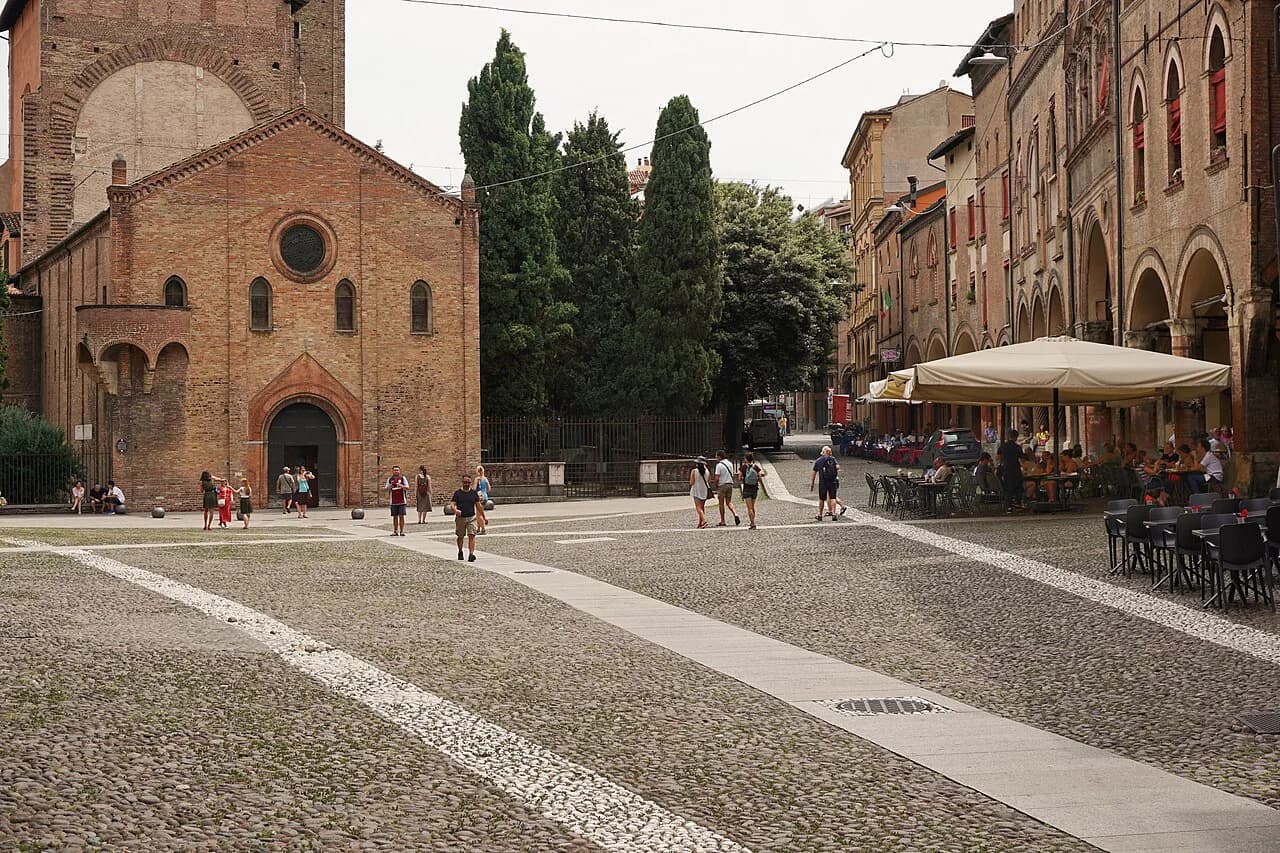
Piazza Santo Stefano sits at the end of Via Santo Stefano's porticoes, a stretch often described as Bologna's prettiest street. The complex grew in stages across several centuries, not as one building. Tradition credits Bishop Petronius with founding the site in the 5th century, over the ruins of a pagan temple. He wanted the design to echo the Church of the Holy Sepulchre in Jerusalem, which is why locals also call the complex Santa Gerusalemme. Benedictine monks expanded it between the 10th and 13th centuries, adding chapels, a courtyard, and a two-level cloister. Locals still call the result Sette Chiese, Seven Churches, even though only four connected churches remain distinct today. Those four are the Church of the Crucifix, the Church of the Holy Sepulchre, the Church of Saints Vitale and Agricola, and the Church of the Trinity. Three other original spaces, the Courtyard of Pilate, the Benedictine cloister, and the Chapel of the Bandage, now sit as rooms inside those four buildings rather than standing alone.
While Petronius founded the complex in the 5th century, its oldest standing structure, the Church of Saints Vitale and Agricola, dates to 305 AD, making it far older than the site's formal establishment.
Essential Visitor Information: Hours, Entry, and Group Rules
Santo Stefano keeps a split schedule, with a long midday closure most days. Monday differs from the rest of the week: only the Church of the Crucifix opens, and only for evening Mass. Because entry carries no fixed fee, Santo Stefano fits naturally into a day built around 15+ Free Things to Do in Bologna: A 2026 Budget Guide. Visits can pause during scheduled Mass times, so plan around the liturgical hours below if a fully open complex matters.
| Day | Hours |
|---|---|
| Monday | Closed to visitors; Church of the Crucifix opens 6:00–7:30 PM for Mass only |
| Tuesday–Friday | 9:30 AM–12:30 PM and 2:30–7:00 PM |
| Saturday | 9:30 AM–12:30 PM and 2:30–7:30 PM |
| Sunday | 9:30 AM–12:30 PM and 3:30–7:00 PM |
- Entry: free, with donations encouraged at the door.
- Groups over 20 people: tour headphones are recommended.
- Groups over 40 people: split into separate entry groups.
- Mass times: Monday 6:30 PM; Tuesday to Saturday 8:30 AM (suspended in August) and 6:30 PM; Sunday 9:30 AM, 12:00 PM, and 6:30 PM.
- Dress code: shoulders and knees covered, standard for Italian churches.
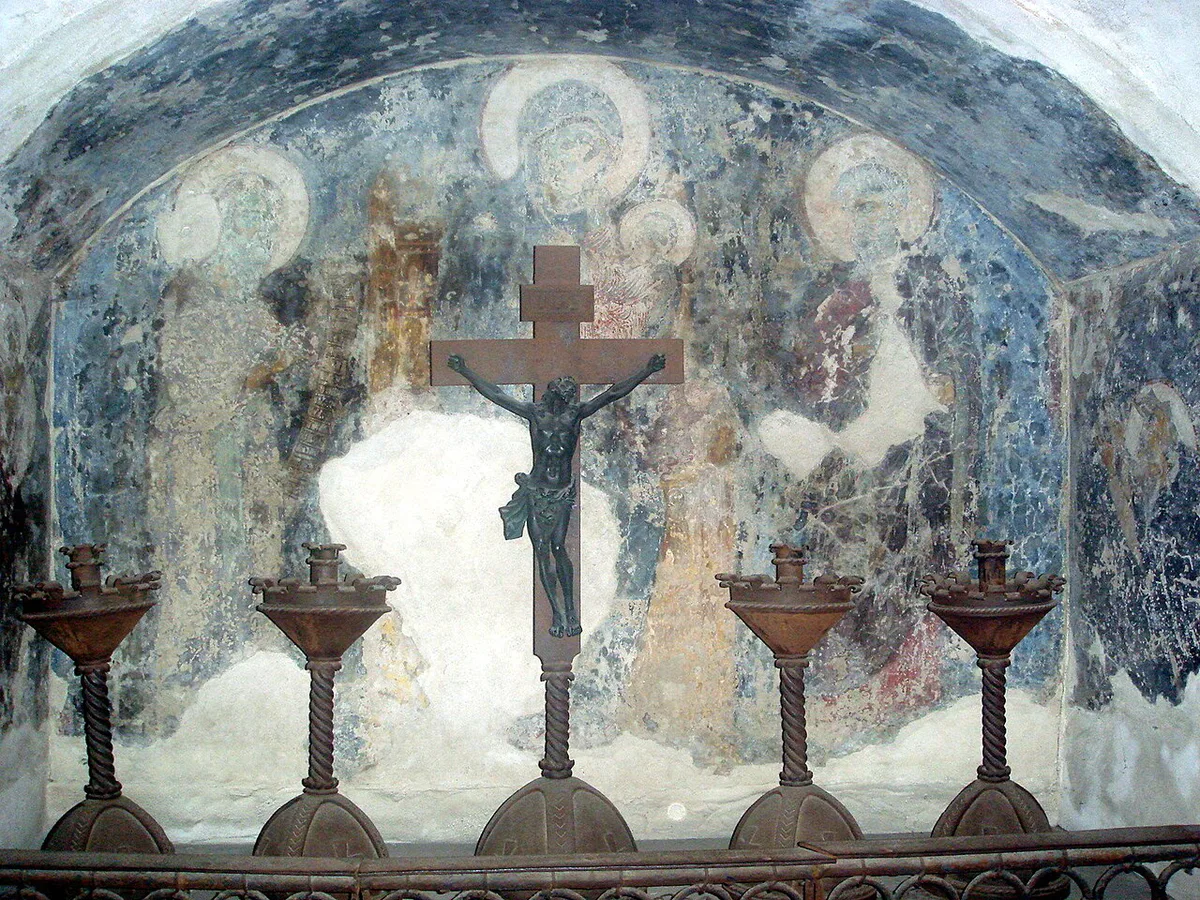
Navigating the Complex: The Four Churches and Two Courtyards
Expect a maze-like walk between four churches and two courtyards, not a single straight nave. Each stop carries its own construction date and its own story.
- Church of the Crucifix (Chiesa del Crocifisso): Lombard-era origin dating to the 8th century, with a raised presbytery over a five-aisle crypt. The corpus on the altar is a 14th-century Crucifix attributed to Simone dei Crocifissi, carved around 1380.
- Church of the Holy Sepulchre (Santo Sepolcro): an octagonal-plan church built by Petronius as a copy of Jerusalem's tomb of Christ. Its central shrine held the relics of St. Petronius from their 1141 rediscovery until 2000, when his remains moved to the Basilica di San Petronio.
- Church of Saints Vitale and Agricola: the oldest structure in the complex, built to house the relics of Bologna's first Christian martyrs, dated to around 305 AD.
- Courtyard of Pilate (Cortile di Pilato): a 13th-century open court centered on a marble basin donated by Lombard kings Liutprand and Hildeprand, tied symbolically to the Passion narrative.
- Benedictine Cloister: a two-level Romanesque loggia built between the 10th and 13th centuries, generally the quietest corner of the complex.
The Chapel of the Bandage and the Basilica Museum
The museum occupies two rooms inside the 17th-century Chapel of the Bandage, added after 19th-century restorations displaced devotional objects from elsewhere in the complex. Bologna Welcome lists roughly 1,600 square feet, about 150 square meters, of exhibition space across those two rooms. Paintings by Vitale da Bologna, Lippo di Dalmasio, and Jacopo di Paolo hang alongside a 13th-century fresco fragment of the Massacre of the Innocents, originally part of a larger cycle that once covered the Sepulchre's dome. A 1380 reliquary attributed to Jacopo Roseto, historically linked to the relic of St. Petronius's head, sits among the shrines on display. A carved oak figure identified as St. Bovo, a Benedictine monk once resident at Santo Stefano, rounds out the collection. On select days each month, young volunteers from the Pietre Vive group lead free guided tours, typically in the afternoon between 3:30 and 6:00 PM. Confirm the current schedule on the basilica's own site before planning around one. Before leaving, stop at the Terra Santa Store inside the complex. It sells olive-wood and mother-of-pearl objects made by Holy Land artisans, plus charity favors and goods tied to old monastic recipes.
Piazza Santo Stefano and the Streets Around It
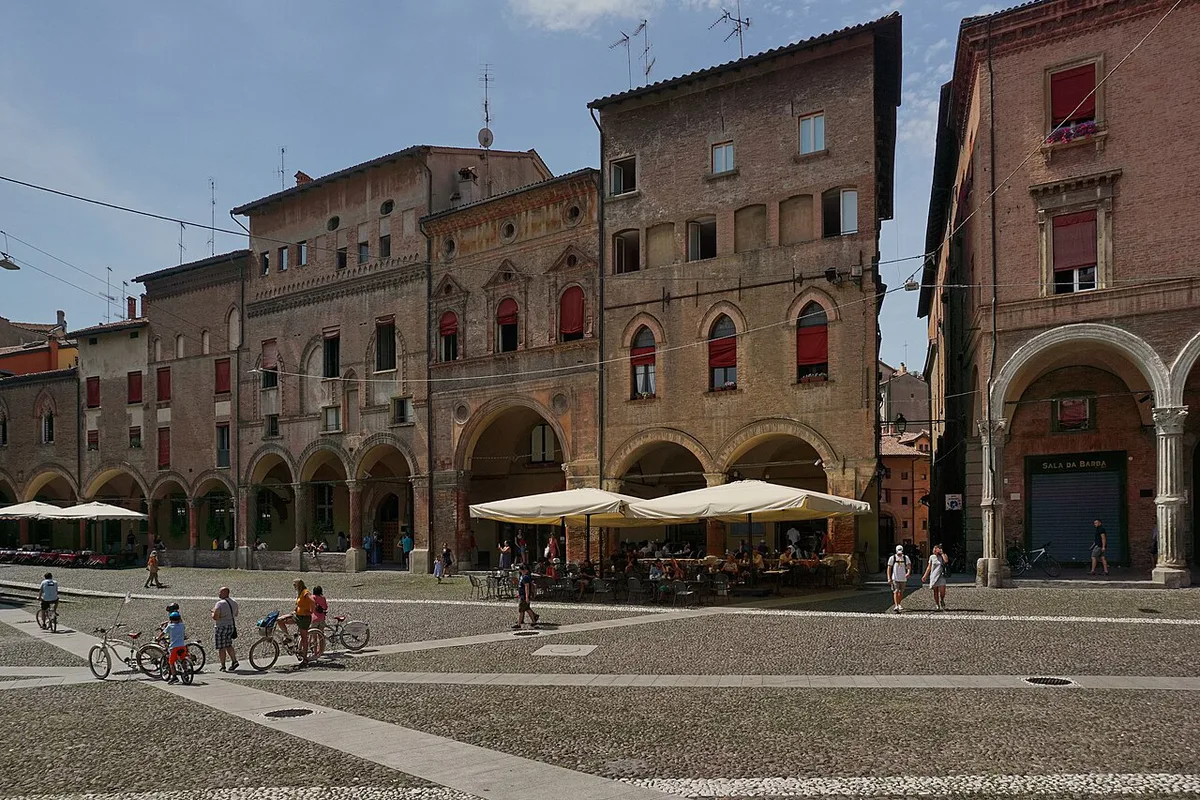
Piazza Santo Stefano rewards slow attention beyond the basilica doors. Bologna Welcome describes it as a kind of civic cradle, the point where several porticoed streets meet. A recurring weekend antiques market, the Mercato Antiquario Città di Bologna, sets up on the square. Casa Isolani, a medieval tower-house on the same piazza, is another stop Bologna's tourism office flags nearby. Its tucked-away courtyards and working monastery keep the complex on lists of quieter corners of Bologna, despite a location in the heart of the center. After the visit, the market streets of the Quadrilatero food market sit a short walk away, a workable next stop for lunch.
Is Santo Stefano Worth the Visit? Decision Criteria
Santo Stefano rewards some visitors more than others, depending on travel style.
- History buffs: high priority. The Romanesque cloister, the 5th-century Sepulchre, and the reused Roman-era columns inside the Church of the Holy Sepulchre reward a slow walk-through.
- Short itineraries: a strong candidate. A full visit runs 45 to 60 minutes, and the complex sits inside the center, not a detour.
- Families: workable with caution. The maze-like layout keeps children curious, but this remains an active place of worship, so quiet is expected throughout.
Mistakes to Avoid at Santo Stefano
A few timing and packing details separate a smooth visit from a frustrating one. For a contrasting religious landmark outside the center, compare notes with the San Luca Sanctuary, reached by Bologna's long portico walk.
Monday visits are limited to the Church of the Crucifix from 6:00–7:30 PM, but a complete tour of all four churches and courtyards requires 45 to 60 minutes, making any other day preferable.
- Arriving around 12:15 PM: most days close for a two-hour midday break starting at 12:30 PM, reopening at 2:30 PM.
- Skipping coins for the light boxes: several frescoes and chapels sit behind coin-operated lighting, so keep small change on hand.
- Expecting a full visit on Monday: only the Church of the Crucifix opens that day, and only for evening Mass.
- Walking past the Terra Santa Store: the shop inside the complex is easy to miss on the way out.
- Ignoring Mass times: tourist visits pause during scheduled services, so check the liturgical hours above before fixing on a time.
Best Time to Visit Santo Stefano
Visit between 9:30 and 11:00 AM from Tuesday through Saturday for a quieter walk and useful natural light. Morning light reaches the Courtyard of Pilate and helps reveal details around its marble basin and brick arcades.
Avoid arriving after noon. The complex closes at 12:30 PM, leaving too little time for its four churches, courtyards, cloister, and museum rooms. Allow 45 to 60 minutes for an unhurried circuit.
The afternoon session works well when Santo Stefano is paired with lunch in the Quadrilatero. Doors usually reopen at 2:30 PM, except on Sunday, when reopening shifts to 3:30 PM. Pietre Vive tours also tend to run on selected weekend afternoons.
Check Mass times before choosing either period because tourist access may pause during services. Monday is unsuitable for sightseeing, since only the Church of the Crucifix opens for evening Mass. Photography should remain discreet, particularly during worship, and flash may be restricted around artworks.
Further reading: Bologna on Wikivoyage · Bologna on Wikipedia
Frequently Asked Questions
Is Santo Stefano in Bologna free to visit?
Yes. Entry to the Santo Stefano complex is free, though donations are encouraged at the door. The attached museum inside the Chapel of the Bandage follows the same access as the rest of the complex, with no separate ticket noted by Bologna Welcome.
What are the opening hours for Santo Stefano?
Hours split across the day, with a long midday break. Tuesday through Friday, the complex opens 9:30 AM to 12:30 PM and 2:30 to 7:00 PM. Saturday keeps the same morning slot with an evening extension to 7:30 PM, and Sunday shifts the afternoon opening to 3:30 PM. Monday differs entirely: only the Church of the Crucifix opens, and only from 6:00 to 7:30 PM for Mass.
Why is Santo Stefano called the Seven Churches if there aren't seven?
The Sette Chiese name reflects the complex's medieval history rather than its current layout. Benedictine monks merged and rebuilt several structures between the 10th and 13th centuries. Only four connected churches remain distinct today: the Crucifix, the Holy Sepulchre, Saints Vitale and Agricola, and the Trinity. The other original spaces, like the Courtyard of Pilate and the Chapel of the Bandage, survive as rooms inside those four buildings.
Where are St. Petronius's relics kept now?
His remains stayed inside the Church of the Holy Sepulchre's central shrine from 1141 until 2000. Cardinal Giacomo Biffi then moved the body to the Basilica di San Petronio, which already held his head. The shrine structure itself remains inside Santo Stefano, even though it no longer holds the relics.
How much time should visitors plan for Santo Stefano?
Plan for 45 to 60 minutes to walk through all four churches, the Courtyard of Pilate, and the cloister. Add extra time if the museum inside the Chapel of the Bandage is open, and more still if a free Pietre Vive guided tour is running that afternoon.
Continue exploring
More guides you'll find useful