8 Best Local Restaurants in Bologna: Where Locals Actually Eat
Find the 8 best local restaurants in Bologna for 2026, from a wine-only Quadrilatero osteria to Via San Felice trattorie where Bolognesi actually eat.
On this page
8 Best Local Restaurants in Bologna: Where Bolognesi Actually Eat
Last updated July 2026, this guide narrows down the best local restaurants in Bologna to the places locals actually choose. These trattorie and osterie cluster in residential pockets away from Piazza Maggiore: Via San Felice, Via Saragozza, and the streets near Via Zamboni. Expect handwritten menus, €10-15 primi, and a dinner rhythm that runs later than the tourist clock.
Osteria, Trattoria, or Ristorante? Bologna's Dining Tiers Explained
Bologna sorts its dining scene into three rough tiers, and knowing which one you are walking into sets the right expectations for price and service. An osteria began as a wine-focused stop and has grown into a casual sit-down spot. Osteria del Sole in the Quadrilatero and Osteria dell'Orsa near the university both keep that informal, no-frills style. A trattoria is usually family-run and mid-range, built around a home cook's recipes rather than a trained kitchen brigade. Trattoria da Me on Via San Felice fits this tier, with chef-owner Elisa Rusconi running the kitchen. A ristorante sits at the top of the price ladder, with table service, a longer wine list, and a more formal room. Da Cesari on Via de' Carbonesi is the clearest local example, run across three generations of the same family. None of these tiers is inherently more local than another. Location, timing, and menu style separate a resident's table from a tourist one, and later sections cover all three. Across all three tiers, €10-15 is the sweet spot for a primo. Well below that price, expect a tourist-oriented shortcut. Well above it, expect formal dining rather than a neighborhood meal.
8 Best Local Restaurants in Bologna
These eight spots come up again and again in local recommendations, not tourist round-ups. Each one is tied to a specific street or market district, not the main square.
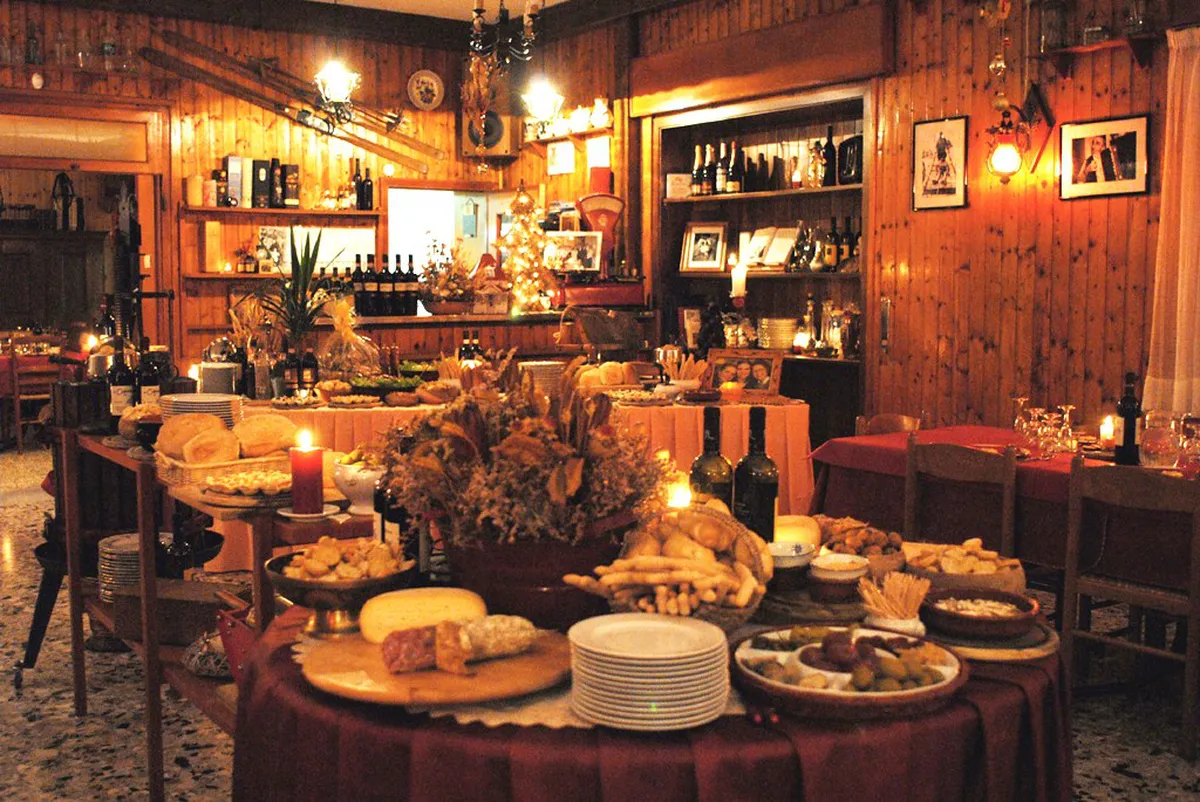
- Osteria del Sole (Quadrilatero)
- Pours are the specialty at this centuries-old Quadrilatero wine bar, and food is strictly bring-your-own.
- Staff uncork the bottle and get out of the way; regulars eat sandwiches or market snacks at the counter.
- Pick up bread, cheese, and cured meats from Quadrilatero market stalls before you sit down.
- Trattoria da Me (Via San Felice)
- Chef-owner Elisa Rusconi runs the kitchen at this Via San Felice trattoria, cooking traditional dishes with carefully sourced ingredients.
- Primi run roughly €10-12, and cotoletta alla Bolognese, breaded veal finished with prosciutto and cream, is the dish to order.
- A second, more polished outpost operates inside the historic Torre Galluzzi at Corte Galluzzi when the original is full.
- Osteria dell'Orsa (University Quarter)
- Students and professors fill this University Quarter osteria near Via Zamboni far more than out-of-town visitors do.
- Primi land around €8-14, tagliatelle al ragù is the standard order, and a carafe of house wine runs about €5.
- Political posters on the walls and loud Italian conversation are standard here, not a design choice.
- Da Cesari (Via de' Carbonesi)
- This family-run ristorante has operated on Via de' Carbonesi since 1955 and is now run by its third generation.
- Tortellini in brodo and gramigna with sausage are the dishes to order, and reservations matter more here than at a casual trattoria.
- Expect a higher bill than at a neighborhood trattoria, in line with more formal, sit-down service.
- Sfoglia Rina (Quadrilatero)
- Part pasta lab and part restaurant, Sfoglia Rina sells fresh sheets to residents who cook at home, not just diners at its tables.
- Tortellini en brodo is the dish to order, plated with a lighter touch than the century-old osterie nearby.
- It sits inside the Quadrilatero market district, so pair a stop here with a walk through the market stalls.
- Anna Maria Trattoria (Via delle Belle Arti)
- Open since 1985 on Via delle Belle Arti, this trattoria has built its menu around traditional Bolognese recipes for four decades.
- Tortelloni al gorgonzola is the standout order, distinct from the meat-filled tortellini served elsewhere on this list.
- Outdoor seating expands through the warmer months, so arrive early on a nice evening.
- La Baita Vecchia Malga (Via Pescherie Vecchie)
- A husband-and-wife team founded this shop-and-restaurant hybrid in 1969, just steps from Piazza Maggiore.
- It works best for groups ordering a shared charcuterie board, though the pasta menu is just as reliable.
- Outdoor tables fill fast, and service can be hard to flag down once the room is at capacity.
- Mo Mortadella Lab (Via de' Monari)
- This counter on Via de' Monari specializes in one thing: mortadella sandwiches piled thick with Bologna's signature cured meat.
- Expect a lunch line, since it draws residents and visitors who know the mortadella here outclasses a deli-counter slice.
- It works well as a quick stop between sit-down meals rather than a full trattoria sitting.
Compare Bologna's Top Local Restaurants at a Glance
The table below lines up all eight by neighborhood, vibe, and what to order, so you can match a stop to whichever part of the city you are already walking through. Price Point uses € for primi under about €10, €€ for the €10-15 range, and €€€ for €15 and up.
| Restaurant | Neighborhood | Vibe | Signature Dish | Price Point |
|---|---|---|---|---|
| Osteria del Sole | Quadrilatero | Historic wine bar, bring your own food | House wine by the glass | € |
| Trattoria da Me | Via San Felice | Family-run, unpretentious | Cotoletta alla Bolognese | €€ |
| Osteria dell'Orsa | University Quarter | Loud, student-priced | Tagliatelle al Ragù | € |
| Da Cesari | Via de' Carbonesi | Historic, refined | Tortellini in Brodo | €€€ |
| Sfoglia Rina | Quadrilatero | Modern pasta lab | Tortellini en Brodo | €€ |
| Anna Maria Trattoria | Via delle Belle Arti | Traditional, since 1985 | Tortelloni al Gorgonzola | €€ |
| La Baita Vecchia Malga | Via Pescherie Vecchie | Shop-and-restaurant, since 1969 | Charcuterie board | €€ |
| Mo Mortadella Lab | Via de' Monari | Quick counter, lunch line | Mortadella sandwich | € |
Where Locals Actually Eat: A Neighborhood Guide
Neighborhood matters more than any single review when you are hunting for a genuinely local table. For a deeper breakdown of how the city's districts differ, the Bologna Neighborhoods Guide: Where to Stay by Vibe and Budget (2026) maps all of them in one place.
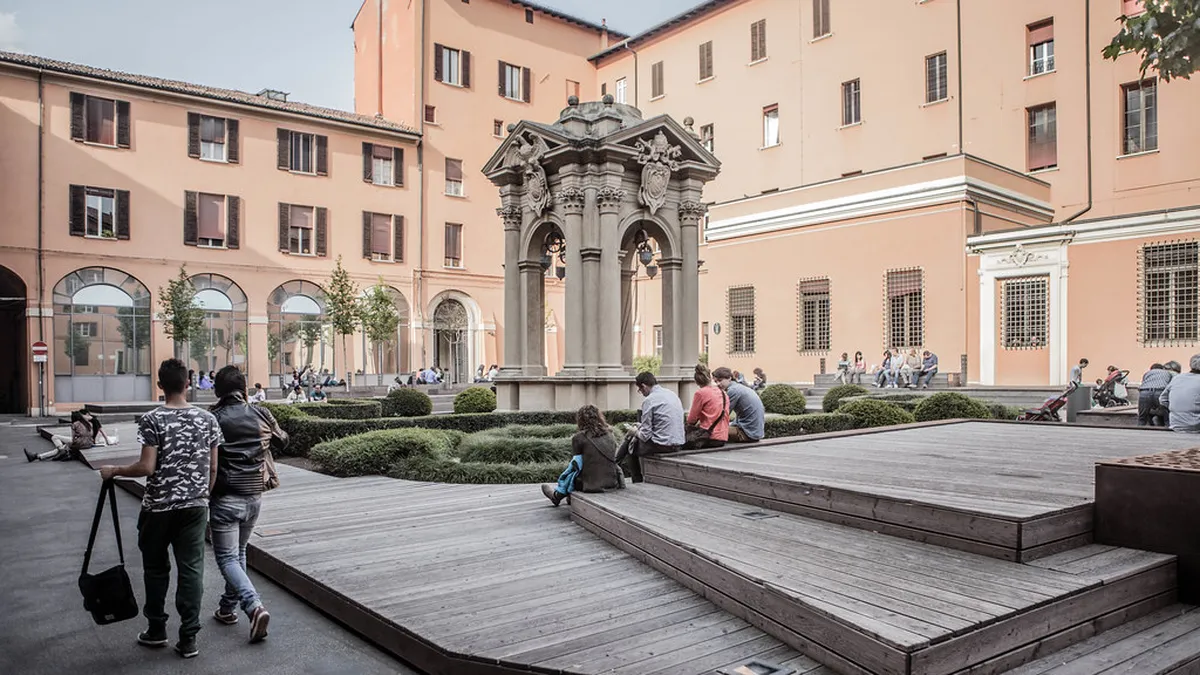
- Via San Felice & Via Saragozza
- These residential corridors sit about a 10-minute walk west and southwest of Piazza Maggiore.
- Family trattorie here serve people who eat there weekly, not once on a trip.
- University Quarter (Via Zamboni)
- Centered on Via Zamboni, the university quarter is loud, young, and inexpensive.
- Via Pratello, covered in its own Pratello neighborhood guide, adds a run of student-priced trattorie a few streets over.
- Santo Stefano
- East of the center, Santo Stefano skews more upscale, with primi closer to €15-20.
- It draws locals marking an occasion rather than a weeknight dinner.
- Bolognina
- Across the train tracks, the Bolognina neighborhood mixes long-standing local spots with newer, more experimental kitchens.
- It sees far less tourist foot traffic than anywhere inside the old walls.
How to Spot a Tourist Trap Near Piazza Maggiore
Three quick checks separate a resident's table from a tourist menu, and they take less time to run than reading a full review.
Within roughly 100 meters of Piazza Maggiore, primi cost €16–20 instead of the €10–15 found blocks away on Via San Felice. Proximity to the main square drives higher prices than any single dining tier does.
- The menu test
- A handwritten chalkboard or single printed page that changes daily signals a kitchen cooking to what's fresh.
- A laminated booklet with photos and eight languages signals the opposite.
- The timing test
- A room packed with Italians at 1 PM on a weekday, or after 8:30 PM at dinner, is doing real local business.
- A restaurant already full at 6 PM is running on tourist hours, since Bolognese dinner starts later.
- The 100-meter rule
- Anywhere within roughly 100 meters of Piazza Maggiore is priced and staffed for foot traffic, not neighborhood regulars.
- Walk a further 10 to 15 minutes into a residential street and the ratio of Italian to English conversation flips.
The Big Five Dishes to Order in Bologna
Order from this shortlist and the menu language barrier stops mattering. For the full picture of the city's food culture beyond these five dishes, the Bologna Local Food Guide: What to Eat and Where in 2026 goes deeper on ingredients and markets.
- Tagliatelle al Ragù
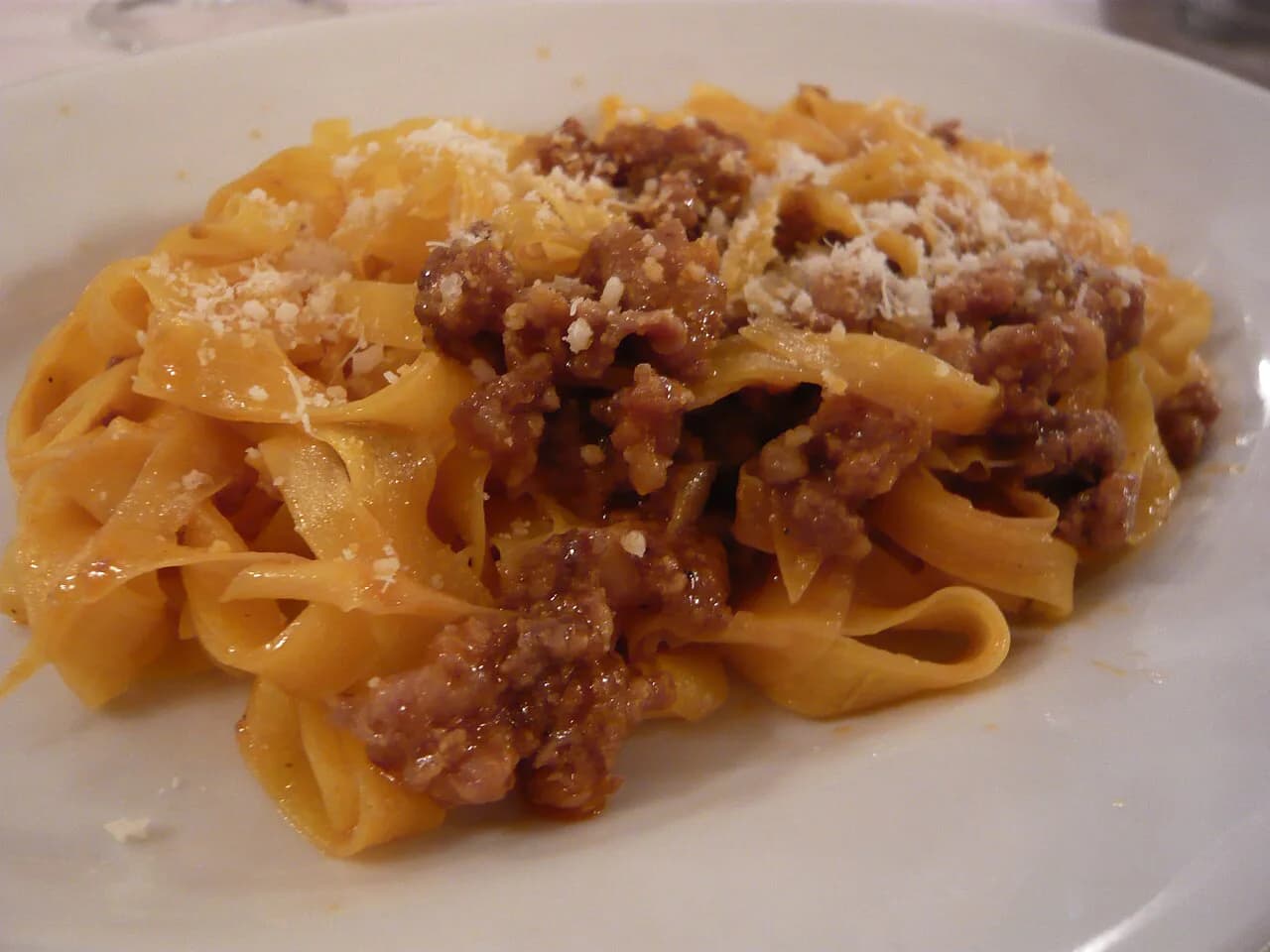
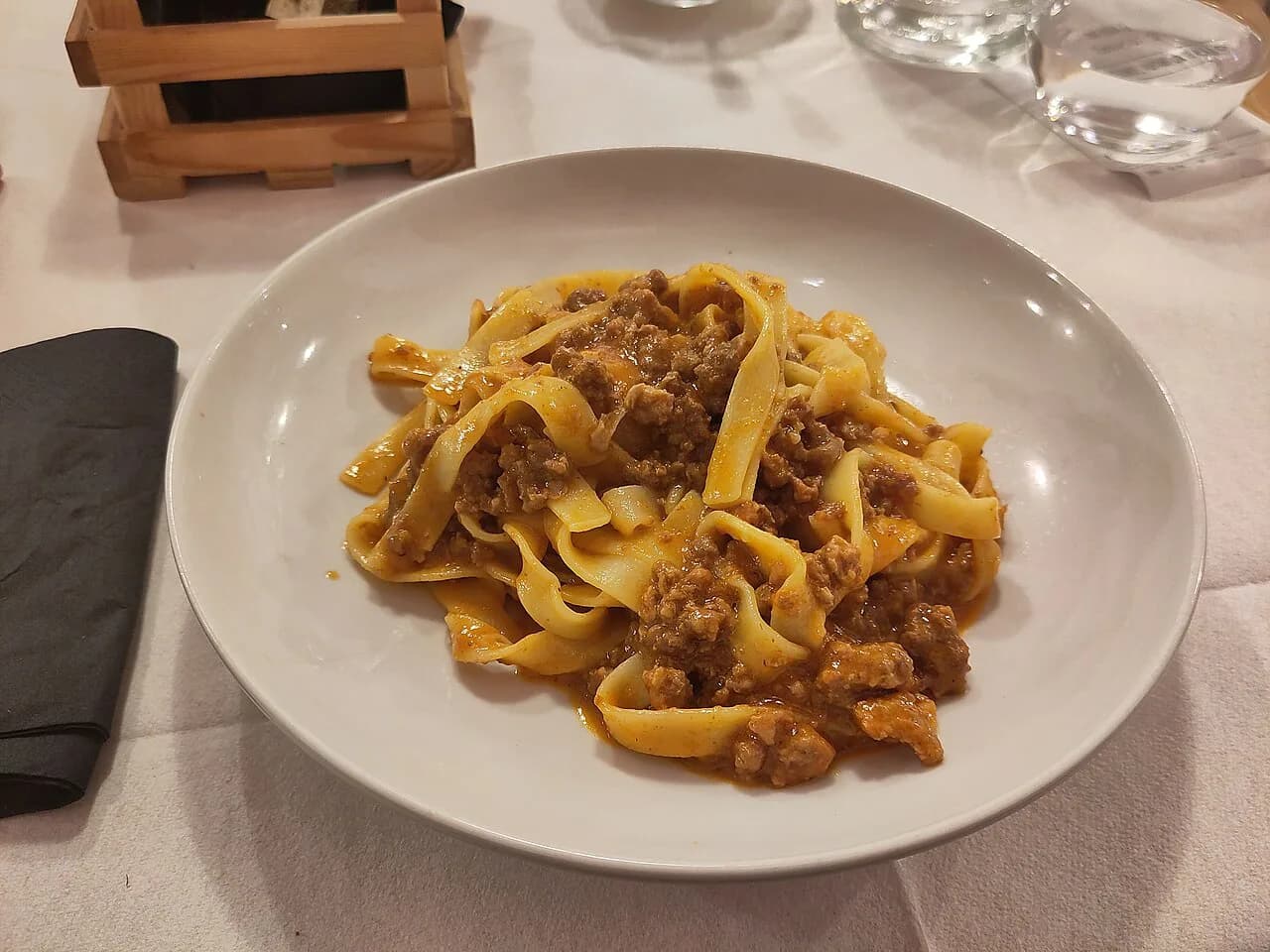
- Every trattoria, osteria, and ristorante in the city carries a version of this dish, made with flat egg noodles and a slow-cooked meat sauce.
- "Spaghetti Bolognese" is not on local menus; ask for tagliatelle al ragù instead.
- Tortellini en Brodo
- Small, meat-and-cheese-filled pasta served in broth is the comfort-food benchmark, and Da Cesari's version is a local reference point.
- Sfoglia Rina's fresh-pasta counter is a reliable place to see it made before it reaches the bowl.
- Mortadella
- This cured pork sausage, often studded with pistachio, is Bologna's namesake meat and the origin of American "bologna" lunch meat.
- Mo Mortadella Lab builds it into a sandwich; market stalls in the Quadrilatero sell it sliced to order.
- Cotoletta alla Bolognese
- Breaded veal is layered with prosciutto and cream and finished under the broiler, a heavier relative of a Milanese cutlet.
- Trattoria da Me's version is one of the more consistent orders on this list.
- Lasagne Verde
- The spinach-dough version of lasagne, layered with ragù, béchamel, and Parmigiano Reggiano, is the traditional Bolognese take on the dish.
- It shows up on menus across every dining tier, from trattoria to ristorante.
What to Drink: Lambrusco, Pignoletto, and Aperitivo Hour
The food here is rich, and the local wine list is built to cut through it rather than compete with it. Lambrusco, a sparkling red, and Pignoletto, a dry sparkling white from the hills around Bologna, are the two house pours you will see most often. Both are usually offered by the carafe rather than the bottle at trattoria-tier restaurants, keeping a glass well under a bottled wine list. Before dinner, the Quadrilatero fills with an aperitivo crowd. Pair a stop there with a walk through the Quadrilatero market district while stalls are still open. A heavy plate of tortellini or lasagne is easier to walk off afterward. The porticoes of Bologna shelter most of the routes back to a hotel or train station.
Reservations, Hours, and the Coperto: Practical Logistics
Most local kitchens run on a split schedule: lunch service, then a closure, then dinner starting again in the evening. Expect kitchens to close somewhere between 3 PM and 7:30 PM. Plan a late lunch or an early dinner around that gap, not in between. Dinner service picks back up around 7:30 PM, though rooms genuinely fill later, closer to 8:30 PM. Reservations for dinner at smaller trattorie run through phone calls or WhatsApp, not a booking app. Calling ahead, or asking a hotel to book on your behalf, works better than searching for an online reservation system. Nearly every sit-down bill includes a small per-person coperto, a standard Italian cover charge. It shows up as its own line rather than being folded into a dish price.
Kitchen closure between 3 PM and 7:30 PM creates the gap where tourist restaurants serve at 6 PM but locals haven't arrived at their standard 8:30 PM dinner time. This split explains why restaurants full at 6 PM signal a tourist crowd.
Common Mistakes to Avoid at the Table
A handful of small habits mark a table as visibly non-local, even at a genuinely good restaurant.
- Ordering a cappuccino after 11 AM
- Milk-based coffee is a breakfast order in Bologna, not an after-meal one.
- Ask for an espresso or a macchiato instead if dinner just wrapped up.
- Asking for "Bolognese sauce"
- Menus list ragù, not "Bolognese sauce," and it's ordered with a pasta name attached, as in tagliatelle al ragù.
- Spaghetti with meat sauce, the version familiar abroad, is not how it's served here.
- Dining at 6 PM
- A restaurant open and full at 6 PM is generally staffed and priced for tourist turnover.
- Waiting until 8:30 PM or later puts you at the table alongside neighborhood regulars.
- Requesting menu substitutions
- Small kitchens cook a fixed daily selection, and swapping ingredients is not standard practice.
- Order what's listed, or ask what the piatto del giorno, the dish of the day, is instead.
How to Read a Bolognese Menu
A short Italian-only menu is common in Bologna and does not signal unfriendly service. It often means the kitchen serves a focused selection rather than adapting dishes for tourist demand.
Menus usually move from antipasti to primi, secondi, contorni, and dolci. Primi include pasta and risotto, while secondi are meat-based main courses. Vegetables are normally ordered separately as contorni.
Look for regional terms rather than familiar international dishes. Sfoglia means fresh egg pasta, while ragù indicates Bologna’s slow-cooked meat sauce. Tortellini in brodo arrives in broth. Gramigna is a short, curled pasta commonly paired with sausage.
Daily specials may appear on a chalkboard or under piatti del giorno. Ask “Cosa consiglia?” for the server’s recommendation. At traditional places such as Da Cesari or Anna Maria Trattoria, this can reveal seasonal dishes absent from translated menus.
Bolognese cooking also relies heavily on butter, pork fat, Parmigiano Reggiano, and rich broths. Expect less emphasis on olive oil than in many southern Italian cuisines.
Pair this with our broader Bologna tourism attractions guide for the full city overview.
Further reading: Bologna on Wikivoyage · Bologna on Wikipedia
Frequently Asked Questions
How do you spot a tourist trap in Bologna?
Check the menu, the timing, and the location. A laminated, photo-heavy, multi-language menu is the clearest sign, along with a room that's empty at 1 PM but full at 6 PM. Anywhere within about 100 meters of Piazza Maggiore is worth a second look before you sit down.
What time do locals eat dinner in Bologna?
Local dinner service runs from roughly 8:30 PM to 10 PM, well after most tourist-oriented restaurants fill up around 6 PM. Lunch follows a similar pattern, with the local rush landing between 12:30 PM and 2 PM.
Is it expensive to eat at local restaurants in Bologna?
A full trattoria meal with wine typically runs €15-25 per person. Primi at genuinely local spots usually price between €8 and €14, well under the €16-20 range common at restaurants aimed at tourists.
Where can you find the best fresh pasta in Bologna?
Sfoglia Rina in the Quadrilatero operates as both a pasta lab and a restaurant, selling fresh sheets to residents who cook at home. Trattoria da Me on Via San Felice also runs an attached fresh pasta shop next to its dining room.
What is a coperto, and will it show up on the bill?
The coperto is a standard per-person cover charge added to most Italian restaurant bills, separate from food and drink. It's normal practice across dining tiers in Bologna, not a sign of a tourist markup.
Continue exploring
More guides you'll find useful