Bolognina, Bologna: A Guide to the Creative District North of the Station
Bolognina sits north of Bologna Centrale station: a guide to its street art circuit, the Ustica Memorial Museum, Mercato Albani, and local nightlife.
On this page
Bolognina, Bologna: Street Art, History, and Local Life
Last updated July 2026, this guide to Bolognina, Bologna covers the city's most multicultural district, a former factory zone north of Bologna Centrale station. Bolognina trades red porticoes for painted warehouse walls, and the Ustica Memorial Museum's tribute to a 1980 air disaster sits near grocers and kitchens from North African, Eastern European, and Asian immigrant families. This walkthrough covers crossing the tracks from the station, the street art circuit, and when Mercato Albani shifts from produce to aperitivo.
Crossing the Tracks: From Bologna Centrale to Bolognina
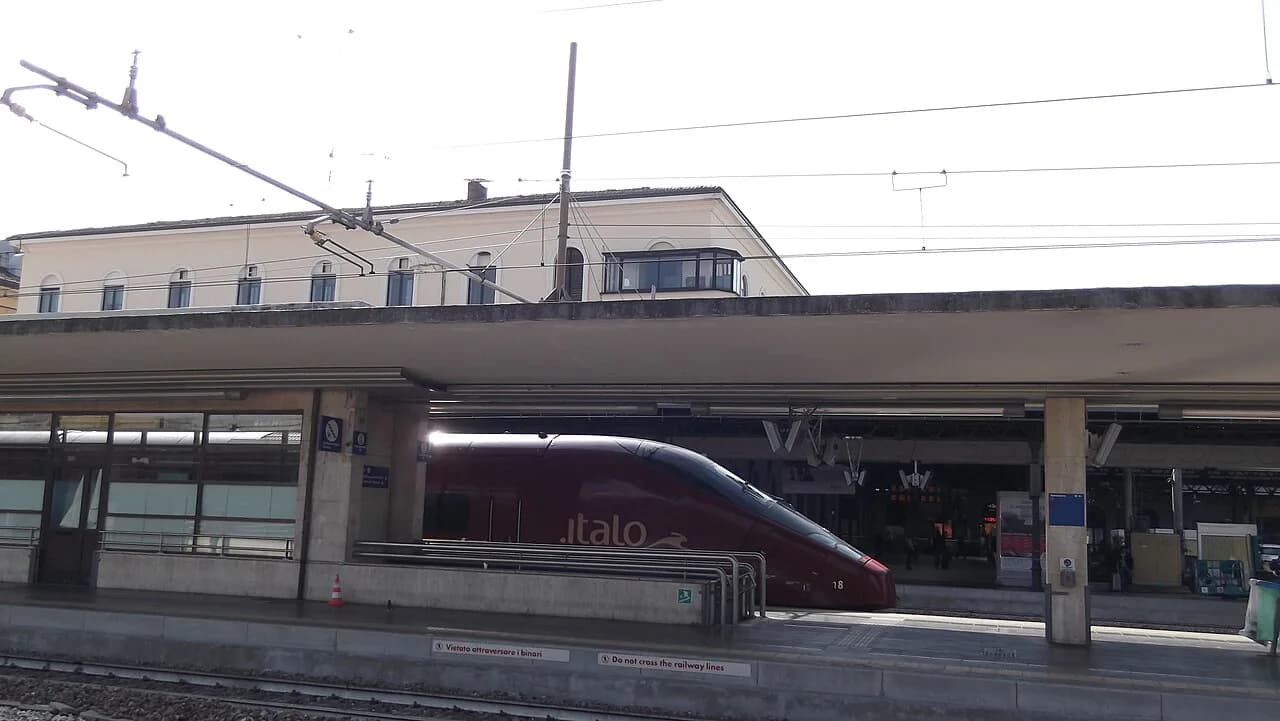
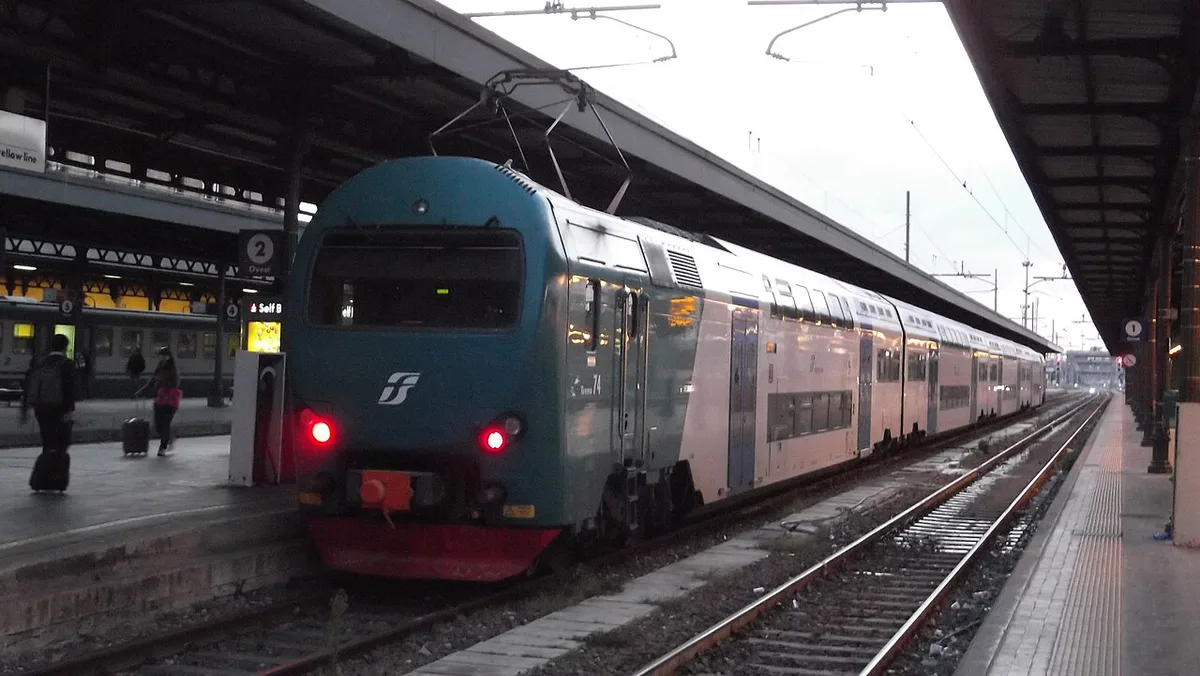
Bolognina sits immediately north of Bologna Centrale, across the rail lines from Bologna's medieval core. Most travelers exit toward Piazza Medaglie d'Oro and walk straight into the historic center. Crossing here means walking the opposite direction instead. The station's Alta Velocità exit puts you on Via Carracci, already inside the neighborhood, without a detour through the main hall. That makes Bolognina the most train-accessible district in the city for anyone arriving by rail. It's also the least likely to match the red-brick, arcaded look most visitors expect. For that look, see the separate guide to the porticoes of Bologna. Pair this walk with the wider guide to lesser-known Bologna spots if you're building a full detour away from the center.
A Grid Layout Named After Bolognese Artists
Industrial-era planning gave Bolognina its grid, a break from the concentric medieval streets across the tracks. That pattern dates to the neighborhood's early-20th-century expansion. Many street names honor painters, sculptors, and architects tied to Bologna's art history. Four are worth knowing before you start walking.
- Via Tiarini: named for Alessandro Tiarini, the 17th-century painter whose altarpiece hangs in the Chapel of Saint Barbara at the Basilica of San Petronio.
- Via Cignani: honors Carlo Cignani, whose Samson and Delilah is held at the Pinacoteca di Bologna.
- Via Creti: carries the name of Donato Creti, an 18th-century Bolognese painter represented in the city's Municipal Art Collections.
- Via Dall'Arca: references sculptor Niccolò Dall'Arca, known for the Lamentation over the Dead Christ in the Church of Santa Maria della Vita.
History and Memory: The Ustica Memorial and the Shoah Memorial
Two of Bolognina's most serious sites sit close to the station. The Ustica Memorial Museum houses an installation by French artist Christian Boltanski, built around wreckage from the DC-9 that crashed off Ustica on 27 June 1980, killing everyone aboard. Boltanski's installation surrounds visitors with recovered fragments and recordings rather than a conventional exhibit layout. Nearby stands the Bologna Shoah Memorial, a basalt stone square holding two steel blocks roughly 33 feet (10 meters) tall, angled to converge into a gap barely wide enough for one person. Both sites reward a slow visit rather than a quick photo stop. Opening hours for the Ustica Memorial Museum change periodically, so confirm the current schedule on Fondazione Bologna Welcome's site before planning around it.
The Bolognina Street Art Circuit
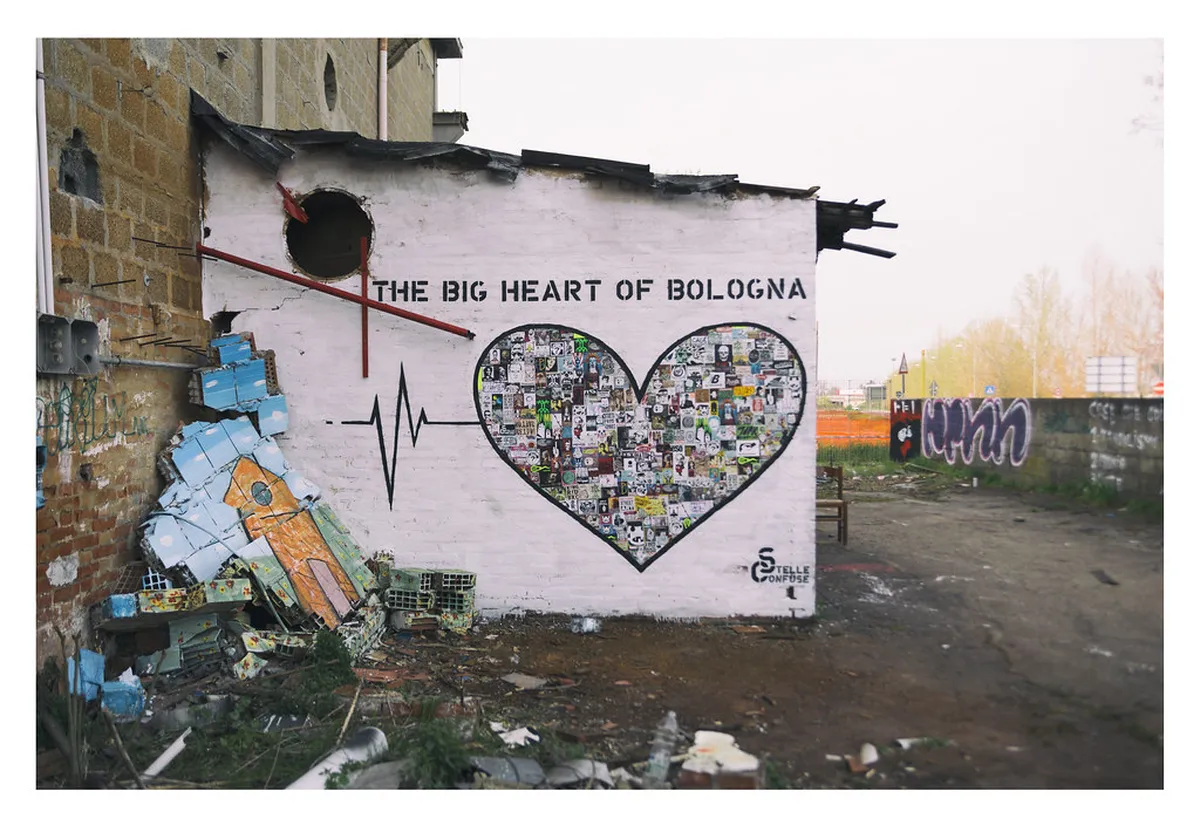
Bolognina's murals turn former factory walls into a running outdoor gallery. Via Aristotile Fioravanti carries the best-known piece, 'The Kiss' by the artist Blu, showing two faces locked in an embrace across a multi-story facade. Via Franco Bolognese holds a set of politically pointed murals by the artist known as Rusty. The DumBO district rotates additional street art and graffiti through its former railway sheds. Animal-themed murals by Ericailcane appear on several nearby buildings, adding a different register to the circuit. None of it costs anything to see, which makes the walk one of the free things to do in Bologna, and it pairs naturally with a stop at the Ustica Memorial. Guided options exist too: a bike tour built around the murals runs about 3 hours, alongside walking and photography-focused tours led by local guides. For a second, quieter mural circuit in the historic core, the Secret Spots in Bologna: The Seven Secrets, Hidden Corners, and Local Finds guide covers a different set of walls entirely.
The street-art bike tour spans about 3 hours, but a complete Bolognina visit—including the memorials and Mercato Albani—requires at least half a day.
Mercato Albani: From Morning Produce to Evening Aperitivo
Mercato Albani anchors Bolognina's food scene, though its vendor mix runs toward Eastern European, North African, and Asian ingredients. Mornings bring produce stands and grocery stalls serving neighborhood residents. By early evening, several counters shift toward aperitivo service, with plates and glasses replacing crates of vegetables. It functions as a neighborhood market first and a visitor stop second. For comparison, the historic-center version of this format is covered in the Quadrilatero market guide.
Nightlife and Creative Spaces: DumBO, Locomotiv Club, and the Social Centers
DumBO, short for Distretto Urbano delle Officine, converts former railway maintenance sheds into event space and exhibitions that change through the year. Locomotiv Club anchors indie and alternative live music, drawing acts that skip the city's more mainstream rooms. Estragon Club adds punk and hip-hop nights to the same circuit. Bolognina's activist history runs through spaces like XM24, an autonomous social center whose programming and access have shifted over the years, so confirm current events on official listings rather than assuming past details still hold. The Cassero LGBT Center operates as a hub for inclusive cultural programming in the same district. Circolo Hex, a Bauhaus-style building on Via Corticella designed by architect Lorenzo Cremonini in the 1970s, has cycled through uses from library to co-working space and now runs as a space organized by a feminist and inclusive-minded collective. Compared with the bar-heavy nights of the university quarter, Bolognina's scene leans toward independent venues and one-off events. For a third alternative-neighborhood option, the Pratello neighborhood guide profiles a different bar-and-street scene on the other side of the center.
Where to Eat: Trattorias and Global Kitchens
Bolognina's trattorias tend to price plates lower than equivalent spots inside the Quadrilatero or near Piazza Maggiore, reflecting the neighborhood's working-class roots. Menus and current prices are posted at each restaurant, so check them directly rather than relying on averages. Alongside the traditional kitchens, the district's immigrant-run eateries add North African, Persian-influenced, and East Asian menus to the mix. A sourdough pizzeria using organic ingredients anchors one end of the scene, while an artisanal bakery known for sourdough loaves covers the other. For a fuller citywide rundown, the Bologna Local Food Guide: What to Eat and Where in 2026 and the 8 Best Local Restaurants in Bologna: Where Locals Actually Eat guide both cover Bolognina alongside the rest of the city's dining map.
Craft Beer and Natural Wine
Bolognina's drinking scene extends past its music venues into a cluster of dedicated beer and wine spots, listed below by style.
- Birra Cerqua: a neighborhood microbrewery that pours its own beers and runs periodic tastings.
- Harvest Pub: built its reputation on a wide, rotating tap list of local and international craft beer.
- Beer for Bunnies: pairs craft beer with vinyl nights for a mixed crowd of regulars and visitors.
Planning Your Visit: Best Time, Who It's For, and Safety
Daytime visits suit the market and street art circuit best, since Mercato Albani and the murals are visible from morning onward. Thursday through Saturday nights suit the social and live-music scene, when Locomotiv Club and the surrounding bars fill in. Budget-conscious travelers, street art fans, and anyone tired of a crowded center all fit well here. The best time to visit Bologna guide covers how that plays out across the whole city, not just here. Unlike the hillside walk to the San Luca Sanctuary, Bolognina is flat and grid-based, easy walking even after a long day. On the safety question that comes up often, the honest answer is nuanced. The industrial, sometimes graffiti-heavy look reads as grittier than the center, but that's aesthetic, not an actual risk difference. Standard urban awareness applies: stick to main thoroughfares like Via Carracci and Via Ferrarese after dark. Treat the district the way you would treat any city neighborhood you don't know well yet. If half a day feels like too little time, the day trips from Bologna guide has options for the rest of the stay.
Bolognina's 19th- and 20th-century industrial architecture creates a grittier aesthetic than medieval Bologna, but this visual difference doesn't indicate a genuine safety concern—standard urban awareness suffices.
Mistakes to Avoid in Bolognina
A few expectations trip up first-time visitors to this district.
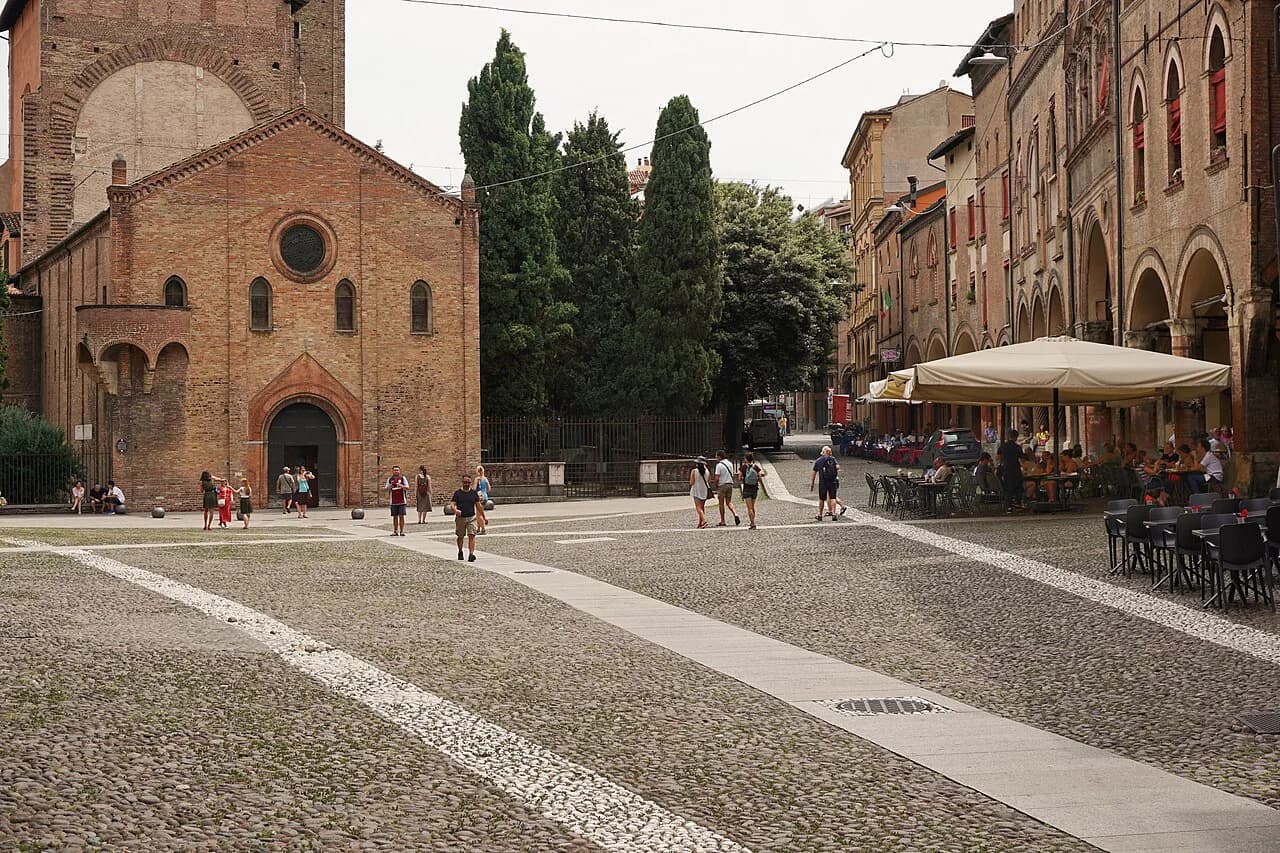
- Expecting medieval porticoes: Bolognina is largely 19th- and 20th-century industrial architecture. For arcaded, medieval-style sights instead, the Santo Stefano complex is the closer match.
- Skipping the Ustica Memorial Museum over uncertain hours: confirm the current schedule before visiting instead of assuming it matches a generic city-center museum's hours.
- Treating it as a quick stop: the market, memorial sites, and street art circuit together take at least half a day to cover properly.
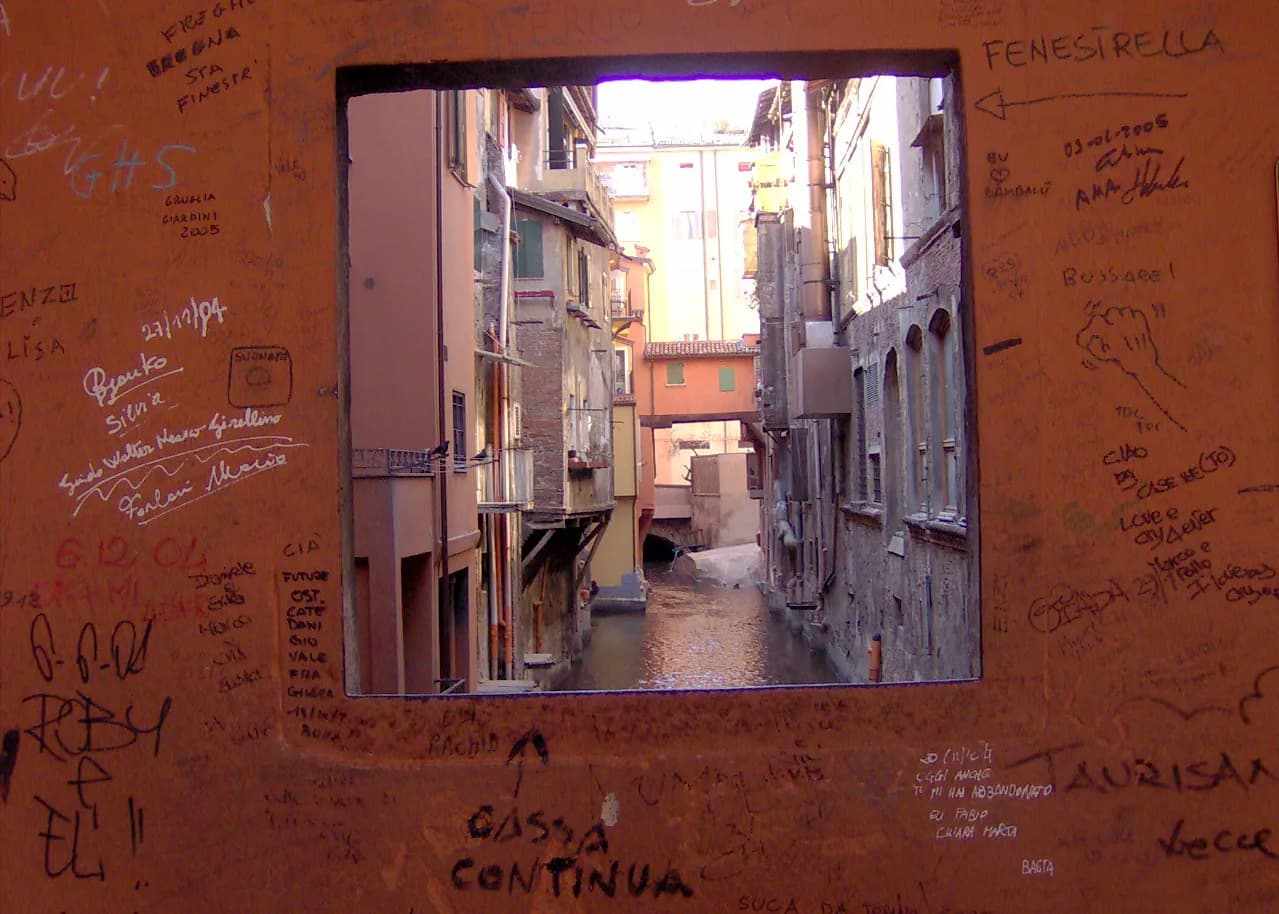
- Overlooking nearby alternatives: if Bolognina's grit is appealing, the other under-the-radar districts and unusual things to do nearby guides list similar, less-touristed options, and the Finestrella di Via Piella is a short detour worth adding on the way back toward the center.
Summer Cinema at Arena Puccini
Arena Puccini adds a seasonal evening option to a daytime Bolognina walk. The open-air cinema occupies part of the Dopolavoro Ferroviario grounds at Via Sebastiano Serlio 25/2. It usually operates during summer, with screenings beginning after sunset.
The program mixes Italian releases, international films, documentaries, and occasional presentations by directors or performers. Films may screen in their original language, so check the listing for subtitle details before booking.
The arena is east of Bolognina’s central grid and reachable on foot from Via Ferrarese. Allow extra time to find the entrance inside the larger recreational complex. Mosquito repellent and a light layer can make late screenings more comfortable.
Arena Puccini is seasonal rather than a permanent nightly attraction. Confirm dates, start times, language information, and ticket availability through the official Cineteca di Bologna or Arena Puccini program. Pairing a screening with Mercato Albani or dinner nearby creates an easy evening itinerary without returning to the historic center.
Further reading: Bologna on Wikivoyage · Bologna on Wikipedia
Frequently Asked Questions
Is Bolognina safe to visit?
Bolognina's industrial look and street art give it a grittier feel than Bologna's historic center, but that aesthetic doesn't equal a real difference in risk. Standard urban awareness applies: stick to main streets like Via Carracci after dark, the same as in any unfamiliar district.
How do you get to Bolognina from Bologna Centrale?
Take the station's Alta Velocità exit, which puts you directly onto Via Carracci inside Bolognina. That route skips the walk through the main station hall toward the historic center.
How much time should I plan for a Bolognina visit?
Plan on at least half a day. The Ustica Memorial Museum, the Shoah Memorial, the street art circuit, and Mercato Albani each take real time, not a quick pass-through.
What is the Ustica Memorial Museum?
It's an installation by French artist Christian Boltanski, built around wreckage from the DC-9 that crashed off Ustica on 27 June 1980. Because opening hours change, confirm the current schedule before visiting.
Is Bolognina worth visiting on a short trip to Bologna?
If time is tight, prioritize the historic center first and treat Bolognina as a half-day add-on for the street art circuit and Mercato Albani.
Continue exploring
More guides you'll find useful