Bologna Local Food Guide: What to Eat and Where in 2026
A bologna local food guide to tagliatelle al ragù, tortellini in brodo, and mortadella, plus the markets, restaurants, and etiquette locals actually use in 2026.
On this page
Bologna Local Food Guide: What to Eat and Where to Find It
Last updated July 2026, this bologna local food guide covers the dishes, markets, and restaurants that define eating in Bologna, known locally as La Grassa for its butter-rich cooking. La Dotta, for the university, and La Rossa, for its terracotta rooftops, are the city's other two nicknames. This guide separates the tagliatelle al ragù that Bologna actually serves from the spaghetti bolognese variant no local kitchen recognizes.
Why Bologna Is La Grassa, Italy's Food Capital
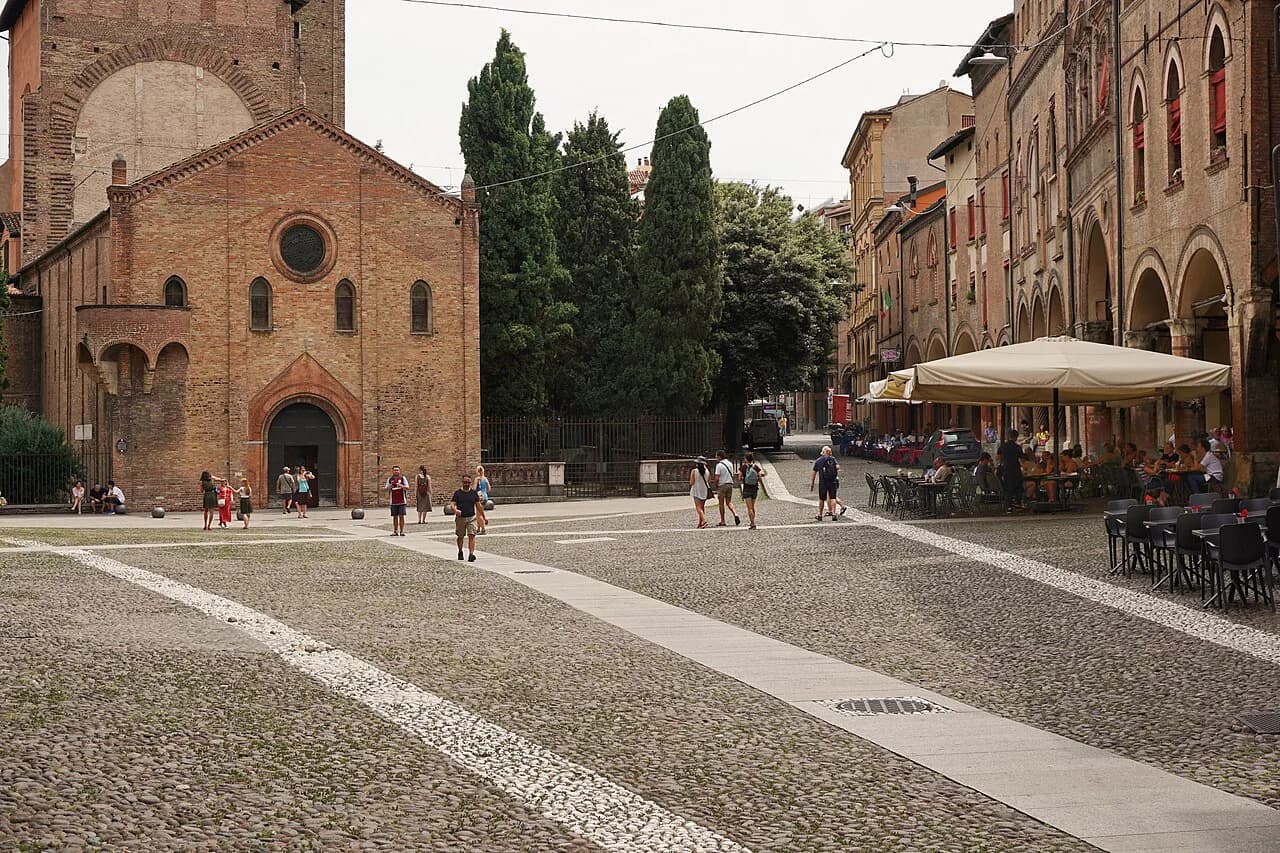
Butter, pork fat, and slow-simmered sauces built Bologna's reputation as La Grassa, roughly translated as the fat one. Emilia-Romagna, the region around the city, supplies the pantry behind that reputation: Parmigiano Reggiano, cured pork, and the eggs and flour behind every fresh pasta shop downtown. Kitchens here stay traditional, and straying from ragù or tortellini for too long tends to cost a restaurant its regulars. Piazza Maggiore anchors the center, with the Quadrilatero market quarter just steps away. Plan the trip around quieter travel months and tables open up without a days-ahead reservation.
The Bologna Local Food Guide to 10 Dishes You Need to Try
Ten dishes define the Emilian table, and Bologna serves all of them within a few blocks of Piazza Maggiore. Each entry below names one restaurant that does the dish justice, so treat this as a shortlist rather than a full menu. Order these first, then branch out from there.
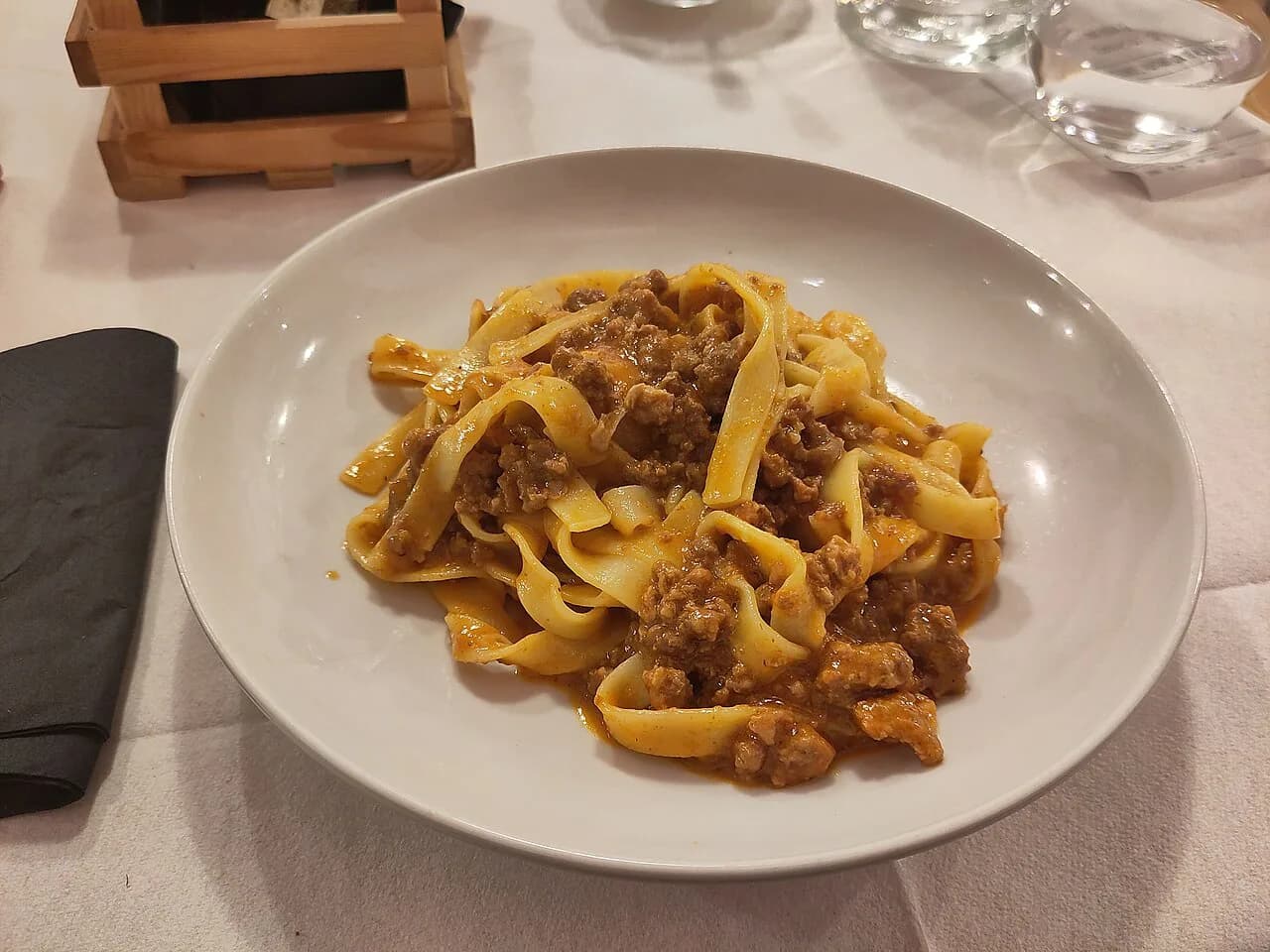
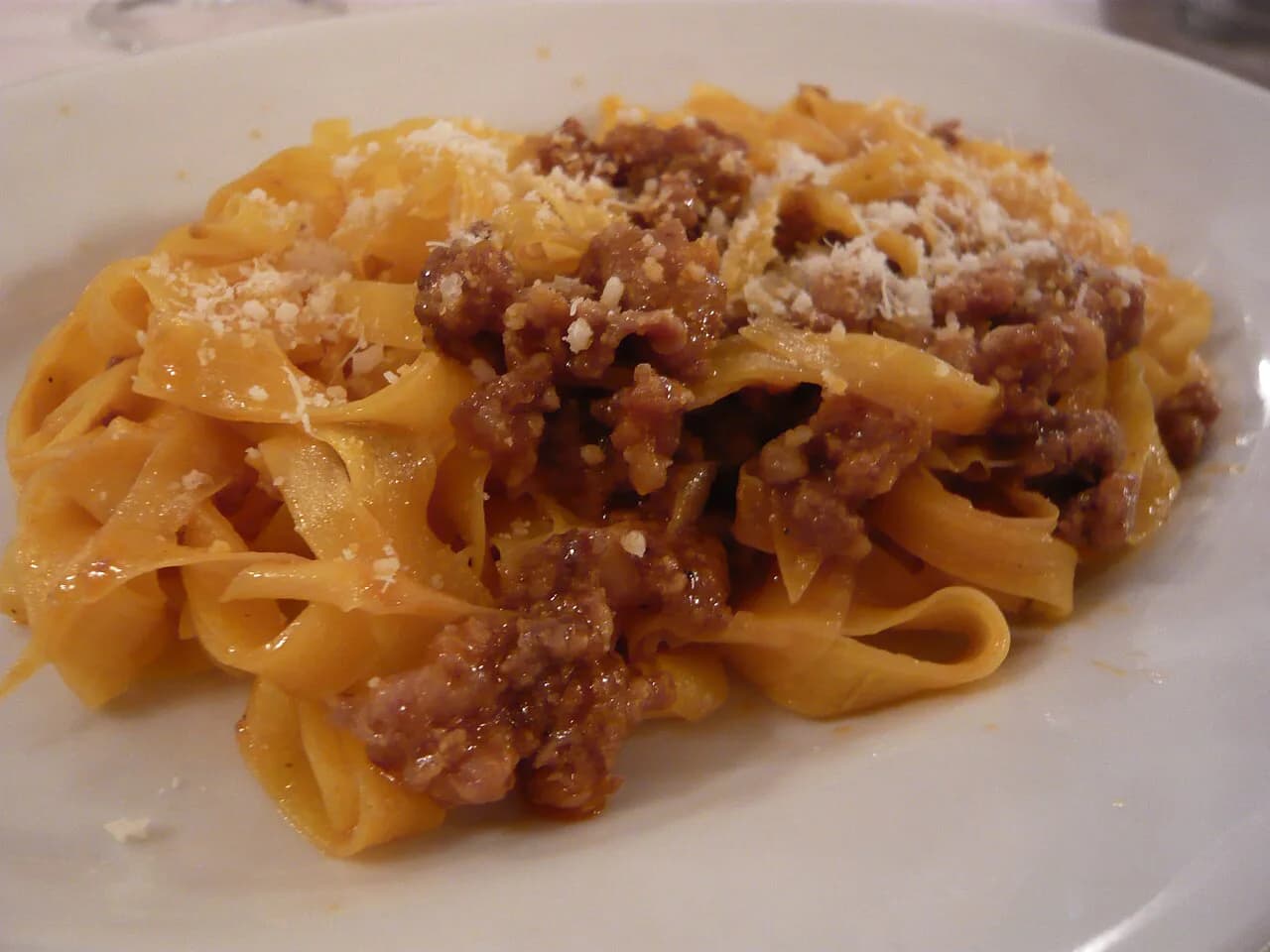
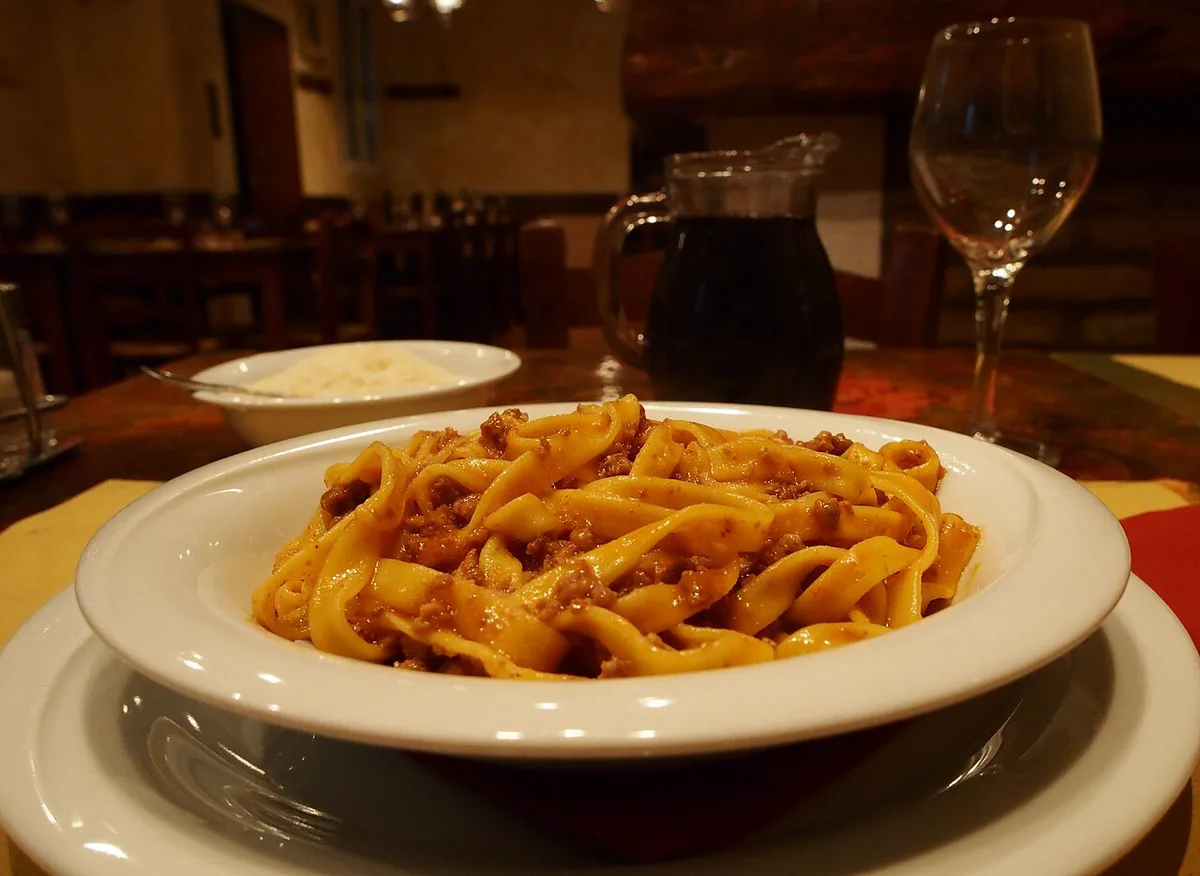
- Tagliatelle al ragù: Egg pasta cut to a regulated 8mm width, per Bologna's Chamber of Commerce, tossed with a slow-cooked beef and soffritto sauce of carrot, celery, and onion. No garlic, no dried herbs, and no cream. Try it at Osteria Bottega, Via Santa Caterina 51.
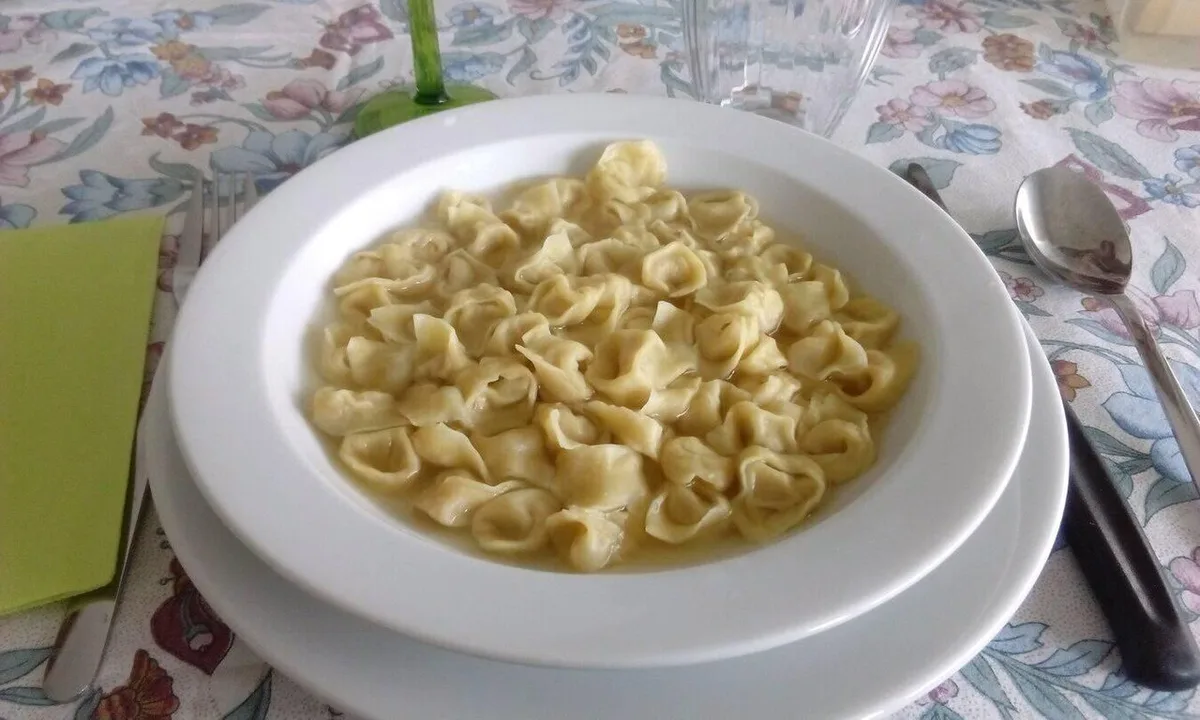
- Tortellini in brodo: Small, hand-folded pasta filled with pork loin, mortadella, and Parmigiano, served in meat broth. Bolognese legend ties the shape to Venus's navel, and tradition reserves the dish for Sundays. Try it at Caminetto d'Oro, Via de' Falegnami 4.
- Mortadella: Bologna's namesake cold cut, made from select pork cuts and cubes of fat called lardelli, slow-cooked for up to 24 hours. Forget the pink deli slices sold abroad; the real version is coarser and more fragrant. Try it sliced paper-thin at a Quadrilatero salumeria such as Salumeria Simoni, Via Pescherie Vecchie 3/b.
- Salame rosa: A milder, rarer cousin of mortadella, once common and now a specialty item. Also sliced to order at Salumeria Simoni.
- Cotoletta alla Bolognese: Also called la petroniana, a veal cutlet fried in butter, topped with prosciutto and Parmigiano, then finished with a splash of broth. Try it at Ristorante Al Cambio, Via Stalingrado 150.
- Gramigna alla salsiccia: Curly, hollow pasta tossed with a sausage ragù, a homier alternative to tagliatelle. Try it at Da Serghei.
- Lasagne verdi: Spinach-dough lasagna layered with ragù and béchamel. Try it at Trattoria Belle Arti.
- Friggione: Slow-cooked onions and tomato, a recipe traced to 18th-century home kitchens in the region. Spread it on warm bread. Try it at Trattoria Da Me, Via S. Felice 50/A.
- Crescentine and tigelle: Fried or griddled bread, the standard vessel for cold cuts and squacquerone cheese. Try tigelle farcite, stuffed with mortadella or culatello, at Zerocinquantino, Via Pescherie Vecchie 3/e.
- Torta di riso and zuppa inglese: Torta di riso is a dense rice cake with almonds and lemon, at Le Sfogline, Via Belvedere 7. Zuppa inglese layers sponge soaked in Alchermes liqueur with chocolate and vanilla custard, at Trattoria Collegio di Spagna, Via Collegio di Spagna 15.
Where to Eat: Restaurants for Lunch, Dinner, and Aperitivo
The Quadrilatero, Bologna's historic market quarter beside Piazza Maggiore, holds the densest concentration of charcuterie counters and wine bars in the city. Zerocinquantello, at Via Pescherie Vecchie 2/b, pairs mortadella and culatello with homemade tigelle from 12:30pm daily, for around €25 per person. Tamburini, a few doors away, runs a wine bar built for a stand-up cheese and cured-meat aperitivo. Le Mercanzie, on Piazza della Mercanzia, works for a simpler Aperol Spritz with outdoor seating and a shared appetizer plate. For a break from pasta, Ristorante Pizzeria Il Saraceno covers pizza night, including a white quattro formaggi and a topping-heavy capricciosa. For a sit-down trattoria meal, Trattoria Da Me, at Via S. Felice 50/A, serves chef Elisa Rusconi's friggione alongside pasta from its attached shop. Trattoria Belle Arti is the address for lasagne verdi alla Bolognese, with both indoor and outdoor seating. Ristorante da Cesari plates a seasonal pumpkin flan alongside tagliatelle al ragù and tortellini in brodo for a quieter, more formal dinner. Osteria de' Poeti pairs its strigoli pasta and tagliatelle with chilled Lambrusco under wine barrels, with live music most weekends from 9:30pm. Osteria Bottega, on Via Santa Caterina, is the reference point for tagliatelle al ragù with no shortcuts. Oltre, at Via Augusto Majani 1/b, plates balanzoni next to a cocktail list for a modern take on the classics. Check the full local restaurant guide for more picks across every price point.
| Dining style | Example | Per-person price | Good for |
|---|---|---|---|
| Wine osteria | Osteria de' Poeti | €40+ | Evening wine, weekend live music, homemade pasta |
| Refined ristorante | Ristorante da Cesari | €40+ | A quieter dinner with a seasonal menu |
| Market lunch counter | Altro? (Mercato delle Erbe) | €30+ | Sit-down lunch inside the market |
| Charcuterie bar | Zerocinquantello | €25+ | Cold cuts and tigelle, lunch or dinner |
| Aperitivo bar | Zerocinquantino | €20+ | Early-evening tigelle farcite and wine |
Bologna's Food Markets: Mercato delle Erbe, Mercato di Mezzo, and the Quadrilatero
Three markets and one historic quarter cover most of the informal eating in the center. Mercato delle Erbe, built in 1910, holds Altro? and Polpette e Crescentine plus a cheese counter for squacquerone. Enter from Via Ugo Bassi 25 for the main market side, or Via San Gervasio 3 for Polpette e Crescentine's separate entrance. Mercato di Mezzo, a covered market with records dating to the Middle Ages, sits centrally and leans toward grab-and-go meat, cheese, and pasta stalls. Both markets wind down by early evening, so shop earlier in the day for the best stall selection. The Quadrilatero itself works as an open-air food market as much as a dining strip, with Salumeria Simoni's salame rosa and Zerocinquantino's tigelle farcite both a short walk from Piazza Maggiore. Farther out, Mercato Piazzola runs largely as a clothing market but keeps a food section, with over 400 stalls in a tradition dating to 1251. For self-catering, Ceccarelli Amedeo, on a narrow street between San Petronio Basilica and the twin towers, sells fresh tortellini and cured meats. Sapori & Dintorni, near the Cattedrale Metropolitana di San Pietro, stocks wine and beer to go. Read the Quadrilatero guide for a street-by-street breakdown of the quarter.
Mercato delle Erbe, built in 1910, pairs market stalls with sit-down lunch at Altro?, making it distinct from the grab-and-go Mercato di Mezzo and the Quadrilatero's salumeria focus—a difference reflected in its central role in the sample food day.
How to Eat Like a Local: Booking, Timing, and the Coperto
Reservations matter more in Bologna than the city's relaxed pace suggests. Osteria Bottega and Trattoria Da Me fill up days or weeks ahead, especially for weekend dinners. Confirm opening days before visiting, since several Quadrilatero addresses close on Mondays. Lunch service generally runs 12:30pm to 2:30pm or 3pm, matching posted hours at Zerocinquantello and Ristorante da Cesari. Dinner rarely starts before 7:30pm, and some osterie, like Osteria de' Poeti, don't open at all until then. Expect a small per-person coperto, or cover charge, added to the bill on top of the €20 to €40 range typical of central trattorie and osterie. Card payments work at every restaurant named here, but small market stalls sometimes prefer cash. Several trattorie in the center welcome dogs, though it's worth confirming with each restaurant beforehand. Everything covered here sits inside a compact center, so walking between the Quadrilatero, Mercato delle Erbe, and Via del Pratello rarely takes more than fifteen minutes. The portico-covered routes connect most of these stops, useful cover during a rain shower.
Mistakes to Avoid When Eating in Bologna
Ordering spaghetti bolognese is the fastest way to mark a table as first-time visitors. Bologna kitchens serve tagliatelle, not spaghetti, with ragù, and the dish carries no garlic or dried herbs. Cream has no place in the sauce either. Richness comes from butter, pork fat, and hours of slow cooking, not dairy. Forget the pink, rubbery mortadella sold as deli meat elsewhere; the artisanal version is coarser, spiced, and slow-cooked for closer to a full day. Treating tortellini in brodo as a special-occasion order is another common mistake. Tradition reserves it for Sundays, but nearly every trattoria on this list serves it any day of the week. Skip the temptation to eat every meal near Piazza Maggiore. Some of the best plates, like squacquerone at Mercato delle Erbe or friggione at Trattoria Da Me, sit several blocks away. Explore lesser-known corners of the city for dining stops that skip the main square entirely.
A Sample Day of Eating in Bologna
One day covers most of the canon, if the order is right. Via del Pratello draws a student-age crowd for cheap wine and informal bar food. The university quarter offers a similarly low-cost evening for anyone on a tighter budget. Compare both areas, plus the rest of downtown, in the Bologna Neighborhoods Guide: Where to Stay by Vibe and Budget (2026) before picking a base.
Dinner rarely starts before 7:30pm, leaving only afternoon hours for market stops and tastings between lunch's end and aperitivo opening—a tighter window than the sample day's itinerary might suggest.
- Morning: Coffee and a cornetto standing at a central bar, the standard Bolognese breakfast.
- Midday: A market crawl through Mercato delle Erbe for tortellini or crescentine, plus a stop at the cheese counter for squacquerone.
- Afternoon: A mortadella and salame rosa tasting in the Quadrilatero, sliced to order at a salumeria.
- Evening: Aperitivo along Via del Pratello before a sit-down dinner of tagliatelle al ragù or tortellini in brodo.
- Late evening: Gelato at Cremeria Marconi to close out the night.
Osteria, Trattoria, or Ristorante: Which Should You Choose?
Bologna’s dining labels suggest different experiences, although restaurants do not follow rigid legal categories. Check the current menu and service style before booking.
- Osteria: Traditionally wine-led and informal, often with a focused food menu. Osteria Bottega specializes in carefully prepared Bolognese classics and requires advance reservations.
- Trattoria: Usually relaxed, with a broader selection of familiar regional dishes. Trattoria Da Me suits diners wanting pasta, friggione, and other traditional recipes at one table.
- Ristorante: Generally offers more formal service, longer pacing, and greater attention to presentation. Ristorante da Cesari is a suitable choice for a quieter evening meal.
Choose an osteria for wine and a focused specialty, or a trattoria for an approachable meal with several local dishes. Pick a ristorante when atmosphere and slower service matter as much as the food. Market counters remain better for flexible lunches without committing to a full sit-down meal.
For trip-planning details, see Bolognese sauce – Wikipedia.
Further reading: Bologna on Wikivoyage · Bologna on Wikipedia
Frequently Asked Questions
What does La Grassa mean, and why is Bologna called that?
La Grassa translates to the fat one in Italian. Locals use it because Bologna's cooking leans on butter, pork fat, and rich meat sauces rather than lighter regional styles.
Is spaghetti bolognese served in Bologna?
No local kitchen in Bologna serves spaghetti bolognese. Kitchens here serve tagliatelle al ragù instead, egg pasta cut to a regulated 8mm width tossed with a slow-cooked meat sauce.
Do you need reservations for Bologna's best-known restaurants?
Yes, reserve ahead for busy spots. Osteria Bottega and Trattoria Da Me routinely book out days or weeks ahead, particularly for weekend dinners, so lock in a table once travel dates are set.
What is a coperto in Bologna restaurants?
A coperto is a small per-person cover charge added to the bill at most sit-down restaurants. It applies across Italy generally, not just to tourists, on top of the meal price.
Where can you try mortadella and salame rosa in Bologna?
Quadrilatero salumerie such as Salumeria Simoni slice mortadella and salame rosa to order. Market stalls inside Mercato delle Erbe also sell mortadella by weight for a picnic lunch.
What's the best area to stay for food-focused travel in Bologna?
The center around Piazza Maggiore and the Quadrilatero puts most restaurants and markets in this guide within a 15-minute walk. Basing there cuts down on transit time between meals.
What's a good dessert to end a Bolognese meal?
Torta di riso, a dense rice cake with almonds and lemon, is a traditional choice. Zuppa inglese, a boozy layered custard dessert soaked in Alchermes liqueur, is the other classic option.
Continue exploring
More guides you'll find useful