Quadrilatero Bologna: A Practical Guide to the Medieval Market Quarter
A street-by-street guide to Bologna's Quadrilatero: toponymy, Mercato di Mezzo, the Osteria del Sole BYO-food protocol, and when to visit for shopping vs aperitivo.
On this page
Quadrilatero Bologna: The Complete Guide to Bologna's Medieval Market District
Last updated July 2026, this guide to the Quadrilatero Bologna walks you street by street through Bologna's medieval market quarter. Bounded by Via Rizzoli, Piazza della Mercanzia, Via Castiglione, Via Farini, Piazza Galvani, and Via dell'Archiginnasio, it's the first stop most first-time visitors make in the historic center. You'll find a walking route through Via Pescherie Vecchie, Via Drapperie, and Via degli Orefici, plus a time-of-day plan for beating the crowds.
Where Is the Quadrilatero in Bologna, Exactly?
The Quadrilatero sits directly behind Piazza Maggiore, in the oldest commercial core of Bologna's historic center. Piazza Maggiore's Basilica of San Petronio sits just behind you as you step into the quarter, a useful landmark for finding your way back out. You enter through tall archways off the piazza, leaving the open square for narrow lanes that have carried food and craft trade since the Middle Ages. Nearly the entire quarter is pedestrianized, so leave the taxi and rental car outside this zone. Cobblestones underfoot are uneven in places, so flat, closed-toe shoes make the walk easier. Six streets and squares mark its boundary:
- Via Rizzoli
- Piazza della Mercanzia
- Via Castiglione
- Via Farini
- Piazza Galvani
- Via dell'Archiginnasio
From Medieval Guilds to Bologna's Food Quarter
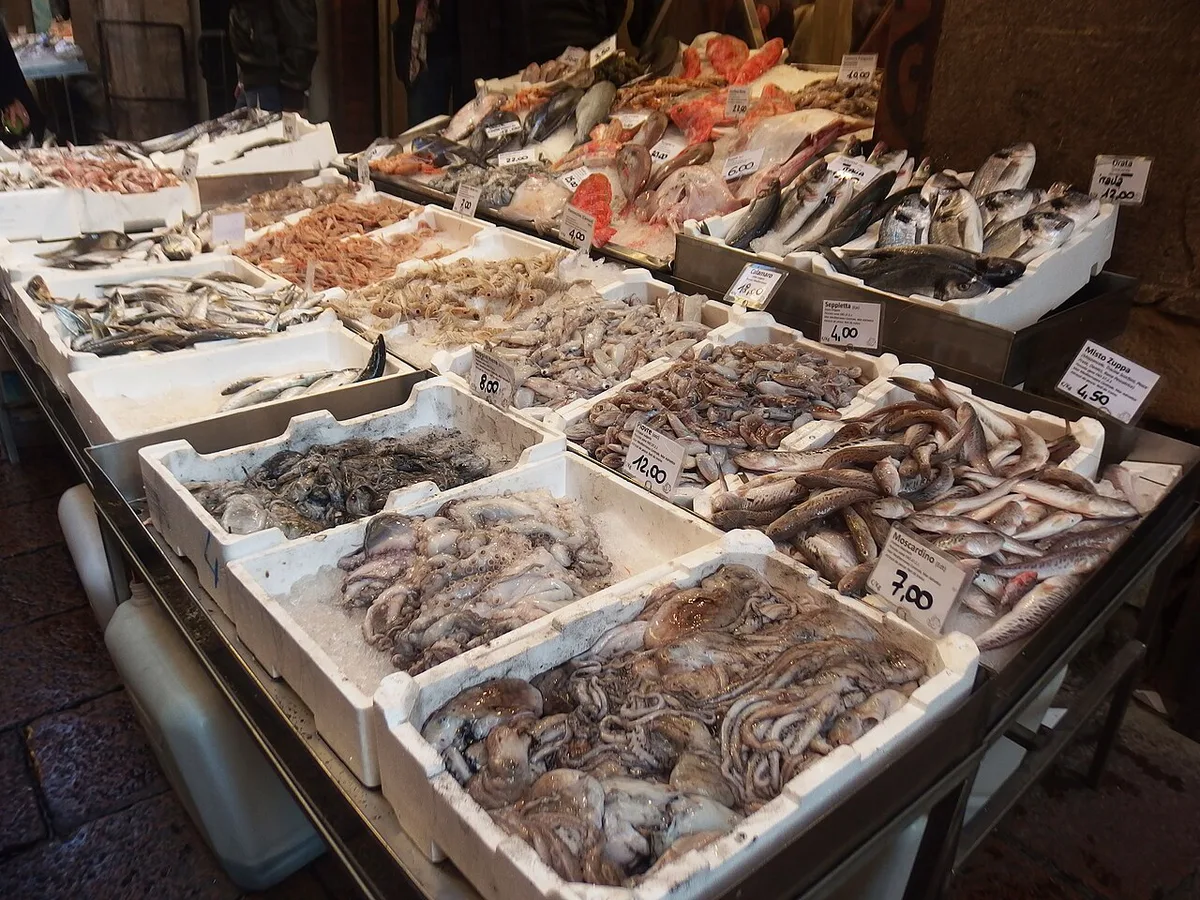
Trade guilds occupied this quarter starting in the 13th century. Butchers, fishmongers, goldsmiths, and other tradespeople worked from small workshop windows, later nicknamed the 'holes,' that still frame many storefronts today. Guild records from the era name several trades that anchored the quarter: painters, goldsmiths, barbers, fishmongers, furriers, and butchers among them. Bologna avoided the earthquake damage that struck other parts of the region over the centuries, so much of the district's medieval structure survived intact. Family-run shops have passed the same trade down for generations in some cases, keeping historic fittings alongside the goods on sale. A handful of former chemist shops in the quarter still keep their old pharmacy fixtures, even though most now sell food or clothing. For the wider layout of surrounding districts, Bologna's district guide maps how the Quadrilatero connects to the university quarter and Santo Stefano.
- Painters
- Goldsmiths
- Barbers
- Fishmongers
- Furriers
- Butchers and meat processors
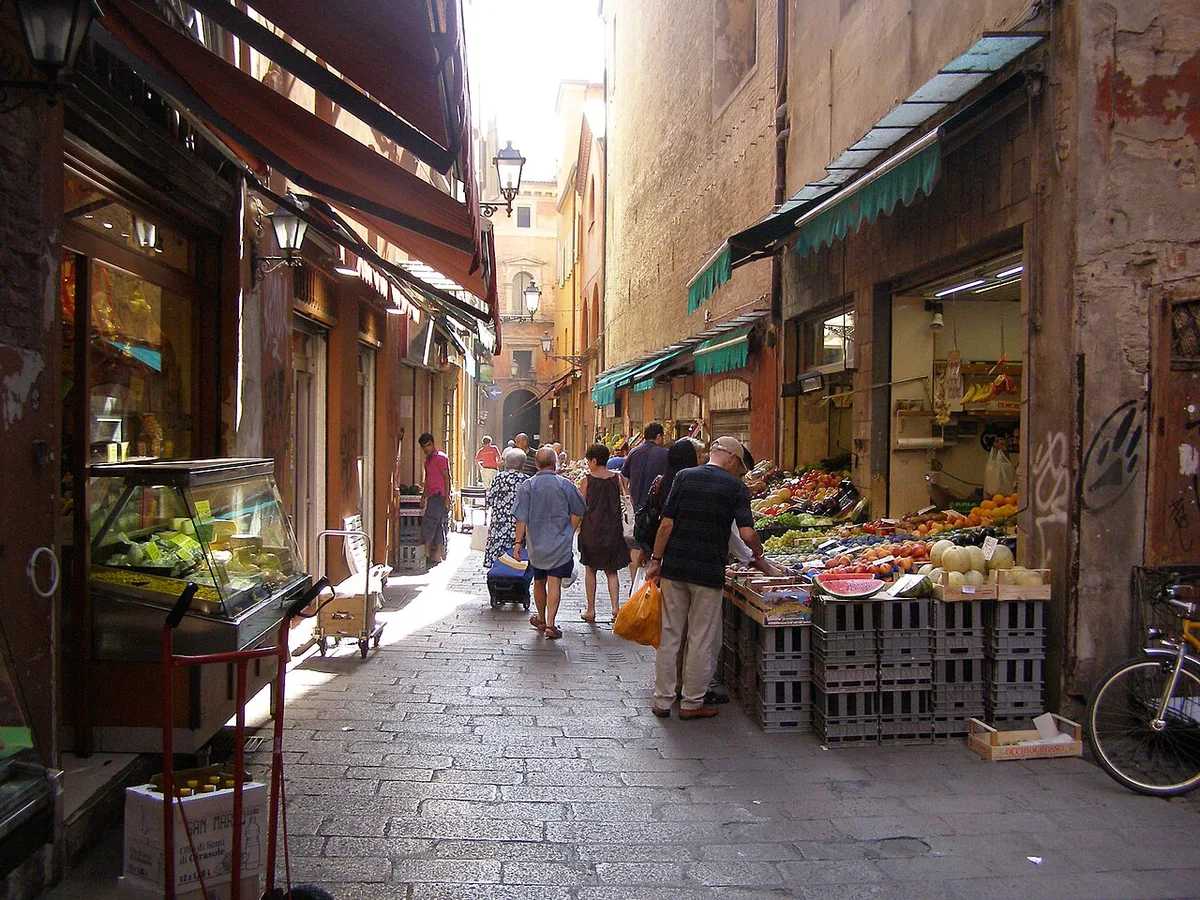
Navigating the Quadrilatero: A Street-by-Street Toponymy Guide
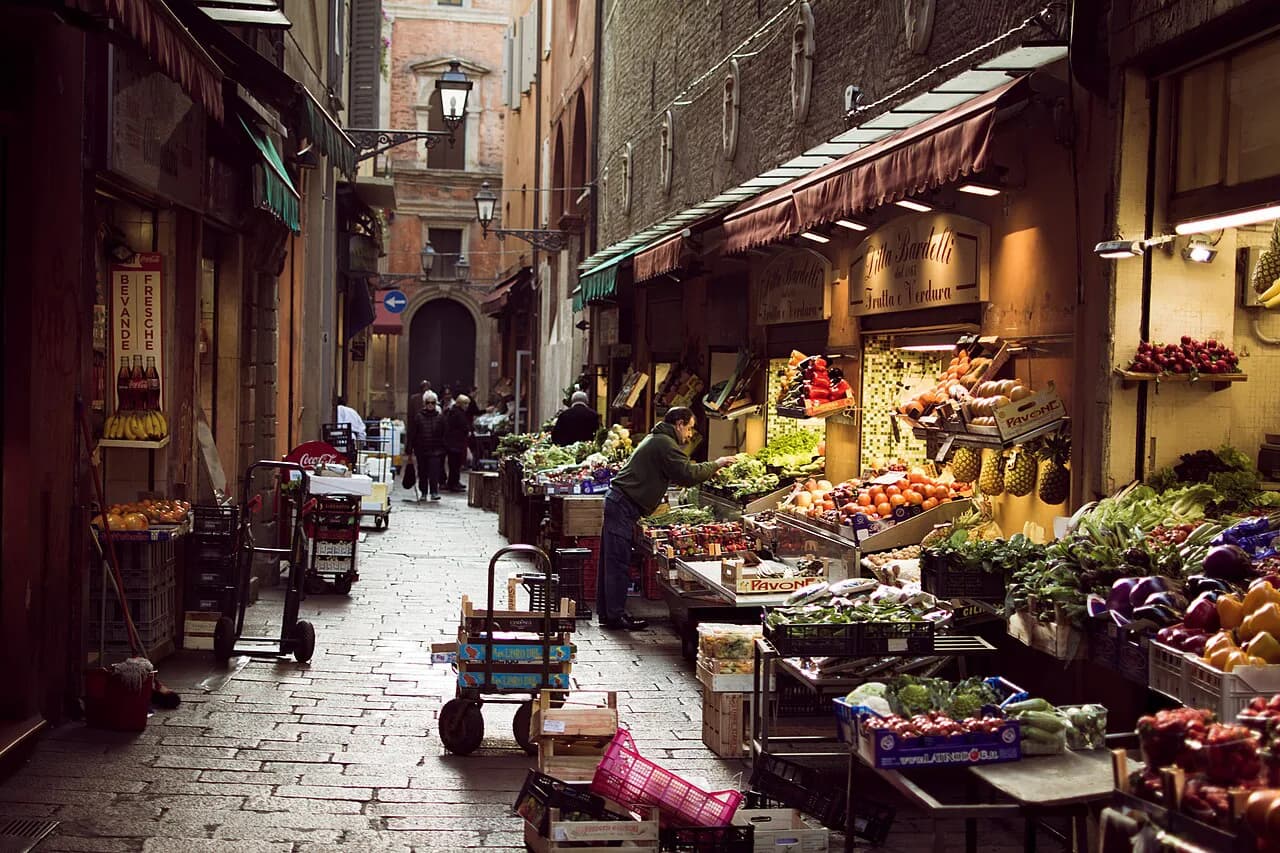
The name Quadrilatero comes from a term for a four-sided defensive structure, a nod to the roughly rectangular shape these boundary streets trace. Street names across the quarter still describe the medieval trade once practiced there. Reading them turns a random wander into a route with a logic of its own. Locals often call the whole district Mercato di Mezzo, though that name technically covers only part of it. The market shrank in the late 1800s, when Via Rizzoli's construction cut through the old Via del Mercato di Mezzo and pushed vendors into today's Quadrilatero. A logical walking route starts at Piazza Maggiore's archway, continues onto Via Clavature, then Via degli Orefici, then Via Drapperie, and finishes on Via Pescherie Vecchie. Via Caprarie, one block over, was named Bologna's 'Strada del Jazz' in 2011, marking the city's mid-century jazz festival years with plaques for the musicians who performed there.
| Street | Historic Trade | What You'll Find Today |
|---|---|---|
| Via Pescherie Vecchie | Fishmongers | Fresh pasta, cheese, and fish stalls |
| Via Drapperie | Textile and upholstery merchants | Delis, produce stands, and wine bars |
| Via degli Orefici | Goldsmiths | Jewelers and specialty food shops |
| Via delle Clavature | Locksmiths | The route toward Vicolo Ranocchi and Osteria del Sole |
Mercato di Mezzo: The Market's Modern Anchor
Mercato di Mezzo anchors the Quadrilatero's food scene inside a covered market building. Its roots trace to the medieval guild era, when this stretch functioned as the city's first covered market. A 2014 renovation turned it into a three-floor space that keeps its historic shopfronts. Long-running family businesses trade alongside the market's stalls. Ceccarelli, a gourmet deli on Via Pescherie Vecchie, builds sandwiches to order from fresh bread and a counter of cured meats and cheeses. Salumeria Simoni sells cured meats and Modena balsamic vinegar nearby. Tortellini specialist Paolo Atti & Figli is another name worth watching for on a shopping stop. Businesses such as Tamburini have also traded here for generations, though current stock and hours are worth confirming on-site, since family-run shops adjust seasonally. Vendors are generally happy to talk through their products if you show interest, even with basic Italian. The local food guide covers restaurants beyond the market walls for a broader spread of where to eat.
- Ground floor: fresh pasta makers, cheese counters, and salumi stalls selling mortadella and prosciutto
- First floor: a pizzeria, wine-tasting counters, and communal dining tables
- Basement: a craft brewery pouring local beer
- Specialties worth seeking out: fresh ricotta and squacquerone cheeses, balsamic vinegar aged over multiple years, seasonal truffle products, and mortadella made with pistachios
Other Markets Near the Quadrilatero
Central Bologna has other food-shopping streets worth a short detour beyond the Quadrilatero itself. Both sit an easy walk from the Quadrilatero's main archways, making them simple to fold into the same outing.
- Mercato delle Erbe: a Liberty-style market hall with seasonal produce, aged Parmigiano Reggiano, and traditional Mortadella butchers.
- Via Ugo Bassi: family-run salumerias, bakeries, Lambrusco wine merchants, and small gelaterias just outside the Quadrilatero's boundary.
Osteria del Sole: The Bring-Your-Own-Food Protocol
Osteria del Sole has operated on Vicolo Ranocchi since 1465, making it one of the oldest pubs still running anywhere. Its bar pours wine, craft beer, and little else, so the house rule catches newcomers off guard. Wine barrels line the walls, and card games are common at the communal tables, echoing the pub's centuries of continuous use. Here is the bring-your-own-food protocol, step by step:
Osteria del Sole has operated since 1465, over two centuries after Bologna's guild era began in the 13th century. Its communal wooden tables preserve the collaborative social structure that once bound medieval tradespeople, now serving students and visitors instead of craftsmen.
- Buy food first at a nearby deli or salumeria, such as Ceccarelli or Salumeria Simoni.
- Walk the short block to Vicolo Ranocchi, home to Osteria del Sole.
- Order a glass of wine or beer at the small bar and pay as you go.
- Carry your own plate to any open seat at the communal wooden tables.
- Stay as long as you like; nobody rushes you out once you've settled in.
The Aperitivo Ritual in the Quadrilatero
Around 6:00 PM, the market mood shifts from grocery shopping to aperitivo. Enotecas and small wine bars fill their outdoor tables, and the narrow lanes turn social. Order a glass of Pignoletto or Lambrusco alongside a plate of Mortadella Bologna IGP, the city's signature cured pork. Tortellini in brodo, culatello, and aged Parmigiano Reggiano round out a typical spread for a sit-down stop. Students, office workers, and visitors share the same communal tables at this hour, which is part of the draw.
When to Visit: Morning Shopping vs Evening Aperitivo
Timing changes what the Quadrilatero delivers. Morning suits shopping and photography, while evening suits socializing. Prices at Quadrilatero stalls typically run higher than at neighborhood markets such as Mercato delle Erbe, since central-city rents show up in the price tags. The avoiding Bologna's crowds guide has more on citywide timing beyond the market.
| Time Window | Best For | What to Expect |
|---|---|---|
| 8:30 AM – 12:30 PM | Food shopping and photography | Vendors stocking stalls, thinner foot traffic, and clear morning light |
| Around 6:00 PM – 9:00 PM | Aperitivo and socializing | Communal tables filling up and standing room at wine bars |
Mercato di Mezzo vs. the Open-Air Stalls
Both formats sit inside the same few blocks, so choosing between them is mostly a matter of pace. Pick Mercato di Mezzo when you want to sit down; pick the open-air stalls when you're assembling food to carry to Osteria del Sole.
| Feature | Mercato di Mezzo | Open-Air Stalls |
|---|---|---|
| Setting | Indoor, three floors | Open-air, street-front |
| Seating | Communal dining tables and a pizzeria | Standing room only |
| Focus | Eating in, wine tasting, and browsing | Shopping to take away |
| Best for | A sit-down break mid-visit | Fast stops for ingredients to bring to Osteria del Sole |
Common Mistakes to Avoid in the Quadrilatero
A few habits trip up first-time visitors more than others.
- Trying to drive or hail a taxi inside the quarter. It's fully pedestrianized, and the cobblestones are uneven underfoot.
- Assuming every food shop closes for the traditional midday riposo. Many central food shops now stay open through the afternoon, though hours vary by owner.
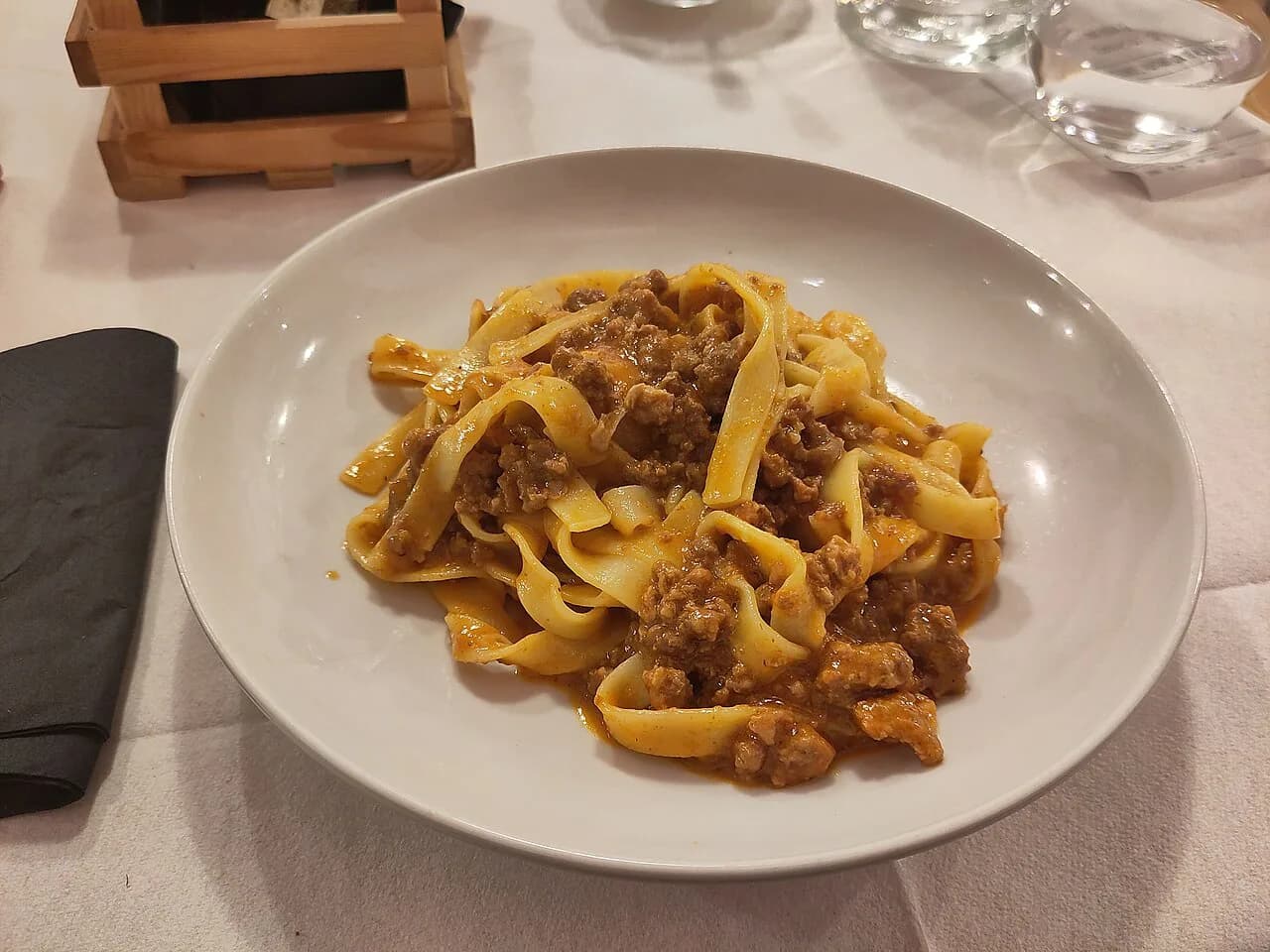
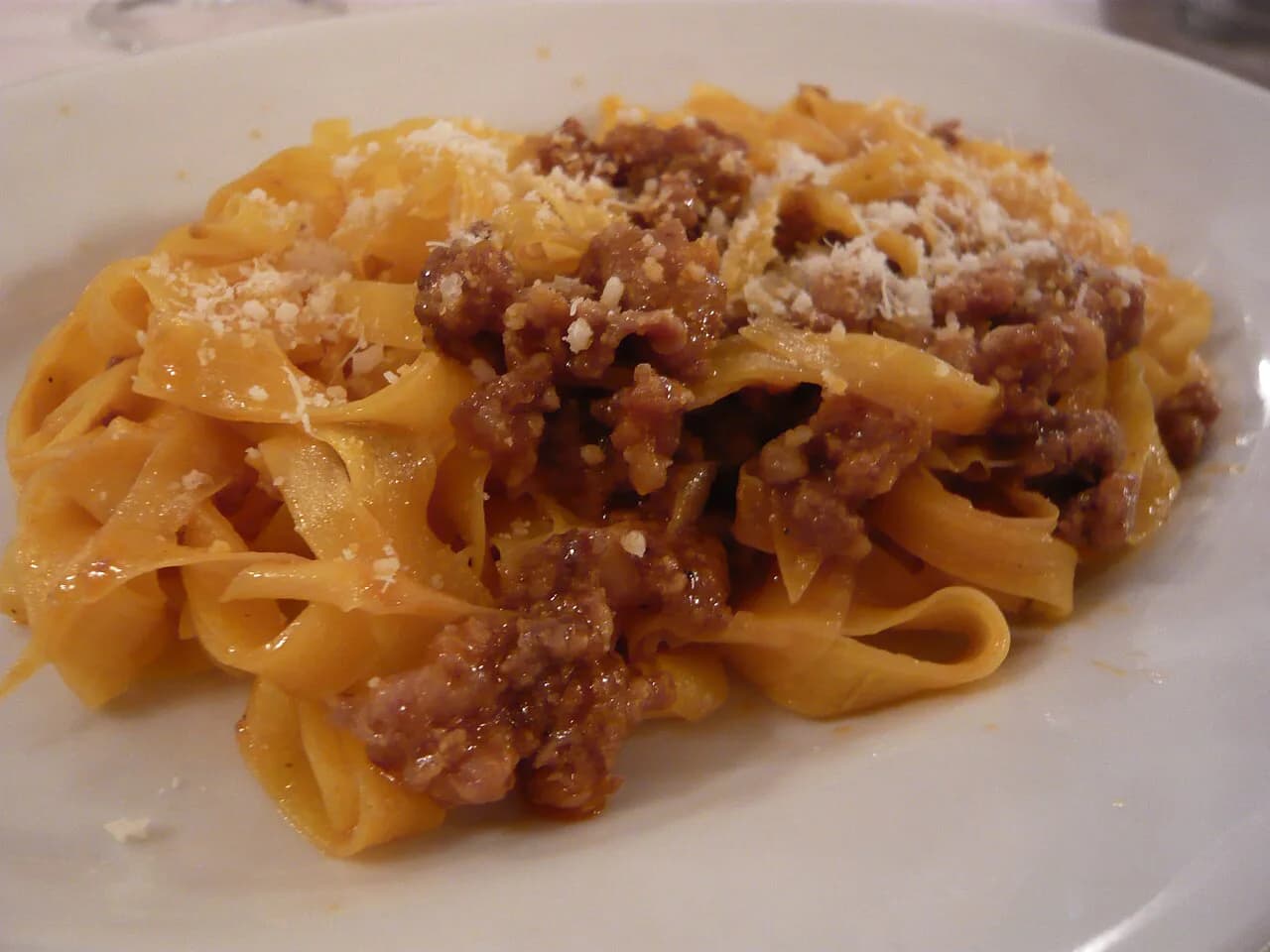
- Ordering spaghetti with Bolognese sauce. The authentic dish, ragù alla Bolognese, is served over tagliatelle, never spaghetti.
- Showing up at Osteria del Sole without food already in hand. Skipping the deli stop misses the entire point of its wine-only setup.
Beyond the Market: What's Next to the Quadrilatero
Several landmarks sit close enough to the Quadrilatero to combine into one visit. Piazza Maggiore and the Basilica of San Petronio are a short walk through the market's main archway. Le Due Torri, the city's Two Towers, rise just beyond the quarter's eastern edge. Santo Stefano's cluster of seven interconnected churches sits a few minutes further on. The Santo Stefano's churches guide has more detail. Much of the walk between these points runs beneath Bologna's UNESCO-listed porticoes, the arcaded walkways that shelter shoppers rain or shine. A few minutes north, the university district has drawn students since the University of Bologna's founding in 1088; the university quarter guide covers its cafés and bookshops. If the Quadrilatero's crowds aren't for you, the hidden gems guide lists quieter corners of the city to pair with a market visit.
A Two-Hour Quadrilatero Walking Route
Start at Piazza Maggiore and enter the market quarter through Via Clavature. Allow 15 minutes to notice the former locksmiths’ street and continue toward Via degli Orefici.
Spend the next 25 minutes following Via Drapperie and Via Pescherie Vecchie. These lanes offer the clearest views of produce displays, pasta counters, salumerias, and historic shopfronts. Morning visitors can photograph the stalls before the lanes become crowded.
Set aside 30 minutes for Mercato di Mezzo. Browse the ground-floor counters, then use the communal seating if you want a quick meal. Skip the upper levels when shopping or photography is your priority.
Use the final 40 minutes for the Quadrilatero’s distinctive food-and-wine ritual. Buy a sandwich or small platter from a nearby salumeria before walking to Osteria del Sole on Vicolo Ranocchi. Order a drink there and bring your food to a communal table.
Finish by returning through Via Pescherie Vecchie to Piazza Maggiore. This route avoids backtracking and leaves a short buffer for queues or browsing.
Further reading: Bologna on Wikivoyage · Bologna on Wikipedia
Frequently Asked Questions
What is the Quadrilatero in Bologna?
The Quadrilatero is Bologna's oldest market quarter, a network of medieval streets just behind Piazza Maggiore. Trade guilds worked here from the 13th century onward, and many of today's food shops occupy the same storefronts their trades originally used.
Where exactly are the Quadrilatero's boundaries?
The district is bounded by Via Rizzoli, Piazza della Mercanzia, Via Castiglione, Via Farini, Piazza Galvani, and Via dell'Archiginnasio. It sits directly behind Piazza Maggiore and is almost entirely pedestrianized, so plan to arrive on foot.
What is the etiquette at Osteria del Sole?
Buy food first at a nearby deli, such as Ceccarelli or Salumeria Simoni. The osteria itself sells only wine and beer, so bring your own plate to one of the communal tables once you've ordered a drink at the bar.
What should you bring into Osteria del Sole?
A sandwich or a small platter from a nearby deli works well. Ceccarelli builds sandwiches to order, and Salumeria Simoni sells cured meats and Modena balsamic vinegar if you'd rather assemble your own plate.
What's the difference between Mercato di Mezzo and the open-air stalls?
Mercato di Mezzo is an indoor, three-floor market with seating for eating in. The open-air stalls along Via Pescherie Vecchie and Via Drapperie are standing-room only and better suited to quick shopping stops.
When is the best time to visit the Quadrilatero?
Visit between 8:30 AM and 12:30 PM for food shopping and quieter photos. Return around 6:00 PM for the aperitivo hours, when enotecas fill their outdoor tables and the lanes turn social.
Can you drive into the Quadrilatero?
No. The quarter is fully pedestrianized, and the cobblestone streets aren't set up for cars or taxis. Park outside the historic center and walk in through one of the archways near Piazza Maggiore.
Continue exploring
More guides you'll find useful