Finestrella di Via Piella: Bologna's Little Venice Window
Find the Finestrella di Via Piella in Bologna: the exact location, when the canal runs dry, and the best times for photos of the city's Little Venice.
On this page
Finestrella di Via Piella: A Guide to Bologna's Little Venice Window
Last updated July 2026, the finestrella di via piella bologna is one of Bologna's easiest close-up canal stops. A small wooden shutter on Via Piella opens onto the Canale delle Moline, a stretch of canal that once ran open through medieval Bologna. This guide covers exactly where to stand, when to open the shutter, and how to build a short water-themed walk around it.
What Is the Finestrella di Via Piella in Bologna?
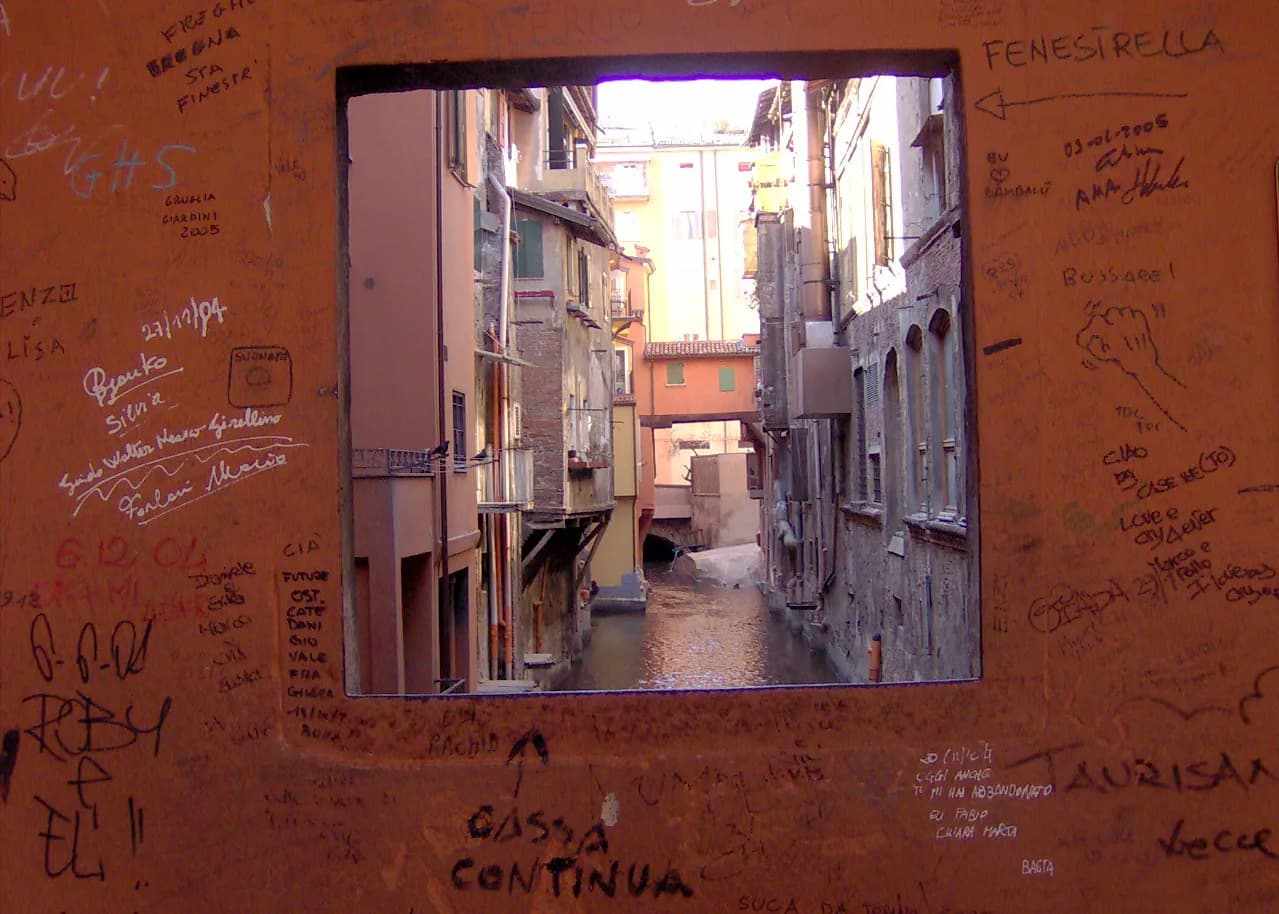
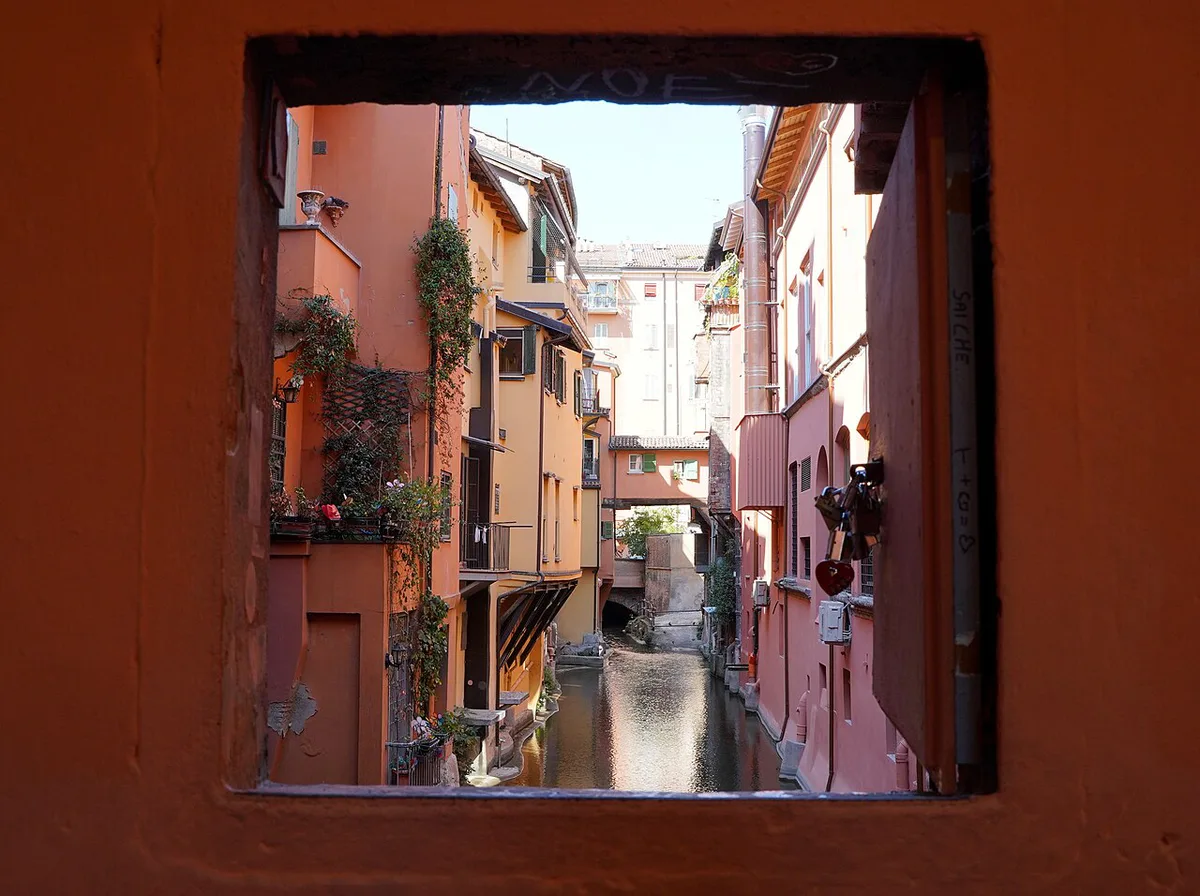
The finestrella di via piella is a small square hatch built into a wall on Via Piella. Lift its wooden shutter and you get a framed view of the Canale delle Moline below. Locals call this corner piccola Venezia, or Little Venice, because water runs between old buildings on both sides. Only a few stretches of Bologna's medieval canal network stayed visible after the city covered the rest. Many guides to 7 Hidden Gems in Bologna: Secrets & Local Spots Beyond the Crowds list this shutter first. It also appears on lists of off-the-beaten-path corners in the center. Bologna Welcome's own official listing describes this corner as one of the few places where the city's underground waterways surface.
Why Bologna Has Hidden Canals: A Quick History
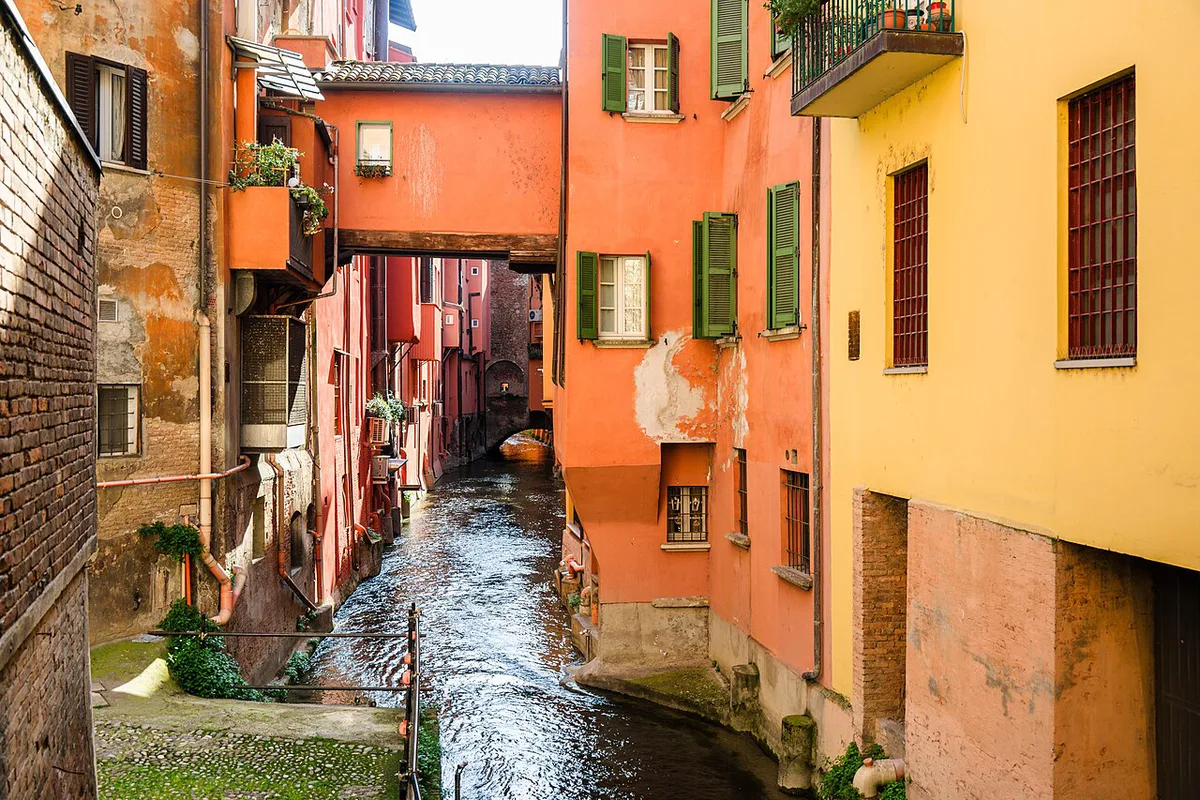
Bologna built its canal network starting in the Middle Ages, drawing water from the Reno River. Millers and silk workshops relied on that water to turn wheels and wash raw silk. At their peak, roughly 62 kilometers of waterways crossed the city, according to FAI's heritage listing. Canals also supplied street cleaning and laundry services for centuries. Between the early 1900s and the postwar decades, the city paved over most of that network with asphalt. One of the few stretches that survived uncovered is the Canale delle Moline, visible through the finestrella. Its second ring of walls included small gates known as torresotti. Porta Govese is one of them.
What once sprawled across 62 kilometers of waterways now survives as just three visible windows in Bologna's center. The finestrella is one of these rare uncovered sections remaining from the medieval system.
The Mill Wheels and Bologna's Water-Powered Past
The Canale delle Moline takes its name from the mulini, or mill wheels, that once turned inside it. Those wheels powered silk-twisting machines that fed Bologna's silk trade, a major source of the city's wealth for centuries. Most of the original hydraulic wheels are gone today. Some were dismantled, and others were moved to Bologna's Industrial Museum, where visitors can see equipment from that era. No working wheels remain in view from the finestrella itself. What you see instead is the water, the buildings, and the arches that once housed the machinery. A few local associations still run tours of Bologna's water canals by rubber boat, giving a closer angle on the same channel than the shutter offers. Sometimes those boats float visibly along the canal, giving passersby at the finestrella an unexpected glimpse of a tour in progress.
How to Find the Finestrella di Via Piella
The shutter sits at Via Piella 16/a-18/a, within easy walking distance of Piazza Maggiore and the Two Towers. Reach it by passing under Porta Govese, also called Torresotto dei Piella, one of the surviving gates from Bologna's second ring of walls. Once through the gate, look right, under the portico, for a small wooden panel set flush into the wall. Via Piella runs beneath one of the porticoes of Bologna that shelter much of the old center. Bologna Welcome's own city listing pairs this stop with two other nearby places: Piazza del Nettuno and Via Riva di Reno.
- Address: Via Piella 16/a-18/a, postal code 40126.
- Landmark: Porta Govese, also known as Torresotto dei Piella, a surviving gate from the second ring of city walls.
- Look for: a plain wooden shutter set into the wall under the portico, not an obvious window.
Opening the Shutter: What First-Timers Get Wrong
Many visitors walk right past the finestrella because it looks like a sealed panel, not a window. The trick is simple. Push the small wooden shutter to swing it open, rather than pulling it. Behind it is a narrow gap in the wall, framing the canal and the buildings that line it. Close the shutter again after taking a look. Other visitors are often waiting behind you at busier hours. Unlike the open-air views at Via Oberdan and Via Malcontenti, this one stays hidden until someone actually opens it.
Getting a Good Photo Through the Finestrella
The opening is small, roughly the size of a single window pane, so a wide-angle phone lens usually fits the shot better than zooming in. Hold the camera flat against the frame to avoid catching the shutter's edge in the picture. Avoid flash. It reflects off the wall inside and washes out the canal view. Only one or two people can look through at a time, so take the photo quickly and step aside. If the shutter feels stuck, it usually needs a firm, gentle push rather than a pull. There is little room to set up a tripod, since the lane is only wide enough for foot traffic.
Planning Your Visit: Cost, Timing, and Crowds
Opening the shutter costs nothing. It sits on a public street, not inside a ticketed site, so there is no entry fee or booking process. That makes it a natural stop on any list of 15+ Free Things to Do in Bologna: A 2026 Budget Guide. The street has no fixed hours, but daylight is what makes the view worth the stop. Early morning and early evening tend to have the shortest queue at the shutter. Midday visits often mean waiting behind other travelers, since Via Piella is narrow. Many self-guided walking routes start at Piazza Maggiore and treat the shutter as an early stop before continuing toward the Quadrilatero market. If you are also weighing when to schedule the wider trip, the guide to the best time to visit Bologna covers seasonal crowd patterns citywide. Some local operators run bike and walking tours that include this stretch of canal as one stop. Published rates for Bologna bike and walking tours have ranged roughly from €25 to €65, depending on length and group size. Confirm current pricing directly with the operator before booking.
Visit all three canal windows self-guided in 20 to 30 minutes for free, or choose a €25 to €65 organized boat or walking tour for a closer perspective on the waterway.
The Secca: When the Canal Runs Dry
Bologna periodically drains and cleans the Canale delle Moline as routine maintenance, a period locals call the secca. Regional tourism guides note the canal's water level changes across the year for this reason. These maintenance windows have typically fallen in autumn in past years, though exact dates shift annually. Turning up during a secca means looking at a dry channel bed instead of running water. Some visitors mistake a low-water period for a permanently dry canal, when it is only temporary maintenance. Check current updates from Bologna's canal authority, or its canali di Bologna information channels, before planning a visit around the shutter specifically. A quick search closer to your travel dates should confirm whether the canal is currently flowing.
Beyond the Finestrella: The Hidden Water Route
The finestrella on Via Piella is not the only place to see Bologna's covered canals. Two nearby openings, on Via Oberdan and Via Malcontenti, give different framings of the same Canale delle Moline. Bologna Welcome's own listing groups all three windows together as views onto the same waterway. Following them in sequence turns a single photo stop into a short water-themed walk. Each of the three windows frames a slightly different section of rooftops and water. Further upstream, the Canale delle Moline connects back to the Canale di Reno, which draws from the Reno River by way of the Casalecchio sluice. That sluice is recognized as a Unesco Messenger of Peace site. Regional tourism sources describe it as the oldest working sluice of its kind in Europe.
| Viewpoint | Character | What You'll See |
|---|---|---|
| Via Piella | Classic framed photograph through wooden shutter | The famous window offering the most iconic view |
| Via Malcontenti | Uncovered canal stretch | How closely homes were built around the waterway |
| Via Oberdan | Broader, less enclosed opening | More room to pause without crowding the street |
- Via Oberdan: a second opening onto the same canal, a short walk from Via Piella.
- Via Malcontenti: another uncovered stretch of the Canale delle Moline.
- Canale di Reno: the waterway that feeds the Moline canal, tracing back to the Casalecchio sluice.
Recognition: FAI's I Luoghi del Cuore Census
The finestrella has also been nominated in FAI's I Luoghi del Cuore, a public census where people vote for heritage sites they want protected. In the 2024 round, the site placed 753rd with 23 votes, according to FAI's own published results. In the 2022 round, it placed 574th with 21 votes. FAI's census also tracks earlier results back to 2012, giving the site a long, if modest, voting history. This census does not change access or hours. It does confirm that this stretch of canal has a steady following among people who care about Bologna's water heritage.
Where the Finestrella Fits in a Bologna Walk
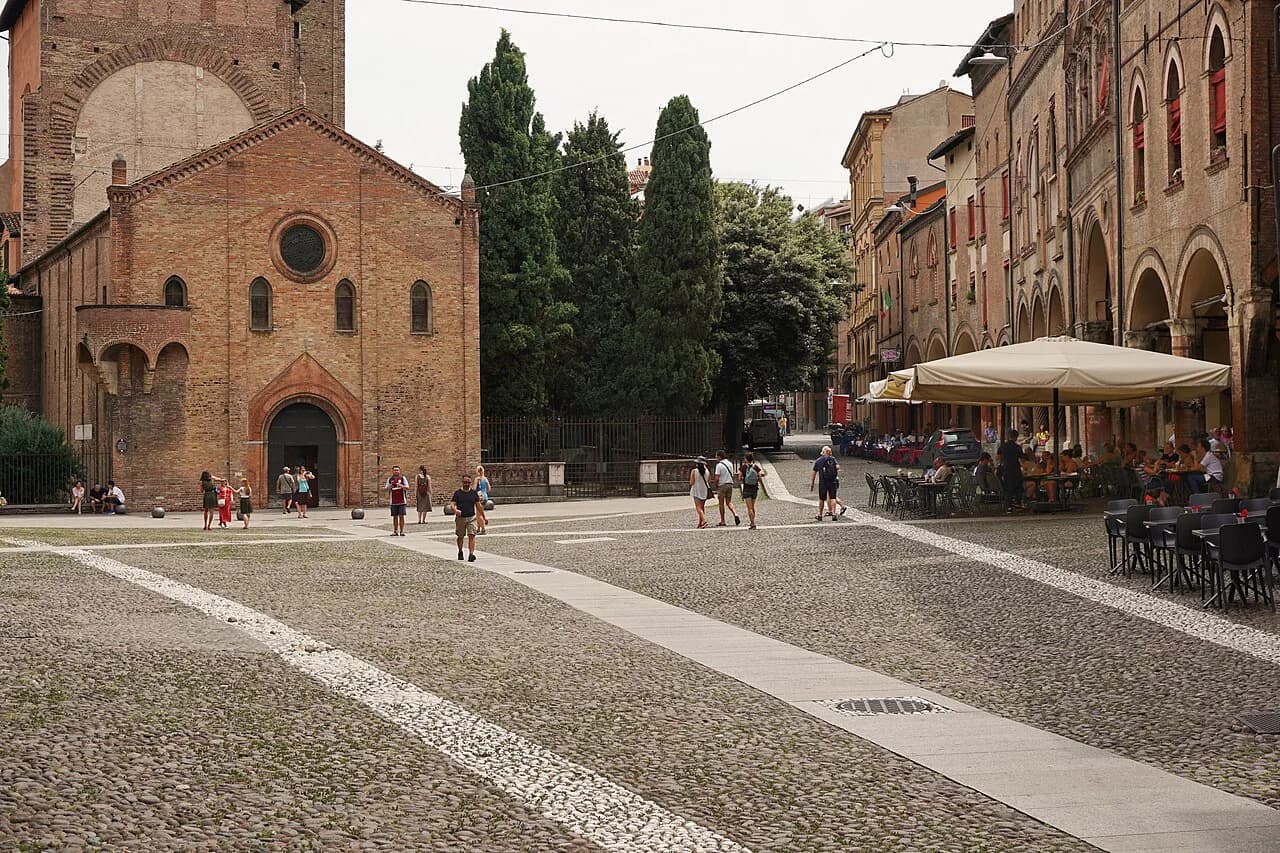
Via Piella sits close to two of Bologna's most walkable districts. The university quarter lies just beyond the old gate, with its own mix of bars and bookshops. The Quadrilatero market streets sit on the other side, known for food stalls and delis. Both neighborhoods sit inside Bologna's historic center, within a short walk of the shutter. Neither one requires a taxi or transit connection from the finestrella. Pair the stop with a coffee or an aperitivo nearby, then use the Bologna Local Food Guide: What to Eat and Where in 2026 to plan a fuller meal. For sit-down options later in the day, the roundup of 8 Best Local Restaurants in Bologna: Where Locals Actually Eat covers choices across the center.
Mistakes to Avoid at Via Piella
A few habits turn a two-minute stop into a frustrating one. Watch for these before heading to Via Piella.
- Walking past without opening the shutter, assuming it is a sealed panel or private property.
- Planning a special trip during the secca without checking canal maintenance updates first.
- Blocking the narrow street: Via Piella is a residential lane, so let others pass and keep the sidewalk clear.
- Skipping Via Oberdan and Via Malcontenti, which add a different angle on the same canal for a few extra minutes.
How to Walk Bologna’s Three Canal Viewpoints
Turn the finestrella into a compact canal walk by visiting Via Piella, Via Malcontenti, and Via Oberdan together. The viewpoints lie within the same small section of Bologna’s historic center.
Start at the wooden shutter on Via Piella, near Torresotto dei Piella. After opening and closing the hatch, continue to Via Malcontenti for another exposed section of the Canale delle Moline. Finish at Via Oberdan, where the broader opening provides a less enclosed perspective than the famous window.
- Via Piella offers the classic framed photograph through the wooden shutter.
- Via Malcontenti reveals how closely homes were built around the waterway.
- Via Oberdan gives more room to pause without crowding the narrow Via Piella pavement.
Allow about 20 to 30 minutes for the three stops, including photographs. Map each street before leaving Via Piella because the canal disappears beneath buildings between viewpoints. From Via Oberdan, continue toward the University Quarter or return toward Piazza Maggiore and the Quadrilatero.
Further reading: Bologna on Wikivoyage · Bologna on Wikipedia
Frequently Asked Questions
What is the Finestrella di Via Piella?
It is a small wooden shutter set into a wall on Via Piella. Open it and you get a framed view over the Canale delle Moline, the corner of Bologna known as Little Venice.
Is visiting the Finestrella di Via Piella free?
Yes. The shutter sits on a public street, with no ticket, booking, or entry fee involved.
What if the canal looks dry when you visit?
Bologna periodically drains the Canale delle Moline for maintenance, a period known locally as the secca. This has typically fallen in autumn in past years, so check current canal updates before planning a special trip. Local canal-maintenance announcements are usually the most reliable source close to your travel dates.
How far is the Finestrella from Piazza Maggiore?
It sits within easy walking distance of Piazza Maggiore and the Two Towers. Reach it by passing under Porta Govese, also called Torresotto dei Piella.
Are there other canal viewpoints besides Via Piella?
Yes. Via Oberdan and Via Malcontenti both offer separate openings onto the same Canale delle Moline, a short walk from the original shutter.
Can you see the old mill wheels or canal machinery at the finestrella?
No. The wheels themselves are gone; some ended up in Bologna's Industrial Museum. The finestrella only frames the canal itself, not any surviving machinery.
What's the best time of day to visit for photos?
Early morning or the hour after sunrise usually gives even light without harsh shadows in the narrow canal. Overcast days work well too.
Continue exploring
More guides you'll find useful