London Ghost Tour Guide: Best Haunted Walks & Spooky Sites
Plan your London ghost tour with top-rated haunted walks, self-guided spooky routes, and practical tips on scare levels, child suitability, and booking.
On this page
London Ghost Tour Guide
London is a city built on layers of history and forgotten bones. Taking a london ghost tour allows you to see the capital through a dark lens. These walks reveal secrets hidden behind modern glass buildings. You will discover why the past refuses to stay buried here.
Ancient alleys and fog-drenched graveyards set the perfect stage for spooky stories. Visitors often find that nighttime tours offer a unique perspective on famous landmarks. The city transforms into a maze of shadows after the sun sets. Expert guides bring these chilling tales to life with dramatic flair.
Why London Ghost Tours are Special
London's long history provides an endless supply of tragic tales and mysterious sightings. From Roman ruins to Victorian slums, every era has left a spectral mark on the streets. The city experienced the Black Death, the Great Fire of 1666, and centuries of public executions at sites you can still visit today. That accumulated weight of history is what sets London apart from most cities offering ghost experiences.

Many people ask why people like ghost tours when visiting such an old city. The answer lies in the thrill of connecting with the past in a visceral way. Atmosphere plays a massive role in making these experiences memorable. Narrow cobblestone passages in the City of London create a natural sense of unease — you might feel a sudden drop in temperature near ancient stone walls.
Professional storytellers use the city's architecture to enhance their narratives. They point out iron railings and gas lamps that have stood for centuries. Seeing the actual locations of historical tragedies adds a layer of authenticity. This combination of visual cues and dark history creates an unmatched experience that no museum can fully replicate.
Walking, Bus, or Boat: Choosing Your Ghost Tour Format
London ghost tours split into three main formats, each with a different trade-off between atmosphere, access, and comfort. Walking tours are the most immersive — they take you into narrow alleys, hidden courtyards, and graveyards that a vehicle simply cannot reach. They typically last 90 to 120 minutes and cost between £15 and £25 per person. Expect stops every ten minutes or so, with your guide holding the group's attention through storytelling rather than special effects.
The Ghost Bus Tour runs on a vintage black Routemaster and turns the experience into a comedy-horror stage show on wheels. Actors perform alongside you as the bus crawls past St. Paul's Cathedral, Tower Bridge, Fleet Street, and Westminster Abbey. The full route takes around 75 minutes and departs from 8 Northumberland Avenue near Trafalgar Square. Tickets cost around £30 and should be booked in advance, particularly on Friday and Saturday evenings in 2026 when seats sell out fast.
Walking ghost tours cost £15–£25 per person and last 90–120 minutes — the most atmospheric and affordable format. The Ghost Bus Tour at ~£30 suits rainy nights or anyone who prefers to stay seated and dry for the full 75-minute show.
River boat tours offer a third angle — literally. Night cruises along the Thames pass Traitors' Gate at the Tower of London and Execution Dock in Wapping, where pirates were hanged and left until three tides had washed over them. The open water creates a chill that indoor venues cannot fake. These tours run less frequently, so check schedules directly with operators before planning your evening around one.
- Walking tour — most atmospheric, accesses hidden alleys, £15–£25, 90–120 min, weather dependent
- Ghost Bus Tour — theatrical show, seated and covered, £28–£32, 75 min, great for rainy nights
- River boat — unique Thames perspective, sees Traitors' Gate and Execution Dock, less frequent schedules
| Format | Price | Duration | Best For | Booking |
|---|---|---|---|---|
| Walking tour | £15–£25 | 90–120 min | Atmosphere; hidden alleys | Often walk-up or short notice |
| Ghost Bus Tour | ~£30 | 75 min | Families; rainy nights; theatrical fans | Book ahead; Fri/Sat sells fast |
| River boat tour | Varies | Varies | Thames landmarks; Traitors' Gate view | Check operator schedules |
Top-Rated Guided Ghost Tours in London
The Ghosts, Ghouls and Gallows Walking Tour is a reliable starting point for first-timers. It runs for 2.5 hours and moves from Berkeley Square through St. James's Park to the Tower of London, finishing with a short river cruise on the Thames. The combination of haunted Royal Parks and riverside history gives it a broader scope than most competitor tours. You can check current schedules and book directly through London Walks.
The Ghastly Ghost Walking Tour focuses tighter on the City of London's medieval core. It starts at All Hallows by the Tower and passes through Smithfield Market — where heretics were burned alive — before ending at St. Paul's Churchyard. Duration is two hours and the route is flat and manageable. This tour suits anyone who wants the genuine horror of the city's commercial district rather than a theatrical show.
The Cloak & Dagger Tour covers Southwark, the borough that sat outside the City's legal jurisdiction for centuries. Here you will find the Clink Prison Museum, Southwark Cathedral, and the George Inn. The tour uses professional actors to recreate historical events, making it higher on theatricality than purely historical walks. It begins and ends at the George Inn near London Bridge, so a post-tour pint in Britain's last surviving galleried coaching inn is a natural finish.
Ghost Bus and Boat Tours: Seated Scare Experiences
The Ghost Bus Tour of London is ideal if you prefer to stay seated while being spooked. This experience runs on a classic black Routemaster bus with on-board actors performing a comedy-horror show as you drive past famous haunted landmarks. It is a great option for rainy nights or those with limited mobility. The tour departs from 8 Northumberland Avenue and runs nightly — check the official site for 2026 departure times as schedules shift seasonally.
Many travelers wonder whether the Ghost Bus Tour is scary for younger passengers. The show uses jump scares and loud sound effects to create a fun, spooky atmosphere. It feels more like a haunted house attraction than a history lecture, which means sensitive children may find it overwhelming but most teenagers love it. If you want a ghost experience where everyone stays dry and comfortable regardless of the weather, this is the safest bet.
River Thames night tours offer a different perspective on the city's dark past. You can see Traitors' Gate at the Tower of London from the water, and the guide can describe Execution Dock's history while you float past it at night — a perspective impossible on a walking tour. The river creates a natural chill and an unobstructed view of landmarks normally blocked by crowds. These boat trips run less frequently than bus or walking tours, so book early if this format appeals to you.
Self-Guided Spooky Walk: Key Haunted Locations
Exploring on your own allows you to set your own pace and linger at atmospheric spots. The City of London Corporation publishes a free Spooky Self-Guided Walk that connects many of the most storied locations in the Square Mile. Using this map ensures you stay on the right path and don't miss the easily overlooked alleyways. This flexibility is perfect for photographers seeking the perfect shot at dusk or solo travelers who prefer quiet exploration.
A good self-guided route begins near Monument or Bank station and works east toward Aldgate. Start at sunset to watch the shadows grow longer across the narrow courts. Bring a portable charger for your phone to keep your map active and keep your voice down — many of these alleys are flanked by residential buildings. The walk takes roughly two hours at a leisurely pace if you visit all the key sites below.
Hen & Chicken Court, Fleet Street
This narrow alleyway is one of the most atmospheric spots in the city. It is famously associated with the legend of Sweeney Todd, the demon barber of Fleet Street. The tight walls and dim lighting create an immediate sense of claustrophobia — many visitors report feeling watched as they walk through the passage. Scare level: high. Best visited after 22:00 when foot traffic drops.
The court remains largely unchanged from its Victorian appearance. It serves as a reminder of the crowded and dangerous conditions of old London. You can find it tucked away near the Royal Courts of Justice, just a few minutes' walk from Temple tube station. It is a short stop but one of the most viscerally unsettling on any london ghost tour because the physical space itself does the work.
The echoes of your own footsteps can sound like someone following you. Be quiet when you enter — residents still live here. Access is free as a public alley, but the visit lasts only five minutes, so build it into a longer route rather than making it your sole destination.
The Old Lady of Threadneedle Street
The Bank of England is home to one of London's most famous ghosts. Sarah Whitehead, known as the Black Nun, has supposedly been seen wandering the area for nearly two centuries. She waited for her brother Philip, who was executed for forgery in 1811, and legend says she never accepted his death. Her black-clad figure remains a staple of local folklore and a regular fixture in ghost tour narratives about the Square Mile.
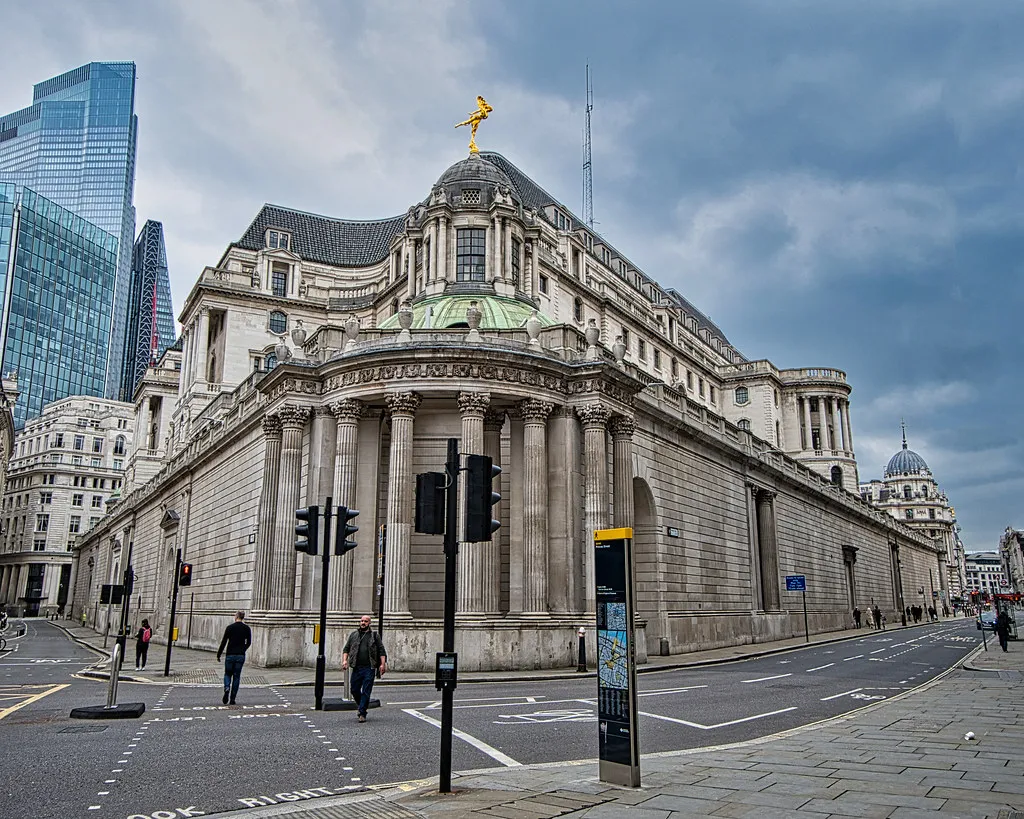
Sightings are typically reported near the main entrance of the bank on Threadneedle Street. Witnesses describe a woman in a long black veil appearing and disappearing suddenly without speaking. The story adds a human dimension to what is otherwise a cold financial institution. Scare level: low — the location is busy on weekdays but the story itself is quietly haunting.
This spot works best on a Sunday morning when the City empties out and the grand architecture feels genuinely imposing. Stand across the street to take in the full neoclassical facade. It pairs well with a stop at the Royal Exchange opposite, which has its own history of financial ruin and desperate deaths. The journey from Bank station takes less than a minute.
Mitre Square, Jack the Ripper, and the Victims Often Forgotten
Mitre Square is a chilling site for anyone interested in true crime history. It was the location of the murder of Catherine Eddowes in September 1888, one of the most brutal of the Whitechapel killings. Today it remains a quiet paved square that feels disconnected from the modern city rushing past on Aldgate. Many east London hidden gems are located nearby in this historic district.
Most Jack the Ripper tours in London focus on the killer's identity — a mystery still unsolved — but a smaller number of operators have reframed the tour around the five canonical victims. London Walks runs a specific "Women of the Abyss" tour that traces Mary Ann Nichols, Annie Chapman, Elizabeth Stride, Catherine Eddowes, and Mary Jane Kelly on their own terms, covering where they lived and worked rather than just where they died. This tour departs from Aldgate tube station and runs on occasional Saturday mornings — check the London Walks schedule for 2026 dates. For travelers who find the standard Ripper framing uncomfortable, this is a meaningfully different experience.
Standing in Mitre Square at night is sobering. The old paving stones and Victorian street layout remain largely intact. It is a place that demands a respectful attitude — avoid treating it as a photo opportunity. Scare level: medium. The square can be crowded on summer evenings if a guided group is present, so visit on a weekday if you want quiet reflection.
Mitre Square and surrounding Aldgate alleyways are surrounded by residential buildings. Keep voices low, avoid blocking doorways, and treat these sites with respect — ghost tour groups have received complaints from residents for loud behaviour near private homes.
Jamaica Wine House and Liverpool Street Station
The Jamaica Wine House sits on the site of London's first coffee house, established around 1652 in St Michael's Alley off Cornhill. Its basement is said to be haunted by spirits from its long mercantile history and the space has survived the Great Fire, the Blitz, and centuries of City commerce. The building features beautiful dark wood paneling and a cozy traditional atmosphere. It is the perfect place to warm up after a chilly walk, though note it closes on weekends — a detail that catches visitors out.
Liverpool Street Station is another hotspot for reported paranormal activity. Staff and late commuters have described seeing a figure in white overalls on the platforms, particularly during the quiet hours after midnight. The station sits on the site of a Bethlem Royal Hospital burial ground and later a workhouse — layers of suffering that ghost tour guides draw on regularly. These sightings happen when the station is nearly empty, so the last train is a better time to linger than rush hour.
Combining these two locations offers a natural end to a self-guided evening: a drink at the wine house followed by the short walk to Liverpool Street. Both are easily accessible and represent the kind of living history that defines the City of London. The two sites are around ten minutes apart on foot.
How do ghost tours work?
Understanding what happens on a ghost tour helps you prepare for the night. Most tours begin at a designated meeting point near a tube station — your booking confirmation will specify the exact spot and a brief description of where to find your guide. You will meet your guide, who may be dressed in period costume, and they will give a brief introduction before leading the group into the shadows. Groups typically run between 10 and 30 people depending on the operator.

The experience is a blend of historical facts and local legends. Guides use storytelling techniques to build suspense and engage the audience, stopping at each haunted location for a specific story that ties the place to its history. It is a social experience that often brings strangers together through shared thrills. Most walking tours cover between half a mile and a mile over the course of the evening, so the pace is gentle enough for most fitness levels.
Logistics vary between companies, so always check your booking details before you arrive. Some tours allow walk-ups on the night but most require pre-booking online, particularly for weekends in summer when popular routes sell out. Prices in 2026 typically range from £15 to £30 per person for walking tours, with the Ghost Bus Tour sitting at the higher end around £30. Wear flat shoes and a warm layer — even in summer, evenings in London can turn cold once the sun goes down.
Are London ghost tours suitable for children?
Many parents wonder if a london ghost tour is appropriate for their kids. Most tours are designed to be spooky rather than truly terrifying, but some stories involve graphic historical details — plague, execution, and murder — that might upset sensitive children. As a general rule, operators recommend a minimum age of eight to ten for standard walking tours, and children under 14 must be accompanied by an adult. Always check the specific age guidance on the tour operator's booking page.
Daytime walking tours are often a better choice for younger families. These provide the same historical context without the added fear of the dark, and the architecture of the old city is still impressive in daylight. You can see the haunted sites while remaining in a comfortable, less atmospheric environment. This approach balances education with a more relaxed experience for younger visitors.
The Ghost Bus Tour is the most family-friendly evening option for groups with teenagers. The theatrical elements make it feel like a fun show rather than a haunting history lesson, and the seated format means younger children do not need to walk for two hours. If your child enjoys Halloween-style entertainment, they will likely find the bus tour highly entertaining. If in doubt, read recent reviews on the operator's page specifically mentioning family experiences before booking.
Are ghost tours real?
The question of whether ghost tours are real depends on your perspective. Most tours focus on historical events and documented sightings recorded over centuries — they provide a window into how people have interpreted mysterious and violent events over time. Whether you believe in spirits or not, the history is real and well-researched. Good guides cite primary sources, newspaper accounts, and eyewitness records rather than invented lore.
Skeptics can still enjoy the tours for the architectural and cultural insights they provide. You will learn about the city's development, the lives of its former residents, and how London's street plan has changed over centuries. The stories serve as a memorable way to absorb historical facts that would feel dry in a textbook. Many guests who book ghost tours for the thrill leave having genuinely learned something about the city.
For those open to the paranormal, some operators offer equipment-based experiences — the Paranormal Activity Tour through Farringdon uses ghost-hunting devices in an attempt to detect presences in genuinely old buildings. Reports of strange feelings, unexplained noises, and odd shapes in photographs are common on these tours. Whether those experiences have a supernatural explanation is for each visitor to decide.
The Ethics of Spooky Travel
Travelers sometimes ask whether ghost tours constitute dark tourism and whether that is ethical. These tours frequently visit sites of real-life tragedies: plague pits, execution grounds, murder scenes. The key distinction is intent and framing. A tour that names victims, explains the historical conditions that led to tragedy, and treats the material with seriousness is markedly different from one that uses suffering as pure entertainment. The better London operators consciously make this distinction in how they write and deliver their content.
Respecting the local community is another practical part of ethical spooky travel. Many haunted sites sit in residential areas or adjoin active businesses. Keep your voice down, avoid blocking doorways or narrow passages, and do not stand in front of private residences while your guide tells their story. This kind of basic courtesy is what keeps ghost tours welcome in neighborhoods like Aldgate and Fleet Street rather than generating complaints from residents.
Think about the impact of your visit on the memory of those named in the stories. Avoid sensationalizing tragedy or taking inappropriate photos at sites connected to named victims. The Jack the Ripper tourism industry in particular has attracted criticism for this reason — which is why tours that center the victims rather than the killer represent a more considered approach. Responsible tourism helps preserve these stories for future generations without causing additional harm to the communities connected to them.
York's Haunted Heart: Ghost Trips Beyond London
If you love haunted history, consider extending your trip to the city of York. It is widely regarded as the most haunted city in Europe, with a density of reported sightings per square mile that exceeds London's. Fast trains from King's Cross reach York in under two hours on most services, making it a practical overnight add-on to a London ghost itinerary. Return rail tickets booked in advance in 2026 typically cost £40 to £70.
York's Haunted Heart tour explores the city's medieval Shambles, where overhanging buildings almost touch overhead and the lanes are barely wide enough for two people to pass. The character is completely different from London's Victorian Gothic atmosphere — here the horror is Roman and Viking, running far deeper in time. Many local tours cover the city's Roman past, including a famous reported sighting of Roman soldiers marching through the cellar of the Treasurer's House, a story corroborated by multiple independent witnesses over decades.
Planning a combined trip is straightforward with the UK's rail network. Spend two or three evenings in London covering the City, Southwark, and East End routes, then head north for York's medieval core. Both cities offer ghost tours that run year-round, not just at Halloween. It is a journey that any fan of British history and the paranormal will find genuinely rewarding.
Continue planning your trip to London
After your ghost tour, there is still so much more to see in the capital. You might want to explore some unusual things to do in London during the day. From secret gardens to quirky museums, the city is full of surprises. These activities provide a great contrast to the dark stories of the night.
Finding hidden gems in London can make your visit feel much more personal. Avoid the typical tourist traps and seek out local favorites instead. You can find remarkable street art or quiet bookshops in almost every neighborhood. These spots offer a deeper look at the city's modern culture.
If you enjoy walking, consider exploring some off the beaten path London routes. These walks take you away from the crowds and into the heart of local life. You might discover a new favorite park or a historic pub. Every corner of London has a story waiting to be told.
Frequently Asked Questions
What is the best ghost tour in London?
The best tour depends on your interests. For historical accuracy, London Walks offers expert-led routes. If you want theatrical entertainment, the Ghost Bus Tour is a top choice. Many visitors also enjoy the Jack the Ripper walks for true crime history. Check out hidden London tours for more niche options.
How long is the Ghost Bus Tour in London?
The Ghost Bus Tour typically lasts around 75 minutes. This includes a full theatrical show and a drive past major haunted landmarks. It starts and ends near Trafalgar Square, making it very central. The duration is perfect for a pre-dinner activity or a late-night thrill.
Are phones allowed at the ghost tour?
Yes, phones are generally allowed on most ghost tours. Many people use them to take photos of haunted locations or follow digital maps. However, you should keep your phone on silent during the storytelling sections. Using a flash can also be distracting for other guests in dark alleys.
Is the Ghost Bus Tour scary?
The Ghost Bus Tour is designed to be spooky and fun rather than truly terrifying. It uses actors, sound effects, and jump scares to create a creepy atmosphere. Most adults and teenagers find it more entertaining than scary. It is a great introduction to the city's dark side for those who prefer a show.
A london ghost tour is a fantastic way to experience the city's rich and dark history. Whether you choose a guided walk or a theatrical bus show, you will see a side of London most visitors miss. The stories of the past continue to echo through the modern streets. Prepare for a night of chills, history, and unforgettable memories.
Continue exploring
More guides you'll find useful