Trapani Hidden Gems: Slow Streets and Quiet Corners
A practical guide to Trapani's quieter corners, from the sunset wall and morning fish market to the salt pans, with free versus paid stops explained.
On this page
Most itineraries treat Trapani as a launchpad, a place to board a ferry or a cable car and leave again by evening. That framing undersells a compact, walkable port city where the pleasure is in the in-between: laundry on balconies, coral shop windows, a defensive wall you can stroll along at sunset.
Trapani has few blockbuster sights, and that is precisely why it stays calm while day-trippers scatter to Erice or the Egadi Islands. Plan around timing instead of ticking off monuments: the fish market early, shade or a beach at midday, the wall and a long dinner in the evening.
This guide gathers the city's quieter corners with the practical detail that decides whether a stop works, and it flags honestly where published information may not match reality.
Start With the Streets, Not the Sights
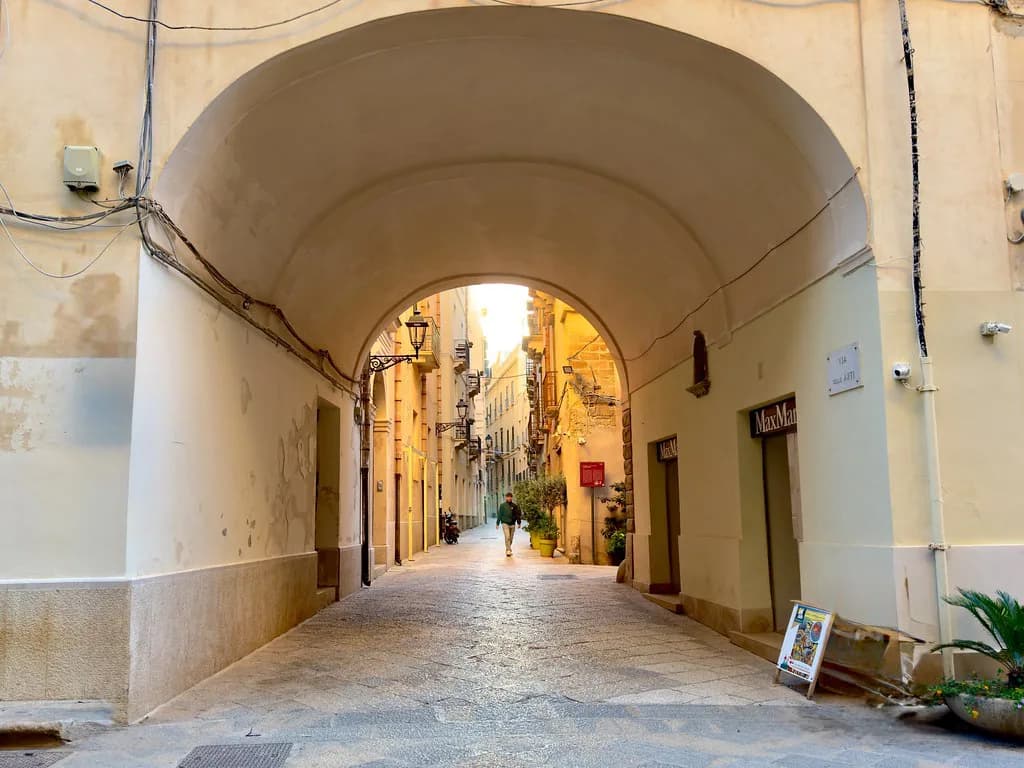
The centre is small enough to cover on foot, and strolling is the main event rather than the transport between events. Pastel mansions in mixed states of repair, small balconies and narrow lanes do more for the city's atmosphere than any single monument, and evening is when Corso Vittorio Emanuele fills with people to watch.
Look for the coral workshops: jewellery made from red coral, usually set in gold, is a local trade rather than a souvenir gimmick, and prices can run high. Treat shop windows as part of the walk, and only buy if the piece and the price both make sense to you.
If a self-guided wander feels too loose, guided walks exist that combine snacks and drinks with the old town streets. That suits anyone who wants context in one concentrated block; otherwise the free version is simply to walk, look up and keep moving.
Cattedrale di San Lorenzo: The Free Stop You Might Miss
The cathedral sits directly among the mansions of the main street, which makes it hard to see as a building and easy to walk straight past. Step inside for the light-blue interior detail, then step out again into the noise of the corso.
Entry to the cathedral is free, which makes it the obvious low-risk stop when you are budgeting your paid visits. Elsewhere in the city, several churches ask a small amount to enter, so check before you commit and do not assume one ticket covers a group of sites.
If you have limited time, prioritise this one interior over a scattergun church crawl.
Walk the Mura di Tramontana Toward Sunset
Part of Trapani's old defensive wall survives, and you can walk along the top of it. It runs from the fish market down to the city beach, which makes it the most natural late-afternoon route in the city rather than a detour.
Time the walk so you finish as the sun drops, and arrive at your chosen terrace well before it does rather than hoping for a table at the last minute.
Sunset terraces on the old wall and at Piazzetta del tramonto are the classic perches, and a bar on the wall draws a crowd for the same reason. Check the sunset time for your date and work backwards; half an hour of buffer is more useful than a perfectly chosen bar you cannot get into.
Two Beaches With Very Different Jobs
The thin strip directly under the city walls, Spiaggia delle Mura di Tramontana, is convenient rather than idyllic. It exists for a quick dip when the afternoon heat flattens your plans, and on that measure it does the job well.
For something closer to a proper beach day, Spiaggia di San Giuliano is a short drive away and a better use of a full afternoon. The trade-off is straightforward: convenience without a car in the centre, or a car trip for sand and space.
Decide by season and by how much time you have, and check the transport options that fit your base before committing to the further beach.
Torre di Ligny and the Promenade Approach
The Torre di Ligny sits at the end of a wide promenade, and the walk to it is half the point. Inside, a small archaeological museum occupies the tower, but published opening hours are not something you should build a day around.
Plan the tower as a maybe rather than a fixed slot: go for the promenade and the setting, and treat the museum as a bonus if the doors happen to be open. Ask at your accommodation whether anything special is running during your stay instead of relying on a listing.
The tower and the passggiata are a good pairing with the wall walk, since both reward late light.
The Morning Fish Market
The Mercato del Pesce is a morning stop, not an afternoon one. Activity starts early, around six, and the market is busiest closer to nine, when boats have docked and the counters are full.
Buying straight from the boats is the reason to come, and there is an indoor hall too, though it carries less of the atmosphere of the waterfront. If you are self-catering, the timing decision is easy: go early, then plan the rest of the day around the heat.
If you are in the city for a single day, this is the stop that shapes the whole schedule.
Beyond the Boats: Lazzaretto and Torre Peliade
Past the fishing boats and across the parking area stands the Lazzaretto, once a quarantine building for people with infectious diseases, in use from 1831 to 1885. It now houses an organisation focused on navigation knowledge, and you can walk onto the grounds, though there is little to see beyond the setting itself.
From the same spot you can see the small sea castle of Torre Peliade on its island across the water. It is a view rather than a visit: enjoy it from the shore and do not plan to cross.
This is an honest half-hour, not a headline attraction, so fold it into the waterfront walk when you are already in the area.
Couscous alla Trapanese, Ordered Sensibly
Trapani's signature dish is couscous alla Trapanese, a seafood couscous with fish that owes more to the city's maritime trading history than to the pasta most visitors expect from Sicily. It is a full meal rather than a side, so treat it as the centre of a lunch or dinner.
Portions can be generous, and sharing one as a starter before a smaller second course is a sensible way to try it without over-ordering. Pair it with a late evening, since Sicilian dinner service tends to start well after the tourist hour.
Meal times shape your day more than you might expect, so read the evening rhythm before you book tables.
Saline di Trapani e Paceco and the Via del Sale
The salt flats closest to the city, Saline di Trapani e Paceco, are where you can watch salt production and visit a museum on site. This is also where the Via del Sale begins, the salt route that runs between Trapani and Marsala.
Guided salt pan tours exist that combine the flats with the salt museum, and the museum occupies a historic mill, which makes the visit more than a walk along the water. Those tours are operated separately, so confirm current timings and prices directly with the operator rather than assuming a fixed schedule. Further visitor details appear in Post-Holiday Serenity: Exploring Trapani's Cultural Treasures.
The flats are outside the walkable centre, so plan transport before the day rather than improvising at the gate.
Erice and the Egadi Islands as Add-Ons
The cable car up to Erice delivers a completely different atmosphere, a mountain village that feels slower and more frozen in time than the port below. It is a good half-day add-on, but it is not a substitute for spending time in Trapani itself.
The Egadi Islands, with Favignana as the main island, work as a day out by ferry or boat tour, and exploring Favignana by electric bicycle is a practical way to cover ground. Treat both as additions to a Trapani stay rather than replacements for it.
If your instinct is to escape a city for its neighbours, compare the trip timing before you commit.
The Daily Rhythm That Decides Your Plan
Sicilian daily life sets the pace here: shops typically close in the afternoon, lunch is served roughly between noon and three, and restaurants reopen around seven in the evening. Locals tend to eat much later than tourists, after an aperitivo at sunset, which means an early table is usually a quiet one.
Build your day around that shape: market and walking in the morning, beach or shade in the hot middle, wall and dinner later. It also tells you when museums and churches are worth attempting versus when you should simply be outside.
Crowds follow the same pattern, thinning in the middle of the day as day-trippers leave.
Short Stays, Hot Afternoons and Rainy Days
With a single day, combine the morning fish market, a walk down the corso including the free cathedral, the wall in the late afternoon and couscous for dinner. It is a full day without a single paid attraction, and it gives a better sense of the city than a rushed island trip.
On very hot afternoons, shift outdoors time to early and late and use the middle for the cathedral interior or a slow lunch. In rain, the indoor market hall and church interiors give you cover, though you should confirm access on the day.
For a longer stay, give each corner its own morning or evening rather than stacking them, and let the weather decide which day takes the salt pans.
Plan Your Visit
Trapani works best when you treat it as the destination and let Erice, Favignana and the salt flats orbit around it. The core of the trip costs little beyond food and coffee: streets, the wall, the beach under it and a free cathedral interior.
Check opening times and tour availability close to your dates rather than trusting older listings, especially for the tower and the salt pans. That single habit removes most of the friction from a city whose charm depends on unhurried timing.
More Trapani guides
- A Day Trip from Trapani to the Egadi Islands
- A Self-Guided Walk Through Trapani's Historic Centre
- Day Trips from Trapani
- Free Things to Do in Trapani
- Getting to and Around Trapani
- The Best Time to Visit Trapani for Weather and Fewer Crowds
- Trapani in One Day
- Trapani in Three Days
- Trapani in Two Days
- Trapani Local Food Guide
- Cattedrale di San Lorenzo in Trapani
- Museo Regionale Agostino Pepoli in Trapani
- Piazza Mercato del Pesce
- San Giuliano Beach and Trapani's Coastline
- Santuario dell'Annunziata in Trapani
- Torre di Ligny
- Trapani and Paceco Salt Flats
Frequently Asked Questions
Is Trapani worth more than a day trip?
Yes. Trapani has few major attractions, but its compact centre, waterfront wall, morning fish market and slow evening rhythm reward staying at least one night. Day-trippers leave in the afternoon, which is when the city becomes most enjoyable.
What can you see in Trapani for free?
Walking the streets and the Mura di Tramontana costs nothing, and the Cattedrale di San Lorenzo has free entry. The city beach under the walls is also free to use. Several other churches charge a small entry fee, so check before going in.
When is the best time to visit Trapani's fish market?
Go early in the morning. Activity starts around six and the market is usually busiest closer to nine, when the boats have docked. Late afternoon is too late for the waterfront stalls, though the indoor hall is an alternative.
Do you need a car to visit the Trapani salt pans?
The salt flats lie outside the walkable centre, so you need a plan for getting there, whether by car, taxi or an organised tour. Confirm transport and tour timings with the operator before the day rather than improvising on arrival.
What is the local dish to try in Trapani?
Couscous alla Trapanese, a seafood couscous with fish, is the city's signature dish. Portions can be large, so sharing one as a starter is a sensible way to try it without over-ordering.
Is the beach in Trapani centre good for swimming?
Spiaggia delle Mura di Tramontana is convenient for a quick dip but is not an idyllic beach. For a fuller beach day, Spiaggia di San Giuliano is a short drive away.
How do you get to Erice and the Egadi Islands from Trapani?
A cable car connects Trapani with the mountain village of Erice, and ferries from the port serve the Egadi Islands, with Favignana as the main island. Check current schedules and fares with the operators before relying on them.
Should you rely on published opening hours for Torre di Ligny?
Treat them with caution. Published hours for the tower and its small museum may not match reality, so plan the promenade walk regardless and ask locally whether the museum is open during your stay.
Sources
Continue exploring
More guides you'll find useful